
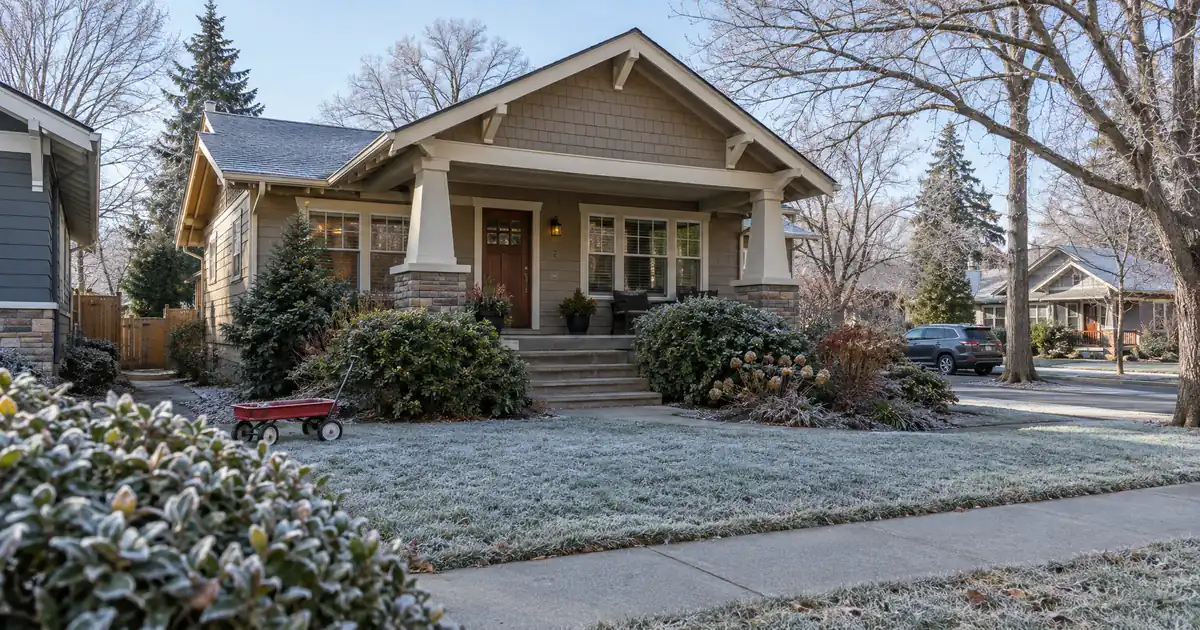
The Quick Read: It depends on the collateral: a DSCR HELOC is written only on a non-owner-occupied rental, never on your own home, so tuition can come out of one only when the lender’s use-of-proceeds terms allow a personal purpose and the rent clears the coverage test, subject to underwriting. The product fits a landlord with a rental’s equity to tap. It does not fit a parent who wants to borrow against the family house.
- The line sits on a rental as a standalone second lien behind your first mortgage, or as a first lien on a rental with no mortgage.
- Rent qualifies the line, not your paycheck, at a minimum 1.10x coverage on a stress payment across the whole line.
- Leverage tops out at 70% combined loan-to-value on a second lien and 75% loan-to-value on a first lien, through select programs.
- Tuition is a personal use, so confirm use-of-proceeds terms before you apply.
- Rental equity is reported on federal aid forms, so the draw can cost you aid.
What a DSCR HELOC Is, and Where Tuition Fits
A DSCR HELOC is a home equity line of credit on a rental property, qualified on the rent instead of the owner’s personal income. DSCR stands for debt service coverage ratio. It is the rent divided by the monthly payment the lender uses to test the loan. A HELOC is a revolving credit line: you borrow, repay, and borrow again, with property as collateral, as the CFPB’s HELOC brochure describes it.
Across the wholesale network Lendmire places files through, this line comes in two shapes. It is a standalone second lien behind a first mortgage you keep. Or it is a standalone first lien on a rental that has no mortgage. It is never closed with a purchase, never a third lien, and never placed on your own home or a second home. If you hold the rental in an LLC, the line can stay in the LLC’s name, depending on program guidelines, with the members signing as guarantors.
So the straight answer on tuition has two halves. Using home equity for tuition is common, and a HELOC on a primary residence is a different, owner-occupied product built for exactly that. A DSCR HELOC is the rental version. If the goal is to avoid putting the family home on the line, a rental-secured line is the version worth discussing. For the full picture of how rent-qualified loans work, see the complete DSCR loans guide.
Can the Money Actually Go to Tuition?
Nothing about a revolving line stops you from spending it on school. What matters is the lender’s own policy on use of proceeds. Lenders on investment property often review what the money is for, and personal-purpose cash on a rental-secured line can be treated differently from money reinvested in real estate.
There is no single rule across the network. Some programs are silent on use, and some ask. The practical move is to raise tuition at the start of the conversation, not after the application is in.
One more caution on labels. “DSCR HELOC” is not a standardized product name. Some lenders use it for a rent-qualified line. Others call a rental-secured equity line by the same name but review the owner’s personal debt-to-income ratio instead. Ask which test the line actually uses before you compare offers.
Tax treatment can depend on how the funds are used and how the property is held; borrowers should keep clear records and speak with a qualified tax professional before relying on any deduction.
How the Rent Test Works (and Why Tuition Stays Outside It)
The rent test is simple to state. Gross monthly rent divided by the qualifying payment must reach at least 1.10x. That qualifying payment is a fully amortizing payment on the entire credit limit, calculated at the start rate plus 2 percentage points. It is a stress payment, and it covers the whole line even if you draw less.
Rent is the lesser of the appraiser’s Form 1007 market rent or the lease. A lease in place is required. A lease above market rent counts only with three months of receipts. A two-to-four-unit property can have at most one vacant unit. Whether the first-mortgage payment joins the qualifying payment on a second lien is set by the lender’s own coverage calculation, and the lender’s math governs.
Run the numbers this way. Picture an investor whose duplex rent covers the stress payment on the requested line at roughly 1.2x. That clears 1.10x with some room. Ask for a bigger line on the same rent and the stress payment grows, so coverage slides. The same rental can pass at one line size and miss at another.
Your tuition payments never enter this formula. You pay them from your own income, outside the rental’s math. But the size of the line you need for tuition does enter it. A large tuition goal can push coverage below the minimum, even though your salary is not part of the test. Select lenders in the network will look at lower coverage in some cases, but leverage and terms adjust, so a thin file does not get the same offer.
The Draw Rules Don’t Fit Four Years of Tuition
Tuition arrives in installments, and this line does not. At least 80% of the line, and never less than $50,000, is drawn at closing. Later draws are at least $5,000 each. Interest runs on what you have drawn, during a 5-year interest-only draw period. Then a 25-year fully amortizing repayment period begins, for a 30-year maturity. The rate is variable.
Say you need money across eight semesters. Most of it comes out on day one, and interest starts on that balance right away. That cash then sits in an account while you spend it down. The remaining portion can fund later semesters in draws of at least $5,000.
Two consequences follow. First, you carry interest on money you will not spend for years. Second, cash in a bank account counts as an asset on aid forms, as Fastweb’s financial-aid explainer notes.
The calendar matters too. A five-year draw period that starts at freshman year ends about a year after graduation. The full amortizing payments then begin just as the graduate enters the job market. Because the rate is variable, that payment can move. This is a genuine toss-up for some families. The structure works if the rental carries the line comfortably. It strains if the rental has a bad year.
How Much Line Can the Equity Support?
Lines start at $50,000. The cap and the leverage depend on the lien position. Every figure below is a ceiling, subject to underwriting, never an offer.
| Factor | Second lien | First lien |
|---|---|---|
| Sits behind | Your existing first mortgage | Nothing (no mortgage) |
| Leverage cap | 70% CLTV maximum (second lien only) | 75% LTV at 740+ (first lien only) |
| Credit minimum | 720 (second lien only) | 700 (first lien only) |
| Line range | $50,000 to $500,000 | To $1,000,000 |
On a first lien, 740 or better reaches 75% LTV, while 700 to 739 caps at 70% LTV on lines up to $500,000. Lines above $500,000 carry a 65% LTV ceiling at 720 or better. Second-lien leverage is combined, meaning your first-mortgage balance plus the new line, divided by value. At 70% CLTV, the existing mortgage uses up much of the room. Terms depend on the lender’s guidelines, the property type, the leverage, and a full review of the credit profile.
The valuation path scales with the line. Lines to $400,000 use an automated valuation with a property inspection report, or a full interior appraisal. Larger lines need a full interior appraisal. Appraisal waivers are not accepted. There are no reserve or cash-to-close requirements. Borrowers are limited to 5 loans or $2,500,000 with the program.
Not every rental qualifies. Rural property, condotels, row homes, leaseholds, mixed-use and agricultural property are outside this lane. A rental bought or refinanced in the last 6 months is not eligible, and you need 6 months of ownership. The program is offered only in states covered by Lendmire’s consumer licensing, so state availability is a first check.
Aid Forms Treat Rental Equity Differently
Rental equity is not sheltered on federal aid forms, and home equity on your residence is. That asymmetry matters if you own both.
| Asset | FAFSA | CSS Profile |
|---|---|---|
| Equity in your primary home | Not reported | Counted, with a cap |
| Equity in a rental | Reported | Reported |
| Loan cash in a bank account | Counts as an asset | Counts as an asset |
Per Fastweb, the CSS Profile, used by about 250 colleges, counts primary-residence equity and caps it at two to three times income. Net equity in rentals and second homes is reported on the federal form. If your rental equity already pushes the aid formula, borrowing against it and parking the cash can make the picture worse. Ask each school’s aid office how it treats both.
Alternatives, Side by Side
| Option | Collateral | Main trade-off |
|---|---|---|
| Home equity line on your residence | Your home | Home is at risk |
| DSCR HELOC on a rental | The rental | Draw rules, use-of-proceeds check |
| DSCR cash-out refinance | The rental | Replaces your first mortgage |
| Federal parent loan | None | Credit-based, fixed terms |
| School payment plan | None | Smaller sums only |
A home equity line on your residence puts the family house behind the debt. The FTC’s home equity guidance states plainly that the lender can take your home if you don’t repay, and that a HELOC is revolving credit with a variable rate. Moving the lien to a rental shifts that risk onto your rental portfolio, which is a trade, not an escape.
A DSCR cash-out refinance is a different product. It is a new first lien that replaces your current mortgage, qualified on rent against the full payment. If your existing first mortgage is one you want to keep, a second-lien line avoids touching it. If you are already refinancing, cash-out may be cleaner. Lendmire’s explainer How to Tap Home Equity Without Tax Returns Using a Bank Statement HELOC covers the other income-light route.
Federal loans carry something equity lenders generally do not: hardship deferment options, per College Finance’s comparison of home equity and federal loans. Federal loans are also not secured by your home.
Who Should Skip This
Skip it if the tuition gap is small enough for a payment plan or federal loan. Skip it if your rental’s coverage is thin, since the stress test covers the whole line and a vacancy or a rate move can strain the carry. Skip it if the equity is your reserve for the next acquisition. Equity spent on tuition cannot fund the next down payment.
It makes more sense when the rental has strong coverage, the equity is large relative to the need, the family home must stay out of the collateral, and the aid office confirms the draw will not cost you aid. In that narrow case, a rent-qualified line avoids opening the personal income file. The borrower stays responsible for the debt whatever the student’s results.
Key Terms Defined
DSCR: the debt service coverage ratio, meaning monthly rent divided by the payment the lender tests the loan against.
CLTV: combined loan-to-value, the first mortgage balance plus the new line, divided by the property’s value.
Second lien: a loan that sits behind your first mortgage and gets paid after it if the property is sold.
Draw period: the stretch when you can borrow from the line and pay interest only on the drawn balance.
Seasoning: the ownership time a lender wants before it will lend against a property you just bought or refinanced.
Use of proceeds: what the borrowed money is for, which some lenders review on a rental-secured loan.
Frequently Asked Questions
Can I get a DSCR HELOC on the home I live in?
No. This line is written only on non-owner-occupied one-to-four-unit rentals. A line on your own home is a primary-residence HELOC, which is underwritten on your income, credit and equity, not on rent. The two are separate products with separate rules.
Does the rental’s coverage count my tuition payment?
No. Tuition is paid from your own income and sits outside the rent test. The test runs on a stress payment across the whole line at a minimum 1.10x, so the size of the line you request is what matters.
Will a draw hurt my financial aid?
It can, because rental equity is reported on the federal form and loan cash sitting in a bank account counts as an asset. Ask each school’s aid office how it treats both before you draw.
What happens when the draw period ends?
The 5-year interest-only period ends and a 25-year fully amortizing repayment period begins, with a 30-year maturity. The rate is variable, so payments can change. Plan for the step-up before the first semester.
Can an LLC-owned rental carry the line?
Yes, the LLC can stay on title, subject to program terms. The members sign as guarantors, and a title holder who is not a borrower signs an owner acknowledgment. Foreign nationals and ITIN borrowers are not eligible on this program.
Next Steps
If you are considering a home equity line on a rental property and want to see how the numbers work, Lendmire can help you compare DSCR HELOC options based on the property, the rent, the equity available, credit profile, combined leverage, and your goals. Programs change and every file is underwritten individually, so nothing here is a commitment to lend.
About Lendmire
Lendmire is a mortgage brokerage (NMLS# 2371349) arranging home equity lines of credit — primary-residence, second-home and investment-property lines — through a wholesale lending network in its 16 full-service states. Eligibility is determined by the lender on each file. Scotsman Guide named Lendmire a Top Mortgage Workplace in both 2025 and 2026.
Get Started
Ready to find the right loan for you?
See your offer in seconds. No credit pull, no obligation.
Informational only. Not a Loan Estimate, approval, or commitment to lend. Program availability and eligibility are subject to lender guidelines, credit approval, property review, and underwriting.
References
2. Fastweb’s financial-aid explainer
3. FTC: Home Equity Loans and Home Equity Lines of Credit
4. College Finance: Home Equity Loans for College, Pros and Cons
This article is part of Lendmire’s DSCR HELOC program — full qualification details, guidelines, and scenarios live on the program page.
Related reading: DSCR HELOC for 1099 Contractors and How Much You Can Borrow · DSCR HELOC Requirements for 1099 Contractors Who Own Rentals · DSCR HELOC vs Cash-Out Refinance for Pulling Equity From a Rental
Brandon Miller
Founder & CEO, Mortgage Loan Originator, Lendmire LLC
- Mortgage Loan Originator · NMLS# 1129696 · Verify on NMLS Consumer Access
- North Carolina Real Estate Broker · License# 343312 · Verify on NCREC
- North Carolina Insurance Producer · License# 19053198 · Property, Casualty, Life, Health · Verify on NAIC SBS
- Lendmire LLC · Firm NMLS# 2371349 · Verify firm licensure
Important disclosures. Lendmire (NMLS# 2371349) is a licensed mortgage brokerage. Lendmire is not a direct lender, depository institution, or financial advisor. All loan inquiries are subject to lender underwriting; this article does not constitute a commitment to lend. Rates, terms, and program guidelines are subject to change without notice and vary by borrower profile, property type, and state. Information in this article is general in nature and is not financial, legal, or tax advice. Equal Housing Opportunity. NMLS Consumer Access: nmlsconsumeraccess.org.