
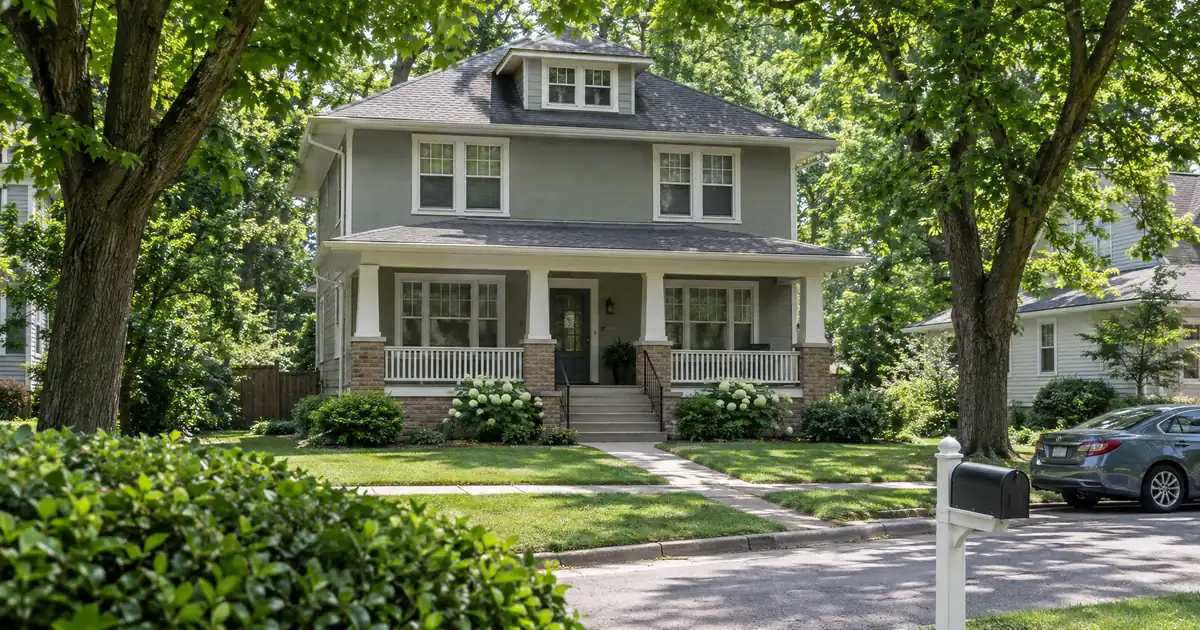
The Quick Read: Usually, yes, if the jointly owned property is a rental. One co-owner can be the only borrower on the line, while every other person on title signs the security instrument and a non-borrowing owner acknowledgment, but not the promise to repay. The line qualifies primarily on property-level rental income covering the payment, subject to lender guidelines. A DSCR HELOC is never written on your own home, so a joint residence needs a different product.
- One borrower can carry the line. Other titled owners sign to pledge their share, not to owe the debt.
- Rent is the test. A lease in place and a minimum 1.10x coverage ratio matter more than anyone’s paycheck.
- An LLC can stay on title, with its members signing as guarantors, through select programs.
- An unmarried co-owner who refuses to sign usually ends the deal. The fallback is a different loan or a different ownership structure.
What Does “Joint Home” Mean for a DSCR HELOC?
For this loan, “joint home” has to mean a jointly owned rental. A DSCR HELOC is a revolving line of credit secured by a non-owner-occupied one-to-four-unit rental. It is never offered on the home you live in or on a second home.
So sort your property first. If two siblings inherited a duplex and rent both sides, you are in the right lane. If you and a spouse live in the house and want to tap its equity, that is a primary-residence HELOC. It follows owner-occupied rules, and it is a different conversation.
The structure on a rental is simple. The line is a standalone second lien behind the first mortgage you keep. Or it is a standalone first lien on a rental with no mortgage. It is never a third lien and never closed together with a purchase.
DSCR stands for debt service coverage ratio. It is the rent divided by the qualifying payment. Across the wholesale network, the minimum on this line is 1.10x. The lender measures that payment as a fully amortizing payment on the entire credit limit at a stressed start rate. You never see the rate here, because pricing terms come with the lender’s disclosures.
Can One Co-Owner Be the Only Borrower?
Yes, on most files. The borrower on the line need not be the borrower on the first mortgage, and the line needs no one else’s income.
Here is how the paperwork splits:
- The borrower signs the note, which is the promise to repay. The borrower owes the whole balance.
- Each titled owner who is not borrowing signs a non-borrowing owner acknowledgment and the security instrument. That signature pledges their share of the property as collateral. It does not make them a borrower.
- LLC members, when the entity holds title, sign as guarantors, per lender program requirements.
That last point trips people up. A guarantor stands behind the debt. A non-borrowing title holder only pledges the property. Different roles, different exposure.
The federal rule on this mirrors the logic. Regulation B says a creditor may not require a spouse’s signature on the credit instrument when the applicant qualifies alone. It also allows the creditor to require signatures that make the property reachable if the loan goes bad. The rule’s text and commentary are also laid out in a BankersOnline reference.
The rule speaks mainly about spouses. For siblings, partners and heirs, the practical result is the same. A lien cannot reliably reach an owner’s undivided share without that owner’s signature. How that plays out depends on state property law and the lender’s collateral policy, so a title company or attorney should confirm it for your deed.
Who Signs What? A Title Matrix
Title decides who signs. Marital status alone does not. Here is how the common setups line up, in general terms and subject to underwriting.
| Title setup | Can one owner borrow? | Signs the lien | Owes the note |
|---|---|---|---|
| Two individuals (any relationship) | Usually | Both owners | Borrower only |
| Spouse off the deed | Usually | Titled owner; state rules may add a spouse’s consent | Borrower only |
| LLC with several members | Yes, via the LLC | LLC; members as guarantors | LLC and guarantors |
| Heirs or siblings, shared deed | Usually | All heirs on title | Borrower only |
Two notes on the table. A spouse who is off the deed generally has no title interest to pledge. Some states add homestead or community property consent rules. Those rules mostly bite on a primary residence, but a lender or title company decides case by case. And in the heirs row, confirm that the deed actually reflects the current owners before anything else. A title that has not caught up with an estate can stall a file.
How Qualification Works When Only One Owner Applies
The rent qualifies the line. No traditional personal-income documentation, W-2s, pay stubs or debt-to-income ratio go in the file. So the co-owner who stays off the note does not need to produce anything about their income.
What the lender does review:
- Rent and lease. Rent counts as the lesser of the appraiser’s market rent schedule (Form 1007) or the lease. A lease in place is required. A two-to-four-unit property can have at most one vacant unit.
- Borrower credit. The minimum score is 720 on a second lien and 700 on a first lien. The tier comes from the lender’s own credit report. The borrower’s mortgage history must show no 30-day late in the last 12 months.
- Borrower status. US citizens, permanent residents and non-permanent residents with a Social Security number are eligible. Foreign nationals and ITIN borrowers are not.
- Seasoning. Seasoning is the waiting period after you buy or refinance. A rental bought or refinanced inside the last 6 months is not eligible (that clock runs from the last note date to the new note date), and the owner must have held title for 6 months (settlement date to note date).
Picture two siblings who inherited a fourplex years ago and fully rent it. One has strong credit and wants to borrow. The other has a thin credit file. The strong-credit sibling applies alone. The other signs the pledge documents and the acknowledgment. The rent is what gets tested, not the second sibling’s file. (Whether this works for you still depends on the lender’s review of the borrower, the property and the title.)
Is there ever a case where the non-borrowing owner’s credit matters? Typically not, because they are not a borrower on the line. Still, the lender’s overall file review governs, and underwriting is individual.
How Much Can You Pull?
Leverage runs on combined loan-to-value, or CLTV, for second liens. That is the first mortgage balance plus the new line, divided by value. On a first lien, with no other mortgage, it is plain LTV. The figures below are ceilings through select programs, never offers.
| Lien type | Credit score | Maximum leverage | Line size |
|---|---|---|---|
| Second lien, rental | 720 or better | 70% CLTV | $50,000 to $500,000 |
| First lien, rental | 740 or better | 75% LTV | Up to $500,000 |
| First lien, rental | 700 to 739 | 70% LTV | Up to $500,000 |
| First lien, rental | 720 or better | 65% LTV | Above $500,000, to $1,000,000 |
Below 720 there is no second-lien option. A declining-market flag can lower the ceiling by 5 points. Whether the first mortgage payment joins the qualifying payment on a second lien is the lender’s coverage calculation to make, so do not assume either way.
A few draw rules shape the decision when co-owners share the cash:
- At least 80% of the line, and never less than $50,000, is drawn at closing.
- Later draws are at least $5,000 each.
- The draw period is 5 years, interest-only on the drawn balance. Then comes a 25-year repayment period, for a 30-year maturity.
- The rate is variable.
That 80% rule matters for co-owners. You cannot park the line and draw later. Most of it is borrowed on day one, and the borrower on the note owes all of it.
What If a Co-Owner Refuses to Sign?
For an unmarried co-owner, a refusal usually ends the line. Without their signature the lien cannot reliably reach their share. A lender then has little to lend against.
Your options, roughly in the order investors try them:
1. Buy them out. Once title sits in your name alone, the question disappears. Keep in mind that removing a name from the deed does not remove it from an existing debt.
2. Refinance into one name. If the property carries a mortgage, a refinance can reset who owes what. Talk to a title company before you touch the deed.
3. Switch products. A DSCR cash-out refinance is also reviewed on rent, and co-owners can go on the loan as borrowers or hold title through an entity, per lender program requirements. It replaces the first mortgage instead of sitting behind it, so it is a bigger step. The complete DSCR loans guide lays out those first-lien paths.
4. Live with it. If a co-owner will not cooperate and you have no agreement, partition (a court-ordered split or sale) is the legal backstop. It is slow, costly and rarely a financing plan.
Do not reach for a quitclaim deed without advice. A deed change can trigger lender consent clauses and title issues. Have an attorney or title company map the order of operations first.
A couple of related edge cases come up often:
- Power of attorney. Whether a lender and title company accept one to sign for an absent owner varies by lender and by document. Ask early.
- Divorce in progress. Title, court orders and the marital property rules of your state all matter. Expect the title company to want clarity on who owns what before it insures a new lien.
- A cosigner who is not on the deed. This is a different thing from a non-borrowing owner. A banker on a BiggerPockets thread describes lenders declining to add one, and policies vary. Do not plan around it.
How Does This Compare With a Bank Line on a Rental?
Many investors first try a personal home equity line on a rental through a depository institution. Those lines test the borrower’s personal income and debt ratio. Choices are thin. As one banker says on a BiggerPockets thread, only a few lenders still offer a HELOC on an investment property, and their rules vary.
A DSCR HELOC flips the test. The rent qualifies the line, and your personal income file stays closed. That helps a co-owned rental in two ways. The non-borrowing owner’s finances stay out of it. And the borrower’s own debt-to-income ratio does not decide the outcome.
The LLC option can help too, since the entity can hold title and members sign as guarantors. This holds subject to lender program eligibility.
Is the Line Eligible? A Quick Property Check
Even with every signer lined up, the property has to fit. Eligible types include single-family, PUD, townhome, two-to-four units, and warrantable and non-warrantable condominiums. Lots up to 10 acres are fine.
Not eligible on this lane: rural-designated property, row homes, condotels, commercial or agricultural property, leaseholds, land trusts, age-restricted communities, hobby farms, modular and log homes, land contracts, mixed-use, a property listed for sale in the prior 2 months, and a property with a solar lien.
Valuation depends on line size. Lines up to $400,000 use an automated valuation (confidence score of 85 or better) with a property inspection report, or a full interior appraisal. Larger lines take a full interior appraisal. Appraisal waivers are not accepted. No reserves or cash to close are required, but each borrower is capped at 5 loans or $2,500,000 with the program.
It is not offered everywhere. The line runs in 15 of Lendmire’s 16 licensed states, every licensed state except Tennessee, so confirm your property’s state first.
Practical Steps Before You Apply
1. Pull the recorded deed. Know exactly who is on title and how.
2. Confirm the property type. Rental, one-to-four units, not on the excluded list.
3. Gather the lease and rent evidence. The lease in place is required.
4. Decide who borrows. Pick the owner whose credit tier fits, 720 or better on a second lien.
5. Get every titled owner on board. Each one needs to sign the pledge documents and the acknowledgment.
6. Check your timeline of ownership. Confirm both seasoning clocks against your closing and settlement paperwork.
7. Run the coverage. Aim for rent that clears 1.10x on the stressed full-line payment.
Tax treatment can depend on how the funds are used and how the property is held. Borrowers should keep clear records and speak with a qualified tax professional before relying on any deduction.
Key Terms Defined
Note: the signed promise to repay. Only borrowers sign it.
Lien (security instrument): the document that pledges the property as collateral. Every titled owner signs it.
Non-borrowing owner: a person on title who is not a borrower. They pledge their share and acknowledge the loan but do not owe the debt.
Guarantor: someone who stands behind an LLC’s debt. This differs from a non-borrowing owner.
CLTV: combined loan-to-value, meaning the first mortgage plus the new line, divided by value.
Vesting: how title is held, such as two individuals or an LLC.
Frequently Asked Questions
Does my co-owner have to be on the loan?
Usually not. One co-owner can be the only borrower on the line. Every other titled owner is generally asked to sign the security instrument and a non-borrowing owner acknowledgment. That pledges their share without making them liable for the debt, subject to lender guidelines.
Will it hurt my co-owner’s credit?
Generally not, because they are not a borrower on the line. The borrower’s credit is what the lender reviews. A non-borrowing owner still risks their share of the property if the loan is not repaid, so they should read what they sign.
Can I use a power of attorney to sign for an absent co-owner?
It depends on the lender, the title company and the document itself. Some will accept a properly drafted power of attorney. Ask early, because a late surprise can stall a file.
What if we are divorcing and still co-own the rental?
Expect the title company to want clarity on ownership and any court orders before a new lien is insured. State marital property rules can add signature requirements. Get legal advice before you apply.
Can a spouse who is off the deed block the line?
Generally the lien follows title, so a spouse who is not on the deed has no interest to pledge. Some states add homestead or community property consent rules, mostly on primary residences. A title company or attorney can confirm your situation.
About Lendmire
As a mortgage broker (NMLS# 2371349), Lendmire helps homeowners and real estate investors in its 16 full-service states open home equity lines of credit arranged through wholesale lenders. Lendmire is never the lender; line amounts, ceilings and terms are set by the lender under its guidelines. Scotsman Guide named Lendmire a Top Mortgage Workplace in both 2025 and 2026.
If you are considering a home equity line on a rental property and want to see how the numbers work, Lendmire can help you compare DSCR HELOC options based on the property, the rent, the equity available, credit profile, combined leverage, and your goals. Investors who want the broader program framework can start with what a DSCR loan is.
Get Started
Ready to find the right loan for you?
See your offer in seconds. No credit pull, no obligation.
Informational only. Not a Loan Estimate, approval, or commitment to lend. Program availability and eligibility are subject to lender guidelines, credit approval, property review, and underwriting.
References
1. CFPB, Regulation B § 1002.7
2. BankersOnline, 12 CFR 1002.7 reference
3. BiggerPockets: Joint HELOC if only spouse is on deed
4. BiggerPockets: HELOC on an investment property
This article is part of Lendmire’s DSCR HELOC program — full qualification details, guidelines, and scenarios live on the program page.
Related reading: How to Qualify for a DSCR HELOC on a Paid-Off Home Without Refinancing · Does a DSCR HELOC Make Sense to Buy Out a Co-Owner or Ex-Spouse? · Can You Get a DSCR HELOC on a Paid-Off Home Without Refinancing?
Brandon Miller
Founder & CEO, Mortgage Loan Originator, Lendmire LLC
- Mortgage Loan Originator · NMLS# 1129696 · Verify on NMLS Consumer Access
- North Carolina Real Estate Broker · License# 343312 · Verify on NCREC
- North Carolina Insurance Producer · License# 19053198 · Property, Casualty, Life, Health · Verify on NAIC SBS
- Lendmire LLC · Firm NMLS# 2371349 · Verify firm licensure
Disclosures. The information presented in this article is general market commentary, not financial, legal, or tax advice. Lendmire is a mortgage brokerage (NMLS# 2371349) — not a direct lender or depository institution — and loan placement is subject to lender underwriting. Nothing in this content represents a commitment to lend. Loan terms, pricing, and program availability vary based on borrower qualifications, property characteristics, and state of subject property, and are subject to change at any time. Lendmire complies with Equal Housing Opportunity requirements. Consumer access: nmlsconsumeraccess.org.