
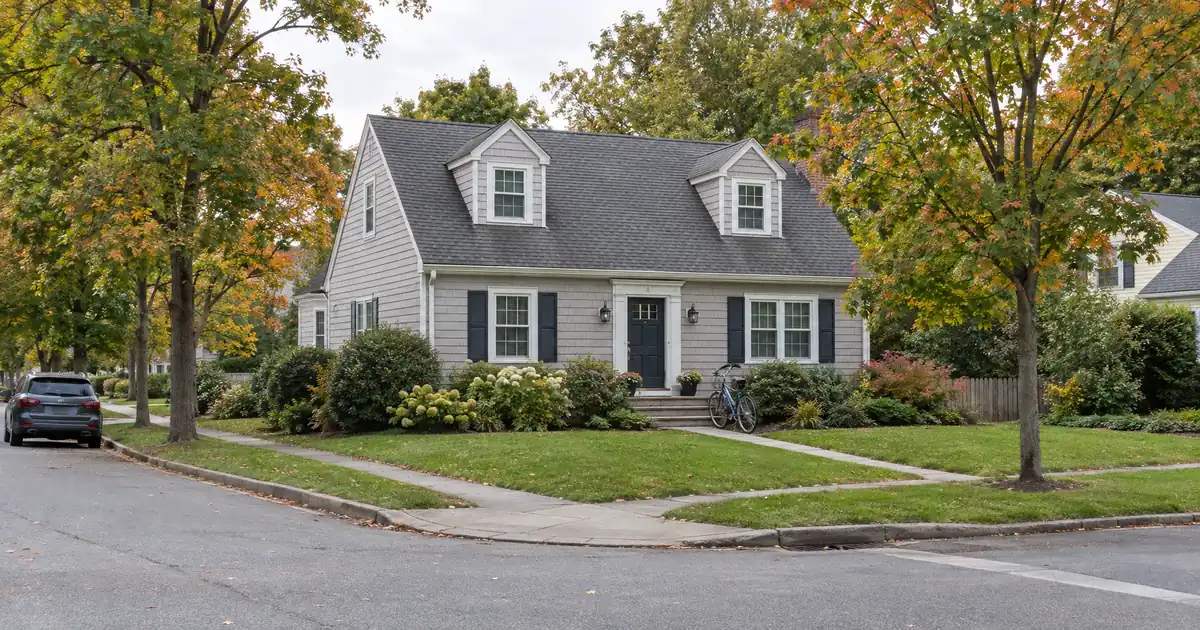
The Quick Read: A DSCR HELOC lets a landlord pull business capital out of a rental’s equity, and the rental’s rent, not the owner’s personal income, is what qualifies the line, subject to lender guidelines. The line sits as a standalone second lien behind the first mortgage the owner keeps, or as a first lien on a paid-off rental. What the lender cares about is title, equity, credit, a lease in place, and a clear purpose for the money.
- Rent must cover a stress payment on the whole credit limit at 1.10x or better, subject to underwriting.
- Second liens reach 70% combined loan-to-value at a 720 score or better, on lines of $50,000 to $500,000.
- First liens reach 75% loan-to-value at 740 or better, through select programs.
- The rental can sit in an LLC, and no traditional personal-income documentation or W-2s are part of the file.
- The program is offered in 15 of Lendmire’s 16 licensed states, every licensed state except Tennessee.
Plenty of small-business owners hold a rental with equity and a first mortgage they do not want to touch. Refinancing the first loan to get at that equity can mean giving up a payment structure that works. A standalone line avoids that. This piece walks through how these files are built, step by step, and where they break.
What a DSCR HELOC Actually Is
A DSCR HELOC is a revolving line of credit secured by a non-owner-occupied one-to-four-unit rental. It is not a line on the owner’s own home, and it is not a second-home product. The label is loose in the market, so name the product before comparing numbers.
A home equity line on an investment property that is underwritten on personal income and debt-to-income is a different product from a DSCR HELOC. Mixing them up is how borrowers end up with figures that belong to a different product.
| Factor | DSCR HELOC | Cash-out refinance |
|---|---|---|
| First mortgage | Stays in place | Replaced |
| Lien position | Second lien, or first on a paid-off rental | New first lien |
| Reviewed on | Rent coverage | Rent coverage |
| Draw structure | Revolving, variable rate | Lump sum |
For the broader picture of how rent-qualified loans work, the complete DSCR loans guide covers the basics.
How Underwriting Treats the File, Step by Step
Underwriting runs in a fixed order, and a file that fails at step one never reaches step five. Here is the sequence on most programs.
1. Property and title. The rental must be a single-family home, PUD, townhome, two-to-four-unit, or a condominium (warrantable or not). It cannot be rural-designated, a condotel, a row home, a leasehold, or listed for sale in the prior two months. Vesting in the owner’s LLC is allowed on this lane, with the members signing as guarantors, subject to program terms.
2. Lease and rent. A lease in place is required. Rent counts at the lesser of the appraiser’s market rent (Form 1007) or the lease. A lease above market counts only with three months of receipts. A two-to-four-unit building can have at most one vacant unit.
3. The coverage test. Gross monthly rent divided by the qualifying payment must reach 1.10x. The qualifying payment is a fully amortizing stress payment on the entire credit limit, not just the amount drawn. That is the quiet trap. An owner who plans to draw a modest amount still gets tested on the full line. Whether the first-mortgage payment joins that calculation on a second lien is the lender’s own calculation, so do not assume either way.
4. Credit. The minimum score is 720 on a second lien and 700 on a first lien. Mortgage history needs no 30-day late in the last 12 months, and 48 months must have passed since a bankruptcy, foreclosure, short sale or deed-in-lieu. No reserves and no cash to close are required, subject to underwriting.
5. Valuation. Lines up to $400,000 use an automated valuation with a property inspection report, or a full interior appraisal. Lines above $400,000 need a full interior appraisal. Appraisal waivers are not accepted.
6. Seasoning and ownership. Two clocks run. A rental bought or refinanced in the last 6 months is not eligible, measured from the last note date to the new note date. Separately, 6 months on title are required, measured from settlement date to note date. Purchase files tend to trip on the second one.
Leverage Tiers and Line Mechanics
Leverage depends on lien position, and the two use different terms. Second liens are measured as combined loan-to-value, meaning the first mortgage balance plus the new line, divided by value. First liens are plain loan-to-value.
| Lien position | Score | Max leverage | Line size |
|---|---|---|---|
| Second lien | 720 or better | 70% CLTV | $50,000 to $500,000 |
| First lien | 740 or better | 75% LTV | Up to $500,000 |
| First lien | 700 to 739 | 70% LTV | Up to $500,000 |
| First lien, larger line | 720 or better | 65% LTV | Above $500,000 to $1,000,000 |
Think of these as ceilings, not offers. A declining-market flag lowers the ceiling by 5 points, and Philadelphia lines carry a ceiling 10 points lower.
The draw rules matter for a business owner. At least 80% of the line, and never less than $50,000, is drawn at closing. Later draws are at least $5,000 each. The draw period is 5 years interest-only on the drawn balance, followed by a 25-year fully amortizing repayment period, with a 30-year maturity. The rate is variable.
That 80% draw is a planning point. A line meant as a standby cushion for slow months does not fit well, because most of it is funded and carrying cost starts on day one. It suits an owner with a defined use for the money.
Using the Money in a Business
The line funds a real business: equipment, inventory, a second location, payroll through a ramp-up, or working capital. What the lender wants is a credible, documented purpose. Expect a signed business-purpose declaration and a short use-of-funds letter on typical files.
DSCR loans are designed for non-owner-occupied investment properties. Because they are business-purpose investor loans, they are reviewed differently from a standard owner-occupied mortgage. That is also why the purpose has to be real. The federal business-purpose rule turns on what the credit is primarily for, and a checked box is not the whole test.
Two practical habits keep the file clean.
- Keep proceeds in a separate business account. Mixed personal and business spending muddies the purpose and the records.
- Keep personal use out. Small, incidental personal use is a gray area. Proceeds that go into the business are the clean path.
Tax treatment varies; consult a qualified tax professional.
Where the General Rule Breaks
These are the edge cases that derail files most often.
Wrong product, wrong numbers. An owner reads a market figure for a personal-income HELOC and expects it here. Market surveys report different equity thresholds for investment-property lines, for example Bankrate’s guidance of 20% minimum equity on investment properties. The network figures for this program are the tiers above, and they govern the file.
Thin coverage on the full line. The stress payment applies to the whole limit. A rental that clears 1.10x on a smaller line can miss on a larger one. Sizing the line down to what the rent supports is usually the fix.
Ineligible property. Rural-designated property, condotels, row homes, leaseholds, land trusts, age-restricted communities, hobby farms, modular and log homes, mixed-use, and anything with a solar lien fall outside the lane. Learn this before the application, not after the appraisal.
Recent purchase. A rental bought inside 6 months fails the seasoning clock, even with strong rent.
Borrower type. US citizens, permanent residents and non-permanent residents with a Social Security number are eligible. Foreign nationals and ITIN borrowers are not on this program.
Exposure caps. A borrower is limited to 5 loans or $2,500,000 with the program, which matters for owners with larger portfolios.
Hazard coverage. Insurance must cover both liens, with flood coverage where required. A policy written for the first lien alone can stall the file.
The Decision in Practice
The real question is not whether the line qualifies. It is whether the rental should carry the business’s risk. Pledging a rental to fund an operating business ties the two together. If the business struggles, the lien is still on the rental, and the variable rate and the move into the 25-year repayment period change the carrying cost over time. Bankrate makes the same point about using home equity for a business, and it cites a Federal Reserve survey showing a small share of owners rely on home equity for start-up funding.
Here is how the choice usually sorts out.
- Keep the first mortgage, need a revolving pool: the standalone second lien fits.
- Paid-off rental, larger need: a first lien reaches higher line sizes, with the 65% ceiling applying above $500,000.
- No eligible rental: a primary-home line is a different, owner-occupied file with its own tiers.
An owner weighing an SBA loan should know that most SBA lenders require personal guarantees, and the business-credit benefit of a home-equity line is thin. Neither path is automatically better. It comes down to how much risk the owner wants sitting on the rental.
Key Terms Defined
DSCR: Debt service coverage ratio, meaning gross monthly rent divided by the qualifying payment.
Combined loan-to-value (CLTV): The first mortgage balance plus the new line, divided by the property’s value.
Draw period: The 5-year stretch when the borrower draws funds and pays interest only on the drawn balance.
Stress payment: A fully amortizing payment on the entire credit limit at a higher test rate, used only to measure coverage.
Seasoning: The time since the rental was last bought or refinanced, measured note date to note date.
Business-purpose loan: Credit extended mainly for a commercial use, documented with a declaration and use-of-funds letter.
Frequently Asked Questions
Can a rental held in an LLC qualify?
Yes, on this lane. Vesting in the owner’s LLC is allowed for investment property, the members sign as guarantors, and a title holder who is not a borrower signs an acknowledgment and the security instrument. Eligibility remains subject to program terms and lender review.
Is my personal income reviewed?
No. The line qualifies primarily on property-level rental income covering the payment, subject to lender guidelines. There are no traditional personal-income documentation, W-2s or pay stubs, though the rent, lease, credit report and valuation are all documented.
Can I fund a startup with no revenue?
The qualifying source is the rental, not the business. A startup with no revenue is not disqualified for that reason, but the lender will still want a credible, documented purpose for the funds.
Can I use a recently purchased rental?
Not right away. A rental bought or refinanced in the last 6 months is not eligible, and 6 months on title are also required. These are two separate clocks.
What if my coverage falls short of 1.10x?
Sizing the line down is the usual first move, because the test runs on the full credit limit. Otherwise, a cash-out refinance or a different structure may fit better. Which options apply depends on the property, the program and current lender guidelines.
If you are considering a home equity line on a rental property and want to see how the numbers work, Lendmire can help you compare DSCR HELOC options based on the property, the rent, the equity available, credit profile, combined leverage, and your goals. Reach the team at 828-256-2183 or request a quote.
A rental’s equity is only as useful as the file behind it, and in this lane the file is title, lease, coverage on the full line, and a purpose that holds up on paper.
About Lendmire
As a mortgage broker (NMLS# 2371349), Lendmire helps homeowners and real estate investors in its 16 full-service states open home equity lines of credit arranged through wholesale lenders. Lendmire is never the lender; line amounts, ceilings and terms are set by the lender under its guidelines. Scotsman Guide named Lendmire a Top Mortgage Workplace in both 2025 and 2026.
Get Started
Ready to find the right loan for you?
See your offer in seconds. No credit pull, no obligation.
Informational only. Not a Loan Estimate, approval, or commitment to lend. Program availability and eligibility are subject to lender guidelines, credit approval, property review, and underwriting.
References
2. Bankrate: HELOC on an investment property
3. Bankrate: Using a HELOC for a business
This article is part of Lendmire’s DSCR HELOC program — full qualification details, guidelines, and scenarios live on the program page.
Related reading: DSCR HELOC vs DSCR Cash-Out Refinance to Consolidate Business Debt · How to Qualify for a DSCR HELOC Without Tax Returns or W-2s · How to Qualify for a DSCR HELOC With All Other Units Leased
Brandon Miller
Founder & CEO, Mortgage Loan Originator, Lendmire LLC
- Mortgage Loan Originator · NMLS# 1129696 · Verify on NMLS Consumer Access
- North Carolina Real Estate Broker · License# 343312 · Verify on NCREC
- North Carolina Insurance Producer · License# 19053198 · Property, Casualty, Life, Health · Verify on NAIC SBS
- Lendmire LLC · Firm NMLS# 2371349 · Verify firm licensure
Required disclosures. Lendmire (NMLS# 2371349) operates as a licensed mortgage broker, not a direct lender or depository. The discussion in this article is general in nature and should not be relied upon as financial, legal, or tax advice — every investment scenario is unique and should be reviewed by a qualified professional. Any loan inquiry is subject to lender underwriting, and this article is not a commitment to lend or a guarantee of approval. Mortgage rates, loan terms, and program guidelines vary by borrower, property, and state, and may change without notice. Equal Housing Opportunity. Verify licensure at NMLS Consumer Access.