
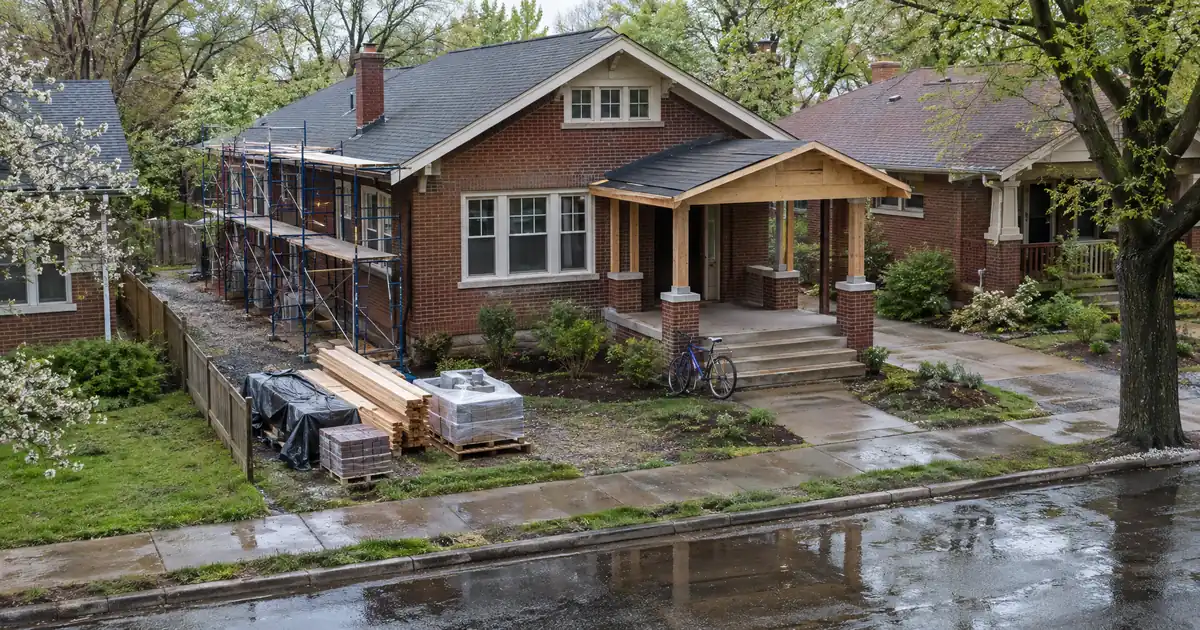
The Quick Read: On a fixer, conventional financing fits a livable house and a borrower with strong, documentable income, while hard money fits a property too damaged for conventional underwriting and an investor with a clear rehab plan and a defined exit strategy. Neither is better in general. The condition of the house and the shape of your plan usually decide it.
- Conventional lenders underwrite you: credit, income, debts, and reserves.
- Hard money lenders underwrite the deal: the property, the rehab budget, the after-repair value, and how you get out.
- A house with serious safety or structural problems often cannot be financed conventionally until it is repaired.
- Hard money is built to be short, usually six to eighteen months, and is not a long-term hold loan.
The Honest Answer First
Pick conventional when the house is livable, your tax returns show the income you need, and your repairs are cosmetic enough to pay for out of pocket. Pick hard money when the house needs real work before anyone would insure or rent it, or when your personal income is hard to document. Plenty of investors use both in sequence: short-term money to buy and fix, then long-term financing to hold.
What this loan actually costs to carry.
Hard money is sized against the project and priced by time. Enter the deal and see how much the program will lend, the cash required at closing, the carry while you hold it, and what is left at the exit.
Leverage tiers on the current program: 85% with fewer than 2, 90% with 2 or more, 93% with 5 or more completed projects — every tier capped at 75% of after-repair value. Loan amounts up to $5,000,000, larger by exception; terms of 6 to 18 months, interest-only, no prepayment penalty. The rehab portion funds in draws against completed work, not at closing.
Program parameters shown update from Lendmire’s centralized guideline source. Rate, points, and months are editable assumptions, not quoted terms.
Cost cap sets the loan · positive spread
Illustrative estimate only — not a quote, Loan Estimate, approval, or commitment to lend. Rate, points, and months are editable assumptions. Hard money is business-purpose financing for real estate investors, not a consumer mortgage. Leverage on the current program tops out at 93% of project cost for investors with a documented track record, capped at 75% of after-repair value, with rehab funding up to 100% of the documented budget released in draws; actual terms vary by lender, borrower experience, property, and exit. Lendmire is a mortgage broker, not a lender.
Conventional loans reward the borrower who looks good on paper and buys a house that already works. Hard money rewards the investor who can show a believable plan on a property that does not work yet. The rest of this article shows where the line between them sits.
Side-by-Side
The conventional column reflects published industry norms. The hard money column reflects the parameters of Lendmire’s wholesale network, which places both kinds of files. Every figure varies by lender, property, and experience, and nothing here is a commitment to lend.
| Factor | Conventional (industry norms) | Hard Money (network) |
|---|---|---|
| Review basis | Borrower income, credit, debts | Property, rehab plan, exit |
| Documentation | Heavy: income, assets, tax history | Lighter: scope, budget, entity docs |
| Property condition | Generally livable at closing | Distressed properties considered |
| Property types | Varies; renovation products are narrow | Non-owner-occupied 1-4 units |
| Entity vesting | Often individuals; entities vary | Entity borrowers are common |
| Rehab funding | Usually your own cash | Draws against completed work |
| Reserves | Documented reserves expected | Your cash in the deal and experience |
| Term structure | Long amortizing loan | 6-18 months, interest-only |
| Exit | Hold the loan | Sell or refinance out |
Two rows deserve a closer look. Rehab funding is the biggest practical gap. Property condition is the biggest structural one.
Who Each Lender Is Really Underwriting
A conventional lender is betting on you. It wants to see steady documented income, a clean credit file, manageable debt, and cash in the bank after closing. A self-employed investor whose tax returns show low income after deductions can have a strong business and still look weak on a conventional file.
A hard money lender is betting on the property and the plan. It asks what the house is worth today, what it will be worth after repairs, what the work costs, and how you will repay the loan. Credit still matters. In Lendmire’s network a 620 score is the minimum, with extra conditions below 660. But the file turns on the asset, the budget, and the exit, not on your W-2s.
Here is the wry part. Hard money is not “no underwriting.” It is underwriting aimed at a different target.
Why Property Condition Is the Real Dividing Line
Conventional lenders care a great deal about what the appraiser writes about the house. Under Fannie Mae’s Selling Guide, appraisers rate condition from C1 to C6. A C5 means obvious deferred maintenance and significant repairs needed. A C6 means deficiencies that affect safety, soundness, or structural integrity.
DSCR loans are not agency products, so those ratings do not govern them. They matter here only as a picture of how conventional underwriting thinks. Per McKissock’s appraisal education, a C6 property cannot be delivered to Fannie Mae until the appraisal is completed subject to repairs. One C6 component can pull the whole dwelling down to C6.
For you, the lesson is practical. A house with dated kitchens, worn flooring, and tired paint may be fine for conventional financing. A house with a failing roof, active water damage, missing systems, or foundation problems usually is not. The more the house looks like a project and the less it looks like a home, the more likely hard money becomes the only workable route.
Can Conventional Money Pay for the Rehab Too?
Usually not. A standard conventional loan funds one lump sum at closing against a finished, livable property. It does not hold back repair money and release it as work gets done.
There is one notable exception. Fannie Mae’s HomeStyle renovation loan can roll repairs into the mortgage. It is generally limited to one-unit investment properties. It also asks for renovation plans, contractor bids, and permits before closing. That is a lot of paperwork for a flipper, and it is built more for a modest renovation of a single house than for a gut job. Renovation programs from other agencies generally exclude investment properties altogether.
So the realistic conventional fixer is a light one. You buy a livable house, pay for the cosmetic work yourself, and either rent it or sell it.
When Conventional Is the Better Fit
Conventional is the stronger choice in these situations:
- The house is livable. Cosmetic work like paint, floors, fixtures, and landscaping does not usually block a conventional appraisal.
- You plan to hold. A long amortizing loan has no maturity cliff. If your plan shifts from flip to rental, you are not forced to refinance on someone else’s calendar.
- You have the cash for repairs. Conventional will not fund your renovation budget, so you pay for it yourself.
- Your income documents well. Salaried or steadily self-employed borrowers with clean returns and healthy reserves fit the box.
- You want a loan with no short fuse. A rehab that runs long is annoying on a conventional loan. On a short-term loan it can become a crisis.
Conventional also wins when the numbers are thin. A short hold lets a loan’s cost matter less, but a longer hold lets it matter a great deal. If you intend to keep the house for years, a long-term structure usually serves you better than a bridge. Pricing is the calculator’s job, not this article’s, so run the hard money numbers there and get a conventional quote before you decide.
When Hard Money Is the Better Fit
Hard money is the stronger choice in these situations:
- The house fails conventional condition standards. Safety, soundness, or structural problems often make conventional financing a dead end until repairs are done.
- The rehab is the project. Hard money funds repairs in draws, so you are not paying for the entire renovation from your own savings first.
- Your tax returns understate your business. Asset-based underwriting looks at the property and the plan, not at your 1040.
- You buy through an entity. Vesting title in an entity is common on hard money files, subject to lender program eligibility.
- You have a clear exit. A sale or a refinance into long-term financing has to be credible on paper.
For a deeper look at how short-term money compares with refinancing, Lendmire’s piece Hard Money vs Investment Property Cash-Out Refinance in an LLC covers the entity side.
How the Hard Money Numbers Work on a Fixer
Hard money leverage is usually measured against cost and against after-repair value. After-repair value (ARV) is what the property should be worth once the work is finished. Loan-to-cost is the loan amount as a share of the purchase price plus the rehab budget.
In Lendmire’s network, fix-and-flip leverage is tiered by documented completed projects. It runs 93% of project cost at 5 or more completed projects, 90% of project cost at 2 or more, and 85% of project cost with fewer than 2. Every tier is capped at 75% of ARV. The top tier is reserved for experienced investors, and first-time investors qualify at the lower tiers. Up to 100% of the rehab budget can be funded in draws as work is completed.
Notice what that means in practice. Say the all-in project cost is 80% of the ARV, and you have 2 or more completed flips. Ninety percent of cost is 72% of ARV, so the cost tier controls. Now say the all-in cost is 85% of the ARV. Ninety percent of cost would be 76.5% of ARV, so the 75% cap controls, and you bring more cash than the tier suggests. This is the math that surprises first-timers: a thin deal gets squeezed by the ARV cap, not by the cost percentage.
Other network parameters are straightforward:
- Loan amounts run up to $5,000,000, larger by exception.
- Terms run 6 to 18 months, interest-only, with no prepayment penalty.
- Collateral is non-owner-occupied residential property, 1 to 4 units.
- There is no true 100% purchase program. Any “100% financing” claim refers to the rehab budget, not the purchase.
Every figure varies by lender, property, and experience.
How Draws Work (and What You Front)
Rehab money does not arrive on day one. The lender holds the rehab budget and releases it in draws tied to completed work. A draw typically follows an inspection that confirms the work was done.
That structure has a cash-flow consequence. You usually pay contractors first, then get reimbursed. Investors who plan their contractor payment schedule around that rhythm do fine. Investors who assume the budget is a debit card run short between draws.
Expect the lender to also want title coverage, insurance, and an appraisal that supports both an as-is value and an ARV. These lenders may look at credit mainly for serious derogatory events and at your experience for how aggressive the leverage tier should be.
The Risk Nobody Likes to Talk About: The Exit
A short-term loan is only as good as its exit. If the rehab runs long, the sale slips, or the appraisal lands low, the maturity date does not move because you had a bad month. Hard money is built for short holds. It is not suited to being a long-term hold loan, and treating it that way is the most common way investors get into trouble.
Three habits reduce that risk:
- Pad the schedule, not just the budget. Plan the timeline with room for permit delays and contractor gaps.
- Test the exit before you buy. Ask whether the property would sell at the ARV you are underwriting, and whether it would refinance at the value you need.
- Talk to the lender early. A problem raised in the middle of a project is easier to solve than one raised at maturity.
Conventional has its own version of this risk. If a house does not rent or sell as planned, a long amortizing loan lets you wait. A bridge loan does not.
Using Both: Buy Short, Hold Long
Many investors do not choose. They buy and rehab with short-term money, then refinance into long-term rental financing once the property is stabilized. Lendmire brokers that path, including the refinance into long-term DSCR financing.
A DSCR (debt service coverage ratio) loan is reviewed primarily on property-level rental income covering the payment, subject to lender guidelines. Across most of the network, a cash-out refinance on a standard rental tops out around 75% LTV, and about 6 months of seasoning is the common expectation. Seasoning is the waiting period a lender wants between a purchase and a refinance. Coverage of 1.00 is where many select programs start. Stronger ratios open better terms and leverage.
One caution belongs here. Clearing 1.00 does not mean positive cash flow. The calculation compares rent to the monthly payment only. Repairs, vacancy, management, utilities, and capital expenses sit outside it. For the full picture of how these loans work, see the complete DSCR loans guide.
Business-Purpose Treatment, Briefly
DSCR loans are designed for non-owner-occupied investment properties. Because they are business-purpose investor loans, they are reviewed differently from a standard owner-occupied mortgage. The same logic reaches hard money. Federal consumer-lending rules carve out credit extended primarily for a business purpose, and the CFPB’s Regulation Z § 1026.3 describes that carve-out, including its unit-count details for acquiring or improving rentals. Lenders apply those details file by file, so a lender’s own reading of your deal matters more than a general rule.
A Quick Decision Checklist
Run your fixer through these questions in order:
1. Would an appraiser call the house livable today? If the answer is no, lean hard money.
2. Can you pay for the repairs yourself? If yes, conventional stays on the table. If no, draws matter.
3. Does your income document cleanly? If it does not, asset-based underwriting may fit better.
4. How long will you hold? A long hold favors a long-term loan, and a flip favors short-term money.
5. What is the exit if the rehab runs long? If you do not have a good answer, shrink the plan or the leverage.
This is a toss-up for many light rehabs. A cosmetic fixer with a strong borrower can go either way, and the stronger play often comes down to whether you value a simple long-term loan more than funded repairs. A heavy fixer, though, rarely leaves much choice.
A Balanced Verdict
Conventional financing is the better tool when the property is livable, the repairs are light, and you want a loan that does not force a decision. Hard money is the better tool when the property needs real work, when the repairs themselves need funding, or when your personal income does not tell the story of the deal. The wrong choice usually comes from forcing a heavy fixer into a conventional box, or from using a short-term loan on a plan that needs years. Tax treatment varies; consult a qualified professional about how either structure affects your return.
Frequently Asked Questions
Can I use a conventional loan to buy and renovate a fixer?
Sometimes, but only for light work. A standard conventional loan does not release repair funds in stages. Fannie Mae’s HomeStyle renovation loan can roll repairs in, but it is generally limited to one-unit investment properties and requires plans, bids, and permits upfront. A house with safety or structural problems usually needs hard money or cash first.
Does hard money ignore my credit?
No. Underwriting is asset-based, meaning it centers on the property, the rehab plan, and the exit. Lendmire’s network still sets a 620 minimum score, with additional conditions below 660. First-time investors qualify at the lower leverage tiers. Terms vary by lender, property, and experience.
Can I borrow through an entity?
Often yes on hard money, subject to program terms. Entity vesting is common on short-term investor loans. Conventional loans on investment property are more often written to individuals, though entity rules vary by lender, so confirm before you assume either way.
What happens if my rehab runs past the loan term?
You need a plan before it happens. Terms run 6 to 18 months, and the maturity date does not shift on its own. Talk to the lender early, since options such as an extension depend on the lender and the file. A refinance into long-term rental financing is the usual exit once the property is stabilized.
Can hard money fund 100% of a flip?
Not the purchase. There is no true 100% purchase program. Leverage runs 85% to 93% of project cost depending on completed projects, capped at 75% of ARV, and the rehab budget can be funded up to 100% through draws. Investors bring the balance.
If you are buying, rehabbing, or refinancing an investment property on a short timeline and want to see how the numbers work, Lendmire can help you compare hard money options based on the project, the exit plan, leverage, and your goals. Lendmire is a mortgage broker that arranges financing through select lenders in its wholesale network across 41 markets, including Washington, D.C. Hard money availability varies by market.
About Lendmire
As a non-QM mortgage broker (NMLS# 2371349), Lendmire facilitates DSCR investor loans across 41 markets, including Washington, D.C. DSCR eligibility is generally reviewed around property-level rental income instead of personal income documentation, subject to lender guidelines, serving LLC-structured portfolios and self-employed borrowers who don’t fit conventional boxes. A two-time Scotsman Guide Top Mortgage Workplace (2025, 2026).
Get Started
Ready to find the right loan for you?
See your offer in seconds. No credit pull, no obligation.
Informational only. Not a Loan Estimate, approval, or commitment to lend. Program availability and eligibility are subject to lender guidelines, credit approval, property review, and underwriting.
References
1. Fannie Mae Selling Guide, B4-1.3-06
2. McKissock, Understanding Appraisal Condition Ratings C1 to C6
3. CFPB, Regulation Z § 1026.3
This article is part of Lendmire’s hard money loan program — full qualification details, guidelines, and scenarios live on the program page.
Related reading: DSCR Loan vs Hard Money on a Condo With a Pending Special Assessment · DSCR HELOC vs DSCR Cash-Out Refinance for Investment Property Owners With Built-Up Equity · Can You Get a DSCR HELOC on an Investment Home Instead?
Brandon Miller
Founder & CEO, Mortgage Loan Originator, Lendmire LLC
- Mortgage Loan Originator · NMLS# 1129696 · Verify on NMLS Consumer Access
- North Carolina Real Estate Broker · License# 343312 · Verify on NCREC
- North Carolina Insurance Producer · License# 19053198 · Property, Casualty, Life, Health · Verify on NAIC SBS
- Lendmire LLC · Firm NMLS# 2371349 · Verify firm licensure
Important disclosures. Lendmire (NMLS# 2371349) is a licensed mortgage brokerage. Lendmire is not a direct lender, depository institution, or financial advisor. All loan inquiries are subject to lender underwriting; this article does not constitute a commitment to lend. Rates, terms, and program guidelines are subject to change without notice and vary by borrower profile, property type, and state. Information in this article is general in nature and is not financial, legal, or tax advice. Equal Housing Opportunity. NMLS Consumer Access: nmlsconsumeraccess.org.