
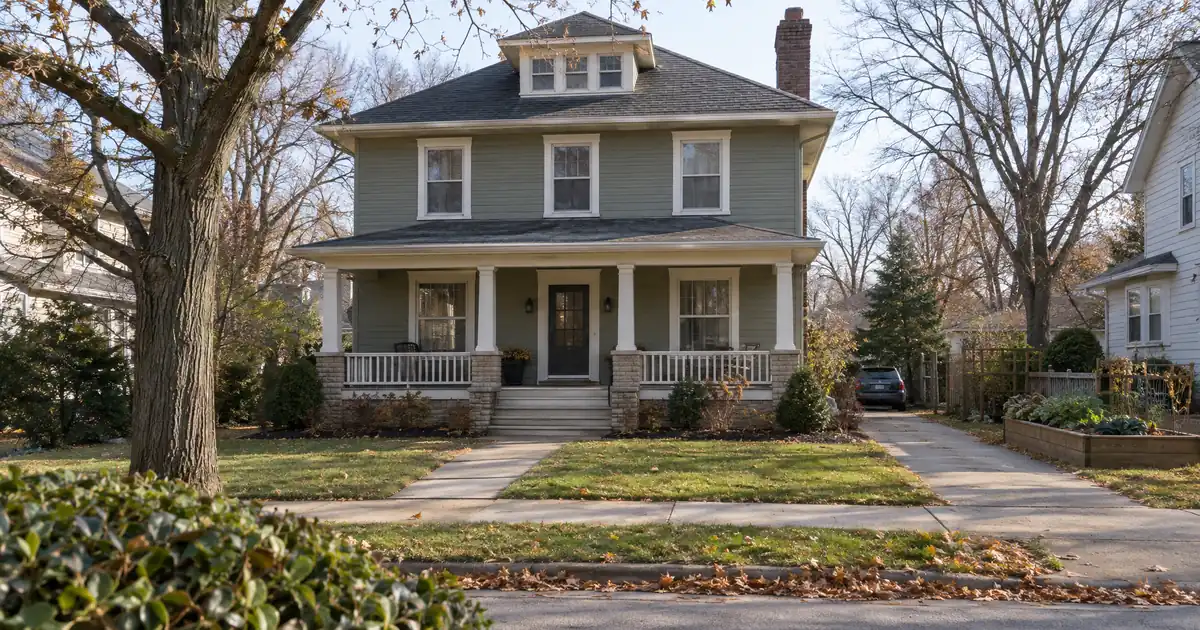
The Quick Read: The best program for the one rental outside your blanket loan is the one that fits how it is titled, how much equity it holds, and how your deposits qualify you, because the blanket does not automatically block a separate line on that property. The line is a personal-credit product on that single rental. The blanket’s rent and properties do not count as its collateral.
- On an investment property, lines in Lendmire’s wholesale network reach up to 70% CLTV (combined loan-to-value) and up to $500,000, subject to lender guidelines.
- The minimum credit score is 700, and 700 and 720 reach the same 70% ceiling.
- Title must sit in your individual name or a revocable living trust. An LLC cannot hold it.
- The blanket still matters through its covenants, your debt-to-income ratio, and the count of financed properties.
Key Terms Defined
Bank statement HELOC: a revolving credit line secured by a property, where the lender verifies income from your deposits instead of tax returns. It is an income method only. Credit, equity, and the property are still reviewed.
Blanket loan: one note secured by several rentals. Industry shorthand also calls it a portfolio DSCR loan or a cross-collateralized loan. All three mean the same thing.
Cross-collateralization: every property in the pool backs the whole debt. Trouble on one property can reach the others.
Release price: the amount you pay down to pull one property out of the pool. It usually runs above that property’s share of the balance.
CLTV: combined loan-to-value, meaning all loans on the property added together and divided by its value.
Expense factor: the percentage a lender subtracts from business deposits to reflect operating costs before counting what remains as income.
DTI: debt-to-income ratio, meaning your monthly debt obligations divided by your monthly qualifying income.
Lien position: whether the new loan sits first or second in line behind any existing mortgage.
What Does “the One Rental Left Out” Actually Mean?
“Left out” can describe several different situations, and the right program changes with each. Pin yours down first. A rental can be free and clear, carry its own first mortgage, sit in an LLC, or have been bought after the blanket closed.
| Your left-out rental | What it changes |
|---|---|
| Free and clear | Line can sit in first position |
| Has its own first mortgage | Line sits second; CLTV counts both |
| Deeded to an LLC | Title blocks a HELOC; see DSCR cash-out |
| Bought after the blanket | Equity may be thin; check the numbers |
| Excluded for weak rent coverage | HELOC ignores rent; personal file decides |
The last row surprises people. A DSCR loan, which tests whether a property’s rent covers its monthly payment, judges the property. A HELOC judges you. A rental that was too weak for the pool can still carry a line if your credit, deposits, and equity are strong.
What Does a Bank Statement HELOC Do on That Rental?
It gives you a revolving line against that one property’s equity. You qualify on deposits instead of tax returns. Investors with heavy write-offs often like this, because deductions can shrink the income a traditional file counts.
Alternative documentation is not no documentation. The lender still pulls credit, orders a valuation, verifies title, and checks that you can repay. Qualification runs on documented income under the applicable program, subject to lender guidelines.
On an investment line, the structure is set. You get a 5-year interest-only draw period followed by a 25-year fully amortizing repayment period. At least 75% of the line is drawn at closing. Pricing floats during both periods and never converts to fixed. So treat it as a drawn loan, not an idle backup.
Market context is brief. The product is common. Rental-property lines are the narrower slice.
Will the Blanket Loan Get in the Way?
It can, in four specific ways. None is automatic. All are checkable before you apply.
1. The blanket’s own covenants. Some notes restrict new debt or contain cross-default language. Cross-default means a problem on one obligation can trigger a default on another. Read the note before you put a new lien anywhere, even on a property outside the pool. Then get your lender’s comfort on it. Documents control here, not assumptions.
2. Your DTI. The blanket payment can show up in your personal debt load, especially if you personally guarantee it. Recourse structures carry that guarantee. This program allows a DTI up to 50%, qualified on the interest-only payment calculated on the maximum draw. Rent from the pooled properties does not count as the income behind a bank statement line. Your deposits do.
3. Your property count. A borrower with more than 15 financed properties is not eligible. A blanket can hold anywhere from 2 to 20 properties on the 30-year portfolio DSCR loan, so a large pool can push you over that line fast. Count each financed property, including every one in the pool. Housing-history standards also apply across all financed properties, so a late payment on the blanket counts.
4. Exposure limits. A borrower is limited to three lines in this network. That is rarely the binding issue on one rental, but it matters if you plan to repeat the move.
Sequencing matters too. Give the blanket servicer a heads-up if the note calls for it. Keep valuations consistent, since the new line’s automated valuation and any blanket valuation may tell different stories.
Which Title Structures Work, and What Breaks?
Title is the sharpest gate. This line is secured only when the individual borrower or a revocable living trust holds title. LLCs, corporations, partnerships, and irrevocable, blind, or land trusts cannot hold it. That is the biggest structural difference from a DSCR loan, which commonly lends to entity-owned rentals, subject to program terms.
So what if your left-out rental is already in an LLC? You have two paths. Deed it to yourself or a revocable trust, or take a DSCR cash-out refinance instead. Think twice about the first path. Moving title can trigger the existing mortgage’s due-on-sale clause, and federal law makes those clauses enforceable. Talk to your existing lender and your attorney before re-titling anything just to qualify.
Rental lines are also treated as business-purpose credit by many lenders. Federal lending rules exempt credit extended primarily for a business or commercial purpose, so it may carry fewer consumer-style disclosures. That is a lender determination, not an automatic result.
How Do You Find the Best Program for This Property?
The best program for your situation depends on a short list of criteria. A broker who shops several wholesale lenders matches your file to the program that fits, instead of forcing it into one lender’s box. Lendmire is a broker and never the lender. Here is what the network’s lenders look at on an investment line.
| Criterion | What the investment line looks for |
|---|---|
| Title | Individual or revocable trust only |
| Credit | 700 minimum, single-bureau score |
| Leverage | Up to 70% CLTV |
| Line size | Up to $500,000 on investment |
| Valuation | Usually automated; no traditional appraisal |
| Draw structure | 5-year interest-only, 25-year repayment |
| Properties | SFR, 2-4 units, PUD, townhome, condo |
A few notes on those rows. Credit above 700 buys eligibility, not extra leverage, because 700 and 720 both reach 70% CLTV. The credit report must be no more than 90 days old at closing, with no rescores. A line at or below $500,000 ordinarily runs on an automated valuation, though a higher CLTV may call for a second look. You can request a full appraisal in any case.
Property type can end the conversation. Manufactured homes, co-ops, condotels, log homes, commercial, mixed-use, and agricultural zoning are not offered. Availability is also limited to the states where Lendmire offers full-service mortgage lending, which is narrower than its DSCR investor footprint of 41 markets, including Washington, D.C.
How Does Income Work on Deposits?
The lender totals eligible deposits over a statement window, then applies an expense factor to business accounts. The window length and the factor vary by program, business type, and structure. What remains is your qualifying income.
Cleaning the deposits is the part borrowers underestimate. Transfers between your own accounts, loan proceeds, and one-off items generally come out before averaging. If your blanket rents run through the same account as your business income, expect questions. Separate them well before you apply, and write a short explanation for any large unusual deposit.
One structural note: business bank accounts need a 680 minimum for the deposit analysis. Investment lines floor at 700 anyway, so the income method is never the binding constraint on this file. Credit and equity are.
Bank Statement HELOC or DSCR Cash-Out: Which Route?
Many investors with a left-out rental should price both. The two products test different things.
| Factor | Bank statement HELOC | DSCR cash-out |
|---|---|---|
| What is tested | You: credit, deposits, DTI | The property’s rent vs. payment |
| Title | Individual or revocable trust | LLC possible, per program terms |
| Leverage | Up to 70% CLTV (investment) | Around 75% LTV on standard rentals |
| Structure | Revolving, floating, 25-year repayment | Fixed 30-year spine; options vary |
| Seasoning | Not the driver | About 6 months is common |
A DSCR cash-out wins when the rental is in an LLC, when your personal DTI is stretched by the blanket, or when you want a fixed term. Most programs want a score around 660, and 700 or better unlocks the strongest leverage tiers. Coverage of 1.00 is where many select programs start, and coverage below 1.00 is available through select lenders in the network, with leverage and terms adjusted.
Don’t confuse coverage with cash flow. DSCR compares rent to the full monthly payment of principal, interest, taxes, insurance, and any HOA dues. Repairs, vacancy, management, and capex sit outside it. A property can clear 1.00 and still lose money.
The HELOC wins when the rental is personally titled, equity is meaningful, and you want to draw in pieces. Loan sizes on DSCR cash-out generally run up to $3,000,000 on standard programs (smaller balances available through select lenders), so a large equity pull usually fits there better than under a $500,000 line cap.
Two other routes exist. You can bring the rental into the blanket through a modification, but that depends entirely on the existing note. You can also leave the property alone. If the cash is for a purchase you have not found yet, waiting is a real option.
Worked Example: Run the Numbers This Way
These are modeled assumptions, not market data. Say your left-out rental is a single-family home held in your own name. It carries a first mortgage at 50% of its value. Your score is above 700, and your deposits, after the expense factor, keep DTI under 50% with the blanket payment included.
The line caps at 70% CLTV. So combined debt can reach 70% of value, which leaves room for a line of up to 20% of value, within the $500,000 maximum. Now change one input. If the first mortgage sits at 62% of value, the room shrinks to 8% of value. Same property, much smaller line.
Remember that at least 75% of the line is drawn at closing. Your DTI is tested on the interest-only payment at the maximum draw. So a larger line can tighten the file even if you never use all of it.
What Should You Gather Before You Apply?
- The full statement set for the account or accounts you are qualifying on
- Your blanket loan note and any covenants on additional debt
- The first mortgage statement on the left-out rental, if it has one
- Proof of how title is held, and trust documents if applicable
- Credit report timing, since how long a report stays valid varies by lender and file
- A short written explanation for large or unusual deposits
Who Should Skip This?
Skip the HELOC if the rental sits in an LLC and you do not want to re-title it. Skip it if your DTI is already close to 50% because of the blanket. Skip it if you are near 15 financed properties.
Also weigh the variable cost. Pricing floats through the draw and repayment periods, and the payment steps up when the interest-only period ends. That is a real risk if your deposits fall. Tax treatment can depend on how the funds are used and how the property is held; borrowers should keep clear records and speak with a qualified tax professional before relying on any deduction.
For related reading, see Lendmire’s piece Can You Get a HELOC on the One Rental Left Out of a Blanket Loan?. For the loan side, the complete DSCR loans guide covers the alternatives.
Frequently Asked Questions
Do I need my blanket lender’s permission?
Not necessarily. It depends on the blanket note. Some notes restrict new debt or include cross-default terms, while others say nothing. Read the covenants first, and ask your counsel if the language is unclear.
Does the blanket payment count against me?
Often yes. If you personally guarantee the blanket, expect it to show in your DTI. This program allows up to 50% DTI, tested on the interest-only payment at the maximum draw.
Can I use the line if the rental is in an LLC?
Not as it stands. Title must be held by you individually or by a revocable living trust. A property deeded to an LLC needs a vesting change or a DSCR cash-out instead. Check due-on-sale exposure before re-titling.
How much can I borrow on an investment rental?
Up to 70% CLTV and up to $500,000, for borrowers at 700 or better, subject to lender guidelines and full file review. Any existing first mortgage counts toward that combined figure.
Does a bank statement HELOC mean no documents?
No. It changes how income is verified, using deposits instead of tax returns. Credit, title, valuation, and repayment ability are all still reviewed.
Next Step
If you are considering a home equity line and want to see how the numbers work, Lendmire can help you compare HELOC options based on the property, the equity available, credit profile, combined leverage, and your goals. Reach the team at 828-256-2183. Lendmire arranges financing through select lenders in its wholesale network, and this is not a commitment to lend.
About Lendmire
Lendmire (NMLS# 2371349) is a mortgage brokerage serving homeowners and real estate investors in its 16 full-service states. Home equity lines of credit are arranged through wholesale lending channels; Lendmire brokers the line and the lender underwrites each application under its occupancy-based guidelines. Scotsman Guide named Lendmire a Top Mortgage Workplace in both 2025 and 2026.
Get Started
Ready to find the right loan for you?
See your offer in seconds. No credit pull, no obligation.
Informational only. Not a Loan Estimate, approval, or commitment to lend. Program availability and eligibility are subject to lender guidelines, credit approval, property review, and underwriting.
References
1. Cornell LII: 12 U.S.C. §1701j-3
2. eCFR: 12 CFR 1026.3, Exempt Transactions
This article is part of Lendmire’s bank statement HELOC program — full qualification details, guidelines, and scenarios live on the program page.
Related reading: Best Bank Statement HELOC Program on a Rental That Still Has a First Mortgage · Best Bank Statement HELOC Program to Buy Out a Partner · Best Bank Statement HELOC Program on Your Primary Home to Buy a Rental
Brandon Miller
Founder & CEO, Mortgage Loan Originator, Lendmire LLC
- Mortgage Loan Originator · NMLS# 1129696 · Verify on NMLS Consumer Access
- North Carolina Real Estate Broker · License# 343312 · Verify on NCREC
- North Carolina Insurance Producer · License# 19053198 · Property, Casualty, Life, Health · Verify on NAIC SBS
- Lendmire LLC · Firm NMLS# 2371349 · Verify firm licensure
Legal disclosures. Lendmire (NMLS# 2371349) is a state-licensed mortgage brokerage that arranges financing through wholesale lender relationships. Lendmire is not a direct lender, depository institution, or registered financial advisor. The discussion above is general informational content about real estate financing — it is not financial, legal, or tax advice, and readers should consult licensed professionals for guidance on their individual circumstances. Loan inquiries are subject to lender underwriting; this article does not represent a commitment to lend. Loan terms, rates, and qualification standards vary by borrower, property, and state, and are subject to change at any time. Equal Housing Opportunity. NMLS Consumer Access: nmlsconsumeraccess.org.