
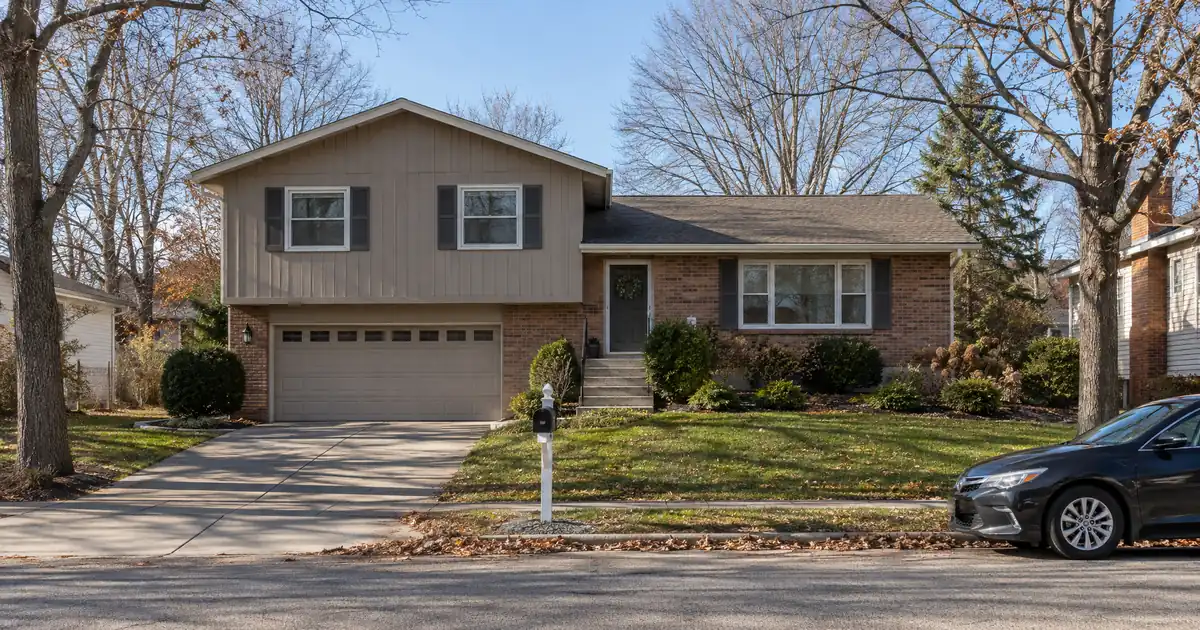
The Quick Read: A divorcing sole title holder can usually apply for a home equity line alone, and the program that fits depends on three things: the occupancy of the property, the combined loan-to-value after the buyout, and whether the divorce orders and state law allow a new lien on the home. Title in one name does not always mean one signature. The line is a second mortgage, so it does not touch the first mortgage or your ex’s liability on it.
- Primary residence and second-home lines reach up to 90% CLTV, but only at a 720-or-better credit profile. Investment property lines stop at 70% CLTV, require at least a 700 score, and cap at a $500,000 line.
- Who can hold title matters. The borrower or a revocable living trust can hold it. An LLC cannot, so a property deeded to an LLC needs a vesting change or a different loan.
- State law can still call for a lien-level signature from a spouse who is not on the deed, even when you qualify on your own.
- Lendmire is a mortgage broker. It matches the file to a wholesale program and does not lend. This line product is available only in 16 states: AL, CA, CO, FL, GA, IN, MI, MT, NM, NC, OH, PA, TN, TX, VA, and WA.
What “Best” Means for a Sole Title Holder
The best program for your situation is the one that qualifies you alone, fits the property’s occupancy, keeps combined leverage under the ceiling, and respects the divorce orders. No single lender wins on every file. A broker that shops several wholesale lenders matches your scenario to the program whose guidelines fit it. The criteria below do the sorting.
How large a line the equity supports.
An equity line is sized by combined loan-to-value, occupancy, and credit — not by rental coverage. Switch the occupancy or the credit band and the ceiling moves with it.
Investment-property lines require a 700 minimum credit score; second-home lines start at a 640 minimum and primary-residence lines at 600, and the combined-LTV ceiling steps down as the credit band drops on primary-residence and second-home lines and holds on investment-property lines; the line cap steps down on primary-residence lines and holds at every tier on investment-property and second-home lines.
A debt-to-income ratio above 45% requires 680+ credit. Profiles under 640 are limited to single-family homes. At least 75% of the approved line is drawn at closing. Ceilings, floors, and caps update from Lendmire’s centralized guideline source.
Line estimate
Illustrative estimate only — not a quote, Loan Estimate, approval, or commitment to lend. The rate is an editable assumption; equity-line pricing is variable through both the draw and repayment periods and never converts to fixed. Occupancy and credit drive the ceiling together: an investment property tops out at 70% combined LTV (minimum credit 700, line cap $500,000); a second home tops out at 90% combined LTV (minimum credit 640, line cap $500,000), with the ceiling stepping down as the credit band drops (the cap holds at every tier); a primary residence tops out at 90% combined LTV (minimum credit 600), and its $750,000 maximum line is available only at 75% combined LTV or below with a 700-or-better credit profile (720 on the longer-runway program) and a full appraisal. Lines above $500,000 require a full appraisal. Credit, debt-to-income, property type, and full underwriting review all affect the final line.
| Criterion | What to check |
|---|---|
| Borrower eligibility | Credit score, DTI, tradelines, housing history |
| Occupancy | Primary, second home, or investment |
| Combined leverage | First mortgage plus the new line, against value |
| Title and vesting | Individual or revocable trust only |
| Signatures | Whether state law needs a lien-level signature |
| Draw structure | Interest-only draw, then amortizing repayment |
| Divorce posture | Filed or not, orders in place, settlement terms |
How Underwriting Treats a Sole Title Holder, Step by Step
A line of credit underwrites the borrower, not the property’s rent. Here is how the deal works.
1. Confirm title. The deed should show you alone, or your revocable living trust. If a former or current spouse is on title, both owners sign the new lien until title changes.
2. Confirm the court posture. Ask your attorney whether a case has been filed and whether any standing order or agreement limits new debt. Some states restrict new liens once a divorce is filed. That is a state-law question, not a lender question.
3. Check whether you qualify alone. Lenders look at your credit, your debts, and your equity. In our wholesale network, DTI tops out at 50%, and it drops to 45% for credit profiles from 600 to 679. Qualifying runs on the interest-only payment at the maximum draw. Credit reports must be no more than 90 days old at closing.
4. Value the property. Lines at or below $500,000 ordinarily use an automated valuation, though a higher CLTV may call for a secondary valuation. Every line above $500,000 needs a full appraisal, and you may request one in any case.
5. Pay the buyout. At least 75% of the line is drawn at closing, which suits a lump-sum payment to a spouse. Coordinate the draw with your divorce attorney and the deed transfer.
6. Clean up liability. A new line does not release anyone from existing debt. Your ex stays on the first mortgage until it is refinanced or paid off.
Who Signs What?
Title, Note, and Lien
Federal lending rules treat the spouse’s signature in two parts, and the split matters here. Under Regulation B at the CFPB, a creditor cannot require your spouse to sign the credit instrument if you qualify alone for the amount and terms requested. The same rule lets a lender ask for signatures that state law needs to make the collateral available on default. Examples are creating a valid lien, passing clear title, or waiving inchoate rights.
The official commentary on that rule adds two points. If signing only the mortgage is enough, the lender may not demand the spouse’s signature on the note. If you rely on another person’s income, the lender may require that person’s signature. In community-property states, a spouse’s signature can be required when you rely on the spouse’s separate income.
| Title situation | Note signer | Lien-level signer |
|---|---|---|
| Sole title, qualify alone, no spouse income | You | Depends on state law |
| Joint title | Both owners | Both owners |
| Spouse off deed, community-property state | You | Spouse may be asked |
| Quitclaim done, old note still open | Old borrowers stay liable | New lender decides |
This is why sole title does not mean spouse-proof. A lien signature does not make your spouse a borrower, but it can still be required. A title company or your attorney can tell you which state rules apply.
Can You Borrow at Each Stage of the Divorce?
The stage of the case often matters more than the program. Lender policies differ, so treat this as a map of questions rather than a ruling.
| Stage | What to settle first |
|---|---|
| Before filing | Confirm title, equity, and your own credit |
| Filed, pending | Ask counsel about restrictions on new liens |
| Settlement signed | Get the buyout amount and deed terms in writing |
| After decree | Line fits cleanly, with orders on file |
Whether a line is possible while a divorce is pending depends on filing status, court orders, title, and state law. A line opened without regard to those orders can create problems inside the divorce itself.
The Program Parameters That Decide Fit
Lendmire’s wholesale network includes two programs that write standalone lines in first or second lien position. One is a higher-leverage program with combined exposure up to $2,000,000 across a borrower’s lines. The other is a longer-runway program with combined exposure up to $750,000 and a 12-month, two-tradeline seasoning standard. Where they differ, each figure below applies only within its own program’s terms, and every figure is subject to lender guidelines and full file review.
Primary residence. The ceiling reaches 90% CLTV, and only at 720 or better, with lines up to $500,000. A 700+ score supports 85% CLTV up to $500,000, or 75% up to $750,000. Mid-tier profiles from 640 to 680 range from 80% to 85% up to $500,000. Lower-credit profiles from 600 to 639 drop to 60%–70% up to $400,000. The minimum score is 600. A line above $500,000 is primary-residence only. It requires 700 or better (720 on the longer-runway program), caps at 75% CLTV, and needs a full appraisal.
Second home. The ceiling is again 90% CLTV at 720+, and the minimum score is 640. The maximum line is $500,000.
Investment property. The ceiling is 70% CLTV for 700+ credit profiles, with a $500,000 maximum line. Investment lines run only the 5-year interest-only draw with a 25-year amortizing repayment. This is the section most divorcing landlords need, so read it before you plan a buyout.
Primary residences and second homes can also run a 3-year draw with a 17-year repayment. Pricing floats across both the draw and repayment periods and never converts to fixed. If the first mortgage is a low fixed payment, a floating second lien changes the household’s cost profile over time.
Eligible property types: single-family homes, 2–4 units (a 640 minimum on the longer-runway program), PUDs, townhomes, and condominiums, including non-warrantable condos. Manufactured homes, co-ops, condotels, log homes, commercial, mixed-use, and agricultural-zoned properties are not eligible. A borrower is limited to three lines, and an owner of more than 15 financed properties is not eligible. A bankruptcy needs 4 years of seasoning from discharge or dismissal.
HELOC vs. Cash-Out Refinance vs. Home Equity Loan
A line of credit, a fixed second loan, and a cash-out refinance can all fund a buyout. The CFPB notes that a home equity loan and a HELOC are both second mortgages paid in addition to the first. A cash-out refinance replaces the first mortgage instead.
| Factor | Equity line | Cash-out refinance |
|---|---|---|
| First mortgage | Stays in place | Replaced |
| Ex-spouse on first note | Stays liable | Released if refinanced |
| Leverage on investment | Up to 70% CLTV here | Up to about 70% LTV |
| Underwriting basis | Borrower profile | Borrower or rent coverage |
| Title holder | Individual or revocable trust | LLC possible on DSCR |
Pick the line when preserving the existing first mortgage is worth more than the cost of a floating second. Pick the refinance when the ex-spouse needs a release from the first note, or when combined leverage would exceed the line ceiling. If the property sits in an LLC, a DSCR cash-out refinance is the normal route, subject to program terms. It qualifies primarily on property-level rental income covering the payment, subject to lender guidelines. Lendmire’s complete DSCR loans guide explains how that coverage test works.
Worked Examples
Run the numbers on a sole-title primary residence first. The first mortgage equals 55% of value, and the buyout equals 20% of value. Combined, that is 75% CLTV. A 700+ profile fits the 75% tier, and a 720+ profile has room above it, subject to lender guidelines and line size.
Now take a duplex held in your name alone. The first mortgage is 45% of value, and the buyout is 20%. That lands at 65% CLTV, under the 70% investment ceiling for a 700+ credit profile. The numbers can work, with the 5-year draw as the only structure available.
Change one number: the first mortgage is 55% and the buyout is 20%. That is 75%, over the 70% investment ceiling. The settlement may be restructured into smaller payments, the buyout may be delayed, or a cash-out refinance may be reviewed instead. A standard-rental cash-out tops out around 75% LTV with roughly 6 months of seasoning, though that leaves little cushion once costs are counted. A line that barely clears the ceiling is a warning, not a plan.
Where the Rule Breaks: Edge Cases
- Community-property and homestead states. A spouse off the deed may still be asked to sign a lien document, because state law may require it. Lendmire does not list states here, since the rules change and are best confirmed with a title company or attorney.
- Quitclaim before the line. A quitclaim deed moves title, not the debt. The former spouse remains liable on any open note until it is released or refinanced.
- Existing joint line. Until a lender freezes it, either borrower can usually draw on an open joint line, and both stay liable. Ask the lender about freezing or closing it before any other step.
- Spouse who did not sign. A spouse may still share responsibility for a line they did not sign, depending on state law and how the money was spent.
- Investment property labeled a line of credit. A BiggerPockets thread on investment-property lines shows investors asking for a line of credit secured by investment property, since some lenders avoid the HELOC label on non-owner-occupied homes. Availability on multifamily can be thin.
- Listed for sale. A property that is listed for sale, or was listed within the past 60 days, is ineligible in NC, PA, TN, TX, and WA.
When a HELOC Is the Wrong Tool
Skip the line when the exit is unclear. A floating second lien with an interest-only draw works only if you can carry the amortizing payment later or refinance out of it. It is also the wrong tool when title sits in an LLC, when the combined loan would exceed the occupancy ceiling, or when your ex must be released from the first mortgage as part of the settlement. Any of those points to a refinance or a sale. If the line is meant to fund a down payment on another rental, run the next property’s coverage first, since a line you cannot repay creates a second problem.
Lendmire’s article How to Qualify for a DSCR HELOC Alone When Divorcing or Sole Title Holder covers those alternatives in more depth.
Key Terms Defined
Sole title holder: the only person named on the deed to the property.
CLTV (combined loan-to-value): all loans secured by the property, added together, divided by its value.
Lien-level signature: a signature on the document that secures the property, as opposed to the note that promises repayment.
Non-borrowing owner: someone who signs to release or waive rights in the property but is not responsible for repaying the loan.
Draw period: the stretch at the start of a line when you can borrow and pay interest only.
Revocable living trust: a trust you can change or cancel, which can hold title for this program.
What to Prepare Before You Apply
- The deed, showing title in your name or your revocable trust.
- Your most recent first-mortgage statement and the property’s insurance declaration.
- The divorce decree or settlement agreement, if signed, and a note on any pending orders.
- Credit and debt documentation, including any support obligations.
- A written plan for how the line will be repaid or refinanced.
Bring the plan and the divorce posture to your attorney before the application, not after.
Frequently Asked Questions
Can a lender require my spouse to sign if only my name is on title?
Sometimes, but not as a co-borrower. If you qualify alone, a lender cannot force your spouse onto the note. A lender can still require lien-level signatures when state law makes them necessary to create a valid lien. Community-property states are the usual place this comes up.
Can I get a line while the divorce is pending?
It depends on filing status, any court orders, title, and state law. Some states restrict new liens once a case is filed, and some lenders hesitate until the orders are clear. Ask your attorney first, then ask a broker which programs fit the file.
Does a HELOC take my ex off the mortgage?
No. A line is a second mortgage that sits behind the first. Your ex stays liable on the first note until it is refinanced or paid off, so get a written release of liability if the settlement requires one.
Can I use a line on a rental I own alone?
Yes, if it is held individually or in a revocable trust. Investment lines in Lendmire’s wholesale network require a 700 score, cap at 70% CLTV, and top out at a $500,000 line. A property held in an LLC is not eligible, so it needs a vesting change or a DSCR cash-out refinance. Exact terms depend on lender and investor guidelines, credit profile, reserves, and property review.
What if I cannot qualify alone?
A lower leverage request may help, since credit tiers and CLTV caps step down together. A cash-out refinance can qualify on a different basis, and selling remains an option. Every file is underwritten individually.
Next Step
If you are considering a home equity line and want to see how the numbers work, Lendmire can help you compare HELOC options based on the property, the equity available, credit profile, combined leverage, and your goals. Call 828-256-2183 or request a quote. This line product is limited to the 16 states listed above, and Lendmire arranges financing through wholesale lenders and is not a commitment to lend.
For current guidelines and terms, see Lendmire’s home equity page.
About Lendmire
Lendmire (NMLS# 2371349) is a mortgage brokerage serving homeowners and real estate investors in its 16 full-service states. Home equity lines of credit are arranged through wholesale lending channels; Lendmire brokers the line and the lender underwrites each application under its occupancy-based guidelines. Scotsman Guide named Lendmire a Top Mortgage Workplace in both 2025 and 2026.
Get Started
Ready to find the right loan for you?
See your offer in seconds. No credit pull, no obligation.
Informational only. Not a Loan Estimate, approval, or commitment to lend. Program availability and eligibility are subject to lender guidelines, credit approval, property review, and underwriting.
References
1. CFPB — Regulation B, 12 CFR 1002.7: rules on spouse signatures
2. Cornell LII — Supplement I to Part 1002, official interpretations
3. CFPB — Home equity loan vs. HELOC
4. BiggerPockets — HELOC for investment property
This article is part of Lendmire’s HELOC & home equity loan program — full qualification details, guidelines, and scenarios live on the program page.
Related reading: Best Investment Property HELOC Program on an Inherited Rental Property · Best Investment Property HELOC Program to Buy Rental Property · Best HELOC Program With Two Owners Who Both Need to Sign
Brandon Miller
Founder & CEO, Mortgage Loan Originator, Lendmire LLC
- Mortgage Loan Originator · NMLS# 1129696 · Verify on NMLS Consumer Access
- North Carolina Real Estate Broker · License# 343312 · Verify on NCREC
- North Carolina Insurance Producer · License# 19053198 · Property, Casualty, Life, Health · Verify on NAIC SBS
- Lendmire LLC · Firm NMLS# 2371349 · Verify firm licensure
Disclosure information. Lendmire is a state-licensed mortgage brokerage under NMLS# 2371349. Lendmire is not a depository institution, direct lender, or financial advisor — all loans referenced are placed through wholesale lender partners and are subject to each lender's underwriting standards. This article is provided for general informational purposes and is not a commitment to lend, nor does it constitute financial, legal, or tax advice. Loan programs, terms, rates, and qualification standards change without notice and depend on borrower profile, property type, and the state in which the subject property is located. Equal Housing Opportunity provider. NMLS Consumer Access: nmlsconsumeraccess.org.