
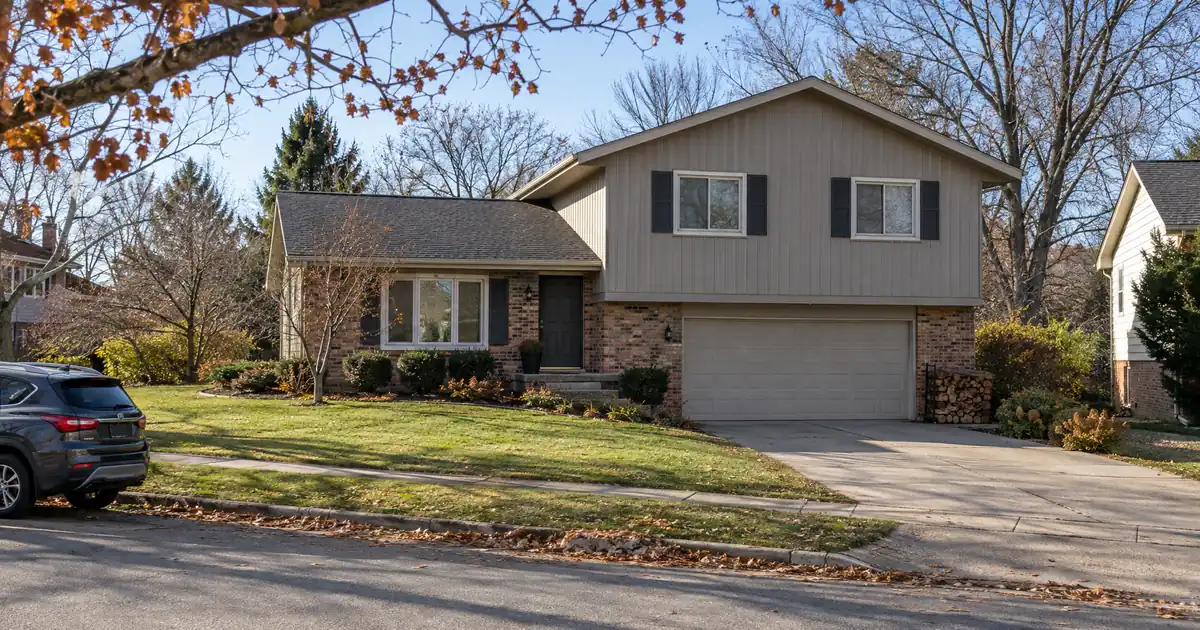
The Quick Read: A HELOC never moves ownership. It records a lien and the borrower keeps the deed. The real question is whether a given program accepts the way title is held today. The best program for your situation depends on occupancy, credit, and combined leverage.
- A line of credit is a recorded lien, not a deed transfer.
- On Lendmire’s wholesale network, title must sit with an individual or a revocable living trust. An LLC cannot hold title on these lines.
- On an investment property, the ceiling is 70% CLTV, with a 700 minimum credit profile and a $500,000 maximum line.
- A rental already deeded to an LLC needs a vesting change or a DSCR cash-out refinance instead.
- Lines are available only in Lendmire’s 16 full-service states, subject to lender guidelines and full file review.
Investors hear “without transferring title” and mean one of two things. Either the rental stays in the LLC, or the existing deed and first mortgage stay untouched. The mechanics differ for each, so this piece takes them in order.
How large a line the equity supports.
An equity line is sized by combined loan-to-value, occupancy, and credit — not by rental coverage. Switch the occupancy or the credit band and the ceiling moves with it.
Investment-property lines require a 700 minimum credit score; second-home lines start at a 640 minimum and primary-residence lines at 600, and the combined-LTV ceiling steps down as the credit band drops on primary-residence and second-home lines and holds on investment-property lines; the line cap steps down on primary-residence lines and holds at every tier on investment-property and second-home lines.
A debt-to-income ratio above 45% requires 680+ credit. Profiles under 640 are limited to single-family homes. At least 75% of the approved line is drawn at closing. Ceilings, floors, and caps update from Lendmire’s centralized guideline source.
Line estimate
Illustrative estimate only — not a quote, Loan Estimate, approval, or commitment to lend. The rate is an editable assumption; equity-line pricing is variable through both the draw and repayment periods and never converts to fixed. Occupancy and credit drive the ceiling together: an investment property tops out at 70% combined LTV (minimum credit 700, line cap $500,000); a second home tops out at 90% combined LTV (minimum credit 640, line cap $500,000), with the ceiling stepping down as the credit band drops (the cap holds at every tier); a primary residence tops out at 90% combined LTV (minimum credit 600), and its $750,000 maximum line is available only at 75% combined LTV or below with a 700-or-better credit profile (720 on the longer-runway program) and a full appraisal. Lines above $500,000 require a full appraisal. Credit, debt-to-income, property type, and full underwriting review all affect the final line.
Does a HELOC Transfer Title at All?
No. Per the CFPB’s HELOC explainer, a HELOC lets you borrow against available equity, meaning the property’s value minus what you owe. The borrower keeps title. The lender records a lien, and that lien is released when the line is paid off and closed.
When a first mortgage exists, the line is a second mortgage paid in addition to the first. When the property is free and clear, the line can sit in first position. On Lendmire’s wholesale network, a standalone line can be placed in either lien position.
So the myth that a HELOC requires a deed transfer is wrong. What is true is narrower. Some products require a particular owner of record before they will place the lien. That is lender policy, not law.
Key Terms Defined
- Lien: a recorded legal claim on a property that secures a debt and is released at payoff.
- Vesting: the way title is held, such as an individual, a trust, or an LLC.
- CLTV: combined loan-to-value, meaning all liens on the property divided by its value.
- Due-on-sale clause: a mortgage provision letting the lender call the loan if the property is transferred without consent.
- Junior lien: a loan that sits behind a first mortgage in repayment priority.
- DSCR: a ratio of property rent to the monthly housing obligation, used on rent-qualified loans.
Why Lenders Still Care How Title Is Held
Vesting is the real gatekeeper. On the wholesale network, these lines require title held by the individual borrower, as fee simple or leasehold, or by an inter vivos revocable living trust. LLCs, corporations, partnerships, and irrevocable, blind, or land trusts cannot hold title.
That is the sharpest structural difference from a DSCR loan. A DSCR loan can be written to an entity, subject to lender program eligibility. An equity line on this network cannot.
A line like this is an individual-credit product. It is a full personal underwrite with a debt-to-income test. On the wholesale network, DTI tops out at 50%, drops to 45% for credit profiles from 600 to 679, and a ratio above 45% requires a 680 minimum. Qualification runs on the interest-only payment calculated on the maximum draw.
Heavy depreciation or a large portfolio can sink a personal DTI test even when rents are strong. That is the usual reason investors look elsewhere.
What Happens If You Move the Deed Anyway?
This is where investors get hurt. Federal law defines a due-on-sale clause as a provision letting a lender declare a loan due when the property or an interest in it is transferred without written consent. The statute, 12 U.S.C. § 1701j-3, lists exemptions. One covers a transfer into an inter vivos trust where the borrower stays a beneficiary and occupancy rights do not transfer. Moving a rental into an LLC is not on the list.
Two cautions. The trust exemption is built around occupancy, and its application to a mortgaged rental is unsettled. Have an attorney read the actual mortgage language. And lenders often leave current loans alone after a transfer. That is an observation about behavior, not a legal protection.
Moving a rental out of an LLC and into personal name just to qualify for a line can undercut the liability structure and put the first mortgage at risk. Do not do it without counsel, the existing servicer, and the insurer lined up first.
Routes That Leave Title Where It Is
If the property is held by an LLC, the options are limited. The table compares the routes, including the one that changes title.
| Route | Who is underwritten | Title stays? | First mortgage stays? |
|---|---|---|---|
| Equity line on a personal-name property | The individual borrower | Yes | Yes |
| Line after moving title to a trust or individual | The individual borrower | No, vesting changes | Needs review |
| DSCR cash-out refinance | Property rent plus borrower | Yes, entity can stay | No, it is replaced |
| Line on a different owned property | The individual borrower | Yes | Yes |
The DSCR cash-out refinance is the path that keeps an LLC on title. Across most of the network it tops out around 75% LTV on a standard rental, with about 6 months of seasoning as the common expectation. It replaces the existing first mortgage, so an investor with a strong first loan gives that up. Lendmire’s complete DSCR loans guide walks through that structure. Exact terms depend on the lender’s guidelines, property type, leverage, and a full review of the borrower’s file.
The Best Program by Situation
The best program depends on how the property is held and what the investor wants to keep. Match the profile to the product.
| Your situation | Likely fit |
|---|---|
| Rental in personal name, keeping first mortgage | Standalone equity line in second position |
| Rental in a revocable trust | Equity line, since the trust is an accepted vesting |
| Rental in an LLC, keeping the LLC | DSCR cash-out refinance |
| Mixed portfolio, some personal, some LLC | Line on the personal-name properties, DSCR on the rest |
| Free-and-clear rental in personal name | Line in first position |
A broker shops several wholesale lenders and matches the scenario to the program. That is the practical edge: one lender’s guideline often differs from the next on credit seasoning, property type, and lien position.
What the Network’s Equity Lines Allow
Figures differ by occupancy, so read the row that matches the property.
| Occupancy | Max CLTV | Min credit | Max line |
|---|---|---|---|
| Investment property | 70% | 700 | $500,000 |
| Second home | 90% (only at 720+) | 640 | $500,000 |
| Primary residence | 90% (only at 720+) | 600 | $500,000 at 90% CLTV; $750,000 at 75% CLTV |
On an investment property, the 70% ceiling applies at both the 700 and 720 tiers. No higher tier exists for rentals.
Draw terms matter too. Investment lines run a 5-year interest-only draw followed by a 25-year fully amortizing repayment. At least 75% of the line is drawn at closing, and pricing floats through both periods and never converts to fixed. The minimum subsequent draw is $1,000 in most states. Lines run $25,000 to $750,000, but anything above $500,000 is primary-residence only, capped at 75% CLTV, and requires a full appraisal. Those larger lines also need a 700 credit profile or better, and 720 on the 5-year draw / 25-year repayment structure. The 600 minimum in the table applies to smaller primary-residence lines at lower CLTV tiers.
Lines at or below $500,000 ordinarily use automated valuation, though a higher CLTV may require a secondary valuation. A borrower can always request a full appraisal. Borrowers are limited to three lines, and an owner of more than 15 financed properties is not eligible.
Eligible collateral includes single-family, 2-4 unit, PUD, townhome, and condominium, including non-warrantable. Manufactured homes, co-ops, condotels, log homes, and commercial, mixed-use, or agricultural properties are not eligible. Availability is limited to Lendmire’s 16 full-service states, which is narrower than the DSCR footprint of 40 states plus Washington, D.C.
Where the General Rule Breaks
Five or more units. The statutory protections discussed above reach only residential property with fewer than five units, per a legal summary of the statute. Larger buildings are also outside the property types these lines accept.
Co-owners. Every titled owner typically has to sign the lien, even someone who is not on the note.
Lines that get frozen. The CFPB notes a lender may stop further draws if home value falls significantly or finances change. A line is a weaker reserve source than cash.
Product labels. “DSCR HELOC” gets used for closed-end seconds, revolving lines, and first-lien cash-outs. Ask for the lien position, whether it revolves, and which vesting it accepts before comparing offers.
Texas. A Texas primary residence is a homestead with its own limits. Texas investment properties are eligible as non-homestead transactions.
A Worked Scenario
Run it this way. An investor holds a duplex in personal name with a first mortgage worth keeping, a 700-plus credit profile, and a goal of pulling equity for the next purchase. A second-position line at up to 70% CLTV on an investment property fits. The first mortgage stays, title stays, and nothing is deeded.
Now flip it. The same duplex sits in an LLC. The line is off the table unless the investor re-vests title, with the due-on-sale review above. The cleaner fit is a DSCR cash-out refinance at around 75% LTV on a standard rental, which qualifies primarily on property-level rental income covering the payment, subject to lender guidelines. The trade-off is replacing the first mortgage. Clearing 1.00 coverage is also not the same as positive cash flow, since repairs, vacancy, and management sit outside the ratio.
When a Line Is the Wrong Tool
Skip it if credit sits under 700 on an investment property. Skip it if most of the portfolio sits in entities, since each LLC property would need a vesting change. Skip it if the draw structure does not fit, because a line is a variable-pricing product that never converts to fixed. A larger down payment or more equity helps the leverage test, but it never erases credit floors or property eligibility.
Frequently Asked Questions
Do I have to put my rental in my name to get a HELOC?
On Lendmire’s network, yes. Title must be held by an individual or a revocable living trust, so an LLC-held rental needs a vesting change or a DSCR cash-out refinance instead. Moving a deed carries due-on-sale and insurance questions that deserve attorney review first.
Can I keep my current first mortgage?
Usually yes. A standalone line can be placed in second position behind a first mortgage you keep. Whether your first mortgage permits a junior lien depends on its own covenants, which are worth reading before applying.
What is the highest CLTV on an investment property line?
70% CLTV, with a 700 minimum credit profile and a $500,000 maximum line. Higher ceilings apply only to primary residences and second homes at 720 or better, never to an investment property.
Is a HELOC the same as a DSCR loan?
No. A line is underwritten on personal credit and DTI. A DSCR loan is reviewed primarily on property-level rental income covering the payment, subject to lender guidelines, and can be written to an entity per program requirements.
Does the lender need to notify my current mortgage servicer?
No, the new lender does not send your servicer a notice, and no ownership changes hands. The second lien is recorded in the public record, though, so the servicer may see it. The first mortgage’s own terms govern whether an added lien is allowed, so read those covenants and ask the servicer before you apply.
If you are considering a home equity line and want to see how the numbers work, Lendmire can help you compare HELOC options based on the property, the equity available, credit profile, combined leverage, and your goals. Reach the team at 828-256-2183.
About Lendmire
Lendmire (NMLS# 2371349) is a mortgage brokerage serving homeowners and real estate investors in its 16 full-service states. Home equity lines of credit are arranged through wholesale lending channels; Lendmire brokers the line and the lender underwrites each application under its occupancy-based guidelines. Scotsman Guide named Lendmire a Top Mortgage Workplace in both 2025 and 2026.
Investors who want the broader program framework can review how DSCR loans work.
Get Started
Ready to find the right loan for you?
See your offer in seconds. No credit pull, no obligation.
Informational only. Not a Loan Estimate, approval, or commitment to lend. Program availability and eligibility are subject to lender guidelines, credit approval, property review, and underwriting.
References
2. FedLaws – Garn-St Germain exceptions
This article is part of Lendmire’s HELOC & home equity loan program — full qualification details, guidelines, and scenarios live on the program page.
Related reading: Top Investment Property HELOC Providers on a Rental in Another State · Banks That Offer a HELOC With Steady Employment and Income · Top HELOC Providers Behind an Existing First and Second Mortgage
Brandon Miller
Founder & CEO, Mortgage Loan Originator, Lendmire LLC
- Mortgage Loan Originator · NMLS# 1129696 · Verify on NMLS Consumer Access
- North Carolina Real Estate Broker · License# 343312 · Verify on NCREC
- North Carolina Insurance Producer · License# 19053198 · Property, Casualty, Life, Health · Verify on NAIC SBS
- Lendmire LLC · Firm NMLS# 2371349 · Verify firm licensure
Legal disclosures. Lendmire (NMLS# 2371349) is a state-licensed mortgage brokerage that arranges financing through wholesale lender relationships. Lendmire is not a direct lender, depository institution, or registered financial advisor. The discussion above is general informational content about real estate financing — it is not financial, legal, or tax advice, and readers should consult licensed professionals for guidance on their individual circumstances. Loan inquiries are subject to lender underwriting; this article does not represent a commitment to lend. Loan terms, rates, and qualification standards vary by borrower, property, and state, and are subject to change at any time. Equal Housing Opportunity. NMLS Consumer Access: nmlsconsumeraccess.org.