
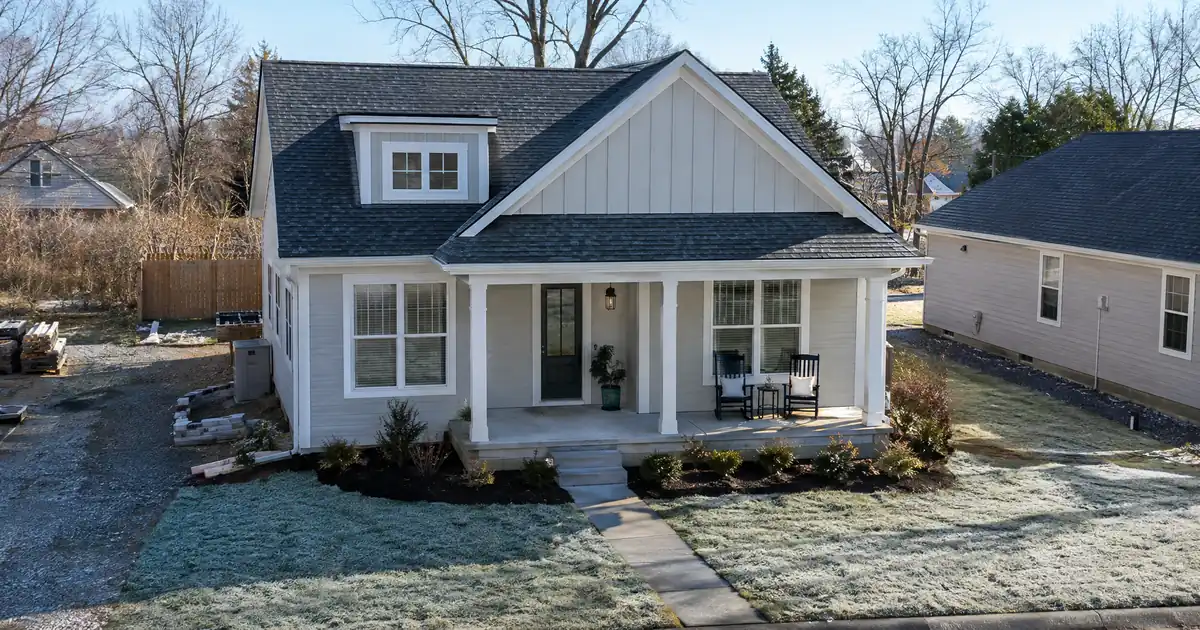
The Quick Read: The right program for your situation depends less on a no-seasoning label and more on which value the lender uses. A loan with no ownership wait is usually sized on your cost. Cash back against the new appraised value generally follows a seasoning period, which DSCR lenders in Lendmire’s network commonly set at about 6 months from title recording.
- “No seasoning” usually means “sized on cost.” Cash returns only to the extent that cost exceeds your hard money payoff.
- Hard money refinances are asset-based. On the hard money side, a cash-out or rate-and-term refinance runs up to 65% of value, with interest-only terms of 6 to 18 months, subject to lender, property, and experience.
- The long-term exit is a DSCR loan. For a DSCR cash-out refinance on an investment property, the program ceiling is 75% LTV, with about 6 months of seasoning and a 1.00 minimum DSCR.
- Seasoning and coverage are two separate tests. Clearing one does not clear the other.
- A broker can match the file to the program. Lendmire arranges these loans through select lenders in its wholesale network. It is a broker, not a lender, and nothing here is a commitment to lend.
What Does “No Seasoning” Actually Mean on a BRRRR?
It means the lender does not make you wait before it will refinance. It does not mean the lender will lend against your after-repair value on day one. Those are two different promises, and marketing copy blurs them.
DSCR Cash-Out Calculator
Run the cash-out numbers in your market
Rate source: Freddie Mac 30-yr average via FRED® — Federal Reserve Bank of St. Louis · effective Nov 5, 2026
Prefilled with starting assumptions — enter your property’s value, balance, taxes, and insurance for a more accurate picture.
Program parameters update from Lendmire’s centralized guideline source. Taxes and insurance are editable estimates.
As of Nov 5, 2026 · General Freddie Mac market benchmark, not a Lendmire loan offer. Property value, balance, taxes, and insurance are editable estimates. Maximum loan-to-value varies by lender, program, property type, and seasoning. Not a Loan Estimate, approval, or commitment to lend. Program availability and eligibility are subject to lender guidelines, credit approval, property review, and underwriting.
Seasoning is the time you must hold title before a lender values the property at the new appraisal instead of at what you paid. The clock is lender policy. It is not a law. DSCR loans are non-agency products, so each lender sets its own rules.
Here is how the mechanics split in practice:
1. No wait, sized on cost. The lender refinances right away but lends against purchase price plus documented rehab. Cash comes back only if cost exceeds your payoff.
2. No wait, sized on value after documented rehab. A few lenders will do this with strong rehab evidence. Terms differ by lender and by file, so ask before you buy.
3. Wait, sized on appraisal. This is the version that returns forced appreciation. On DSCR loans in the network, the common expectation is about 6 months from title recording.
The BRRRR method depends on borrowing against appraised value. That is why the third path matters most to the return. PropertyReach’s BRRRR guide frames the same seasoning problem, and it notes that carrying hard money through a long wait can break the deal’s math.
Which Refinance Path Fits Which Situation?
The table below compares the five paths a BRRRR investor actually has. It uses structure only, not pricing. Every path varies by lender, property, and experience.
| Path | Early close? | Value basis | Cash back? |
|---|---|---|---|
| Payoff-only (rate-and-term) | Often | Cost or appraisal | None |
| Early cash-out on cost | Sometimes | Purchase plus rehab | Only if cost beats payoff |
| Seasoned DSCR cash-out | After about 6 months | New appraisal | Yes, up to 75% LTV |
| Hard money refinance | Depends on the asset | Value, up to 65% | Limited |
| Delayed financing | Cash buyers only | Documented cost | Cost only |
Payoff-only is the cleanest early move. It retires the bridge note and returns no cash. Many investors use it to get out from under a maturing note and then wait out the seasoning clock on the long-term loan. The DSCR rate-and-term ceiling is 85% LTV on an investment property, with no cash back at closing. Terms vary by lender guidelines, property type, leverage, credit profile, and full file review.
How Underwriting Treats an Early BRRRR Refinance, Step by Step
1. Find the start of the clock. Lenders count from the recorded deed or title date. Rehab completion or a tenant moving in does not start it. If you moved the property into an LLC after buying, ask the lender how it treats the transfer, because title changes can complicate the clock.
2. Check the bridge maturity. The hard money note must outlast seasoning, the appraisal, and the closing. Hard money terms run 6 to 18 months, so one slipped contractor can push you past maturity.
3. Order the appraisal. On a rental, the appraiser typically uses the single-family form plus a rent schedule form. A 2-4 unit property uses the small-income form. The appraisal decides the value, and a weak one is the main way cash gets trapped.
4. Document the rehab. For any early loan sized on cost, expect to show invoices, the scope of work, and draw records. Lenders differ on how much rehab spending they credit.
5. Run the coverage test. DSCR compares rent to the full monthly obligation: principal, interest, taxes, insurance, and any HOA dues. The programs in the network typically start at 1.00. A separate select-lender path takes coverage below 1.00, with leverage and terms adjusted. A larger cash-out loan means a bigger obligation and tighter coverage. Clearing 1.00 also does not mean positive cash flow, because repairs, vacancy, management, and capex sit outside the calculation.
6. Pay off the hard money through title. The new lender pays the bridge note at closing. Anything left after the payoff and costs is your cash-out.
7. Check the prepayment terms on the new loan. Many DSCR loans carry a prepayment penalty that steps down over time. Hard money in the program described here has none. If you may refinance again soon, the penalty structure matters as much as anything else on the sheet.
Does Delayed Financing Work If You Bought With Hard Money?
Generally, no. Delayed financing is an agency concept, and it appears here only for contrast. The Fannie Mae Selling Guide lists a delayed financing exception inside its cash-out rules, and it says the other cash-out requirements and cash-out pricing still apply.
The exception is built for cash buyers. A hard money loan secured by the subject property usually breaks that test, because the settlement statement shows financing. The exception also returns documented cost, not after-repair value. So even where it applies, it does not return forced appreciation.
DSCR loans are not governed by agency rules. Some DSCR lenders have their own cash-buyer exceptions, and those vary by lender. Ask before you buy, not after the rehab is finished.
How Do You Pick the Best Program for Your Situation?
The best program for your situation depends on four things: the leverage you need, your credit profile, the property type, and the documents you can produce. No single lender wins on all four for every borrower. That is why a broker that shops several wholesale lenders can matter on a BRRRR exit.
Across the network, here is what the two loans in the sequence look like. Every figure varies by lender, property, and experience.
The hard money side. This is the short-term bridge loan that funds the purchase and rehab.
- Fix-and-flip leverage runs 93% of project cost at 5 or more completed projects, 90% at 2 or more, and 85% with fewer than 2. Every tier is capped at 75% of after-repair value.
- Cash-out and rate-and-term refinances run up to 65% of value.
- Terms run 6 to 18 months, interest-only, with no prepayment penalty. There are no multi-year options.
- The minimum credit score is 620, with extra conditions below 660. First-time investors qualify at the lower leverage tiers.
- Hard money loan amounts run up to $5,000,000, and larger by exception. That ceiling belongs to the bridge loan only. The DSCR exit has its own, lower loan cap, listed below.
- Collateral is non-owner-occupied residential property, 1-4 units.
The DSCR exit. This is the long-term loan that pays the bridge note off.
- A DSCR cash-out refinance on an investment property tops out at 75% LTV. Seasoning is about 6 months, measured from title recording.
- A DSCR rate-and-term refinance on an investment property runs up to 85% LTV, with no cash back at closing.
- The minimum DSCR is 1.00 on rent used for lender review against the full monthly obligation.
- The credit floor is 620. The tiers run 620, 660, 680, and 700, and the higher tiers open the stronger leverage.
- Reserves run about 6 months of the full monthly obligation, and about 9 months above $1,500,000.
- DSCR loan amounts run up to $3,000,000 on standard programs. A bridge balance above that cannot be taken out by a standard DSCR loan, so size the bridge note with the exit cap in mind.
- Manufactured homes, log homes, and barndominiums are not eligible through the network’s DSCR programs. Exact terms depend on the lender’s guidelines, property type, leverage, and a full review of the borrower’s file.
Questions to ask any lender that advertises no seasoning:
- Does the clock start at the recorded deed, or at a different date?
- Does the loan size off cost or off appraised value?
- How much rehab spending does the lender credit, and what proof does it want?
- Does the loan change if the property sits in an LLC?
- What prepayment terms apply to the new loan?
If the answers are vague, treat the claim as marketing. A real program can tell you exactly how it counts.
What Does the Math Look Like on a BRRRR?
Run the numbers on one deal under two value bases. These inputs are modeled assumptions, not market data.
Assume total cost, meaning purchase plus documented rehab, equals 80% of the final appraised value. Assume the hard money payoff equals 85% of that cost, which is the lowest fix-and-flip tier. Multiplying 85% by 80% gives a payoff of 68% when stated against appraised value.
- Early loan sized on cost. Suppose a lender applies a 75% cap to cost instead of value. The loan equals 60% of appraised value. That is below the 68% payoff, so the loan does not clear the bridge note. You would bring cash to closing.
- Hard money refinance on value. A refinance up to 65% of value also falls short of the 68% payoff. It can extend the bridge. It does not return cash on this deal.
- Seasoned DSCR cash-out. After about 6 months, the same file can be sized at up to 75% of value. That sits above the payoff, before closing costs and reserves.
The 7-point gap between 75% and 68% is where any cash back on this deal would come from. It only appears under the third structure, and it also depends on rent covering the new obligation at 1.00 or better. The cash figure is not fixed. It depends on rent used for lender review, the full monthly obligation, reserves, and the 75% ceiling.
Notice the other lesson. The hard money payoff was a high share of value to begin with. High-leverage fix-and-flip tiers can leave little room for a cash-out later. Investors who plan a cash-out exit should size the bridge loan with that exit in mind.
What Documents Does the Exit File Need?
Missing paper is a common cause of trouble on a BRRRR exit, and it is within your control. Build the file before the bridge note nears maturity.
- Payoff statement and draw history from the hard money lender, showing every draw against completed work.
- Rehab records: the scope of work, contractor invoices, and proof of payment.
- Executed lease or rent evidence, so the rent schedule supports the coverage test.
- Entity documents, if the property sits in an LLC, subject to lender program eligibility. The title and the borrower must line up.
- Insurance binder for the property as it stands after the rehab.
- Reserves documentation: statements showing about 6 months of the full monthly obligation, and about 9 months above $1,500,000.
- Title information, including the recorded deed date that starts the seasoning clock.
The sequence matters too. Order the appraisal with enough runway that a reconsideration request can still fit inside the bridge term. A short appraisal is easier to fix when you have not already hit maturity.
What If Something Slips?
Three things go wrong most often. Each has a standard answer.
| Problem | Typical options |
|---|---|
| Appraisal comes in short | Bring cash to close, take a smaller loan, or file a reconsideration with comps |
| Lease is delayed | Wait for the lease, or ask about a lender rent-schedule path |
| Bridge note nears maturity | Ask about an extension, or do a payoff-only refinance |
A reconsideration packet works best with recent in-neighborhood sales and clear rehab documentation. Appraisers adjust for condition, and documented improvements may support a higher appraised value, depending on comps and underwriter review.
If rent comes in below the 1.00 floor, programs below 1.00 are available through select lenders in the network, with leverage and terms adjusted. Expect a lower loan amount or more cash down in that case.
Who Does This Fit, and Who Does It Not?
This structure fits an investor with a documented rehab, a clean title history, and enough runway on the bridge note to reach about 6 months of ownership. It also fits an investor who wants out of a maturing bridge note and is willing to take a smaller cash-out in exchange for certainty.
It fits less well in four cases:
- The investor needs 100% of purchase and rehab funded. There is no true 100% purchase program. Up to 100% of the rehab budget can fund in draws against completed work, but that is a rehab-budget figure, not a purchase LTV.
- The bridge note matures well before the seasoning clock does.
- The property type is ineligible, such as a manufactured home or barndominium.
- Rent will not support coverage at the leverage the investor needs.
Many investors refinance out of hard money into long-term DSCR financing once the property is stabilized. Lendmire brokers that path. The hard money exit refinance program page covers it. The complete DSCR loans guide covers the fundamentals.
Key Terms Defined
Seasoning: the time you must hold title before a lender sizes a loan on the new appraised value instead of on your cost.
Cost basis: the purchase price plus documented rehab spending, which is what an early loan is usually sized on.
Payoff-only refinance: a rate-and-term refinance that retires the bridge note and returns no cash.
Delayed financing: an agency exception for cash buyers that returns documented cost, not after-repair value.
DSCR: the ratio of rent used for lender review to the full monthly obligation, including principal, interest, taxes, insurance, and any HOA dues.
Loan-to-cost: a hard money loan amount stated as a share of project cost, not of value.
Frequently Asked Questions
Can I get cash out against my after-repair value with no seasoning at all?
Rarely. Most early loans size on cost, so cash comes back only if cost exceeds your payoff. A few lenders consider documented rehab, but terms vary by lender and file. Across the network, DSCR cash-out against appraised value commonly expects about 6 months from title recording.
Does a hard money loan count as cash for delayed financing?
Generally not. A lien on the property at purchase breaks the cash-buyer test, and the exception returns documented cost rather than after-repair value. Some DSCR lenders have their own exceptions, so ask the lender before you buy.
Does a strong DSCR waive the seasoning period?
No. Seasoning and rent coverage are separate tests. A file can clear 1.00 and still be sized on cost because the ownership clock has not run. A larger cash-out loan also raises the monthly obligation and tightens coverage.
What happens if my hard money note matures before seasoning ends?
You have three usual options: ask the hard money lender about an extension, do a payoff-only refinance to retire the note, or bring cash to closing. Plan the bridge term around the seasoning clock before you buy. Hard money terms run 6 to 18 months, subject to lender and property.
Does the cash-out loan carry a prepayment penalty?
Many DSCR loans do, with a step-down structure over time, while hard money in this program has none. If you may refinance again soon, ask about the penalty before you choose the loan, because it can outweigh a small difference in other terms.
If you are buying, rehabbing or refinancing an investment property on a short timeline and want to see how the numbers work, Lendmire can help you compare hard money options based on the project, the exit plan, leverage, and your goals. You can reach the team at 828-256-2183 or request a quote. Programs span 41 markets, including Washington, D.C., and nothing here is a commitment to lend.
About Lendmire
A DSCR-focused mortgage broker, Lendmire (NMLS# 2371349) places investor financing across 41 markets — 40 states plus Washington, D.C. — with DSCR eligibility generally reviewed by the lender on property cash flow instead of tax returns, subject to lender guidelines. Scotsman Guide named Lendmire a Top Mortgage Workplace in 2025 and 2026.
Get Started
Ready to find the right loan for you?
See your offer in seconds. No credit pull, no obligation.
Informational only. Not a Loan Estimate, approval, or commitment to lend. Program availability and eligibility are subject to lender guidelines, credit approval, property review, and underwriting.
References
1. PropertyReach’s BRRRR guide
2. Fannie Mae Selling Guide B2-1.3-03, Cash-Out Refinance Transactions
This article is part of Lendmire’s hard money loan program — full qualification details, guidelines, and scenarios live on the program page.
Related reading: How Much a Cash Buyer Can Pull Out in a Rental Cash-Out Refinance? · How Much Cash a DSCR Cash-Out Refinance Pays Out on an Airbnb · How Much a Finished Basement Adds to a BRRRR Cash-Out Refinance
Brandon Miller
Founder & CEO, Mortgage Loan Originator, Lendmire LLC
- Mortgage Loan Originator · NMLS# 1129696 · Verify on NMLS Consumer Access
- North Carolina Real Estate Broker · License# 343312 · Verify on NCREC
- North Carolina Insurance Producer · License# 19053198 · Property, Casualty, Life, Health · Verify on NAIC SBS
- Lendmire LLC · Firm NMLS# 2371349 · Verify firm licensure
Disclosures. The information presented in this article is general market commentary, not financial, legal, or tax advice. Lendmire is a mortgage brokerage (NMLS# 2371349) — not a direct lender or depository institution — and loan placement is subject to lender underwriting. Nothing in this content represents a commitment to lend. Loan terms, pricing, and program availability vary based on borrower qualifications, property characteristics, and state of subject property, and are subject to change at any time. Lendmire complies with Equal Housing Opportunity requirements. Consumer access: nmlsconsumeraccess.org.