
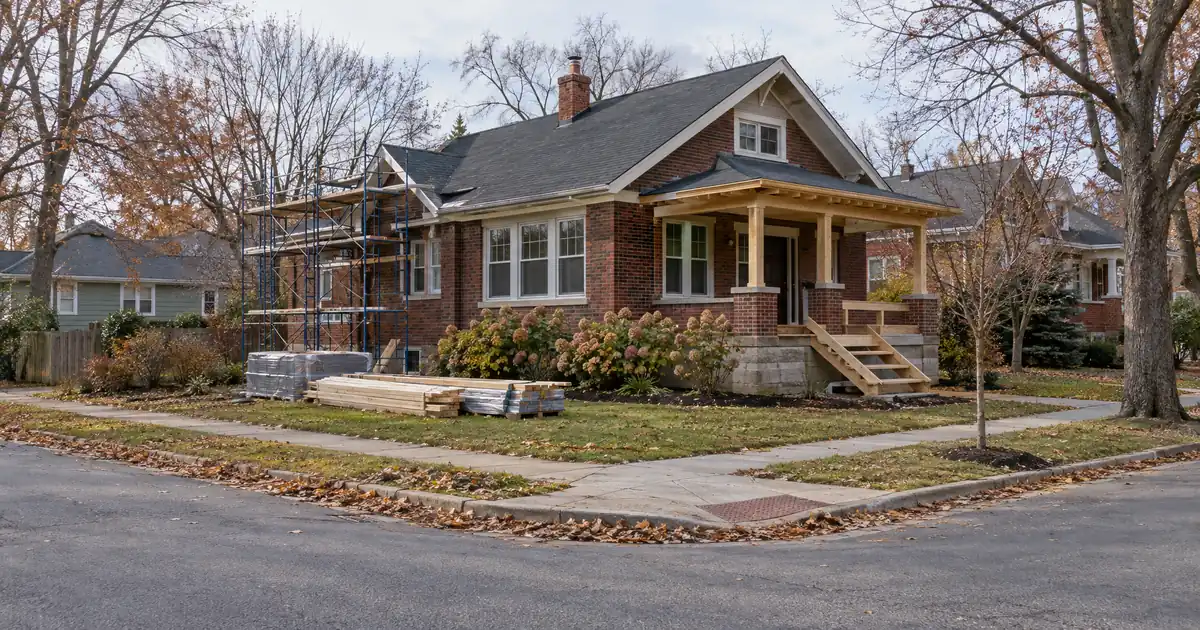
The Quick Read: The best program for your situation is the one whose value basis, ownership clock and leverage cap fit the number your own appraisal is likely to produce, because the lender’s appraisal sets the loan, not your after-repair estimate and not your rehab receipts alone. Most investors who finish a renovation on hard money pay it off with a long-term rental loan, since a short-term hard money loan is built to bridge a project rather than hold it.
- Hard money cash-out and rate-and-term refinances typically top out around 65% of value, and the terms run 6-18 months, interest-only (varies by lender, property, and experience).
- A DSCR cash-out refinance on a standard rental typically reaches about 75% LTV, with about 6 months of seasoning as the common expectation.
- Inside the seasoning window, many lenders size the loan on cost basis (purchase price plus documented rehab), not on appraised value.
- Rent coverage is a second test that sits apart from value, so a strong appraisal alone does not finish the file.
- Documentation of the rehab builds the cost-basis number, which is why draw records and receipts matter on the day you refinance.
Everything below is how the brokerage reads these files across a wholesale network of lenders. Terms vary by lender, and nothing here is a commitment to lend.
What a Hard Money Cash-Out Refinance Actually Means
The phrase covers two different transactions, and mixing them up causes most of the bad planning on these files. One is a new hard money loan that refinances an owned property and returns cash. The other is a long-term rental loan that pays off the hard money note and may return cash on top.
The first product is short and interest-only. Across the network, a hard money cash-out or rate-and-term refinance is generally capped at about 65% of value, with loan sizes up to $5,000,000 and terms of 6-18 months. Credit starts at a 620 minimum, with added conditions below 660. Underwriting stays centered on the property, the plan and the exit.
The second product is the DSCR cash-out refinance. It tops out around 75% LTV on standard rentals across most of the network, and about 6 months of seasoning is the common expectation. It qualifies primarily on property-level rental income covering the payment, subject to lender guidelines. For the full picture of how these loans work, see the complete DSCR loans guide.
So the real question is which one you need after the renovation. A second hard money loan only resets the clock on a short-term note. A DSCR loan replaces the note with long-term financing, which is why many investors who stabilize a property move from hard money into it. Lendmire brokers that path.
Key Terms Defined
- Cost basis: the purchase price plus the rehab spend you can document.
- After-repair value (ARV): your estimate of the finished value, which usually does not size the loan.
- Appraised value: the number from the appraiser the lender orders, which is the value that counts.
- Seasoning: the ownership period a lender wants before it will lend on appraised value instead of cost.
- Payoff-only refinance: a refinance that retires the existing note and returns no cash to you.
- Cash-out refinance: a refinance that pays off the note and returns cash above the payoff and costs.
- DSCR: monthly rent divided by the monthly PITIA, meaning principal, interest, taxes, insurance and any association dues.
Which Value Will the Lender Use?
The lender uses cost basis early in your ownership and appraised value after seasoning. That is the single most useful fact about this product, and it explains most surprise shortfalls at the payoff table.
| Timing | Typical value basis | What it means for you |
|---|---|---|
| Inside the seasoning window | Cost basis (price plus documented rehab) | The loan may land at or below your payoff |
| After seasoning | Lender’s own appraised value | Added value can show up in the loan |
| Any time | Not your ARV estimate | Your projection does not size the loan |
Seasoning is lender policy. It is not a rule written by a regulator. Some programs wait about 6 months, and the clock usually runs from the recorded deed, not the contract date or the day the rehab finished. A few lenders have shorter windows on small 1-4 unit properties, and a few waive it entirely, but each of those is a specific program with its own conditions.
An improvement may support a higher appraised value, depending on comps and underwriter review. It does not add a fixed amount, and the appraiser does not credit work by the invoice total.
How Underwriting Treats the Refinance, Step by Step
1. Acquire and rehab on the short-term loan. Keep the note, the draw history and every receipt. Draws against completed work, up to 100% of the rehab budget on the hard money side, create the paper trail the next lender will ask for.
2. Start the ownership clock. The recorded deed sets it. Ask the takeout lender how it measures seasoning before you buy, not after the work is done.
3. The lender orders its own appraisal. On one-unit rentals the appraiser typically completes a rent schedule form (Form 1007), and on 2-4 units an income report form (Form 1025), as described in the Fannie Mae appraisal forms guide. Those are only the form names. DSCR loans are not agency products, and the appraiser’s rent opinion feeds the coverage ratio.
4. The loan is the smaller of two limits. One is the value limit: the value basis times the cash-out LTV cap. The other is the rent limit: the loan size at which rent still covers PITIA at the lender’s coverage floor.
5. Cash to you is the loan minus the payoff and closing costs. If the number is negative, the refinance needs cash from you or it does not work.
6. Reserves and credit are checked last. Reserves vary by lender, leverage, loan size and transaction type, commonly around 6 months of PITIA.
The break-even test is simple. A refinance returns cash only if the payoff plus costs sit below the LTV cap times the value basis.
Documenting the Renovation
Documentation builds cost basis, and cost basis is what sizes the loan inside the seasoning window. A lender treats a renovation as documented when each dollar of the rehab claim has a record behind it.
| Document | What it proves |
|---|---|
| Purchase settlement statement | What you paid and when the clock started |
| Hard money note and draw history | What was funded against completed work |
| Contractor invoices and receipts | What was actually spent |
| Permits and final sign-offs | That the work was legal and finished |
| Before and after photos | The condition change the appraiser sees |
| Payoff statement and lien release | The exact amount to retire and the clean title afterward |
Missing receipts do not stop a file, but they shrink the cost basis the lender will accept. Gaps usually show up at payoff, when the file needs a settlement reconciliation and the numbers do not tie out.
Worked Example in Index Points
These are index points, not dollars, and they are modeled assumptions rather than market data. Say purchase price is 70 and documented rehab is 30, so cost basis is 100. Payoff plus closing costs come to 80. The appraisal is the only variable.
| Appraised value | Hard money cash-out at 65% | DSCR cash-out at 75% |
|---|---|---|
| 140 | Loan limit 91, cash to you 11 | Loan limit 105, cash to you 25 |
| 125 | Loan limit 81.25, cash to you 1.25 | Loan limit 93.75, cash to you 13.75 |
| 115 | Loan limit 74.75, cash short by 5.25 | Loan limit 86.25, cash to you 6.25 |
Inside the seasoning window the picture changes. If the lender sizes on cost basis of 100 at 75%, the loan limit is 75 against a payoff of 80, so the refinance falls 5 short before any cash comes back. Waiting for seasoning is what lets the appraised value take over. Each of these results also has to pass the rent test, because a larger loan raises the payment.
This is also why 65% of value on a hard money cash-out rarely suits a payoff of a rehab loan. The rehab loan may have funded 85% to 93% of project cost, so a refinance capped at 65% of value often leaves a gap even when the appraisal is strong. A DSCR cash-out refinance, with its higher cap, is the more common takeout.
Choosing the Best Program for Your Situation
The best program depends on property type, credit, leverage need, documentation and exit plan, not on a headline number. A broker that shops multiple wholesale lenders matches the file to the program, and the lenders that write a given scenario depend on these criteria.
| Criterion | What to check |
|---|---|
| Value basis | Does the lender use cost basis or appraised value, and when does it switch? |
| Seasoning clock | When does it start, and does it differ by property size? |
| Cash-out cap | Typically about 75% LTV on standard rentals for DSCR; about 70% on short-term rental collateral |
| Coverage floor | 1.00 is where many select programs start; sub-1.00 is available through select lenders in the network, with leverage and terms adjusted |
| Credit | A 620 floor exists in parts of the network, most programs want about 660, and 700+ opens the strongest leverage |
| Loan size | up to $3,000,000 on standard programs (smaller balances available through select lenders); above $2,500,000 the network generally holds to 30-year fixed structures |
| Structure | 30-year fixed is the spine; 40-year terms and interest-only periods are available through select lenders; ARM options exist |
| Reserves | Commonly around 6 months of PITIA, with conservative rate-and-term files at modest leverage sometimes seeing them waived |
A larger down payment on a purchase lowers the monthly payment and can lift the coverage ratio, but it never erases leverage caps, credit floors, reserve rules or property eligibility. The strongest files clear both tests: enough equity and enough rental coverage.
Clearing 1.00 is also not the same as positive cash flow. DSCR compares rent to PITIA only, and repairs, vacancy, management, utilities and capex sit outside the calculation.
Where the General Rule Breaks
Delayed financing rarely fits a hard money buyer. It is an agency exception, not a DSCR feature. The Fannie Mae Selling Guide section on cash-out refinances describes a delayed financing exception, and cash-out pricing still applies. It is built around cash purchases, and borrowed money secured by the subject property does not fit that test. A secondary explainer from HomeBuyer.com notes the exception also needs documented source of funds, such as the settlement statement and bank statements.
Delayed financing caps proceeds near what you paid. It returns cost, not the value you added. Investors who expected it to pay out on the rehab value find the number stops at purchase price.
An early refinance with a high appraisal may still fall short. Many lenders cap the loan near cost inside the window, so the loan can land below the payoff even though the value is there.
A payoff-only refinance is treated differently. Retiring the note with no cash returned is usually handled more leniently than a cash-out, which is why some investors take a payoff-only loan first and pull cash after seasoning.
Rent can be the binding limit. The appraiser’s rent opinion drives the coverage ratio, and on some files the rent limit, not the value limit, sets the loan.
Some properties are not offered. DSCR is not offered on manufactured homes (single- and double-wide), log homes or barndominiums. Hard money covers non-owner-occupied residential of 1-4 units, with ground-up construction to 10 units.
Short-term rental collateral carries different numbers. Cash-out on short-term rental properties tops out around 70% and expects a 640+ score and about 12 months of hosting history. Short-term rental rules can vary by city, county, HOA and property type, so investors should confirm local rules before relying on projected rental income.
Which Exit Fits Which Situation
| Situation | Usual fit |
|---|---|
| Seasoning is complete and the appraisal is strong | DSCR cash-out refinance on appraised value |
| Seasoning is not complete and the loan would fall below payoff | Payoff-only refinance, or bring cash, then pull equity later |
| Hard money term ends before the seasoning clock does | Extension, sale, or a refinance funded with other cash |
| Rent does not cover the larger payment | Smaller loan, or a select-lender path with sub-1.00 coverage and adjusted terms |
| Property is held for the long term | DSCR financing, with the leverage and coverage tests both cleared |
Pick the takeout path before you buy. Seasoning and bridge maturity must line up, because a hard money term that ends first forces one of the exits above on a schedule you did not choose. Carry cost while you wait is real, since each extra month on a short-term note is a month of interest. For a view of what the investor keeps after the payoff, see Lendmire’s article How Much a BRRRR Cash-Out Refinance Returns After Hard Money Payoff.
Tax treatment varies; consult a qualified professional.
Frequently Asked Questions
Does the lender use my after-repair value to size the loan?
No. The lender’s own appraisal decides, and many lenders also limit the loan to cost basis inside the seasoning window. Your ARV estimate is useful for planning the deal, not for sizing the refinance.
How long do I have to own the property before I can borrow on appraised value?
It varies by lender. Across most of the network, about 6 months of seasoning is the common expectation on a DSCR cash-out refinance, measured from the recorded deed. A few programs have shorter windows, so confirm before you buy.
Can I refinance the hard money loan right away and pull cash later?
Yes, in many cases. A payoff-only refinance retires the note without returning cash and is usually treated more leniently. The cash-out step comes once the lender’s seasoning period passes.
What counts as documented renovations?
Contracts, draw records, receipts, permits, before and after photos, the payoff statement and the lien release. These build the cost basis the lender will accept, and a gap in the record shrinks the number.
How much equity can I take out after the work is done?
On a standard rental, DSCR cash-out refinances are sized as a percentage of the property’s appraised value, with the ceiling varying by program and borrower profile. Hard money cash-out refinances typically cap near 65% of value. The loan is also limited by rent coverage, and cash to you is the loan minus the payoff and closing costs.
Next Step
If you are buying, rehabbing or refinancing an investment property on a short timeline and want to see how the numbers work, Lendmire can help you compare hard money options based on the project, the exit plan, leverage and your goals. Lendmire is a mortgage broker that arranges financing through select lenders in its wholesale network across 41 markets, including Washington, D.C., and you can reach the team at 828-256-2183 or through the quote request page.
About Lendmire
Lendmire (NMLS# 2371349), a non-QM mortgage broker serving investors in 41 markets including Washington, D.C., helps structure DSCR scenarios commonly evaluated around a property’s rental income rather than personal income paperwork, subject to lender guidelines. A Scotsman Guide Top Mortgage Workplace in 2025 and 2026, Lendmire places loans through wholesale investor lenders and is not a direct lender.
Get Started
Ready to find the right loan for you?
See your offer in seconds. No credit pull, no obligation.
Informational only. Not a Loan Estimate, approval, or commitment to lend. Program availability and eligibility are subject to lender guidelines, credit approval, property review, and underwriting.
References
1. Fannie Mae appraisal forms guide
2. Fannie Mae Selling Guide B2-1.3-03, Cash-Out Refinance Transactions
3. HomeBuyer.com, Fannie Mae Cash-Out Refinance Transactions Explainer
This article is part of Lendmire’s hard money loan program — full qualification details, guidelines, and scenarios live on the program page.
Related reading: Hard Money Cash-Out Refinance Requirements Within Six Months of Buying the Property · DSCR Cash-Out Refinance Requirements Right After Buying · DSCR Cash-Out Refinance Requirements After Buying a House All Cash
Brandon Miller
Founder & CEO, Mortgage Loan Originator, Lendmire LLC
- Mortgage Loan Originator · NMLS# 1129696 · Verify on NMLS Consumer Access
- North Carolina Real Estate Broker · License# 343312 · Verify on NCREC
- North Carolina Insurance Producer · License# 19053198 · Property, Casualty, Life, Health · Verify on NAIC SBS
- Lendmire LLC · Firm NMLS# 2371349 · Verify firm licensure
Important disclosures. Lendmire (NMLS# 2371349) is a licensed mortgage brokerage. Lendmire is not a direct lender, depository institution, or financial advisor. All loan inquiries are subject to lender underwriting; this article does not constitute a commitment to lend. Rates, terms, and program guidelines are subject to change without notice and vary by borrower profile, property type, and state. Information in this article is general in nature and is not financial, legal, or tax advice. Equal Housing Opportunity. NMLS Consumer Access: nmlsconsumeraccess.org.