
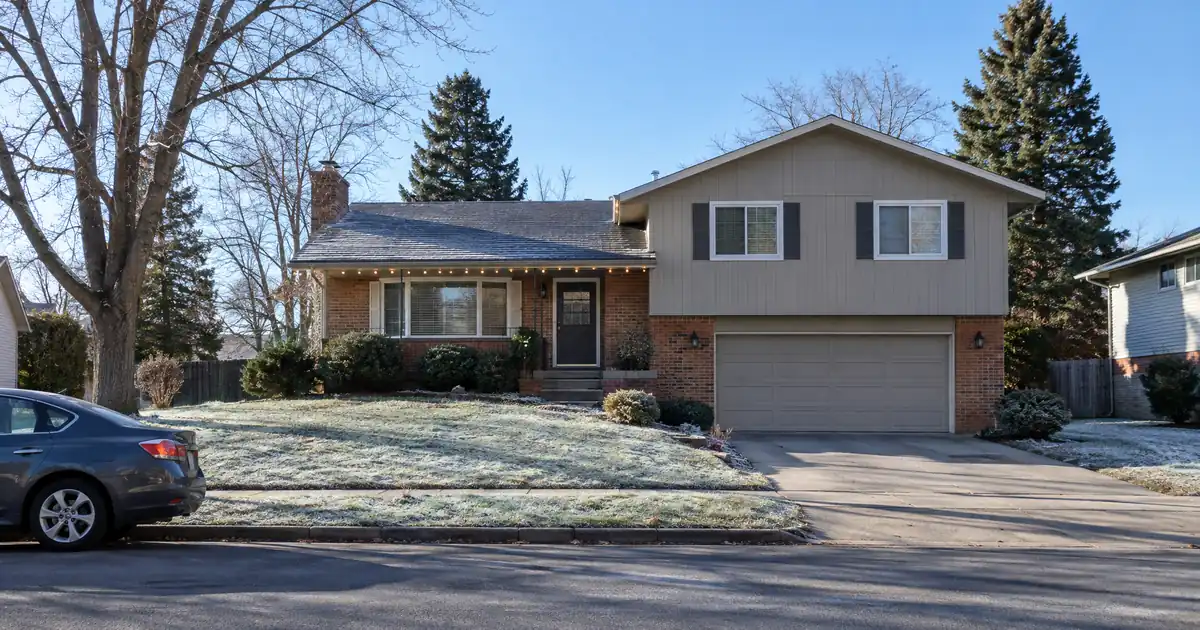
The Quick Read: A DSCR HELOC works after a quitclaim into your LLC when the program accepts LLC title, the rent passes the lender’s stress test, and you handled the deed in the right order with your first lender and title company, because the quitclaim moves title only; it does not move the mortgage or your personal liability. The sequence matters more than the deed itself.
- The line is a standalone second lien behind the first mortgage you keep, or a standalone first lien on a paid-off rental.
- The rent qualifies the line. The program does not calculate your personal income, and the LLC can stay on title.
- The deed creates risks on the first mortgage and the owner’s title policy that the line itself does not.
- Ask the servicer and the title company first, record the deed second, and apply third.
What Is a DSCR HELOC, and Does the Label Matter?
A DSCR HELOC is a revolving line of credit on a non-owner-occupied one-to-four-unit rental, qualified on the property’s rent instead of your personal income. The label matters because it is a market nickname, not a defined product. Different programs use it for different things, and the LLC question is where they split.
Across Lendmire’s wholesale network, the line comes in two shapes. It is either a standalone second lien behind the first mortgage you keep, or a standalone first lien on a rental with no mortgage. Through select programs, vesting in your LLC is allowed on investment property. The members sign as guarantors.
A standard investment-property HELOC qualified on personal income often follows different rules. Many of those lines lend only to individuals or revocable trusts, which is why investors who hold rentals in an LLC get told an LLC cannot hold title. That statement can be true of one product and false of another.
| Factor | DSCR HELOC | Personal-income investment HELOC | DSCR cash-out refinance |
|---|---|---|---|
| What is underwritten | Rent vs. stress payment | Your income and debts | Rent vs. new payment |
| LLC title | Allowed, members guarantee | Often individuals or trusts only | Commonly allowed by program |
| First mortgage | You keep it | You keep it | Replaced |
The middle and right columns describe those programs’ typical rules, not this program’s. The complete DSCR loans guide covers how rent-qualified lending works in general.
What Does a Quitclaim Into Your LLC Change?
A quitclaim changes who holds title and nothing else. It conveys whatever interest you hold, with no warranties. The lender’s lien stays attached, and recording the deed does not establish that your lender agreed to it, per UpCounsel’s overview of quitclaim deeds to an LLC.
| Item | After the quitclaim |
|---|---|
| Who owns the property | The LLC |
| Who owes the first mortgage | You, still |
| First lender’s rights | Unchanged |
| Owner’s title policy | May or may not continue |
| Your personal guaranty | Still required on a line |
Many owners assume the LLC shields them from the lender. It shields you from some property-level claims. On a guaranteed line, the members stay personally liable.
How Does Underwriting Treat the File, Step by Step?
The lender reads the whole file, not just the last deed. Here is the order it typically follows.
1. Program fit. The property must be a one-to-four-unit rental that is eligible. Single-family, PUD, townhome, two-to-four units and condominiums qualify as types. Rural-designated property, row homes, condotels, leaseholds, mixed-use and a property listed for sale in the prior 2 months do not. Borrowers must be US citizens, permanent residents, or non-permanent residents with a Social Security number.
2. Title exam. The examiner reads the full deed chain and checks that vesting matches what the program allows. A name that differs by one word from the LLC’s filed name can stall a file.
3. Entity papers. Expect articles, an operating agreement, an EIN and good-standing evidence, plus guaranties from the members, subject to the specific program.
4. Rent. A lease in place is required. The lender uses the lesser of the appraiser’s market rent (Form 1007) or the lease. A lease above market counts only with three months of receipts. A two-to-four-unit property may have at most 1 vacant unit.
5. Coverage test. The minimum is 1.10x, which is gross monthly rent divided by a stress payment. That payment is a fully amortizing payment on the entire credit limit at the start rate plus 2 percentage points. Whether a second lien’s coverage math includes the first-mortgage payment is the lender’s calculation, so ask for it in writing.
6. Valuation. Lines to $400,000 use an automated valuation with a property inspection report, or a full interior appraisal. Larger lines take a full interior appraisal. Appraisal waivers are not accepted.
7. Seasoning. A rental bought or refinanced inside the last 6 months is not eligible (that clock runs from the last note date to the new note date), and the owner must have held title for 6 months (settlement date to note date).
Seasoning after a recorded deed is lender policy, not law. Programs differ on whether a transfer into your own LLC is read as the same owner or as a new one. Get the answer in writing before you record.
How Much Can You Draw?
Leverage depends on the lien position. These figures are ceilings through select programs, subject to underwriting.
- Second lien: up to 70% CLTV (the first mortgage balance plus the new line, divided by value) at a 720 credit score or better, on lines up to $500,000.
- First lien on a paid-off rental: up to 75% LTV at 740 or better, and 70% LTV at 700 to 739, on lines up to $500,000. Lines above $500,000, up to $1,000,000, carry a 65% LTV ceiling at 720 or better. Terms depend on the lender’s guidelines, the property type, the leverage, and a full review of the credit profile.
Lines start at $50,000. At least 80% of the line is drawn at closing, and later draws are at least $5,000. The draw period is 5 years interest-only, followed by a 25-year repayment period and a 30-year maturity. The rate is variable. No reserves or cash to close are required.
Will Your First Mortgage Lender Object?
The quitclaim, not the line, is the risk to your first mortgage. A due-on-sale clause lets a lender demand payment if the property is transferred without its written consent, as the federal statute defining due-on-sale clauses lays out. The statute protects certain family and estate-type transfers on small residential property. A transfer to your own LLC is not on that list, even when you own 100% of the entity.
The new HELOC lien is a different matter. Federal regulation bars a lender from calling a loan merely because you create a lien behind it, provided the lien does not involve a transfer of occupancy rights. That rule appears in the 12 CFR 191.5 text.
The clause gives the lender an option, not an automatic default. Many servicers never act on a transfer to a borrower’s own single-member LLC. That is practice, not protection. A portfolio lender holding its own loan may react differently from one that sold the loan. The safe move is a written consent or a written statement of the servicer’s LLC policy before you record.
If you have no first mortgage, none of this applies. Your remaining questions are title insurance, seasoning and program fit.
Does Your Title Policy Survive the Deed?
Sometimes, and wording decides. In a California appellate case, owners quitclaimed to an LLC without getting an endorsement moving the policy, and the court held coverage had lapsed, as the California Lawyers Association’s write-up of that case explains. Other policies and newer forms define the insured more broadly. Many LLC transfers keep coverage, but you cannot assume yours does. Ask the title company for an endorsement or written confirmation before recording.
Some attorneys prefer a warranty or special warranty deed for this transfer, and the right deed type is state-specific. A different deed does not remove the due-on-sale question.
Deed First, Line First, or Buy in the LLC?
Each order has a cost.
- Line first, deed later. You qualify as an individual if the program requires it. The line’s lender then needs to know about the later transfer, so a later deed can create its own conflict. Ask before you do it.
- Deed first, then apply. You apply with LLC vesting and a fresh recorded deed. Seasoning and title questions land on this file, so confirm both first.
- Buy in the LLC from day one. The chain is clean and no quitclaim exists. This only works for future purchases.
- Vest at the lender’s closing. Some programs let the LLC take title as part of the transaction. This needs the lender’s explicit approval.
Where the General Rule Breaks
- A second owner on title. A title holder who is not a borrower signs a non-borrowing owner acknowledgment and the security instrument. The borrowers on the line need not match the first mortgage’s borrowers.
- A multi-member LLC. The members sign as guarantors, so every member needs to be an eligible borrower.
- Foreign nationals and ITIN borrowers. They are not eligible on this program.
- Larger buildings. Five-plus-unit properties fall outside the one-to-four-unit program and outside the family-transfer protections.
- State footprint. The program is offered in 15 of Lendmire’s 16 licensed states, every licensed state except Tennessee.
- Weaker credit. Below 720 there is no second-lien cell. A first lien needs at least 700.
- Recent loan history. A 30-day mortgage late in the last 12 months, or a bankruptcy, foreclosure, short sale or deed-in-lieu in the last 48 months, takes the file out of the program.
- Exposure cap. A borrower can hold at most 5 loans or $2,500,000 with the program.
- Property flags. A solar lien or a declining-market flag can end or reduce the line.
Three Scenarios, Described in Ratios
A rental you bought personally and quitclaimed mid-ownership. The rent covers the stress payment at roughly 1.2x. The deed is recent, the first mortgage servicer never gave written consent, and no title endorsement exists. The coverage is fine. The file stalls on consent and seasoning, so the fix is paperwork, not income.
A rental bought in the LLC from the start. The chain is clean, the members guarantee, and the question is only whether the rent clears 1.10x on the full line. Run the test on the whole credit limit, not on what you plan to draw first.
A paid-off rental held personally. There is no first mortgage and no due-on-sale issue. A first lien is available up to 75% LTV at the top tier. If you want LLC protection, the deed adds the title-policy and seasoning questions above. The exact numbers vary by lender and program and follow a full review of property, leverage, and credit.
When Another Route Fits Better
If your first mortgage is cheap, refinancing it just to satisfy an LLC requirement may cost more than the equity is worth. That is why the keep-your-first-mortgage second lien matters. If a program only lends to individuals or trusts, your choices are a DSCR cash-out refinance that replaces the first mortgage, or deeding out of the LLC, which creates another recorded deed and gives up the LLC’s protection.
Key Terms Defined
Quitclaim deed: a deed that moves whatever interest the signer holds, with no promises about the title.
Vesting: the name in which title is held, such as you personally or your LLC.
Due-on-sale clause: a mortgage term that lets the lender demand payment if the property is transferred without its consent.
Seasoning: the waiting period a lender wants since a purchase, refinance or change in ownership.
CLTV: combined loan-to-value, which is all liens on the property divided by its value.
Guarantor: a person who personally promises to repay a loan taken in an entity’s name.
Checklist Before You Record
1. Ask the first-mortgage servicer for its LLC transfer policy, in writing.
2. Ask the title company whether the owner’s policy continues, and request an endorsement.
3. Ask the HELOC lender whether it treats the deed date as the start of a new ownership period.
4. Match the LLC’s legal name and the full legal description exactly on the deed.
5. Confirm the program accepts LLC vesting in your state.
6. Then record the deed, and then apply.
Next Step
If you are considering a home equity line on a rental property and want to see how the numbers work, Lendmire can help you compare DSCR HELOC options based on the property, the rent, the equity available, credit profile, combined leverage, and your goals. Lendmire is a broker, so lenders in its network review every file and make every decision, and no figure here is a commitment to lend.
This article is general information, not legal or tax advice. Consult a qualified attorney or CPA about your own deed, entity and situation.
Frequently Asked Questions
Can I get a DSCR HELOC right after a quitclaim into my LLC?
Only if the program accepts LLC vesting and the seasoning rules are met. Confirm in writing how the lender counts a recent deed.
Does the quitclaim remove me from my mortgage?
No. It changes who owns the property, not who owes the debt. The lien stays attached, and recording the deed does not mean the lender consented.
Can my first lender call the loan?
It can have that option, because a transfer to an LLC is not among the protected transfers. Many lenders do not enforce it against a borrower’s own LLC, but that is practice, not a right. Get written consent first.
Do I need to deed the property back out?
Not if the program allows LLC vesting. If the line you want lends only to individuals or trusts, you can deed out or choose a DSCR cash-out refinance instead. Each choice has costs.
Who signs for the LLC?
The members sign as guarantors on the line.
About Lendmire
As a mortgage broker (NMLS# 2371349), Lendmire helps homeowners and real estate investors in its 16 full-service states open home equity lines of credit arranged through wholesale lenders. Lendmire is never the lender; line amounts, ceilings and terms are set by the lender under its guidelines. Scotsman Guide named Lendmire a Top Mortgage Workplace in both 2025 and 2026.
Investors who want the broader program framework can review how DSCR loans work.
Get Started
Ready to find the right loan for you?
See your offer in seconds. No credit pull, no obligation.
Informational only. Not a Loan Estimate, approval, or commitment to lend. Program availability and eligibility are subject to lender guidelines, credit approval, property review, and underwriting.
References
1. UpCounsel, Quitclaim Deed to LLC
2. Cornell LII, 12 U.S.C. § 1701j-3
4. California Lawyers Association, Transfer to an LLC May Void Title Insurance
This article is part of Lendmire’s DSCR HELOC program — full qualification details, guidelines, and scenarios live on the program page.
Related reading: Best DSCR HELOC Program After a Quitclaim Deed Between Spouses · DSCR HELOC Options to Buy a Rental Property · Best DSCR HELOC Program on a Rental Deeded to an LLC
Brandon Miller
Founder & CEO, Mortgage Loan Originator, Lendmire LLC
- Mortgage Loan Originator · NMLS# 1129696 · Verify on NMLS Consumer Access
- North Carolina Real Estate Broker · License# 343312 · Verify on NCREC
- North Carolina Insurance Producer · License# 19053198 · Property, Casualty, Life, Health · Verify on NAIC SBS
- Lendmire LLC · Firm NMLS# 2371349 · Verify firm licensure
Disclosures. The information presented in this article is general market commentary, not financial, legal, or tax advice. Lendmire is a mortgage brokerage (NMLS# 2371349) — not a direct lender or depository institution — and loan placement is subject to lender underwriting. Nothing in this content represents a commitment to lend. Loan terms, pricing, and program availability vary based on borrower qualifications, property characteristics, and state of subject property, and are subject to change at any time. Lendmire complies with Equal Housing Opportunity requirements. Consumer access: nmlsconsumeraccess.org.