
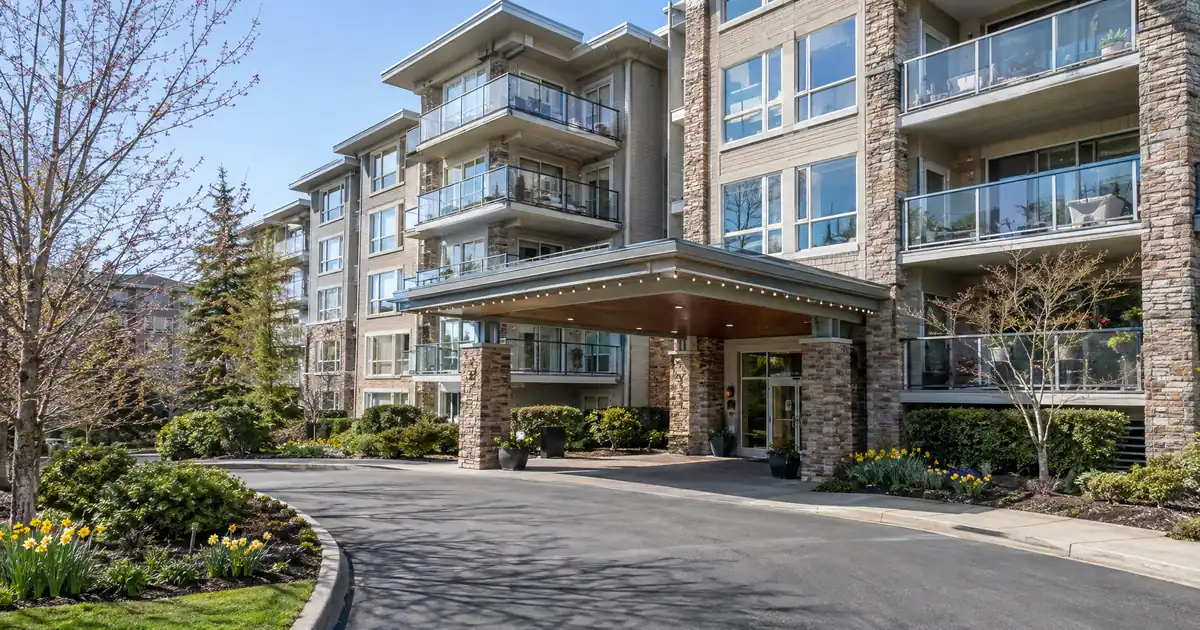
The Quick Read: A DSCR HELOC on a rental condo clears two separate gates, and the file has to pass both. The rent must cover the line’s qualifying payment at 1.10x or better, and the building must pass a lender review built on the association’s completed questionnaire. Passing one gate never substitutes for the other.
- The line is a standalone second lien behind the first mortgage you keep, or a first lien on a paid-off condo, subject to underwriting.
- Rent qualifies the line: no traditional personal-income documentation, W-2s or personal income calculation, subject to lender guidelines.
- HOA dues sit on the payment side of the coverage test, so they reduce the ratio.
- Warrantable and non-warrantable condos are both eligible property types; condotels are not.
- The association, not the borrower, completes the questionnaire, so the request should go out early.
Most owners of a rental condo expect the paperwork to center on their own finances. Here it centers on the building. That is why the questionnaire, a form that lives in the HOA manager’s inbox, can decide a file for an owner whose rent coverage looks fine.
This article walks through the mechanics in order: what the product is, how underwriting treats a condo, what the questionnaire asks, how dues change the math, and where the general rule breaks. The brokerage’s complete DSCR loans guide covers the wider program family if you want context beyond this one lane.
What Is a DSCR HELOC on a Rental Condo?
A DSCR HELOC is a revolving line of credit secured by a non-owner-occupied rental and sized on the property’s rent instead of the owner’s paycheck. The name is a market nickname, not a standardized product, so it helps to pin down what it means here.
Under the program Lendmire places through its wholesale network, the line is written one of two ways:
- Standalone second lien behind the first mortgage the owner keeps. The existing first loan stays untouched.
- Standalone first lien on a rental with no mortgage.
It is never closed together with a purchase, never a third lien, and never a line on your own home or a second home. The LLC can stay on title, subject to program terms. The members sign as guarantors, and a title holder who is not a borrower signs a non-borrowing owner acknowledgment.
The structure follows the general HELOC pattern. The federal consumer-finance regulator describes a HELOC as an open-end line that lets you borrow repeatedly against home equity during a draw period. The consumer agency’s materials are written for owner-occupants, though, so use them for generic mechanics only. This rental line works differently on qualification.
Two terms often get confused with it. A bank’s investment-property line is usually underwritten on the owner’s income and tax returns. A DSCR cash-out refinance replaces the first mortgage entirely. The DSCR HELOC sits between them: your first mortgage stays in place, and the rent drives lender review.
How Does Underwriting Treat a Condo? Two Gates
Underwriting treats a condo as two questions: does the rent cover the line, and is the building acceptable collateral. Each has its own documents and its own ways to fail, and a file moves forward only when both clear.
Gate one is the building. The lender sends the questionnaire to the HOA or its management company. It comes back to the lender, who decides whether the project is acceptable. Other items usually requested alongside it include the master insurance details and the HOA budget and dues statement.
Gate two is the rent. The coverage ratio is monthly rent divided by the qualifying payment, with a 1.10x minimum on this program. The qualifying payment is a fully amortizing payment on the entire credit limit, run at the start rate plus 2 percentage points. That is a stress payment, so a line can look cheap in practice and still be tested at a higher level. Rent counts as the lesser of the appraiser’s Form 1007 market rent or the lease. A lease in place is required.
Whether the first-mortgage payment joins the qualifying payment on a second lien is not published. The lender’s own coverage calculation governs, so ask before you assume.
What Is the Building Questionnaire, and Who Completes It?
The questionnaire is the lender’s request to the association for project-level facts. The HOA or its manager fills it out, not you, and that is the main source of delay on any condo file.
Fannie Mae’s standard version is Form 1076, with a Freddie Mac counterpart numbered 476. It covers topics such as developer control of the association, phasing, reserve sufficiency, engineer reports on structural soundness, and a table of any person or entity owning more than one unit. The HOA Guide explains that using that form is recommended rather than mandatory, so a lender can send its own version.
That detail clears up a common misconception. A DSCR HELOC is not an agency product, so Fannie Mae rules do not govern it. The terms warrantable and non-warrantable come from the agencies. A non-QM lender runs its own project review and decides for itself what it will accept.
What Does the Questionnaire Ask, and What Happens With Each Answer?
Each section of the questionnaire tests a different risk, and the likely effect of a bad answer ranges from a narrower lender pool to a decline. The table below maps the common topics to outcomes. It reflects how files typically behave across the lenders in the network, not a single program’s cutoffs.
| Topic | What the lender checks | Flag | Likely effect |
|---|---|---|---|
| Litigation | Suits against the association | Active or unresolved case | Hold or decline |
| Delinquent dues | Share of owners behind | High delinquency | Hold or lower leverage |
| Reserves and budget | Funding for repairs | Thin reserves | Narrower lender pool |
| Special assessments | Pending or planned charges | Large assessment | Lowers coverage |
| Investor concentration | Rentals versus owner-occupied | Heavy single-owner share | Pool or leverage change |
| Developer control | Builder still running HOA | Early-phase project | Project review issue |
| Structural reports | Engineer findings | Safety concerns | Often a decline |
| Rental rules | Leasing limits or bans | Rental ban | Hard stop |
A few of these deserve a closer look.
Litigation. A pending suit against the association is among the most common reasons a condo file stalls. Unanswered litigation, delinquency or investor-concentration questions hold the file until they are resolved.
Rental restrictions. A line’s terms can prohibit renting the home out. Check your own line documents and the association’s rules together. A DSCR file cannot override a rental ban in the governing documents.
Short-term rentals. Short-term rental rules can vary by city, county, HOA, and property type, so investors should confirm local rules before relying on projected rental income. Condotels are outside this lane regardless.
A note on ownership concentration. Appraisal Form 1073 asks whether a single entity owns more than 10% of the units. That is an appraiser disclosure question on an agency form, not a DSCR rule. It is a useful hint about what reviewers notice, nothing more.
Do HOA Dues Count in the Coverage Test?
Yes. Dues go into the payment side of the ratio and are never netted against rent. Every dollar of monthly dues lowers the coverage number.
Here is the formula in one line:
Coverage ratio = gross monthly rent ÷ qualifying payment, which includes any HOA dues.
Run the logic without dollar figures. Picture two rentals with identical rent and identical line size, one a house and one a condo. The condo carries dues, so its payment side is heavier and its ratio comes out lower. To land at the same coverage, the condo needs more rent. Say the house clears around 1.2x. The condo, with the same rent, might land closer to the 1.10x floor or below it. The illustration is qualitative, and the lender’s own calculation governs.
Dues behave differently from the loan itself. The line doesn’t control them, and insurance rises on its own schedule too. That makes a condo’s payment side less stable than a house’s. Modeling dues growth faster than rent growth in your own projections is a sensible habit, since a dues increase lowers the ratio even if rent holds. Ask about any pending special assessment and use the current dues sheet.
One more caution. Passing the ratio does not mean the condo cash-flows. Repairs, vacancy, management, utilities and capital costs sit outside the calculation.
Does a Non-Warrantable Condo Still Qualify?
Often yes, because eligible property types on this program include both warrantable and non-warrantable condominiums. A non-warrantable building is not an automatic denial.
What changes is the field. Across the lenders in Lendmire’s network, some treat the two categories almost identically, while stricter overlays narrow the pool or trim leverage on a building with heavy investor ownership or open litigation. The leverage tiers below govern every property type, so there is no separate condo leverage figure to quote.
Those tiers are ceilings, subject to underwriting, not offers:
| Lien | Credit score | Maximum leverage | Line size |
|---|---|---|---|
| Second lien | 720 or better | 70% CLTV | $50,000 to $500,000 |
| First lien | 740 or better | 75% LTV | Up to $500,000 |
| First lien | 700 to 739 | 70% LTV | Up to $500,000 |
| First lien, larger lines | 720 or better | 65% LTV | Above $500,000 to $1,000,000 |
CLTV means the first mortgage balance plus the new line, divided by value. A declining-market flag can lower the ceiling by 5 points. Below 720 there is no second-lien option, and the first-lien floor is 700.
Hard blocks do exist, and no questionnaire answer fixes them:
- Condotels
- Rural-designated property
- Row homes and leaseholds
- Land trusts and age-restricted communities
- A property listed for sale in the prior 2 months
- A property with a solar lien
How the Process Runs, Step by Step
The sequence below is the order that protects your time and money. Start the questionnaire first, because it depends on a third party.
1. Confirm eligibility. The unit is a non-owner-occupied rental with a lease in place. A rental bought or refinanced inside the last 6 months is not eligible (that clock runs from the last note date to the new note date), and the owner must have held title for 6 months (settlement date to note date). First-time investors with no existing rental are not a fit.
2. Request the questionnaire. The lender sends it to the HOA or manager. Ask the management company to prioritize it.
3. Collect the supporting papers. That means the dues statement, the budget and the master insurance details.
4. Run the rent test. Rent is the lesser of the Form 1007 market rent or the lease, tested against the stress payment on the whole line.
5. Order the valuation after the building looks clean. Lines up to $400,000 can use an automated valuation (confidence score 85 or better) plus a property inspection report, or a full interior appraisal. Larger lines take a full interior appraisal, which on a condo unit is typically written on Form 1073. Appraisal waivers are not accepted.
6. Underwriting decision. The lender reviews credit, mortgage history, the building and the rent together.
Holding the valuation until the building clears matters. An appraisal fee spent on a building that later fails review is money you don’t get back.
Credit and borrower rules apply as well. There must be no 30-day mortgage late in the last 12 months, and 48 months must have passed since a bankruptcy, foreclosure, short sale or deed-in-lieu. Borrowers must be U.S. citizens, permanent residents or non-permanent residents with a Social Security number. No reserves are required, and the program allows at most 5 loans or $2,500,000 per borrower.
How the Line Itself Behaves
Once approved, the structure has several moving parts worth knowing before you sign.
- Draw rules. At least 80% of the line, and never less than $50,000, is drawn at closing. Later draws are at least $5,000 each.
- Terms. A 5-year interest-only draw period on the drawn balance, then a 25-year fully amortizing repayment period, with a 30-year maturity.
- Variable rate. The rate and pricing terms come with the lender’s disclosures.
That 80% draw at closing is a real tradeoff. If you want a standby cushion you may never touch, this lane is a poor fit. If you have a defined use, such as a down payment on the next rental, it works well.
What If the HOA Is Slow or the Building Fails?
Slow associations are common, and a failed review is not always the end. Here is how the typical problems resolve.
| Problem | Practical response |
|---|---|
| Manager is unresponsive | Escalate to a board member early |
| Incomplete answers | Ask for missing items in writing |
| Pending special assessment | Get the amount and timing, then recheck coverage |
| Open litigation | Ask the lender whether any program review applies |
| Building fails review | Compare other structures or other buildings |
A short experience note from the broker’s side: on condo files, the questionnaire is the item that most often sets the pace, and a clear lead-in with the manager helps more than anything the borrower does on the rent side. Files stall less when the dues sheet, budget and insurance details are lined up before the lender asks. Mismatched answers between the questionnaire and the budget trigger follow-up questions.
DSCR HELOC or DSCR Cash-Out Refinance on a Condo?
The right choice depends on whether your first mortgage is worth keeping. A DSCR HELOC leaves an existing first loan alone and tests only the new line. A cash-out refinance replaces the first loan, so the larger new first payment is what gets tested.
| Factor | DSCR HELOC | DSCR cash-out refinance |
|---|---|---|
| First mortgage | Stays in place | Replaced |
| What is tested | The new line’s qualifying payment | The larger new first loan |
| Drawing | Revolving, 80% minimum at closing | One lump sum |
| Building review | Required | Required |
If your existing first mortgage has favorable terms, keeping it is the strongest argument for the HELOC lane. If the building is borderline and the HELOC program won’t take it, a cash-out refinance may be a path some lenders in the network will review, subject to their own condo guidelines. If you have no rental yet or your unit is a condotel, neither fits.
Key Terms Defined
DSCR: Debt service coverage ratio, meaning monthly rent divided by the qualifying payment.
PITIA: Principal, interest, taxes, insurance and association dues, the full monthly obligation.
Condo questionnaire: A lender’s request to the HOA for project-level facts about the building.
Warrantable condo: A project that meets agency rules for conventional financing.
Non-warrantable condo: A project that falls outside those agency rules but may still be reviewed under non-QM guidelines.
Condotel: A condo operated like a hotel, which is not eligible on this program.
CLTV: Combined loan-to-value, the first mortgage plus the new line divided by value.
Draw period: The window in which you can borrow against the line.
Frequently Asked Questions
Can I get a DSCR HELOC on a condo?
Yes, on a non-owner-occupied rental condo with a lease in place, subject to underwriting. The line is qualified on the rental’s income: no traditional personal-income documentation, W-2s or personal income calculation, subject to lender guidelines. It is offered in 15 of Lendmire’s 16 licensed states, every licensed state except Tennessee.
Does the building have to be warrantable?
No. Both warrantable and non-warrantable condominiums are eligible property types, though the building still has to pass the lender’s project review. A non-warrantable status can narrow the lender pool or affect leverage on some files.
Do HOA dues lower my ratio?
Yes. Dues are added to the payment in the denominator and are never subtracted from rent. A condo therefore needs more rent than a comparable house to reach the same coverage, and a dues increase can pull a passing file below the 1.10x minimum.
Does a DSCR product ever skip the questionnaire?
Not on this program. The building review is a separate gate from the rent test, and the questionnaire drives it. Claims of a no-questionnaire line deserve skepticism because no verified program supports them here.
Are condotels eligible?
No. Condotels sit outside this lane, along with rural-designated property, row homes, leaseholds, land trusts and age-restricted communities.
If you are considering a home equity line on a rental property and want to see how the numbers work, Lendmire can help you compare DSCR HELOC options based on the property, the rent, the equity available, credit profile, combined leverage, and your goals. Reach the team at 828-256-2183.
About Lendmire
Lendmire, NMLS# 2371349, is a mortgage brokerage that arranges home equity lines of credit through wholesale lending partners in its 16 full-service states. Lines on primary residences, second homes and investment properties are each reviewed individually by the lender under the program’s occupancy, credit and combined-loan-to-value guidelines. Scotsman Guide named Lendmire a Top Mortgage Workplace in both 2025 and 2026.
Investors who want the broader program framework can review how DSCR loans work.
Get Started
Ready to find the right loan for you?
See your offer in seconds. No credit pull, no obligation.
Informational only. Not a Loan Estimate, approval, or commitment to lend. Program availability and eligibility are subject to lender guidelines, credit approval, property review, and underwriting.
References
1. CFPB: What Is a Home Equity Line of Credit HELOC
3. The HOA Guide – Form 1076 explainer
This article is part of Lendmire’s DSCR HELOC program — full qualification details, guidelines, and scenarios live on the program page.
Related reading: DSCR HELOC Options to Buy a Rental Property · Best DSCR HELOC Program in a Declining Market · Best DSCR HELOC Program on a Rental Condo for a First-Time Equity Borrower
Brandon Miller
Founder & CEO, Mortgage Loan Originator, Lendmire LLC
- Mortgage Loan Originator · NMLS# 1129696 · Verify on NMLS Consumer Access
- North Carolina Real Estate Broker · License# 343312 · Verify on NCREC
- North Carolina Insurance Producer · License# 19053198 · Property, Casualty, Life, Health · Verify on NAIC SBS
- Lendmire LLC · Firm NMLS# 2371349 · Verify firm licensure
Legal disclosures. Lendmire (NMLS# 2371349) is a state-licensed mortgage brokerage that arranges financing through wholesale lender relationships. Lendmire is not a direct lender, depository institution, or registered financial advisor. The discussion above is general informational content about real estate financing — it is not financial, legal, or tax advice, and readers should consult licensed professionals for guidance on their individual circumstances. Loan inquiries are subject to lender underwriting; this article does not represent a commitment to lend. Loan terms, rates, and qualification standards vary by borrower, property, and state, and are subject to change at any time. Equal Housing Opportunity. NMLS Consumer Access: nmlsconsumeraccess.org.