
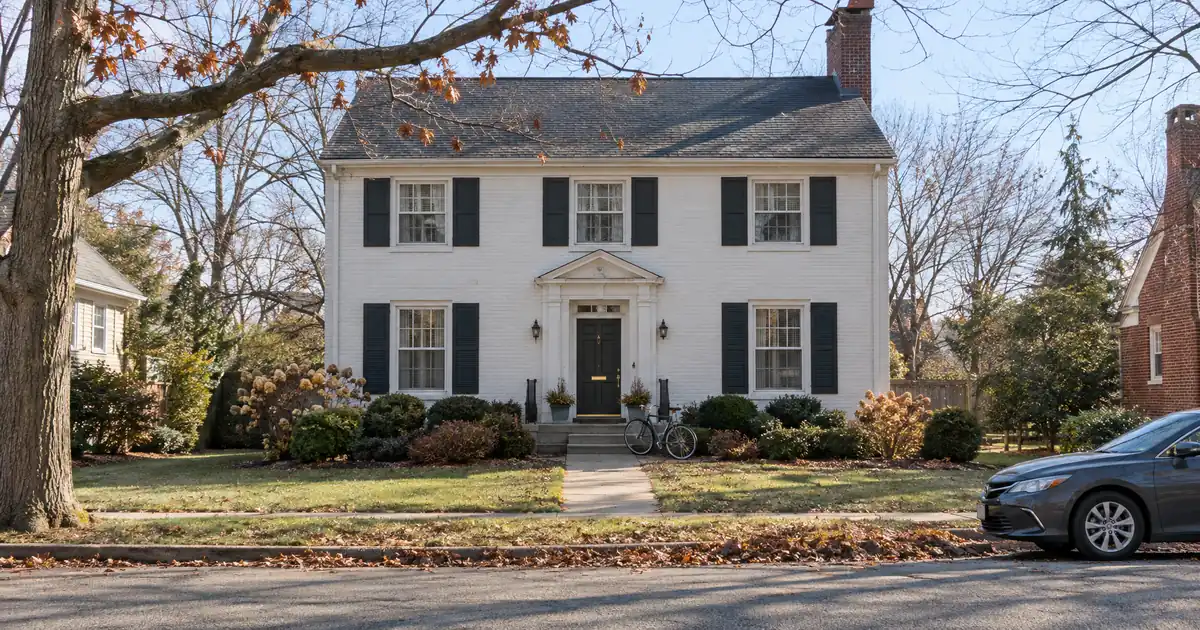
The Quick Read: On a DSCR home equity line, the LLC can stay on title and the members sign as guarantors, so the people behind the LLC still sign personally. The lender, not federal law, decides who must guarantee, and an LLC does not turn the line into a non-recourse loan. Which members sign depends on the lender’s policy and each member’s role in the entity.
- The line is a standalone second lien behind the first mortgage you keep, or a standalone first lien on a rental with no mortgage.
- The rent qualifies the line at a 1.10x minimum, with no personal income calculation, subject to lender guidelines.
- Members of an LLC on title sign as guarantors. A title holder who is not a borrower signs an acknowledgment and the security instrument.
- A guarantee is a separate personal contract. It is not a title fix and not a credit shortcut.
- A spouse who is not a member and not on title generally cannot be forced to guarantee just because of marriage.
Brokers who place these lines see the same confusion on nearly every LLC file. The investor thinks the LLC shields the person. It shields them from some claims. It does not shield them from the guarantee they sign. The rest of this piece shows who signs what, where the general rule bends, and what to prepare before the file goes to a lender.
How Does a DSCR HELOC Work When the Rental Sits in an LLC?
Lendmire, a mortgage broker working with a network of wholesale DSCR HELOC lenders, places these lines on non-owner-occupied one-to-four-unit rentals. The LLC can hold title. The members sign as guarantors. The rental’s income qualifies the line, not the owner’s tax returns or pay stubs.
Two lien positions exist. A second lien sits behind the first mortgage you keep. A first lien goes on a rental with no mortgage. It is never closed with a purchase, never a third lien, and never a line on your own home. The borrowers on the line do not have to match the borrowers on the first mortgage.
The coverage test is the heart of it. Gross monthly rent is divided by a stress payment. That payment is fully amortizing, runs on the entire credit limit, and is set above the start rate. The minimum is 1.10x, subject to underwriting. The lender’s own calculation governs, so any ratio you work out ahead of time is illustrative only.
Leverage depends on lien position. On a second lien, combined loan-to-value (the first mortgage balance plus the new line, divided by value) reaches 70% at a 720 score or better, on lines up to $500,000. On a first lien, loan-to-value reaches 75% at 740 or better and 70% from 700 to 739, on lines up to $500,000. First-lien lines above $500,000, to $1,000,000, carry a 65% ceiling. These are ceilings through select programs, not offers.
Key Terms Defined
Borrower of record: the party named on the note. On an LLC file, that is the LLC.
Guarantor: a person who signs a separate personal contract promising to back the debt.
Guarantee: that separate contract. In a default, the lender can pursue the guarantor directly.
Non-borrowing title holder: an owner on title who is not a borrower. This person signs the security instrument and an acknowledgment, not a guarantee.
Recourse: the lender’s ability to reach assets beyond the property. A personal guarantee creates it.
Vesting: how title is held, such as in an LLC.
Authorized signer: the member or manager the operating agreement empowers to sign for the entity.
Why Do DSCR Lenders Ask for a Guarantee at All?
A DSCR file is built on the property’s cash flow. A newly formed LLC has no credit history, no liquidity record and no assets beyond the rental. The guarantor supplies the credit and the recourse the entity cannot.
Federal rules do not require a guarantee. They limit who can be made to sign. Regulation B, which the Federal Reserve Board wrote under the Equal Credit Opportunity Act, covers business credit as well as consumer credit. The text sits at 12 CFR Part 202. It lets a lender request a cosigner or guarantor when the lender’s creditworthiness standards make an additional party’s personal liability necessary.
So the guarantee is credit policy. One lender may want every member. Another may want only larger owners. Across a wholesale network, the pattern is consistent: expect a guarantee from the people with real ownership and control, and expect the strictest overlays to ask for more of them.
Who Signs What on an LLC-Held DSCR HELOC?
The signer picture is easiest to read in a grid. Details vary by lender and state, so treat this as the common pattern, subject to program terms.
| Document | LLC (authorized signer) | Guarantor member | Non-borrowing title holder |
|---|---|---|---|
| Note | Signs | No | No |
| Security instrument | Signs | May sign | Signs |
| Personal guarantee | No | Signs | No |
| Owner acknowledgment | No | No | Signs |
The same person often signs twice on a single-member LLC. Once as the entity’s authorized signer on the note. Once personally on the guarantee. Both signatures must match the names in the entity file. A guaranty with the LLC’s name on the personal line is a classic signing error that sends a file back.
Which Members Must Guarantee?
It depends on the lender’s policy. A single-member LLC has one answer: the owner. A multi-member LLC is where lenders differ. Many weigh ownership percentage and management role. Some want every member who holds a meaningful share. Others will accept the largest owners and leave out minority members.
Federal law shapes the edges of who a lender may ask to guarantee. A guarantor’s role comes from their connection to the LLC, such as ownership or management, and marital status is not that kind of connection.
Here is what that means in practice. Picture two siblings who each own half of an LLC that holds a duplex. Both will likely be asked to guarantee. Now add a third member holding a small minority stake and no management role. That member may or may not be asked, depending on the lender. If a member refuses, the file does not simply proceed without them. The lender may restructure, drop that member from the entity, or decline.
What About Spouses and Non-Member Title Holders?
A spouse who is a member can be asked to sign as a guarantor, because the request rests on the role in the business. A spouse who is not a member is different. Regulation B generally bars a lender from requiring a guarantor’s spouse to sign just because of the marriage.
There is a second layer. Even in a community property state a lender may require a spouse’s signature on instruments needed to reach the collateral, though not automatically on the note. That is why a non-borrowing title holder signs the security instrument and an acknowledgment. It is a lien document, not a guarantee.
Courts have also split on whether a guarantor counts as an “applicant,” so the spousal guaranty question is not fully settled everywhere. If a spouse or co-owner is on title but not in the LLC, bring the question to an attorney before the file is submitted. State law varies.
Lendmire’s piece Best HELOC Program When Both Owners Must Sign the Loan covers the signing mechanics on a personal-title file in more detail.
How Does a Guarantee Work on a Revolving Line?
A DSCR HELOC is not a one-time term loan. The program requires that at least 80% of the line be drawn at closing, and later draws are at least $5,000. The draw period runs 5 years interest-only on the drawn balance, then a 25-year fully amortizing repayment period, with a 30-year maturity. The rate is variable.
The guarantee is tied to the debt the LLC owes under the line. The exact language on whether it reaches only drawn balances or the full committed amount is a document question. Read the guarantee itself, not the summary. Ask the lender, through your broker, whether later draws extend the guarantee and what releases it. Do not assume.
The qualifying test is stricter than the drawn balance suggests. Because the stress payment runs on the entire credit limit, a large line you plan to draw slowly still has to clear the 1.10x on the full amount. Investors who size a line to their immediate need and not the maximum often get a cleaner coverage number.
When Does the General Rule Break?
Four edge cases come up often.
A personal line that funds the LLC. An investor can draw a line on a property held personally and contribute the money to the LLC as a member contribution. Payments stay personal. No LLC guarantee is needed because the LLC is not the borrower. The trade-off is that the line adds to personal debt.
A title problem a guarantee will not fix. Some lines for owner-held property require an individual or revocable trust on title. A guarantee does not cure an ineligible vesting. If title is wrong for the program, it has to be fixed or the deal works to a different product.
Retitling after closing. Moving a financed property into an LLC after the loan closes can trigger the due-on-sale clause in the mortgage. Read the loan documents or ask counsel before any quit-claim.
Non-recourse structures. True non-recourse is rare on investor loans of this size and is lender-specific. Do not plan around it. The LLC separates liability from other claims. It does not remove the guarantor’s exposure on the debt the guarantor signed for.
What Documents Does the LLC File Need?
Clean entity paperwork prevents the most common preventable gaps. Expect to supply:
1. Articles of Organization.
2. An Operating Agreement that shows who owns what and who can sign for the entity.
3. An EIN letter.
4. A Certificate of Good Standing.
5. Leases and an insurance policy that name the LLC. A lease in place is required, and a two-to-four-unit property may have at most one vacant unit.
Then the guarantor side: credit and the lender’s review of each guarantor. The program has a 720 minimum on a second lien and 700 on a first lien. Mortgage history must show no 30-day late in the last 12 months, and 48 months must have passed since a bankruptcy, foreclosure, short sale or deed-in-lieu. No reserves and no cash to close are required, subject to underwriting.
Valuation depends on line size. Lines up to $400,000 use an automated valuation with a property inspection report, or a full interior appraisal. Larger lines require a full interior appraisal. Appraisal waivers are not accepted. Rent is the lesser of the appraiser’s market rent on Form 1007 or the lease.
Seasoning is one rule with two clocks: a rental bought or refinanced inside the last 6 months is not eligible (that clock runs from the last note date to the new note date), and the owner must have held title for 6 months (settlement date to note date).
The most frequent file killers are name mismatches. The LLC name on the deed, the lease, the insurance and the note must match exactly. An operating agreement that never grants borrowing authority is another. Fix them before submission, not after.
How Do You Screen for the Right Lender Fit?
The best program for your situation depends on property type, credit profile, leverage need and how the entity is built. The lenders that write these lines differ on the points below, and a broker who shops several of them can match the file to the program. Questions worth asking:
- Does the program allow LLC vesting on this property type?
- Which members must guarantee, and is there an ownership threshold?
- Is credit reviewed on each guarantor?
- Does the guarantee cover the full line or only drawn balances?
- What does the entity file need to show about signing authority?
Properties outside this lane include rural-designated property, row homes, condotels, leaseholds, land trusts and mixed-use. The program is offered in 15 of Lendmire’s 16 licensed states, every licensed state except Tennessee. It does not serve foreign nationals or ITIN borrowers. A borrower is capped at 5 loans or $2,500,000 with the program.
For the full picture of how these products fit together, see the complete DSCR loans guide.
Three Quick Scenarios
Single-member LLC. One owner holds a rental with no mortgage in an LLC. The owner signs the note as the LLC’s authorized signer and signs the guarantee personally. The first lien is reviewed on LTV and a 1.10x coverage test, subject to underwriting.
Two-member LLC with a non-member spouse. Two partners own the LLC. Both are likely guarantors. One partner’s spouse is on neither the LLC nor title. That spouse is generally not asked to guarantee on the basis of marriage alone. If the spouse is on title, the spouse signs the security instrument and an acknowledgment instead.
Personal line funding an LLC. An owner holds a second rental personally, draws a line there, and puts the funds into the LLC. No entity guarantee is needed. The line is personal debt, and the lender reviews it on its own terms.
What Should an Investor Do Next?
Pull the entity file together first. Confirm the names match across every document. Decide which members are willing to guarantee before a lender asks. Size the line to the need, since the stress test runs on the whole limit. If a spouse or co-owner is on title, get legal advice early.
If you are considering a home equity line on a rental property and want to see how the numbers work, Lendmire can help you compare DSCR HELOC options based on the property, the rent, the equity available, credit profile, combined leverage, and your goals. Reach the team at 828-256-2183 or request a quote.
This article is general information, not legal or tax advice. Consult a qualified attorney or CPA about your own entity, guarantee and spousal-signature questions.
Frequently Asked Questions
Does an LLC make a DSCR HELOC non-recourse?
No. The LLC can separate the entity’s liabilities from your other assets, but the guarantee is a separate personal contract. Non-recourse structures are rare and lender-specific.
Who must sign for my LLC?
An authorized signer signs the note for the entity, and the members the lender selects sign the guarantee. A single-member owner usually signs in both capacities. Which members of a multi-member LLC must guarantee is the lender’s policy, subject to program terms.
Does my spouse have to sign?
Not automatically. If your spouse is a member of the LLC, the lender can ask for a guarantee based on that role. If your spouse is only a spouse, Regulation B generally bars a guarantee demand based on marriage. A spouse on title still signs the security instrument and an acknowledgment.
Is credit pulled on every member?
Guarantors are reviewed personally, so expect credit review on each person who guarantees. Members who do not guarantee are generally not underwritten. The program’s minimum is 720 on a second lien and 700 on a first lien, subject to underwriting.
Can I put the rental in an LLC after I get the line?
Be careful. Transferring a financed property into an LLC can violate the mortgage and let the lender call the loan. Check your loan documents and talk to an attorney first.
About Lendmire
Lendmire is a mortgage brokerage (NMLS# 2371349) arranging home equity lines of credit — primary-residence, second-home and investment-property lines — through a wholesale lending network in its 16 full-service states. Eligibility is determined by the lender on each file. Scotsman Guide named Lendmire a Top Mortgage Workplace in both 2025 and 2026.
Get Started
Ready to find the right loan for you?
See your offer in seconds. No credit pull, no obligation.
Informational only. Not a Loan Estimate, approval, or commitment to lend. Program availability and eligibility are subject to lender guidelines, credit approval, property review, and underwriting.
References
1. Federal Reserve – Regulation B background
This article is part of Lendmire’s DSCR HELOC program — full qualification details, guidelines, and scenarios live on the program page.
Related reading: How a DSCR HELOC Works on a 2–4 Unit With One Vacant Unit · How a DSCR HELOC Works Across Lenders and Credit Tiers · How a DSCR HELOC Works After a Quitclaim Deed
Brandon Miller
Founder & CEO, Mortgage Loan Originator, Lendmire LLC
- Mortgage Loan Originator · NMLS# 1129696 · Verify on NMLS Consumer Access
- North Carolina Real Estate Broker · License# 343312 · Verify on NCREC
- North Carolina Insurance Producer · License# 19053198 · Property, Casualty, Life, Health · Verify on NAIC SBS
- Lendmire LLC · Firm NMLS# 2371349 · Verify firm licensure
Compliance and disclosures. Lendmire (NMLS# 2371349) is a licensed mortgage broker and is not a direct lender, depository institution, financial advisor, or tax professional. Content in this article is general market analysis and educational information — not financial, legal, or tax advice for any specific situation. Lendmire does not guarantee loan approval; every transaction is subject to underwriting by the funding lender. Mortgage pricing and loan program guidelines are subject to change at any time without notice and vary by borrower characteristics, property type, and state regulations. Lendmire complies with Equal Housing Opportunity. Licensure verification: NMLS Consumer Access.