
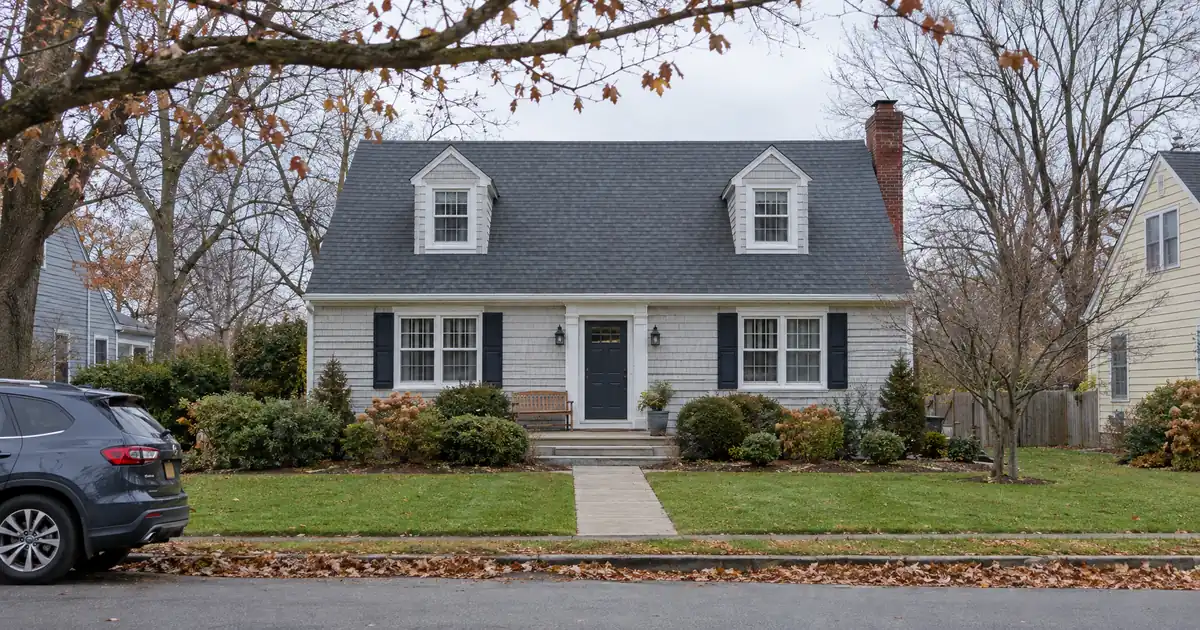
The Quick Read: The rental outside your blanket loan is underwritten as its own file, so you qualify on your documented deposit income, a 700 minimum credit profile, and enough equity to fit a 70% combined loan-to-value ceiling, subject to lender guidelines.
- The line is personal debt secured by that one rental. The blanket pool’s rent does not help you qualify.
- On an investment property, the ceiling is 70% CLTV and the maximum line is $500,000.
- Title must sit with you personally or in a revocable living trust, so an LLC-held rental needs a different route.
- Check the blanket note and recorded documents first, because “left out” has to be true on paper.
- This is not a no-documentation loan. It is a documented-income loan that reads bank deposits in place of tax returns.
What “The One Rental Left Out” Actually Means
A blanket loan is one note secured by several rentals at once. Here it means the same thing as a portfolio DSCR loan or a cross-collateralized loan. The rental “left out” is a property you own that is not pledged under that note.
That separation is the whole appeal. A cross-collateralized pool ties its properties together, so a problem in one can affect the rest. A standalone line on the outside rental taps equity without adding that property to the pool.
Investors usually end up with a left-out rental for one of a handful of reasons. Each reason changes the path.
| Why it was left out | What it changes |
|---|---|
| Bought after the blanket loan | Usually the cleanest case |
| Held in an LLC | Title rules block the line |
| Thin equity | Sizing may fail |
| Weak rent coverage | Irrelevant here, since the line is not rent-based |
| Lender chose not to pool it | Confirm it is not named in the note |
Does the Blanket Loan Block a Line on the Rental Outside It?
Not automatically, but the answer sits in your documents, not in anyone’s general rule. Whether a blanket note restricts new debt or new liens on other property varies by loan. Nothing public settles it, so the only reliable check is reading your own note.
Before you apply, work through this list:
1. Pull the recorded security instrument. One instrument can list several properties, or separate instruments can be used, and the recorded document decides what is pledged.
2. Search the legal description for the left-out rental. If it appears anywhere in the pool’s collateral, it is not truly left out.
3. Read the covenants on additional debt, cross-collateralization, and negative pledges. A clause that reaches “all other real property” matters even if the rental is not listed.
4. Check the personal guarantee. A recourse blanket loan carries one, and a non-recourse loan looks mainly to the real estate, with carve-outs such as fraud and bankruptcy.
5. Ask the blanket servicer whether new debt elsewhere needs consent.
A partial release clause does not make an excluded property cheap to extract later. Under a portfolio loan, the release price for a property runs above its allocated balance, and release terms follow your loan documents. If the rental is still named in the pool, that is a different problem from this article’s scenario.
The Qualification Steps, in Order
Across Lendmire’s wholesale network, this is the sequence a file moves through. Lendmire is a mortgage broker, not the lender, and lenders make the final call on every file.
| Gate | What gets checked | Common failure |
|---|---|---|
| Title and vesting | Individual or revocable trust | Property deeded to an LLC |
| Property type | Eligible type, no ineligible class | Manufactured or log home |
| Credit | 700 minimum on investment | Score below the floor |
| Equity | Value, liens, 70% CLTV | Existing liens too high |
| Income | Deposits after expense factor | Thin or messy deposit history |
| DTI | 50% maximum | Portfolio debt crowds the ratio |
Credit is read from a single-bureau score keyed to the primary wage earner. The report must be no more than 90 days old at closing, and rescores are not available. Housing history is reviewed across all financed properties, so late payments on the blanket loan count against this file.
Eligible properties include single-family, 2-4 units, PUDs, townhomes, and condominiums, including non-warrantable ones. Manufactured homes, co-ops, condotels, log homes, commercial, mixed-use, and agricultural-zoned property are not eligible.
Two limits catch portfolio owners. A borrower can hold only three of these lines at a time. A borrower who owns more than 15 financed properties is not eligible, and every property under a blanket loan counts as financed.
How Deposits Become Income When You Own a Portfolio
Bank statement underwriting averages your eligible deposits over a lookback window, and the program sets that window. For business accounts, the underwriter applies an expense factor based on business type, headcount, and similar details. The result is a monthly qualifying income figure.
This is documented income, not the absence of review. The line is reviewed on documented deposit income under the applicable program, subject to lender guidelines. Credit, equity, and the property are all underwritten as well.
Landlords tend to run into a few deposit problems:
- Transfers between your own accounts. Moving rent from a pooled-property account into your operating account is not new income. Underwriters generally screen these out.
- Loan proceeds. Cash-out proceeds and draws from other lines are not income.
- Commingled accounts. Tenant security deposits mixed with operating cash blur the picture. Separate accounts make the deposit history easier to read.
- A short history. A young business or a new account leaves fewer months to average, and fewer programs fit.
Business bank accounts need at least a 680 score for the deposit analysis. An investment line already floors at 700, so deposit income is never the binding credit constraint here.
Pool rent is not your income for this test. On a DSCR loan, the property’s rent drives the decision. On this line, your personal documented income and debt ratio drive it, and the left-out rental’s own rent matters only to the extent it shows up in your deposits.
How Blanket Debt Affects Your Debt-to-Income Test
The line is personal debt, so the blanket loan can show up in your debt ratio. Whether it does depends on how the blanket debt is reported and guaranteed, and the program’s guidelines decide the treatment. A recourse blanket loan with a personal guarantee is the heavier case.
The maximum debt-to-income ratio is 50%. The ratio is calculated using the interest-only payment on the maximum draw, not the amount you plan to use. That choice matters, because it means a line you intend to draw lightly is still qualified as if it were fully drawn.
This is where a self-employed investor with large deposits can still run short. Strong income does not help if the combined obligations push past the ceiling.
Sizing the Line on the Left-Out Rental
The maximum line equals property value times the maximum CLTV, minus existing liens. On an investment property in this network, the ceiling is 70% CLTV and the line cannot exceed $500,000. Both a 720 and a 700 score reach that same 70% tier, so a higher score buys eligibility, not extra leverage. The minimum line is $25,000.
Run the numbers on percentages first. Say your rental has a first mortgage equal to 50% of its value. A 70% ceiling leaves room for a line up to 20% of value, subject to the $500,000 cap.
Now take a failing case. If the first mortgage is 60% of value, only 10% of value remains. That may fall below what you need, or below the minimum line size once the dollar amounts are worked out. A free-and-clear rental can use the full 70% as a first-lien line, up to the cap.
Three structure facts shape how you use it:
- Draw structure. Investment lines run a five-year interest-only draw followed by a 25-year fully amortizing repayment. This is the five-year-draw program, one of two wholesale programs Lendmire places lines with, and investment lines run on it only.
- Draw at closing. At least 75% of the line is drawn at closing. This is not a draw-only-what-you-need line.
- Pricing. Pricing floats through both the draw and the repayment period and does not convert to fixed.
The CFPB’s HELOC explainer describes the general shape: a revolving line, a draw period, and a repayment period in which payments are often much higher. The CFPB’s HELOC booklet adds that falling behind can put the pledged property at risk. Both describe consumer-bank lines, so use them for the general idea and use the program terms above for this product.
An investment line caps at $500,000, and full appraisals begin only above that size. An investment line therefore sits in the automated-valuation lane and commonly closes with no traditional appraisal. A borrower can still request a full appraisal.
Where the General Rule Breaks
The steps above assume a clean left-out rental. These cases change the outcome.
The rental is held in an LLC. Neither program accepts LLC, corporation, partnership, or irrevocable, blind, or land trust title. The property needs a vesting change into your name or a revocable living trust. Otherwise, a DSCR cash-out refinance on that one property is the usual alternative, subject to program terms.
The blanket note still reaches the rental. If the pledge or a catch-all clause covers it, any new line sits behind the blanket lien. Resolve that with the blanket servicer first.
Credit history is marked. Bankruptcy needs four years of seasoning from discharge or dismissal. On investment files, a foreclosure needs seven years, and a deed-in-lieu, pre-foreclosure, or short sale needs four.
Recent listing. In some states, a property that is currently listed for sale or was listed within the past 60 days is ineligible.
Limited lender pool. NerdWallet notes that a HELOC on an investment property is possible but not offered by all lenders, with strict requirements and some restrictions by location or year-round renting. Large retail lenders often decline the product entirely, which is why the wholesale channel matters.
HELOC, DSCR Cash-Out, or Retitle First?
The right route depends on how the rental is titled, how your income documents, and what you plan to do with the money.
| Factor | Bank statement HELOC | DSCR cash-out |
|---|---|---|
| Reviewed on | Documented deposit income | Property rent vs. payment |
| Title | Individual or revocable trust | LLC allowed, per program terms |
| Investment ceiling | 70% CLTV, $500,000 max | Around 75% LTV, standard rental |
| Structure | Revolving, floating | Fixed-term loan |
| Seasoning | Per program | Around 6 months typical |
A DSCR cash-out compares rent to PITIA only, and most programs want around a 660 score. Select programs start at 1.00 coverage, and stronger ratios open better terms. A separate select-lender path takes coverage below 1.00, with leverage and terms adjusted. Clearing the ratio is also not the same as positive cash flow, because repairs, vacancy, and management sit outside the calculation.
Pick the HELOC if your deposits document well, your title is clean, and you want a revolving structure at 70% CLTV. Pick the DSCR cash-out if the rental sits in an LLC, your personal debt ratio is tight, or a fixed term fits the plan better. Retitle first only if the cost and effort of the vesting change are worth the line you would get.
Key Terms Defined
Blanket loan: One note secured by several rentals, also called a portfolio DSCR loan or cross-collateralized loan.
Release clause: A term that lets one property leave the pool, with a release price above its allocated balance.
CLTV: Combined loan-to-value, which is all liens on the property divided by its value.
Expense factor: A percentage the underwriter subtracts from business-account deposits before counting income.
Vesting: How title to the property is held, whether individually, in a trust, or in an entity.
Who Should Skip It
Skip this line if the rental sits in an LLC and you do not plan to retitle. Skip it if your debt ratio is already close to 50%, because the maximum-draw calculation will not help you. Skip it if you want to draw gradually, since at least 75% of the line is drawn at closing.
Also skip it if the rental is going on the market soon, or if the blanket note’s covenants are unclear and you have not asked about them. A personal line secured by your last unpledged rental is a real risk if the property goes vacant with a balance outstanding. That risk is worth sizing before you commit.
Next Step
If you are weighing a bank statement line against a DSCR cash-out and want to see how the numbers work, Lendmire can help you compare options based on the property, the equity available, credit profile, combined leverage, and your goals. The brokerage shops multiple wholesale lenders to match the scenario to a program. You can also read Lendmire’s complete DSCR loans guide for how the cash-out alternative works, or its piece Can You Get a HELOC on the One Rental Left Out of a Blanket Loan?. For what separates one bank statement HELOC program from another, see its article on the best bank statement HELOC program for the one rental left out of a blanket loan.
Frequently Asked Questions
Can my blanket lender stop me from taking a line on the left-out rental?
It depends on your note. Some blanket loans restrict additional liens or debt, and some do not. Read the covenants on further encumbrance and cross-collateralization, and ask the servicer in writing if the language is unclear.
Does the rent from my other rentals count as income?
No, not as pool rent. The line is underwritten on your documented deposit income, credit, debts, and equity. Rent counts only as it appears in your own deposits, and DSCR loans are the product where property rent drives the decision.
Can I put the line on a rental held in an LLC?
Not as the title stands. Title must be held by you individually or by a revocable living trust, and LLCs cannot hold it. A vesting change or a DSCR cash-out on that property is the usual alternative.
Is a bank statement HELOC the same as a no-documentation loan?
No. Deposits replace tax returns as the income evidence, and an expense factor is applied to business accounts. Credit, equity, and the property are underwritten in full.
How much can I borrow on an investment rental?
Up to 70% CLTV on an investment property, with a maximum line of $500,000, subject to lender guidelines. The line is the 70% ceiling minus existing liens, so a larger first mortgage shrinks it directly.
About Lendmire
Lendmire is a mortgage brokerage (NMLS# 2371349) arranging home equity lines of credit — primary-residence, second-home and investment-property lines — through a wholesale lending network in its 16 full-service states. Eligibility is determined by the lender on each file. Scotsman Guide named Lendmire a Top Mortgage Workplace in both 2025 and 2026.
Get Started
Ready to find the right loan for you?
See your offer in seconds. No credit pull, no obligation.
Informational only. Not a Loan Estimate, approval, or commitment to lend. Program availability and eligibility are subject to lender guidelines, credit approval, property review, and underwriting.
References
3. NerdWallet – Can you get a HELOC on an investment property
This article is part of Lendmire’s bank statement HELOC program — full qualification details, guidelines, and scenarios live on the program page.
Related reading: How to Qualify for a Bank Statement HELOC on a Home You Just Bought and Closed On · How to Qualify for a Bank Statement HELOC in Texas Without Refinancing · How to Qualify for a Bank Statement HELOC on a New Build After Completion
Brandon Miller
Founder & CEO, Mortgage Loan Originator, Lendmire LLC
- Mortgage Loan Originator · NMLS# 1129696 · Verify on NMLS Consumer Access
- North Carolina Real Estate Broker · License# 343312 · Verify on NCREC
- North Carolina Insurance Producer · License# 19053198 · Property, Casualty, Life, Health · Verify on NAIC SBS
- Lendmire LLC · Firm NMLS# 2371349 · Verify firm licensure
Legal disclosures. Lendmire (NMLS# 2371349) is a state-licensed mortgage brokerage that arranges financing through wholesale lender relationships. Lendmire is not a direct lender, depository institution, or registered financial advisor. The discussion above is general informational content about real estate financing — it is not financial, legal, or tax advice, and readers should consult licensed professionals for guidance on their individual circumstances. Loan inquiries are subject to lender underwriting; this article does not represent a commitment to lend. Loan terms, rates, and qualification standards vary by borrower, property, and state, and are subject to change at any time. Equal Housing Opportunity. NMLS Consumer Access: nmlsconsumeraccess.org.