
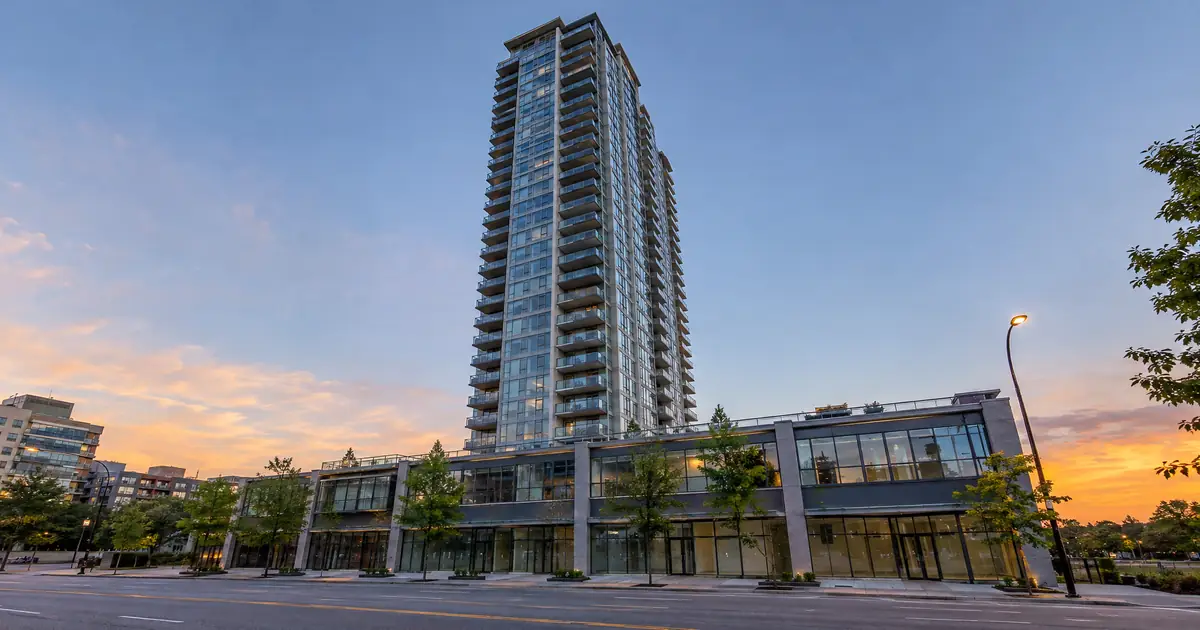
The Quick Read: Often yes, but only when the lender treats your building as a residential condo project and not as a mixed-use commercial property. A retail or commercial floor in the tower does not bar a line by itself, because the unit you own is still a condominium. What matters is how big the commercial share is, who owns it, and what else is wrong with the project. All of this is subject to lender guidelines and full file review.
- A residential unit above a retail podium is an eligible condominium type, subject to project review.
- Owning the whole mixed-use building, a commercial unit, or a live-work unit zoned commercial is not offered.
- On an investment property, the line tops out at 70% CLTV, with a 700 credit minimum and a $500,000 maximum line.
- Title must sit in your personal name or a revocable living trust, not an LLC.
- If the line fails, a DSCR cash-out refinance is the usual fallback.
A brief orientation first. An investment-property home equity line is a separate product from a DSCR loan. It underwrites you, not the rent. A DSCR loan works the other way. Lendmire brokers both through select wholesale partners, and the HELOC side is available only in its 16 full-service states: AL, CA, CO, FL, GA, IN, MI, MT, NM, NC, OH, PA, TN, TX, VA and WA.
How large a line the equity supports.
An equity line is sized by combined loan-to-value, occupancy, and credit — not by rental coverage. Switch the occupancy or the credit band and the ceiling moves with it.
Investment-property lines require a 700 minimum credit score; second-home lines start at a 640 minimum and primary-residence lines at 600, and the combined-LTV ceiling steps down as the credit band drops on primary-residence and second-home lines and holds on investment-property lines; the line cap steps down on primary-residence lines and holds at every tier on investment-property and second-home lines.
A debt-to-income ratio above 45% requires 680+ credit. Profiles under 640 are limited to single-family homes. At least 75% of the approved line is drawn at closing. Ceilings, floors, and caps update from Lendmire’s centralized guideline source.
Line estimate
Illustrative estimate only — not a quote, Loan Estimate, approval, or commitment to lend. The rate is an editable assumption; equity-line pricing is variable through both the draw and repayment periods and never converts to fixed. Occupancy and credit drive the ceiling together: an investment property tops out at 70% combined LTV (minimum credit 700, line cap $500,000); a second home tops out at 90% combined LTV (minimum credit 640, line cap $500,000), with the ceiling stepping down as the credit band drops (the cap holds at every tier); a primary residence tops out at 90% combined LTV (minimum credit 600), and its $750,000 maximum line is available only at 75% combined LTV or below with a 700-or-better credit profile (720 on the longer-runway program) and a full appraisal. Lines above $500,000 require a full appraisal. Credit, debt-to-income, property type, and full underwriting review all affect the final line.
Which Situation Are You In?
The commercial floor matters less than what you actually own. Most confusion on these files comes from mixing up the unit and the building.
| What you own | How it is classified | Likely outcome |
|---|---|---|
| Residential unit above a retail podium | Condominium | Eligible, subject to project review |
| Residential unit in a tower with hotel floors | Condominium, with a condotel flag | Depends on how the project operates |
| Retail or office unit in the tower | Commercial | Not offered |
| Live-work unit zoned commercial or mixed-use | Mixed-use | Not offered |
| The whole mixed-use building | Mixed-use | Not offered |
| Five or more units in one building | Commercial | No investment line |
The first row is the common one. A tower with a shop or restaurant on the ground floor and apartments above is a normal urban building. The network treats your residential unit as a condominium. The building itself would be mixed-use, but you are not borrowing against the building.
How Does the Lender Review the Unit and the Building?
Two gates apply, and the commercial floor touches only one. The borrower gate looks at you: credit, income, debt-to-income and the equity you hold. The property gate looks at the unit and the project it sits in.
On the borrower side, an investment line requires a 700 credit score minimum. Scores of 720 and 700 both reach the same 70% CLTV, so a higher score does not buy more leverage here. Debt-to-income runs to 50% at most, and the line is sized on the interest-only payment at the maximum draw. Nobody looks at the unit’s rent. That is the sharpest difference from a DSCR loan, and our complete DSCR loans guide walks through how the rent-based side works. Terms vary by lender guidelines, property type, leverage, credit profile, and full file review.
CLTV adds your first mortgage balance and the line limit together, then divides by the appraised value. Run the numbers on a unit with a modest first mortgage and the 70% cap can leave a usable line. Run them on a unit bought recently at high leverage and the cap can leave nothing.
On the property side, the lender asks whether the commercial space makes the building look like a residential condo project or a commercial one. That is the only place the retail floor shows up.
What Counts as Commercial Space, and How Is It Measured?
Commercial share is a measured percentage, not a label. The benchmark most lenders start from comes from the agencies. The Fannie Mae Selling Guide caps commercial or mixed-use space at 35% of the project or the building. The count includes space above and below grade. Commercial parking can be excluded. Rental apartments and hotels inside the project count as commercial. The calculation also includes commercial square footage when residential and commercial owners sit in separate associations.
The agencies do not share one number. HUD’s rule on single-family condominium project approval allows a commercial-space limit that falls within a range instead of one fixed figure. Some older blog posts still repeat a 25% cap for Fannie Mae. The current Selling Guide figure is 35%, so treat those posts as stale.
Here is the key point. Those are agency benchmarks for agency loans. A HELOC through Lendmire’s network is not an agency loan, and each lender in the network sets its own project rules. Use the agency number as a rough yardstick, not as the rule on your file.
A tower with one retail floor is usually well under 35%. Picture a 40-story building with a two-level retail podium and a residential tower above it. Measure the retail square footage against total square footage and the share is typically small. The measurement gets harder when the building also has office floors, a hotel component, or a garage owned by a third party.
Lenders also look at character, not only percentage. Fannie Mae’s guide asks that commercial use be compatible with a residential project. A nightclub below the lobby reads differently than a pharmacy.
Key Terms Defined
Commercial floor: Any level or section of the building used for retail, office, restaurant, medical or similar non-residential purposes.
Non-warrantable condo: A condo project that falls outside standard agency project rules because of a trigger such as commercial share, litigation, investor concentration or thin reserves.
Mixed-use property: A property whose collateral itself combines residential and commercial use. This is a different thing from a residential unit inside a mixed-use building.
CLTV: Combined loan-to-value, which is your first mortgage plus the new line limit, divided by the property’s value.
Condotel: A condo project operated like a hotel. The network does not offer lines on these.
Does Non-Warrantable Mean No HELOC?
No. Condominiums in Lendmire’s network are eligible whether warrantable or not, and that includes non-warrantable projects. A commercial floor is a classic non-warrantable trigger, but status is not a verdict on the building. It narrows the set of lenders that will look at the file.
Warrantability stacks, though. Excess commercial space rarely arrives alone. These items tend to show up together on tower files:
- Pending litigation against the association
- High investor concentration among owners
- Delinquent dues
- Thin reserves
- Hotel or condotel operation
- Association-owned or association-operated commercial space
Each lender weighs these differently. One lender may accept a 20% commercial share and decline a building with active litigation. Another may do the reverse. That spread is why a file declined at one shop is not dead everywhere.
Agency exception routes exist, but they do not carry over. Freddie Mac lets sellers submit a project waiver request for projects that miss its commercial-space requirement, and HUD’s rule allows a range of limits. Neither applies to a non-QM investment HELOC.
Title and Vesting: The LLC Problem
Title is where investor files break most often. On this HELOC, the property must be held in your personal name or an inter vivos revocable living trust. LLCs, corporations, partnerships, and irrevocable, blind or land trusts cannot hold title.
Many investors hold rentals in an LLC. If your tower unit sits in one, you have two choices: change the vesting, or use a DSCR cash-out refinance, which accepts LLC vesting, subject to lender program eligibility. Moving title can trigger consequences with an existing mortgage or title insurance, so sort that out with your closing agent first.
Business-purpose treatment is also part of this picture. An investment HELOC is generally business-purpose credit, and the line is reviewed differently from a standard owner-occupied mortgage.
What the Investment Tier Allows
The investment tier is narrow by design:
- CLTV: 70% on an investment property, with no higher tier.
- Credit: 700 minimum, and 700 and 720 reach the same ceiling.
- Line size: $25,000 to $500,000. A line above $500,000 is primary-residence only.
- Structure: A standalone line in first or second lien position, with a 5-year interest-only draw and a 25-year repayment period. At least 75% of the line is drawn at closing, and the pricing floats rather than converting to fixed.
- Valuation: Because investment lines cap at $500,000, they usually run on an automated valuation instead of a full appraisal, though you can request one.
- Exposure: Up to three lines per borrower, and no borrower with more than 15 financed properties.
- Not eligible: Manufactured homes, co-ops, condotels, log homes, commercial and mixed-use property.
Some banks and credit unions advertise higher CLTVs on rental-property lines. Those figures describe the broader market. On the network’s investment tier, 70% is the ceiling.
One more point. Listing status can end a file. In NC, PA, TN, TX and WA, a property listed for sale, or listed within the past 60 days, is ineligible.
Step-by-Step: Before You Apply
1. Confirm what you own. Check your deed and unit designation. A residential unit is the target. A live-work or commercial designation changes the answer.
2. Check vesting. If an LLC holds title, plan the vesting change or move to a DSCR cash-out.
3. Request the condo questionnaire. Ask the management company for the project questionnaire. It covers the non-residential percentage, owner-occupancy, litigation, reserves, delinquent dues, and whether the association owns or operates commercial space.
4. Get the commercial square footage. Ask for the figure against total building area, and ask whether garage space is commercial or residential.
5. Check for hotel components. Any condotel operation is a separate bar.
6. Pull your first mortgage balance. Work out the CLTV before you apply. If the 70% cap leaves no room, the commercial floor is not your problem.
7. Run the borrower gate. Confirm your 700 score, your DTI, and that you are in one of the 16 states.
8. Check association rules. Rental restrictions in the HOA documents can limit use even when a lender approves.
Questionnaire completeness is the quiet failure point. A missing page or an unsigned form can stall a file for reasons unrelated to the commercial floor. Order the document first and read it before you spend anything else.
If the HELOC Does Not Work
Consider a scenario where the tower fails project review, or your CLTV is already at the cap. You have options, and they differ.
| Factor | Investment HELOC | DSCR cash-out refinance |
|---|---|---|
| Reviewed on | Your credit, income and DTI | Property rent covering the payment |
| Title | Personal name or revocable trust | LLC accepted, subject to program terms |
| Leverage | 70% CLTV on investment property | Up to about 75% LTV on a cash-out |
| Structure | Revolving line | Single new loan |
A DSCR cash-out qualifies primarily on property-level rental income covering the payment, subject to lender guidelines. 1.00 is where many select programs start, and a separate select-lender path takes coverage below 1.00 with leverage and terms adjusted. Most programs want about a 660 score, and about 6 months of seasoning is the common expectation on a recent purchase. Clearing 1.00 is not the same as positive cash flow, since repairs, vacancy and management sit outside the calculation.
For deeper reading, Lendmire’s piece How to Qualify for a DSCR HELOC on a High-Rise Condo With a Commercial Floor covers the rent-based route.
Equity in a different property is another path. A line against a single-family rental you own outright may clear where the tower unit does not.
Frequently Asked Questions
Does a ground-floor shop make my whole tower commercial?
No. Your unit is still a condominium, which is an eligible type. The building is mixed-use, but you are borrowing against the unit. The lender reviews the commercial share as part of project review.
Is there a fixed commercial-space limit?
Not on the network’s side that you can count on. The Fannie Mae benchmark is 35% of the project or building, but lenders in the network set their own project rules. Treat 35% as a yardstick only.
Can I get a line if I own the retail unit?
No. A commercial unit is not offered, and neither is a live-work unit zoned commercial or mixed-use. A DSCR loan or a commercial loan is the more realistic route.
Does an LLC change the answer?
Yes. LLCs cannot hold title on this HELOC. A property already deeded to an LLC needs a vesting change, or a DSCR cash-out refinance instead.
Will litigation in the building matter?
Yes. Litigation is a common stacking trigger, and each lender weighs it differently. Active litigation combined with a large commercial share is the hardest combination to place.
Where do I find the commercial percentage?
On the condo questionnaire from your management company. Ask for the commercial square footage and total building area, then do the division yourself.
If you are considering a home equity line and want to see how the numbers work, Lendmire can help you compare HELOC options based on the property, the equity available, credit profile, combined leverage, and your goals. Start with a quote at 828-256-2183 or through the quote form.
A tower’s retail podium is the easy part of the file; the first mortgage balance and the title are usually what decide it.
About Lendmire
Lendmire, NMLS# 2371349, is a mortgage brokerage that arranges home equity lines of credit through wholesale lending partners in its 16 full-service states. Lines on primary residences, second homes and investment properties are each reviewed individually by the lender under the program’s occupancy, credit and combined-loan-to-value guidelines. Scotsman Guide named Lendmire a Top Mortgage Workplace in both 2025 and 2026.
Get Started
Ready to find the right loan for you?
See your offer in seconds. No credit pull, no obligation.
Informational only. Not a Loan Estimate, approval, or commitment to lend. Program availability and eligibility are subject to lender guidelines, credit approval, property review, and underwriting.
References
1. Fannie Mae Selling Guide B4-2.1-03 Ineligible Projects
2. Federal Register, HUD Project Approval for Single-Family Condominiums
This article is part of Lendmire’s investment property HELOC program — full qualification details, guidelines, and scenarios live on the program page.
Related reading: Can You Get an Investment Property HELOC on One Income Without a Spouse Signing? · Can You Get an Investment Property HELOC After the Decree Before the Quitclaim? · Can You Get an Investment Property HELOC on an Inherited Home in Retirement?
Brandon Miller
Founder & CEO, Mortgage Loan Originator, Lendmire LLC
- Mortgage Loan Originator · NMLS# 1129696 · Verify on NMLS Consumer Access
- North Carolina Real Estate Broker · License# 343312 · Verify on NCREC
- North Carolina Insurance Producer · License# 19053198 · Property, Casualty, Life, Health · Verify on NAIC SBS
- Lendmire LLC · Firm NMLS# 2371349 · Verify firm licensure
Legal disclosures. Lendmire (NMLS# 2371349) is a state-licensed mortgage brokerage that arranges financing through wholesale lender relationships. Lendmire is not a direct lender, depository institution, or registered financial advisor. The discussion above is general informational content about real estate financing — it is not financial, legal, or tax advice, and readers should consult licensed professionals for guidance on their individual circumstances. Loan inquiries are subject to lender underwriting; this article does not represent a commitment to lend. Loan terms, rates, and qualification standards vary by borrower, property, and state, and are subject to change at any time. Equal Housing Opportunity. NMLS Consumer Access: nmlsconsumeraccess.org.