
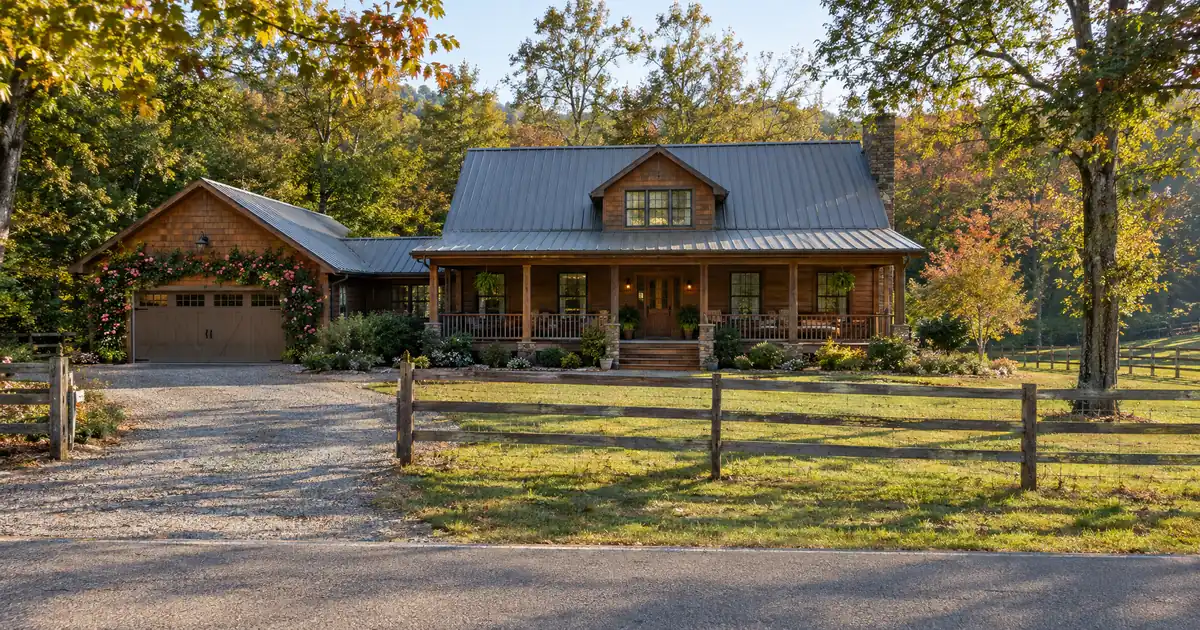
The Quick Read: A rural rental with acreage can get an investment equity line when you hold title personally or in a revocable trust, carry a 700 or better credit profile, stay within 70% combined loan-to-value, and the property reads as residential rather than agricultural, subject to lender guidelines.
- Investment lines across Lendmire’s wholesale network cap at 70% CLTV and $500,000, no matter how much land comes with the house.
- The minimum credit profile is 700, and a 720 buys no extra leverage on an investment property.
- Agricultural zoning, mixed-use, log homes, and manufactured homes are not eligible.
- An LLC cannot hold title. A property deeded to one needs a vesting change or a different loan.
- Acreage counts only as far as the valuation credits it, so a thin rural value is the most common way the line shrinks.
Key Terms Defined
HELOC: A home equity line of credit, a revolving credit line secured by the equity in a property you already own.
CLTV: Combined loan-to-value, which is your first mortgage plus the new line, divided by the property’s value.
Equity: The property’s value minus what you owe on it.
Vesting: The way title is held, such as in your own name, in a revocable trust, or in an entity.
Surplus land: Extra acreage that cannot be split off and sold, so it adds limited value beyond the main parcel.
Excess land: Acreage that could be divided and sold on its own, so it carries separate value and a possibly different best use.
Automated valuation: A computer-generated value based on nearby sales, with no appraiser visiting the property.
DSCR: Debt service coverage ratio, which compares a property’s rent to its monthly housing payment.
How large a line the equity supports.
An equity line is sized by combined loan-to-value, occupancy, and credit — not by rental coverage. Switch the occupancy or the credit band and the ceiling moves with it.
Investment-property lines require a 700 minimum credit score; second-home lines start at a 640 minimum and primary-residence lines at 600, and the combined-LTV ceiling steps down as the credit band drops on primary-residence and second-home lines and holds on investment-property lines; the line cap steps down on primary-residence lines and holds at every tier on investment-property and second-home lines.
A debt-to-income ratio above 45% requires 680+ credit. Profiles under 640 are limited to single-family homes. At least 75% of the approved line is drawn at closing. Ceilings, floors, and caps update from Lendmire’s centralized guideline source.
Line estimate
Illustrative estimate only — not a quote, Loan Estimate, approval, or commitment to lend. The rate is an editable assumption; equity-line pricing is variable through both the draw and repayment periods and never converts to fixed. Occupancy and credit drive the ceiling together: an investment property tops out at 70% combined LTV (minimum credit 700, line cap $500,000); a second home tops out at 90% combined LTV (minimum credit 640, line cap $500,000), with the ceiling stepping down as the credit band drops (the cap holds at every tier); a primary residence tops out at 90% combined LTV (minimum credit 600), and its $750,000 maximum line is available only at 75% combined LTV or below with a 700-or-better credit profile (720 on the longer-runway program) and a full appraisal. Lines above $500,000 require a full appraisal. Credit, debt-to-income, property type, and full underwriting review all affect the final line.
What Lenders Test, in Order
Underwriting an investment line on a rural parcel runs through four gates. A failure at any gate ends the file or shrinks the line.
| Gate | What the lender checks | Where rural files slip |
|---|---|---|
| Property | Type, zoning, use | Agricultural zoning, log home, mixed-use |
| Title | Who holds title | LLC or land trust on the deed |
| Borrower | Credit, DTI, exposure | Score under 700, DTI above 50% |
| Value | What the property is worth | Thin comps, bundled acres |
Start with the property. Single-family homes, 2-4 unit buildings, PUDs, townhomes, and condominiums are eligible property types. Manufactured homes, log homes, commercial, mixed-use, and agriculturally zoned parcels are not. Barndominiums are not offered in the network’s DSCR programs, and converted barns are hard to value on any equity product.
Then comes title. Fee simple or leasehold title must sit with you personally or in a revocable living trust. Entities and irrevocable, blind, or land trusts cannot hold it.
Next is the borrower. The minimum credit profile on an investment line is 700. Both the 720 and 700 tiers reach the same 70% CLTV, so a higher score adds no leverage here, though it can help in other parts of the review. The lender uses a single-bureau score, and the report must be no more than 90 days old at closing. DTI, which is your monthly debts divided by your monthly income, tops out at 50%. It is measured on the interest-only payment calculated at the maximum draw, so a large line weighs on the ratio even if you draw little at first.
Last is value. Everything else sizes against it.
Is It Rural, or Just Big?
Acreage is a number. Rural is a judgment about the surroundings, the access, and the use. A 12-acre lot with a rented ranch house, a paved road, and neighbors on both sides can read as residential. A smaller parcel with fenced pasture and a leased hay field can read as agricultural.
Lenders care about the use more than the size. They look at zoning, at whether farm or timber income shows up on your tax return, and at whether leased land is part of the deal. Agricultural zoning is a hard stop on an investment line.
Outside Texas, the network’s HELOC parameters carry no single acreage cap. That is not a green light. Across the broader market, acreage limits and lower leverage on large parcels are common, so a program can still decline a big parcel on its own guidelines. Texas is the one place with a stated number.
Say you own a rented farmhouse on 8 acres, with a pole barn you use for storage. Residential zoning, no farm income, and one dwelling usually tell a clean story. Add a leased pasture and a second finished dwelling, and the story gets harder to tell.
How Rural Acreage Gets Valued
Acreage rarely adds value acre by acre. McKissock Learning, an appraiser education provider, draws the line between surplus land and excess land. Surplus land generally adds limited value beyond its tie to the main parcel. Excess land can be divided and sold, so it has separate value.
Most extra land on a rented house is surplus. That is why paying for bundled acres does not mean the valuation credits them. If you paid for 15 acres but the market only supports the homesite plus a few acres, the value used for the line can land below your price.
Rural comparables add a second problem. McKissock’s rural appraisal overview lists the usual troubles: few transactions, scarce comparable sales, unconventional home designs, outbuildings with mixed uses, and slower turnover that forces appraisers to look back over longer periods.
Here is why that matters for an investment line. A line of $500,000 or less ordinarily runs on an automated valuation with no traditional appraisal, and an investment line cannot exceed $500,000. So investment lines almost always sit in the automated lane. Automated models lean on nearby sales, and rural areas often lack them. A higher CLTV can trigger a secondary valuation, and you may ask for a full appraisal in any case. On a parcel with few comps, requesting one is worth discussing with your broker before the lender orders a value.
Sizing the Line, With a Worked Example
The method is simple. The CFPB’s HELOC booklet shows it: take a percentage of the appraised value, then subtract what you still owe on the mortgage. On an investment property in this network, that percentage is 70%, and the line stops at $500,000.
The example below uses modeled inputs, not market data. Run the numbers on a rural rental you believe is worth a round 100 units of value. Your first mortgage is 45% of that.
- At your assumed value, 70% CLTV allows room for a line of about 25% of the assumed value.
- Now the valuation comes in 15% lower, because the buyer pool for acreage is thin and the extra land counts as surplus.
- The same 70% now applies to 85 units. That is 59.5, minus the 45 you owe, leaving about 14.5% of your assumed value.
The valuation moved 15%, but your available line fell by roughly 40%. That is the leverage trap. Your mortgage balance stays fixed, so every point of lost value comes out of the cushion.
The cap works the other way too. On a large parcel with a small first mortgage, the $500,000 maximum can bind before the 70% does. Either way, plan around a conservative value, not the price you paid.
Rent, Income, and How the Line Is Underwritten
An investment HELOC is a different test than a DSCR loan. The HELOC leans on you: your credit profile, your income, and a DTI of 50% or less. A DSCR loan leans on the property, and it qualifies primarily on property-level rental income covering the payment, subject to lender guidelines.
That difference matters on rural rentals. Rent comparables are scarce in the country, and large-acreage houses often rent for less than the land value suggests. A DSCR approach can struggle on exactly those files. A line underwritten on personal income can work when the rent is thin but your income is strong.
Still, bring rent evidence. A signed lease, a rent schedule, payment history, and local listings or property-manager data all help the lender understand the property’s cash picture. Exact treatment of rental income varies by program, so ask how a particular lender counts it.
Structure, Draws, and Limits
Know what you are signing up for before you chase the line.
- Draw structure: Investment lines run a 5-year interest-only draw followed by a 25-year fully amortizing repayment. No other structure is offered on an investment property.
- Initial draw: At least 75% of the line is drawn at closing.
- Pricing: It floats through both the draw and repayment periods and never converts to fixed.
- Later draws: The minimum after closing is typically $1,000.
- Line size: $25,000 to $750,000 overall, but an investment line cannot exceed $500,000. Anything above that is primary-residence only.
- Exposure: A borrower can hold three lines at most, and a borrower with more than 15 financed properties is not eligible.
The CFPB explains that a HELOC is an open-end line you can draw on repeatedly, and that a lender may restrict further draws if your home’s value falls significantly. On a thin rural market, a value swing can matter more than it does in a city. The line is also a second mortgage in addition to your first when you have one, so the first stays in place.
Tax treatment can depend on how the funds are used and how the property is held; borrowers should keep clear records and speak with a qualified tax professional before relying on any deduction.
Where the General Rule Breaks
These are the edge cases that catch rural landlords.
The property sits in an LLC. Many landlords deed rentals into entities. An equity line on this network cannot close that way. You would need to move title to your own name or a revocable trust, or look at a DSCR cash-out refinance instead, subject to program terms.
The property is already for sale. A property listed for sale, or listed within the past 60 days, is ineligible in Indiana, North Carolina, Pennsylvania, Tennessee, Texas, and Washington.
Outbuildings carry weight. A finished guest barn or shop can be read as a second dwelling or valued only for its contribution. Do not assume dollar-for-dollar credit. Keep a list of each outbuilding, its use, its condition, and its permit status.
Unconventional dwellings. Log homes and manufactured homes are not eligible. Converted barns and similar buildings are hard to value because the market has few matching sales.
Past credit events. A bankruptcy needs 4 years of seasoning from discharge or dismissal. On an investment property, a foreclosure follows a 7-year path, and a deed-in-lieu, pre-foreclosure, or short sale follows a 4-year path.
Location. Lendmire’s HELOC availability covers its 16 full-service states: AL, CA, CO, FL, GA, IN, MI, MT, NM, NC, OH, PA, TN, TX, VA, and WA. That is narrower than its 41-market DSCR footprint.
A broker’s note from watching many files across this network: the loans that fall apart on rural land usually fail on vesting or on a value that came in thin, not on the borrower’s credit. Both are knowable before you apply.
HELOC or Something Else?
The best product depends on what is failing on your file.
| Your situation | Likely fit |
|---|---|
| Property in your name, 700+ credit, strong income | Investment HELOC |
| Deed is in an LLC | DSCR cash-out refinance |
| Thin rent, strong personal income | Investment HELOC |
| Income is hard to document, rent covers the payment | DSCR cash-out refinance |
| Parcel is agriculturally zoned | Neither; different structure needed |
A DSCR cash-out refinance replaces your first mortgage instead of adding a second lien. Coverage of 1.00 is where many select programs start, and stronger ratios open better pricing and leverage. A separate select-lender path goes below 1.00 with leverage and terms adjusted. Clearing 1.00 is not the same as positive cash flow, because repairs, vacancy, and management sit outside the calculation. Lendmire’s complete DSCR loans guide walks through how those files work. If you want to compare programs for this exact property type, Lendmire’s piece Best Investment Property HELOC Program on a Rural Rental With Acreage goes deeper on that choice.
One honest tradeoff: a HELOC keeps a low-cost first mortgage in place, but you give up a fixed payment. A cash-out refinance resets the first loan but can offer a fixed structure. Neither is better for everyone.
Rural File Checklist
Pull these together before you apply.
1. A lease and rent schedule for the rental.
2. The first-lien mortgage statement.
3. Current insurance on the dwelling and outbuildings.
4. Proof of how title is held, with a vesting change started if needed.
5. A survey or plat showing the acreage and what it is used for.
6. A list of outbuildings with use, condition, and permit status.
7. Recent land or home sales nearby that you know of.
8. Income documents for the DTI review.
Tell your broker about the acreage before you apply. Disclosing it early saves valuation costs and avoids a surprise at the end. If a value comes in low, better comparable sales and facts the report missed, such as a recent permit or a finished outbuilding, are what a reconsideration request needs.
Why Rural Files Fall Out
| Cause | Fix |
|---|---|
| Entity holds title | Re-title, or use DSCR cash-out |
| Agricultural zoning | Different program; not offered here |
| Value below bundled price | Plan on conservative value |
| Score under 700 | Rebuild, or use another product |
| Over 10 acres in Texas | Different structure |
Frequently Asked Questions
Does acreage alone disqualify a rental from an investment HELOC?
No, acreage by itself is not a disqualifier in the network’s program parameters outside Texas, where properties are limited to 10 acres. What matters more is zoning, use, and how the property is valued. A big parcel that reads as residential can work, while a smaller one with agricultural zoning cannot. Individual lenders may set their own limits.
Can I use a HELOC to buy a rural rental?
No. A HELOC draws on equity in a property you already own, so it cannot purchase one you do not yet hold. Purchase financing on a rural rental typically runs through a DSCR purchase loan. Most files there land at 75%-80% LTV, subject to lender guidelines.
How much equity can I pull from a rental with acreage?
Up to 70% combined loan-to-value on an investment property, minus your first mortgage balance, and never more than $500,000. The value used for that math may be lower than you expect if the extra land counts as surplus. Lenders size the line off their own valuation, not your purchase price.
Will a full appraisal be required?
Not ordinarily. Because investment lines cap at $500,000, they commonly run on an automated valuation. A higher CLTV may trigger a secondary valuation, and you can request a full appraisal. On a rural parcel with few comps, asking for one is worth considering.
What if my rental is held in an LLC?
The line cannot close with an LLC on title. You would need to move the property into your own name or a revocable living trust. Alternatively, a DSCR cash-out refinance can work for entity-held rentals, subject to program terms.
Next Steps
If you are considering a home equity line and want to see how the numbers work, Lendmire can help you compare HELOC options based on the property, the equity available, credit profile, combined leverage, and your goals. Lendmire is a broker that arranges financing through select lenders in its wholesale network, and an illustrative calculator on the site can give you a rough sense of the structure. Nothing here is a commitment to lend.
The parcels that win approval are the ones that look like a house with a yard, even when the yard is large.
About Lendmire
As a mortgage broker (NMLS# 2371349), Lendmire helps homeowners and real estate investors in its 16 full-service states open home equity lines of credit arranged through wholesale lenders. Lendmire is never the lender; line amounts, ceilings and terms are set by the lender under its guidelines. Scotsman Guide named Lendmire a Top Mortgage Workplace in both 2025 and 2026.
Get Started
Ready to find the right loan for you?
See your offer in seconds. No credit pull, no obligation.
Informational only. Not a Loan Estimate, approval, or commitment to lend. Program availability and eligibility are subject to lender guidelines, credit approval, property review, and underwriting.
References
1. McKissock Learning – Surplus Land vs. Excess Land
2. McKissock Learning – Appraising Rural Properties
4. CFPB: What Is a Home Equity Line of Credit HELOC
This article is part of Lendmire’s investment property HELOC program — full qualification details, guidelines, and scenarios live on the program page.
Related reading: How to Qualify for an Investment Property HELOC Behind an Existing First · How to Qualify for a DSCR HELOC on a Second Investment Property for Growing Portfolios · Can You Get an Investment Property HELOC as a Widowed Homeowner on One Income?
Brandon Miller
Founder & CEO, Mortgage Loan Originator, Lendmire LLC
- Mortgage Loan Originator · NMLS# 1129696 · Verify on NMLS Consumer Access
- North Carolina Real Estate Broker · License# 343312 · Verify on NCREC
- North Carolina Insurance Producer · License# 19053198 · Property, Casualty, Life, Health · Verify on NAIC SBS
- Lendmire LLC · Firm NMLS# 2371349 · Verify firm licensure
Required disclosures. Lendmire (NMLS# 2371349) operates as a licensed mortgage broker, not a direct lender or depository. The discussion in this article is general in nature and should not be relied upon as financial, legal, or tax advice — every investment scenario is unique and should be reviewed by a qualified professional. Any loan inquiry is subject to lender underwriting, and this article is not a commitment to lend or a guarantee of approval. Mortgage rates, loan terms, and program guidelines vary by borrower, property, and state, and may change without notice. Equal Housing Opportunity. Verify licensure at NMLS Consumer Access.