
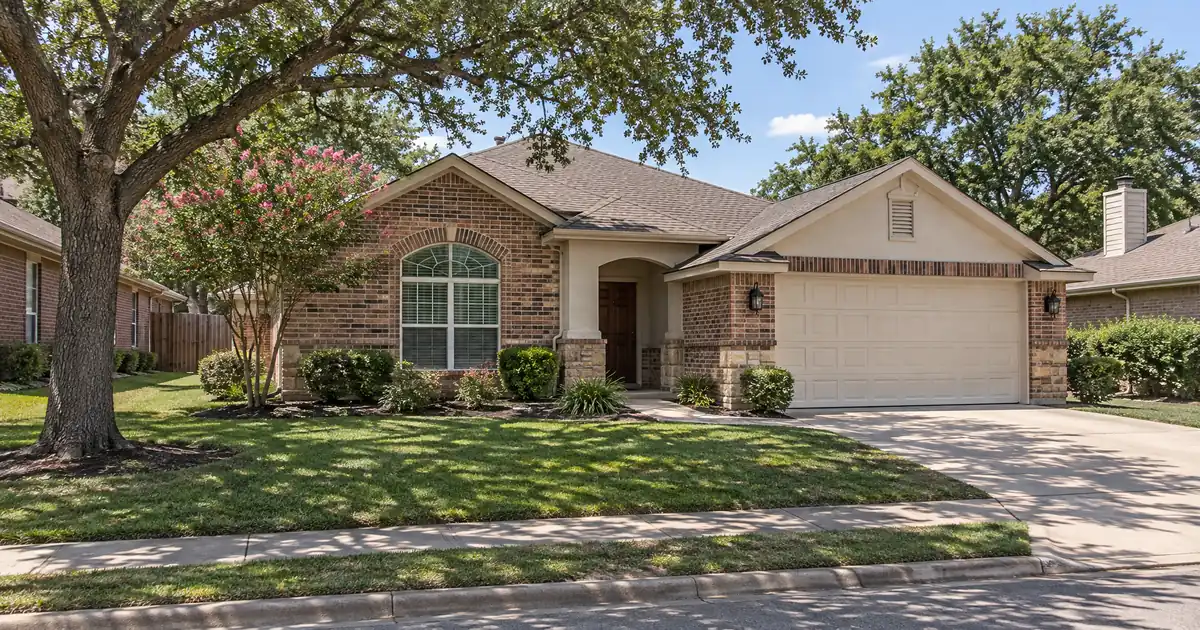
The Quick Read: A line of credit secured by a rental property, not the homestead, can pay for an ADU built on the homestead, because Texas home-equity limits attach to the homestead lien and the rental line sits outside them, subject to lender guidelines and a Texas attorney’s review. The rental’s equity funds the build. The homestead takes on no home-equity lien from this line, though a contractor who is not paid for new improvements can still assert a construction lien claim against it.
- On an investment property, the network’s equity lines top out at 70% combined loan-to-value (CLTV), with a $500,000 maximum line.
- The minimum credit score on an investment line is 700, and a score above that buys eligibility rather than extra leverage.
- At least 75% of the line is drawn at closing, so a phased build carries interest on most of the balance from the start.
- The rental must be titled in an individual’s name or a revocable living trust. An LLC cannot hold title on these lines.
- Whether the ADU counts as new construction or a renovation of existing space changes the contractor-lien rules on the homestead.
Lendmire is a broker. It arranges these lines through select wholesale partners, and every figure below is subject to lender guidelines and full file review. This is not a commitment to lend. These equity lines are available in the 16 states where Lendmire offers full-service lending, and Texas is one of them.
How large a line the equity supports in Texas.
An equity line is sized by combined loan-to-value, occupancy, and credit — not by rental coverage. Switch the occupancy or the credit band and the ceiling moves with it.
Investment-property lines require a 700 minimum credit score; second-home lines start at a 640 minimum and primary-residence lines at 600, and the combined-LTV ceiling steps down as the credit band drops on primary-residence and second-home lines and holds on investment-property lines; the line cap steps down on primary-residence lines and holds at every tier on investment-property and second-home lines.
A debt-to-income ratio above 45% requires 680+ credit. Profiles under 640 are limited to single-family homes. At least 75% of the approved line is drawn at closing. Ceilings, floors, and caps update from Lendmire’s centralized guideline source.
Line estimate
Illustrative estimate only — not a quote, Loan Estimate, approval, or commitment to lend. The rate is an editable assumption; equity-line pricing is variable through both the draw and repayment periods and never converts to fixed. Occupancy and credit drive the ceiling together: an investment property tops out at 70% combined LTV (minimum credit 700, line cap $500,000); a second home tops out at 90% combined LTV (minimum credit 640, line cap $500,000), with the ceiling stepping down as the credit band drops (the cap holds at every tier); a primary residence tops out at 80% combined LTV (minimum credit 600), and its $750,000 maximum line is available only at 75% combined LTV or below with a 700-or-better credit profile (720 on the longer-runway program) and a full appraisal. Lines above $500,000 require a full appraisal. Credit, debt-to-income, property type, and full underwriting review all affect the final line.
Which Property Secures the Line, and Which Gets the ADU?
Three different setups get lumped together online, and they follow different rules. The property that secures the line decides which Texas rules apply. The property that receives the ADU decides which construction-lien rules apply.
| Setup | Line secured by | ADU built on | Main issue |
|---|---|---|---|
| A | Rental | Same rental | Unbuilt ADU adds nothing to the borrowing base |
| B | Rental | Homestead | Cross-property use of funds; lien rules on the homestead |
| C | Homestead | Homestead | Texas home-equity loan rules apply in full |
This article is mostly about setup B. It is the one that surprises people. The line’s collateral is one property. The money goes into another. Nothing in the loan forces them to be the same, but a Texas real estate attorney or title company should confirm the structure on the specific file before anyone signs.
Why Texas Homestead Limits Stop at the Homestead
Texas home-equity borrowing is walled off by the state constitution, and the wall surrounds the homestead only. A rental sits outside it. That is the whole reason this strategy exists.
A Texas A&M Real Estate Research Center article on Texas home equity loans groups the covered products into three types: cash-out refinance, home equity loan and HELOC. The same article says these loans may not be taken on a secondary residence or on a rental or investment property. It also says the loan cannot be secured by any property other than the homestead, and that the owner must keep at least 20% equity.
The state’s implementing rules point the same direction. 7 TAC §153.8 says a homestead equity loan may not be secured by additional real or personal property, and it bars cross-collateralization clauses. In plain terms, a homestead equity loan cannot pull a rental into the collateral package.
The reverse is the useful part. Rules written for a homestead lien do not reach a lien on a rental. The one-lien-at-a-time limit, the 80% combined cap, the 12-day waiting period and the 12-month seasoning all bind a primary residence. In the wholesale network, Texas second homes and investment properties are eligible as non-homestead transactions.
This is a reading of the sources above, not a quoted rule that blesses the strategy. Treat it that way and have counsel review it.
One agency contrast is worth a single paragraph. Fannie Mae’s selling guide confirms the 80% LTV/CLTV limit on Texas homestead equity loans. It also bars HELOC subordinate financing on those loans. DSCR loans are not agency products, so that guide does not govern anything else here. It shows how tight the homestead route is. On the network side, a Texas primary residence also caps at 80% combined loan-to-value. Final terms depend on lender guidelines, property type, leverage, and the borrower’s complete credit picture.
How the Investment Line Is Underwritten, Step by Step
The investment line qualifies the borrower and the rental’s equity. It does not qualify the rental’s rent coverage the way a DSCR loan does. Here is how a typical file moves.
1. Confirm the rental can hold the line. The title must sit with an individual or an inter vivos revocable living trust. The property must be a single-family home, a 2-4 unit, a PUD, a townhome or a condominium. Manufactured homes, co-ops, condotels, log homes, commercial, mixed-use and agricultural zoning are not eligible. The property cannot exceed 10 acres in Texas.
2. Check the borrower profile. The minimum credit score on an investment line is 700. The score comes from a single-bureau model keyed to the primary wage earner. The report must be no more than 90 days old at closing, and rescores are not available. A borrower cannot exceed three lines in total, and anyone owning more than 15 financed properties is not eligible.
3. Run the debt-to-income test. The maximum DTI is 50%. The lender qualifies the borrower on the interest-only payment calculated on the maximum draw, not the amount the borrower plans to use. A borrower who intends to draw half the line is still tested as if the whole line were drawn.
4. Value the rental. An investment line is capped at $500,000. Full appraisals begin only above that size, so an investment line sits in the automated-valuation lane and commonly proceeds without a traditional appraisal. A borrower may request a full appraisal in any case.
5. Set the combined leverage. The first mortgage balance plus the new line cannot exceed 70% of the rental’s value on an investment property. Credit scores of 700 and 720 both reach that same 70% ceiling.
6. Draw the funds and pay the contractor. After closing, subsequent draws carry a minimum of $4,000 in Texas. Pay the contractor from the draws under a written contract, on a documented schedule with lien releases at each payment, because an unpaid contractor can assert a lien claim against the homestead being improved.
Two notes on the list. First, the rental must not be listed for sale, or have been listed within the past 60 days, because Texas properties in that position are ineligible. Second, the line can sit in first or second lien position, so a rental with no mortgage can take the line as a first lien.
Sizing the Line (Percentages, Not Guesses)
The line size is whatever room is left under the 70% combined ceiling, capped at $500,000. Work it as a share of value.
Say a rental carries a first mortgage equal to 45% of its value. Under a 70% combined ceiling, the line can reach roughly 25% of the value, subject to the lender’s valuation. Now say the first mortgage sits at 60% of value. Only about 10% of value remains. A rental with no mortgage can support a line up to 70% of its value, still bounded by the $500,000 cap and the minimum line size of $25,000.
Valuation matters more than most investors expect. An automated valuation reflects the rental as it stands today. On setup A, where the ADU goes on the same rental, the unbuilt ADU adds nothing to the borrowing base. Any improvement may support a higher appraised value later, depending on comps and underwriter review, but the line is sized on what exists at closing.
On setup B, the ADU does not touch the rental’s valuation at all. That is a point in its favor. The rental’s value and the homestead project are separate.
How a Line Behaves During a Build
An investment line draws like a credit line, but it does not behave like a construction loan. A few mechanics matter.
Most of the line is drawn up front. At least 75% of the line is drawn at closing. A contractor bills in stages, but the interest clock on most of the balance starts on day one. Borrowers who size the line to the full budget carry that interest while the slab is still being poured. Sizing the line closer to the real budget, rather than adding a large cushion, limits that carry.
The structure is a 5-year interest-only draw followed by a 25-year fully amortizing repayment. On investment lines this is the only structure offered. The payment steps up when the draw period ends.
Pricing floats and never converts to fixed. It floats through the draw and the repayment period. A borrower who needs a fixed payment should compare the alternatives below. Rent from the finished ADU can help carry the line, but it does not appear in the underwriting.
Overruns are the real risk. A line sized to the penny leaves no room for a change order, and a rental that already sits near the 70% ceiling has no extra capacity to tap. Build a cushion into the budget before choosing the line size, not after.
Construction Liens on the Homestead
Borrowing against the rental does not remove the homestead from the construction. Texas homestead protection has exceptions, and one of them is work and materials for new improvements. A contractor who is not paid may hold a valid claim against the homestead if the contract meets the formal requirements.
A Texas law firm’s overview of constitutional versus statutory liens says a new improvement needs a written contract. It adds that renovating existing improvements brings extra steps: spousal consent, timing limits and a 3-day right of rescission. A detached ADU on a bare part of the lot is generally treated as new improvements. A garage conversion or an attached ADU is a closer call, and counsel should decide which category applies before the contract is signed.
The practical protection is simple. Pay the contractor from the line draws on a documented schedule, get lien releases at each payment, and keep every contract in writing.
Where the General Rule Breaks
The rental-equity route has real limits. These are the cases that stop files.
- The rental sits in an LLC. The equity lines in the network require title in an individual’s name or a revocable living trust. LLCs, corporations, partnerships and irrevocable, blind or land trusts cannot hold title. This is the sharpest structural difference from a DSCR loan. A rental already deeded to an LLC needs a vesting change before the line can proceed, or the investor should look at a DSCR cash-out refinance instead.
- The homestead already carries a home-equity lien. Texas allows one at a time. That does not block a rental-secured line, but it does mean a homestead-secured line is not an option until the existing lien is gone.
- The rental is listed or recently listed. Texas rentals listed for sale in the past 60 days are ineligible.
- The ADU is an attached or converted space. The new-versus-renovation question above changes the contractor-lien formalities. It also affects whether spousal consent is needed on the construction contract.
- The rented ADU may change the homestead picture. How renting an ADU affects the homestead designation is a question for a Texas attorney. Confirm it before the first tenant moves in, because the answer can affect protections the owner currently relies on.
- The property type is excluded. Manufactured homes, log homes and barndominiums are not eligible collateral for these lines, and they are not offered under the network’s DSCR programs either.
- The borrower is already at the exposure cap. A borrower is limited to three lines in total, and one with more than 15 financed properties is not eligible.
The closest call is for a borrower whose rental is near the 70% ceiling. That borrower gains almost nothing from the line, and the DSCR route below may fit better.
Alternatives Compared
The investment line is one of several ways to pay for an ADU. They differ in what secures the debt and in how the payment behaves.
| Option | Secured by | Payment behavior | Texas catch |
|---|---|---|---|
| Rental-secured line | Rental | Floating, interest-only draw | Rental must be in a person’s or revocable trust’s name |
| Homestead-secured line | Homestead | Floating | One-lien rule, 80% cap, waiting period |
| DSCR cash-out refinance | Rental | Fixed structures available | Needs rental coverage and seasoning |
| Cash or savings | None | None | Uses liquidity |
A DSCR cash-out refinance on the rental is the closest substitute. Cash-out tops out around 75% LTV across most of the network, and about six months of seasoning is the common expectation. It qualifies primarily on property-level rental income covering the payment, subject to lender guidelines. Coverage of 1.00 is where select programs start, and a separate select-lender path takes coverage below 1.00 with leverage and terms adjusted. Fixed 30-year structures are the spine of the product, and 40-year and interest-only periods are available through select lenders.
The tradeoff is clear. The line is flexible and sized to the equity. The DSCR cash-out gives a fixed structure but needs the rental’s rent to carry the new loan. Lendmire’s piece DSCR HELOC vs DSCR Cash-Out Refinance to Build an ADU on a Texas Homestead covers that comparison in more depth.
Exit: Build, Lease, Retire the Line
The line is floating-rate debt with a step-up in payment after five years. Most investors want an exit plan before they sign.
On setup A, where the ADU sits on the rental, the finished ADU raises the property’s rent. A DSCR cash-out refinance can then retire the line and replace it with a fixed structure. DSCR compares rent to PITIA only, and clearing 1.00 is not the same as positive cash flow. Repairs, vacancy, management, utilities and capex sit outside the calculation, so an ADU’s income should be underwritten conservatively.
On setup B, the ADU sits on the homestead. A homestead is owner-occupied, so DSCR financing is not available on it. The exit is the rental’s own refinance. A DSCR cash-out on the rental can pay off the line, provided the rental has enough rent coverage, enough equity and the seasoning the lender wants. The ADU’s own rent helps the owner carry the line, but it does not count toward the rental’s coverage.
The complete DSCR loans guide walks through coverage, leverage and documentation for that refinance step.
A larger down payment or more equity lowers the payment and can lift the coverage ratio. It does not erase leverage caps, credit floors or property eligibility. The strongest files clear both tests: enough equity and enough rental coverage.
Key Terms Defined
Homestead. The Texas property a person lives in as a primary residence, which receives special protection from forced sale.
Investment property HELOC. A revolving line of credit secured by a non-owner-occupied rental rather than the borrower’s home.
CLTV. Combined loan-to-value, which is the first mortgage plus the new line divided by the property’s value.
Cross-collateralization. A loan term that pledges more than one property as security, which Texas rules bar on homestead equity loans.
Interest-only draw period. The stretch of the line where the payment covers interest only, before principal repayment begins.
DSCR. Debt service coverage ratio, which compares a rental’s monthly rent to its monthly PITIA.
Frequently Asked Questions
Does a Texas HELOC work on any property I own?
No. The Texas home-equity products are homestead-only, and the state’s research center says they may not be taken on a rental or investment property. A line on a rental is a separate product under a lender’s own guidelines.
What is the maximum leverage on an investment line?
On an investment property, the network’s ceiling is 70% CLTV, with a maximum line of $500,000. Credit scores of 700 and 720 both reach that same ceiling, and 700 is the minimum score. Terms are subject to lender guidelines.
Does the 12-day waiting period or the one-lien rule apply to the rental line?
No. Those rules bind a Texas primary residence. A Texas investment property is eligible as a non-homestead transaction in the network, so neither the waiting period nor the one-lien rule applies to the rental line. Confirm the structure with counsel.
Can I draw the line only as the contractor bills?
Not entirely. At least 75% of the line is drawn at closing, and later draws carry a $4,000 minimum in Texas. The line is a draw product, but it is not a pay-as-you-go construction loan.
Can the rental be in my LLC?
No. An LLC cannot hold title on these lines. The property must be held by an individual or a revocable living trust, so a rental in an LLC needs a vesting change or a DSCR cash-out instead.
If you are considering a home equity line and want to see how the numbers work, Lendmire can help you compare HELOC options based on the property, the equity available, credit profile, combined leverage, and your goals.
About Lendmire
Lendmire — NMLS# 2371349 — is a mortgage broker that arranges home equity lines of credit in its 16 full-service states through wholesale lenders, on primary residences, second homes and investment properties. Every line is subject to the lender’s guidelines and full underwriting. Scotsman Guide named Lendmire a Top Mortgage Workplace in both 2025 and 2026.
Get Started
Ready to find the right loan for you?
See your offer in seconds. No credit pull, no obligation.
Informational only. Not a Loan Estimate, approval, or commitment to lend. Program availability and eligibility are subject to lender guidelines, credit approval, property review, and underwriting.
References
1. Texas A&M Real Estate Research Center, What to Know About Home Equity Loans in Texas
2. 7 TAC §153.8
3. Fannie Mae Selling Guide B5-4.1-03
4. Fasthoff Law Firm, Constitutional versus Statutory Liens in Texas
This article is part of Lendmire’s investment property HELOC program — full qualification details, guidelines, and scenarios live on the program page.
Related reading: Top Investment Property HELOC Providers Without Your Spouse on the Loan · Banks That Offer an Investment Property HELOC Without Restarting Your Mortgage Term · Banks That Offer an Investment Property HELOC to Buy a Rental Property
Guides: Investment Property HELOC in Texas
Brandon Miller
Founder & CEO, Mortgage Loan Originator, Lendmire LLC
- Mortgage Loan Originator · NMLS# 1129696 · Verify on NMLS Consumer Access
- North Carolina Real Estate Broker · License# 343312 · Verify on NCREC
- North Carolina Insurance Producer · License# 19053198 · Property, Casualty, Life, Health · Verify on NAIC SBS
- Lendmire LLC · Firm NMLS# 2371349 · Verify firm licensure
Compliance and disclosures. Lendmire (NMLS# 2371349) is a licensed mortgage broker and is not a direct lender, depository institution, financial advisor, or tax professional. Content in this article is general market analysis and educational information — not financial, legal, or tax advice for any specific situation. Lendmire does not guarantee loan approval; every transaction is subject to underwriting by the funding lender. Mortgage pricing and loan program guidelines are subject to change at any time without notice and vary by borrower characteristics, property type, and state regulations. Lendmire complies with Equal Housing Opportunity. Licensure verification: NMLS Consumer Access.