
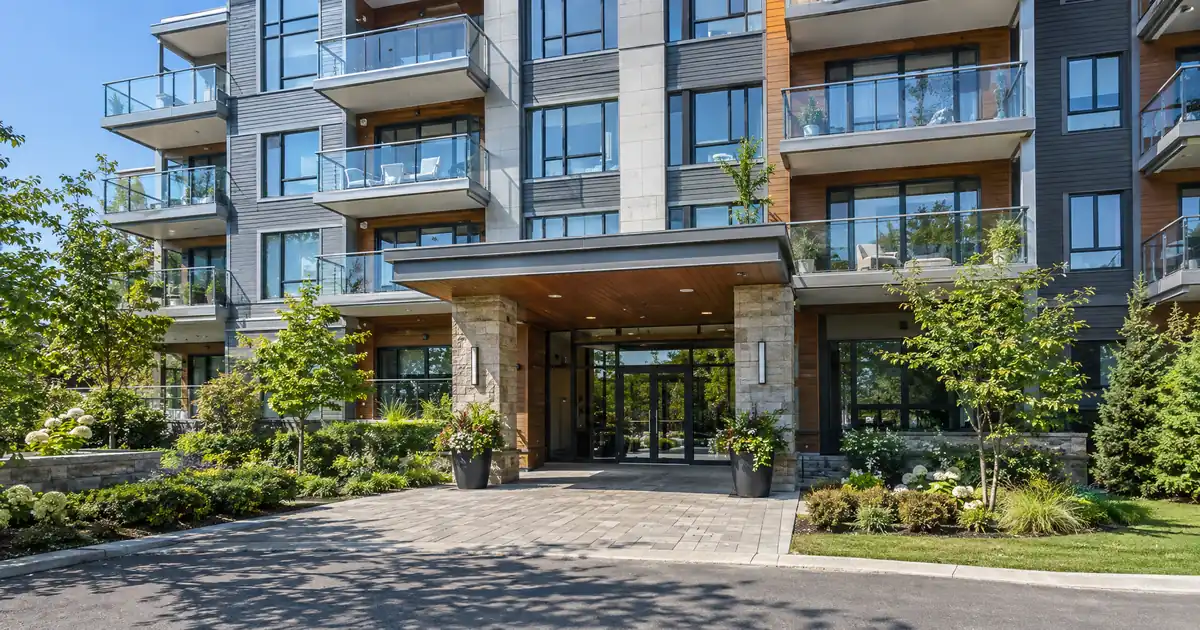
Complete Guide to 1099-Only Loans on Condo Properties — The Quick Read: A 1099-only loan lets a contractor, freelancer, or commission-based earner qualify with 1099 forms. You skip the usual two years of personal-income paperwork. Yes, you can use this loan on a condo. But the condo goes through its own separate review. Lenders judge your income and the building on two separate tracks. A clean file on one side never fixes a problem on the other. Investors buying a rental condo often compare this program against a DSCR loan. A DSCR loan skips personal income and looks at the property’s own cash flow instead.
Key Takeaways
- A 1099-only loan builds qualifying income from 1099 deposit history, not tax-return net income.
- Condo eligibility — warrantable versus non-warrantable — is decided entirely separately from how the borrower documents income.
- Insurance shortfalls and building repair issues, not borrower income, are the leading reasons condo projects fail review.
- Investors buying rental condos frequently compare this program against a DSCR loan.
- Two document tracks run in parallel: income paperwork and condo/HOA paperwork. Both have to clear.
What Is a 1099-Only Loan?
A 1099-only loan is an alternative-documentation mortgage. It calculates your qualifying income from 1099 forms, not from two years of tax returns. This loan works well for people whose income never shows up on a W-2. Think real estate agents, insurance producers, rideshare and delivery contractors, traveling healthcare workers, and freelancers paid on 1099-NEC or 1099-MISC.
What your deposits qualify you for in your market.
Alt-doc programs read 12 months of business or personal bank deposits instead of tax returns. Enter your average monthly deposits and see the income a lender would credit you.
The expense factor is set by the lender from your business type and profit-and-loss statement; it is not a number you choose. This widget quotes no rate and no payment.
Program parameters shown update from Lendmire’s centralized guideline source.
Estimate
Illustrative estimate only — not a quote, Loan Estimate, approval, or commitment to lend. Deposit average, expense factor, and housing ratio are editable assumptions; the expense factor a lender applies is set from your business type and documentation. No interest rate or monthly payment is quoted here. Purchase capacity is a simplified illustration and does not account for taxes, insurance, HOA dues, or other debts. Alt-doc income documentation is available on consumer mortgages in the states where Lendmire is licensed for consumer lending; actual terms vary by lender, borrower, and property.
This is a consumer-purpose mortgage. That matters because lenders underwrite and disclose it like a standard owner-occupied home loan. It’s not treated like an investment-property loan that qualifies on rental income. Most borrowers use it for a primary residence. Some lenders also allow it for second homes, and a few even allow investment purchases.
Schedule C deductions never enter the picture here. The lender isn’t averaging net income off a tax return. So a self-employed borrower who writes off a lot for tax purposes doesn’t automatically lose buying power. On a full-doc loan, those write-offs would hurt qualifying income. Here, qualification runs on documented income under the program’s own rules, subject to lender guidelines. There’s no single fixed formula that applies the same way everywhere.
How the Income Side Actually Gets Underwritten
The lender pulls 12 to 24 months of your 1099 forms. Then it cross-checks those forms against your bank deposit history. Next, it applies an expense factor to your gross income to find your usable qualifying income. That qualifying figure — not your raw 1099 total — gets tested against your debts.
Here’s the sequence most programs in the wholesale network follow:
1. Collect 12–24 months of 1099 forms from the same line of work. 2. Verify deposits against bank statements to confirm the income is real and ongoing. 3. Apply a lender-specific expense factor to estimate net usable income (this varies by program — nobody in the network uses the same number). 4. Calculate debt-to-income using that adjusted figure, not the gross 1099 total. 5. Layer in credit, reserves, and — if the subject property is a condo — the separate project review described below.
Some programs want two full years of 1099 history before they’ll even look at a file. A handful will work with just one year if you show strong compensating factors. Those factors include solid reserves, a long tenure in the same line of work, or a credit score well above the minimum. This flexibility is program-specific. It’s also one of the bigger differences between lenders in this space.
Two Tracks: The Borrower and The Building
A 1099-income file and a condo file clear on two completely separate tracks. A strong contractor with great 1099 history can still get declined because of the building. And a perfectly warrantable condo can’t rescue an income file that can’t carry the payment.
The income track asks one question: is this person’s income documented well enough, and stable enough, to support the debt? The condo track asks a completely different question. Is this specific building sound enough for a lender to take on the risk? That question covers insurance, finances, and ownership structure. Neither track shortcuts the other.
Warrantable vs. Non-Warrantable: Why the Building Matters
A warrantable condo project meets the standard eligibility rules lenders look for. A non-warrantable project has at least one disqualifying feature. Common problems include insurance gaps, pending lawsuits, heavy investor concentration, deferred maintenance, or too much commercial space in the building. This warrantable/non-warrantable label comes from Fannie Mae’s own vocabulary. DSCR and non-QM lenders set their own overlays, but they still use this same basic distinction. It’s the single biggest variable in condo financing.
Reviewers lean on a few standard tools regardless of which loan program is attached to the file:
- A condo/HOA questionnaire completed by the property manager or board, covering budget health, litigation, delinquency rates, and ownership concentration.
- Form 1073, the individual condo unit appraisal report, which forces disclosure of whether any single entity owns more than 10% of the units, whether the building came from a conversion, and how much commercial space exists (Fannie Mae).
- The master insurance policy, which typically covers the building shell and, depending on the policy type, either original fixtures or nothing beyond bare walls — meaning the unit owner’s separate HO-6 policy has to fill whatever gap the master policy leaves (Hippo).
Insurance shortfalls cause most project flags, by a wide margin. Fannie Mae’s own condo-status data shows only 3.6% of reviewed projects carry an outright ineligible status, based on a recent snapshot. The top two reasons are insufficient master property insurance and critical repair issues, including failed local inspection requirements (Fannie Mae Condo Status Finder). Non-QM and DSCR condo declines track those same two root causes, even outside that system.
Condos aren’t a small slice of the market. The Foundation for Community Association Research estimates roughly 373,000 community associations nationwide. Together they house about 78.1 million residents. Condo communities make up 35%–40% of that total (Foundation for Community Association Research). An investor who can’t get comfortable with condo underwriting is cutting out a real chunk of available inventory.
Documentation: Two Tracks, Two Checklists
The paperwork splits cleanly into two sides: income and building. Both sides need to move at the same time. Otherwise the file stalls, waiting on one side or the other.
| Income-side documents | Condo/HOA-side documents |
|---|---|
| 12–24 months of 1099 forms | Completed HOA/condo questionnaire |
| Bank statements matching deposits | Master insurance certificate |
| Proof of ongoing work (contracts, letters) | HOA budget and reserve study |
| Credit report and liabilities | Litigation disclosure |
| Asset/reserve statements | Delinquency and ownership-concentration data |
The condo paperwork is usually the slower half of the file. Your 1099 forms are typically already in your hands. But the HOA questionnaire and insurance certificate often take longer to get from a property manager. Request them the day your offer gets accepted. Don’t wait for the lender to ask.
Where the General Rule Breaks: The Edge Cases
Non-warrantable status isn’t a dead end. It just moves the loan out of agency channels and into portfolio, non-QM, or 1099-specific programs built for this exact scenario. Documentation and leverage typically look different than on a clean warrantable file. The building features that trigger this label are almost always about the property, not the person applying. Those features include insurance gaps, litigation, investor concentration, and deferred maintenance.
Condotels and mandatory rental-pool buildings sit in their own category. Projects operated like a hotel or motel are excluded from agency financing altogether, even when units are individually owned (Fannie Mae Selling Guide). Non-QM lenders underwrite them separately, with their own overlays. They don’t treat them like a standard condo.
New or limited-review projects sometimes get an abbreviated agency review. But that shortcut has no reliable non-QM or 1099-only equivalent. Most programs in this space run the full condo questionnaire, no matter how new the building is. Don’t assume a small or newly converted project skips scrutiny.
Single-payer or short-history 1099 income is its own friction point. A borrower with just one client and under a year of history looks very different to an underwriter than a contractor with three years across multiple payers. Diversified, longer-tenured 1099 income clears easier than concentrated, brand-new income. Every time.
Insurance defects that aren’t obvious on the surface can flag an otherwise solid building. Watch for a deductible above 5% of the policy limit, coverage based on actual cash value instead of replacement cost, or no guaranteed replacement-cost provision. These issues get caught during the insurance certificate review. They’re fixable at the association level far more often than borrowers assume.
1099-Only vs. DSCR for an Investment Condo
For an investment condo purchase, the real decision goes beyond income documentation. It’s really about whether personal income belongs in the file at all. A 1099-only program still builds a personal qualifying income figure and tests it against your debts. A DSCR loan removes that step entirely. It qualifies primarily on the property’s rental income covering the payment, subject to lender guidelines. HOA dues become a direct input into that coverage ratio, not a line item in a personal DTI calculation. Lendmire’s complete DSCR loans guide walks through that mechanic in more depth.
| Factor | 1099-Only Loan | DSCR Loan |
|---|---|---|
| Reviewed on | Personal 1099 income, verified via deposits | Property’s rental income |
| Loan purpose | Consumer-purpose (TRID applies) | Business-purpose (exempt from TRID) |
| Condo review | Same warrantable/non-warrantable process | Same warrantable/non-warrantable process |
| Typical use | Primary residence, some second homes | Investment/rental condos |
Some lenders in the network will consider ratios below the typical 1.00x DSCR floor on select programs. Leverage and terms adjust when they do. This isn’t a standard offering across every program. If you’re weighing structure, check Lendmire’s guide to a no-ratio DSCR loan on condo properties. Its breakdown of an interest-only DSCR loan on condo properties also covers structural variations worth comparing against a straight 1099 file.
Non-QM production overall is projected to keep climbing. A major bank’s research arm projects roughly $175 billion in 2026 non-QM production, up from $108 billion in 2025. DSCR and investor products now make up about half of that collateral (HousingWire). Self-employed and 1099 borrowers are a real part of that growth, not a rounding error.
Key Terms Defined
- 1099-only loan: A mortgage that qualifies income from 1099 forms rather than tax-return net income.
- Warrantable condo: A project that meets standard eligibility characteristics — sound insurance, no active litigation, limited investor concentration.
- Non-warrantable condo: A project with at least one disqualifying feature, reviewable through portfolio or non-QM channels rather than standard agency loans.
- HOA questionnaire: A form the property manager or board completes covering the building’s financial and legal health.
- Expense factor: A percentage a lender applies to gross 1099 income to estimate real, usable qualifying income.
- Condotel: A condo project operated like a hotel or motel, excluded from agency financing and underwritten separately by non-QM lenders.
What the Decision Looks Like in Practice
The condo review runs almost the same whether you choose 1099 documentation or a DSCR loan. Insurance, HOA financials, and ownership concentration get checked either way. What changes is the borrower-side math. A 1099 program builds a personal income number and runs a DTI test. DSCR skips that step and tests the property instead.
For most primary-residence purchases and rate-and-term refinances, select lenders in the network go up to roughly 90% loan-to-value on strong 1099 files. An asset-depletion alternative also exists for borrowers who’d rather qualify from liquid assets than income. That path typically runs to a somewhat lower leverage point than the income-documented route. Investment-property cash-out on this documentation type typically caps closer to 75% LTV. Loan sizes across the network generally run from around $125,000 to $3,500,000. Reserves commonly land near six months of the housing payment. These are typical ranges from select wholesale-network guidelines, not universal figures. Every file gets underwritten individually.
An investor who buys a condo now on 1099 documentation may later want to shift the property to a rental-income review framework. That path is real — Lendmire’s investment property refinance playbook covers how that transition typically works. Anyone weighing a small multifamily building instead of a single condo unit should know the mechanics differ. It’s worth reading the 1099-only loan guide for 2-4 unit properties side by side with this one.
This is a consumer mortgage. So it follows standard federal disclosure timelines under Regulation Z’s TRID framework. That’s a different regulatory lane than a DSCR business-purpose loan, which is exempt from those disclosures. Lendmire’s consumer-purpose lending, including 1099-only programs, currently reaches 16 states. Its DSCR investor programs operate on a separate, much wider footprint across 39 states plus Washington, D.C.
Anyone weighing this decision on a real property can call Lendmire at 828-256-2183 or request a quote. That way you see how the income side and the condo side stack up together, instead of guessing at either one alone.
This article is provided for general information. It is not legal or tax advice. Loan program terms, condo eligibility rules, and qualification outcomes are subject to lender guidelines and can change. Anyone relying on a specific structure should confirm current terms directly and speak with a qualified attorney or CPA about their own situation.
Frequently Asked Questions
Can I use a 1099-only loan on a non-warrantable condo?
Sometimes, but it depends heavily on the specific program and the exact reason the building got flagged. Non-warrantable status pushes the file toward portfolio or non-QM channels instead of standard agency financing. Those same channels often offer 1099-only documentation in the first place. So the two issues frequently land with the same type of lender, just with adjusted leverage and terms.
Do HOA dues count against my 1099 qualifying income?
Yes. HOA dues get added to the housing payment used in your debt-to-income calculation. That’s true on any condo purchase, no matter how you document income. A higher monthly dues figure leaves less income available to qualify for the loan amount.
How many years of 1099s do I typically need?
Most programs want 12–24 months of consistent 1099 history from the same type of work. A handful of lenders will consider a single year if you show strong compensating factors, like solid reserves, a long track record in the same field, or credit well above the minimum. Still, two years remains the more common baseline across the network.
Is a condotel eligible for a 1099-only loan?
Condotels and mandatory rental-pool buildings sit outside standard agency and most conventional condo financing. Non-QM lenders treat them as their own risk category. Some programs will consider them with adjusted terms, but it’s a narrower lane than a standard warrantable condo.
What’s the real difference between a 1099-only loan and a DSCR loan on a rental condo?
A 1099-only loan still builds a personal income number from your 1099s and tests it against your debts. A DSCR loan skips that step. It qualifies primarily on the property’s own rental income covering the payment, subject to lender guidelines. The condo project review, covering insurance, HOA financials, and ownership concentration, runs almost the same either way.
About Lendmire
Lendmire is a non-QM DSCR mortgage broker, NMLS# 2371349. It works with wholesale lenders across roughly 40 markets nationwide. The company connects borrowers with lenders offering DSCR and other alternative-documentation programs, including 1099-only financing. Each match depends on the guidelines that fit a borrower’s income and property situation. Program availability, leverage, and terms vary by lender and are subject to change. Scotsman Guide named Lendmire a Top Mortgage Workplace in both 2025 and 2026.
Get Started
Ready to find the right loan for you?
In about 30 seconds you can review financing options available for your home or investment property. No commitment required.
Informational only. Not a Loan Estimate, approval, or commitment to lend. Program availability and eligibility are subject to lender guidelines, credit approval, property review, and underwriting.
References
1. Fannie Mae — Official Form 1073
2. Hippo — HO-6 Insurance Explained
3. Fannie Mae — Condo Status Finder FAQ
4. Foundation for Community Association Research — Statistical Review
5. HousingWire — Non-QM Originations Set to Reach $175B in 2026
Brandon Miller
Founder & CEO, Mortgage Loan Originator, Lendmire LLC
- Mortgage Loan Originator · NMLS# 1129696 · Verify on NMLS Consumer Access
- North Carolina Real Estate Broker · License# 343312 · Verify on NCREC
- North Carolina Insurance Producer · License# 19053198 · Property, Casualty, Life, Health · Verify on NAIC SBS
- Lendmire LLC · Firm NMLS# 2371349 · Verify firm licensure
Compliance and disclosures. Lendmire (NMLS# 2371349) is a licensed mortgage broker and is not a direct lender, depository institution, financial advisor, or tax professional. Content in this article is general market analysis and educational information — not financial, legal, or tax advice for any specific situation. Lendmire does not guarantee loan approval; every transaction is subject to underwriting by the funding lender. Mortgage pricing and loan program guidelines are subject to change at any time without notice and vary by borrower characteristics, property type, and state regulations. Lendmire complies with Equal Housing Opportunity. Licensure verification: NMLS Consumer Access.


