
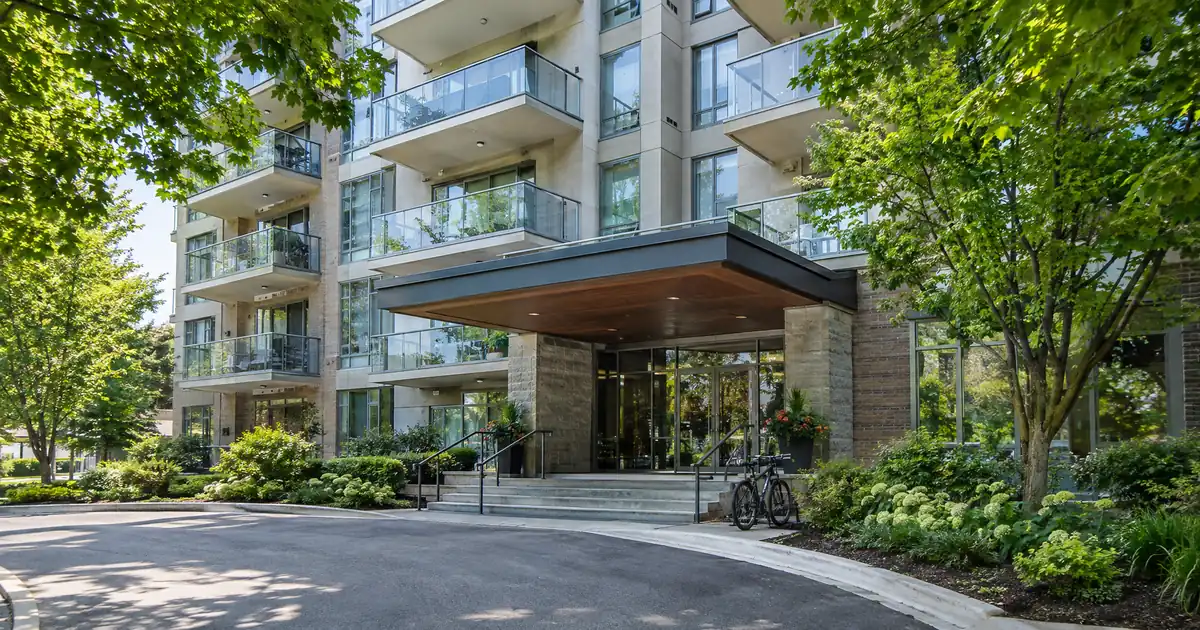
The Quick Read: Yes, but only when the borrower and the building both pass review, because the lender reads the condo project through a questionnaire sent to the HOA or its manager. Through Lendmire’s wholesale network, an investment line is typically capped at 70% CLTV and $500,000, the title must sit with an individual or revocable trust, and non-warrantable condos can be eligible subject to project review.
- Two separate gates apply: the borrower file and the building review. Strength in one does not rescue the other.
- Investment lines on this network are limited to a 700 minimum credit profile and a 70% CLTV ceiling.
- An LLC cannot hold title on these lines, so an LLC-owned condo needs a vesting change or a DSCR cash-out refinance.
- Condotels, co-ops, and mixed-use buildings are not offered.
- The questionnaire gathers facts; it is not an approval.
Why Is This Harder Than a Primary-Home HELOC?
Many retail lenders simply do not offer lines on rental condos. NerdWallet’s explainer says an investment-property HELOC is harder to get than one on a primary home, because lenders see higher default risk when borrowers protect their own home first. Many large retail lenders either skip the product or decline condos outright. A declined application often means the product was never on the menu, not that the file was weak.
How large a line the equity supports.
An equity line is sized by combined loan-to-value, occupancy, and credit — not by rental coverage. Switch the occupancy or the credit band and the ceiling moves with it.
Investment-property lines require a 700 minimum credit score; second-home lines start at a 640 minimum and primary-residence lines at 600, and the combined-LTV ceiling steps down as the credit band drops on primary-residence and second-home lines and holds on investment-property lines; the line cap steps down on primary-residence lines and holds at every tier on investment-property and second-home lines.
A debt-to-income ratio above 45% requires 680+ credit. Profiles under 640 are limited to single-family homes. At least 75% of the approved line is drawn at closing. Ceilings, floors, and caps update from Lendmire’s centralized guideline source.
Line estimate
Illustrative estimate only — not a quote, Loan Estimate, approval, or commitment to lend. The rate is an editable assumption; equity-line pricing is variable through both the draw and repayment periods and never converts to fixed. Occupancy and credit drive the ceiling together: an investment property tops out at 70% combined LTV (minimum credit 700, line cap $500,000); a second home tops out at 90% combined LTV (minimum credit 640, line cap $500,000), with the ceiling stepping down as the credit band drops (the cap holds at every tier); a primary residence tops out at 90% combined LTV (minimum credit 600), and its $750,000 maximum line is available only at 75% combined LTV or below with a 700-or-better credit profile (720 on the longer-runway program) and a full appraisal. Lines above $500,000 require a full appraisal. Credit, debt-to-income, property type, and full underwriting review all affect the final line.
That is the gap a wholesale network fills. A broker sees many lenders’ guidelines at once, so the question shifts from “will my bank do this?” to “which program fits this property and this title?” Lendmire brokers these lines through select wholesale partners in its 16 full-service states (AL, CA, CO, FL, GA, IN, MI, MT, NM, NC, OH, PA, TN, TX, VA, WA). That footprint is narrower than its 41-market DSCR platform, and every figure here is subject to lender guidelines and full file review.
What Are the Two Reviews, Not One?
Every condo file runs through two gates, and they do not trade off against each other.
| Factor | Borrower review | Building review |
|---|---|---|
| What is checked | Credit, DTI, equity, title | Project finances, litigation, ownership mix |
| Who supplies it | The borrower | HOA or management company |
| Key document | Credit report, equity picture | Condo questionnaire |
| Can it be fixed? | Often, with time or equity | Only if the building changes |
The borrower side on an investment line is specific. Credit must be 700 or better, and 720 reaches the same 70% CLTV as 700, so a higher score buys eligibility rather than leverage. DTI tops out at 50%, and qualifying runs on the interest-only payment calculated on the maximum draw. Lines at or below $500,000 ordinarily use an automated valuation rather than a traditional appraisal, though a borrower can request a full one.
The building side is where files stall. Two investors with the same score and equity can get opposite outcomes, because one building passes and the other does not.
Key Terms Defined
Condo questionnaire: A form sent to the HOA or manager asking for project-level facts such as finances, insurance, litigation, and ownership.
Warrantable condo: A condo project that meets agency project standards; the term comes from the agency world, not from DSCR or HELOC programs.
Non-warrantable condo: A project that fails one or more agency standards, often over commercial space, investor concentration, litigation, or developer control.
CLTV: Combined loan-to-value, meaning all liens on the property divided by its value.
Condotel: A condo operated like a hotel with a rental pool; it is not offered on this network.
What Does the Questionnaire Actually Ask?
The questionnaire is a request for project-level facts, and the standard version is long. Fannie Mae publishes it as Form 1076, the Condominium Project Questionnaire – Full Form, and Freddie Mac issues the same form as Form 476, with sections on completion, commercial use, and ownership. An investment line is not an agency product, so those forms do not govern it. Lenders in the non-QM space often borrow the form or use their own.
Here is what the answers reveal and why a lender cares:
| Topic | Why the lender cares | What a problem looks like |
|---|---|---|
| Reserves and budget | Can the HOA fund repairs? | Thin reserves, rising dues |
| Delinquent dues | Cash-flow health of the project | High share of owners behind |
| Litigation | Legal and repair exposure | Active suits against the HOA |
| Owner concentration | Investor-heavy buildings carry more risk | Few owner-occupants |
| Commercial space | Mixed-use character | Large non-residential share |
| Insurance | Master policy adequacy | Gaps in coverage |
| Completion and control | Phasing and developer risk | Developer still runs the HOA |
A questionnaire is not an approval. It collects information, and the lender decides what to do with it.
Does Non-QM Mean No Building Review?
No. That is the most common misunderstanding in this space. Non-QM changes who sets the rules; it does not remove the review. A non-QM lender writes its own project standards instead of following agency ones.
A few sellers advertise programs that skip the questionnaire. Treat that as a narrow, program-specific exception, and ask what the program trades away. Across our wholesale network, the working assumption for a rental condo is that the project gets read.
Can a Non-Warrantable Condo Qualify?
Often, yes, subject to project review. Failing agency standards does not automatically end the conversation in non-QM. The network accepts warrantable and non-warrantable condos as eligible property types, and each lender judges the specific building. As governingdocs.dev notes, a project that fails the questionnaire often leaves only portfolio, non-QM, or cash financing.
The typical triggers are heavy commercial space, investor concentration, litigation, and developer control. Newly built or phased projects with developer-run HOAs are a frequent review problem.
Not offered: condotels, co-ops, and mixed-use or commercial-zoned property. A residential unit sitting above a retail podium is a separate question, and it is reviewed on the commercial share the questionnaire reports.
How Do You Get the Questionnaire Without Losing Weeks?
Order it before spending money on anything else. The sequence that protects the borrower:
1. Confirm the property is held by you personally or by a revocable trust.
2. Request the questionnaire from the HOA or management company early.
3. Gather the companion documents: budget, declaration, master insurance certificate, and rental rules.
4. Read the HOA’s rental rules yourself, including caps, minimum lease terms, and short-term restrictions. Short-term rental rules can vary by city, county, HOA, and property type, so investors should confirm local rules before relying on projected rental income.
5. Only then pay for valuation or move to a full file.
An incomplete questionnaire is a common quiet delay, so a stalled manager is worth following up on directly. Lenders generally want a current questionnaire for each transaction, so recycling an old one is a gamble.
Why Does Title Matter So Much?
Because the line cannot be made to an LLC. Fee simple or leasehold title must be held by the individual borrower or an inter vivos revocable living trust. LLCs, corporations, partnerships, and irrevocable, blind, or land trusts cannot hold title. That is the sharpest structural difference from a DSCR loan, where entity ownership is common subject to lender program eligibility.
If the condo already sits in an LLC, there are two paths: change the vesting, or use a DSCR cash-out refinance instead. Re-deeding has its own consequences, so weigh it before assuming it is free.
HELOC or DSCR Cash-Out on a Condo Rental?
The right product depends on the entity, the equity, and the building. Both depend on the same project review.
| Factor | Investment HELOC | DSCR cash-out refinance |
|---|---|---|
| Title | Individual or revocable trust | LLC possible, per program terms |
| Reviewed on | Credit, DTI, equity | Rent covering the payment |
| Leverage | 70% CLTV on an investment property | Up to about 75% LTV on a cash-out |
| Size | $25,000 to $500,000 on investment | Up to $3,000,000 on standard programs |
| Structure | 5-year draw, 25-year repayment | Typically 30-year fixed spine |
If the investor owns several rentals in an entity, DSCR is usually the more natural fit. If the condo is held personally with a first mortgage worth keeping and a modest draw is the goal, the line can fit. Our complete DSCR loans guide covers how the rent-based path works, and DSCR compares rent to the full monthly obligation only. Clearing 1.00 is not the same as positive cash flow, since repairs, vacancy, and management sit outside it. Condo dues add to the obligation, so a special assessment or dues increase can erode coverage on a file that previously passed.
A HELOC also borrows against existing equity. It cannot fund the purchase of the condo itself, and a recent purchase with thin equity often cannot support a line.
What If the Building Fails Review?
Match the problem to the next step.
| Problem | Practical next step |
|---|---|
| Litigation or assessment pending | Wait for resolution, then reapply |
| Heavy commercial share | Try a different lender’s project standards |
| Condotel or co-op structure | Not offered; choose another asset |
| LLC title | Vesting change or DSCR cash-out |
| Thin equity | Borrow against a different property or wait |
Borrowing against a different property you own is a real alternative, though it puts another asset at risk. Lendmire’s piece Banks That Offer an Investment Property HELOC on a Condo With a Building Questionnaire covers how to shop the category, and the best investment property HELOC program on a condo with a building questionnaire piece covers comparing structures.
What Is Market Advice Versus Network Reality?
On Lendmire’s network, an investment line sits at 70% CLTV with a 700 minimum credit profile, and no tier exists above 70% for investment property.
Also keep exposure in mind: a borrower is limited to three lines, and an owner with more than 15 financed properties is not eligible.
Frequently Asked Questions
Can a rental condo qualify if the HOA is slow to return the questionnaire?
The file generally cannot move forward without it, so the delay is real. Contact the manager directly, confirm what form the lender wants, and send the companion documents while you wait. Ordering it first keeps you from paying for valuation on a building that may not pass.
Does a high credit score override a weak building?
No. Credit and equity clear the borrower gate only. On an investment line, credit above 700 does not raise the 70% CLTV ceiling, and a failing building still stops the file.
Can I use an LLC-owned condo for this line?
Not on these programs. Title must be held by an individual or a revocable living trust. An LLC-held condo needs a vesting change or a DSCR cash-out refinance, subject to program terms.
Is a non-warrantable condo an automatic decline?
No. Non-warrantable condos are eligible property types on this network, subject to project review. The lender looks at the specific building, so outcomes differ by lender and by project.
Will a no-questionnaire program solve the problem?
Rarely. Such programs are narrow and program-specific, and the tradeoffs usually show up in leverage, terms, or eligibility. Do not plan around skipping the building review.
If you are considering a home equity line and want to see how the numbers work, Lendmire can help you compare HELOC options based on the property, the equity available, credit profile, combined leverage, and your goals.
About Lendmire
Lendmire — NMLS# 2371349 — is a mortgage broker that arranges home equity lines of credit in its 16 full-service states through wholesale lenders, on primary residences, second homes and investment properties. Every line is subject to the lender’s guidelines and full underwriting. Scotsman Guide named Lendmire a Top Mortgage Workplace in both 2025 and 2026.
Get Started
Ready to find the right loan for you?
See your offer in seconds. No credit pull, no obligation.
Informational only. Not a Loan Estimate, approval, or commitment to lend. Program availability and eligibility are subject to lender guidelines, credit approval, property review, and underwriting.
References
1. NerdWallet – HELOC on an Investment Property
2. Fannie Mae Selling & Servicing Guide Forms
4. governingdocs.dev – failed questionnaire
This article is part of Lendmire’s investment property HELOC program — full qualification details, guidelines, and scenarios live on the program page.
Related reading: Best Investment Property HELOC Program After Paying Off an Earlier HELOC · Banks That Offer an Investment Property HELOC With Only 15 Percent Equity in the Rental · How to Qualify for an Investment Property HELOC Before Your Return Is Filed
Brandon Miller
Founder & CEO, Mortgage Loan Originator, Lendmire LLC
- Mortgage Loan Originator · NMLS# 1129696 · Verify on NMLS Consumer Access
- North Carolina Real Estate Broker · License# 343312 · Verify on NCREC
- North Carolina Insurance Producer · License# 19053198 · Property, Casualty, Life, Health · Verify on NAIC SBS
- Lendmire LLC · Firm NMLS# 2371349 · Verify firm licensure
Legal disclosures. Lendmire (NMLS# 2371349) is a state-licensed mortgage brokerage that arranges financing through wholesale lender relationships. Lendmire is not a direct lender, depository institution, or registered financial advisor. The discussion above is general informational content about real estate financing — it is not financial, legal, or tax advice, and readers should consult licensed professionals for guidance on their individual circumstances. Loan inquiries are subject to lender underwriting; this article does not represent a commitment to lend. Loan terms, rates, and qualification standards vary by borrower, property, and state, and are subject to change at any time. Equal Housing Opportunity. NMLS Consumer Access: nmlsconsumeraccess.org.