
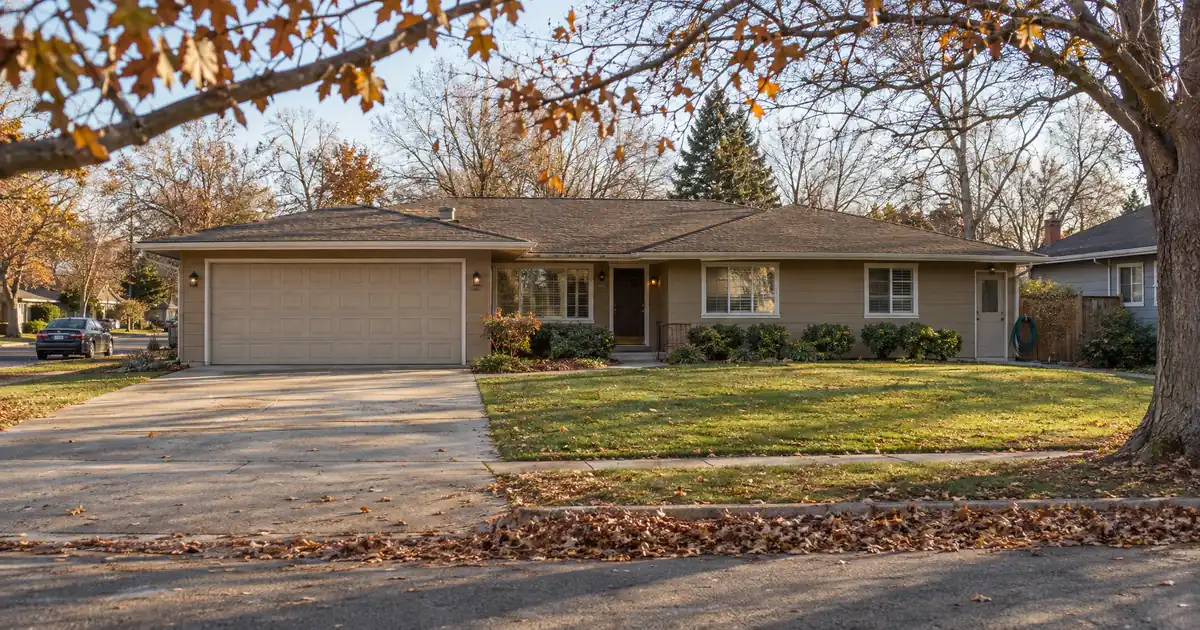
The Quick Read: It depends on the lender, because a signed job offer letter can support a new-income file at some lenders, while others want the first pay stub, and no offer letter of any kind can secure a line on a property you do not own. A rental-property line is approved on your personal income, credit, and equity, so a job change is a real underwriting event. The cleanest move is to open the line before the new job starts.
- On an investment property, the network’s ceiling is 70% combined loan-to-value (CLTV), with a 700 minimum credit score and a maximum line of $500,000, subject to lender guidelines.
- The property must be titled in your own name or an inter vivos revocable living trust. An LLC cannot hold title on this product.
- A purchase offer on a house you do not own yet cannot collateralize a line. The line has to sit on something you already own.
- If personal income is too messy to document, a DSCR cash-out refinance qualifies primarily on property-level rental income covering the payment, subject to lender guidelines.
Which Offer Letter Do You Mean?
Two different documents get called an offer letter, and they do different jobs. A job offer letter is evidence of future income. A purchase offer is a contract proposal on a property. Mixing them up is where most of the confusion starts.
How large a line the equity supports.
An equity line is sized by combined loan-to-value, occupancy, and credit — not by rental coverage. Switch the occupancy or the credit band and the ceiling moves with it.
Investment-property lines require a 700 minimum credit score; second-home lines start at a 640 minimum and primary-residence lines at 600, and the combined-LTV ceiling steps down as the credit band drops on primary-residence and second-home lines and holds on investment-property lines; the line cap steps down on primary-residence lines and holds at every tier on investment-property and second-home lines.
A debt-to-income ratio above 45% requires 680+ credit. Profiles under 640 are limited to single-family homes. At least 75% of the approved line is drawn at closing. Ceilings, floors, and caps update from Lendmire’s centralized guideline source.
Line estimate
Illustrative estimate only — not a quote, Loan Estimate, approval, or commitment to lend. The rate is an editable assumption; equity-line pricing is variable through both the draw and repayment periods and never converts to fixed. Occupancy and credit drive the ceiling together: an investment property tops out at 70% combined LTV (minimum credit 700, line cap $500,000); a second home tops out at 90% combined LTV (minimum credit 640, line cap $500,000), with the ceiling stepping down as the credit band drops (the cap holds at every tier); a primary residence tops out at 90% combined LTV (minimum credit 600), and its $750,000 maximum line is available only at 75% combined LTV or below with a 700-or-better credit profile (720 on the longer-runway program) and a full appraisal. Lines above $500,000 require a full appraisal. Credit, debt-to-income, property type, and full underwriting review all affect the final line.
| Item | Job offer letter | Property purchase offer |
|---|---|---|
| What it proves | Future salary and start date | Intent to buy a specific property |
| Can it support a HELOC? | Sometimes, lender by lender | No, you do not own the collateral |
| What lenders still want | Pay stubs, VOE, credit, equity | Title to something you already own |
| Main risk | Lender waits for first pay stub | Line is not in place when you need it |
The rest of this article takes each in turn. It starts with the job letter, because that is what most searchers mean.
Key Terms Defined
CLTV: Combined loan-to-value, the total of all liens on the property divided by its value.
HELOC: A revolving line of credit secured by property equity, with a draw period followed by a repayment period.
VOE: Verification of employment, a check that confirms you hold the job and pay you reported.
Offer letter: A signed employer document stating your role, pay, and start date.
Source of funds: The documented origin of cash used for a down payment or closing costs.
DSCR: Debt service coverage ratio, a property’s monthly rent divided by its full monthly payment (principal, interest, taxes, insurance, and any HOA dues).
Can a Job Offer Letter Qualify You for the Line?
Sometimes. An investment-property HELOC is underwritten on you, not on the rental. The file tests your income, debt-to-income ratio, credit, and equity. Whether a given lender takes a signed offer letter in place of pay history is a lender policy choice, and the network’s lenders do not all treat it the same way. NerdWallet notes that rental-property lines come from a smaller pool of lenders than primary-home lines, and that requirements are strict. That fits what shows up across the network.
Several stages tend to decide how the file reads:
1. Offer signed, job not started. Some lenders will work from the letter plus pay stubs from your current job. Others will not move until you have started. Ask which camp the lender is in before you spend time on an application.
2. Started, no pay stub yet. The file often waits for early pay evidence. A verification of employment may be ordered near closing, so the employer has to be reachable and willing to confirm.
3. First pay stub in hand. This is the easiest version of the file. Pay is documented, and the lender sees a real employment record.
A few facts change the treatment inside any stage. A new job in the same field with fixed salary draws fewer questions. A new field, even at higher pay, draws more. A move from salary to commission or contract pay is read as variable income, and the lender may want more history before counting it. A contingent offer, where conditions remain open, is weaker than a clean one.
What the file usually needs
When income has changed, expect to supply some mix of these:
- The signed offer letter showing salary and start date.
- Recent pay stubs from the old job, which bridge the gap.
- Leases, mortgage statements, and a rental-income schedule for the properties you own.
- A letter explaining the job change, if the underwriter asks.
- Credit, which on the network’s investment lines starts at a 700 minimum.
Debt-to-income is capped at 50%, and the payment is qualified on the interest-only amount at the maximum draw. That detail matters for job changers. A line sized to the full limit is tested as if fully drawn, so a modest salary change can tip the ratio.
What an Investment-Property Line Looks Like on the Network
Investment lines are the tightest tier on this product, and the figures are fixed enough to plan around. Everything here is subject to lender guidelines and full file review, and Lendmire is the broker, not the lender.
| Item | Investment property line |
|---|---|
| Maximum CLTV | 70% |
| Minimum credit score | 700 |
| Line size | $25,000 up to $500,000 |
| Draw / repayment | 5-year draw, 25-year repayment |
| Title | Individual or revocable trust only |
| Valuation | Usually automated, no traditional appraisal |
Credit above 700 buys eligibility, not extra leverage, because 720 and 700 reach the same 70% ceiling. There is no tier below 700 on an investment line.
Two structural details catch investors off guard. First, at least 75% of the line is drawn at closing. This is not a standby reserve you can leave untouched, and the pricing floats during both the draw and repayment periods without converting to a fixed structure. Second, the draw period is interest-only, so the repayment years are where the payment steps up. If your income is in flux, model the repayment years with the income you expect to have by then, not the income you have today.
Availability is also narrower than the DSCR footprint. These home-equity lines are offered only in Lendmire’s 16 full-service states: AL, CA, CO, FL, GA, IN, MI, MT, NM, NC, OH, PA, TN, TX, VA, and WA.
Can You Open a Line on a Property You Are About to Buy?
No. A HELOC needs collateral you already own, with equity in it. A property under contract has no title in your name, so it cannot secure anything. The line has to be secured by a rental you already hold, or by your primary home.
An approval is also not cash. A purchase lender and a seller care about funds that are drawn, seasoned in your account, and documented, not a line that is merely approved. How borrowed down-payment money is treated depends on the purchase program, and down payment, closing costs, and reserves can each be treated differently. Ask the purchase-side lender before you rely on a line for any of them.
Sequencing is the part most guides skip. Picture an investor with an accepted offer on a rental and a pending job change. If the line is not open yet, the offer deadline and the line’s approval are racing each other. Consider the order that works better:
1. Check equity on the property that will secure the line, and confirm it is titled correctly.
2. Ask the HELOC lender in writing whether it accepts an offer letter, and at which stage of the new job.
3. Apply while the current job is still verifiable.
4. Draw and move the funds into your own account, so they are documented before you make or finalize an offer.
5. Tell the purchase lender about the borrowed funds and the new payment, since both land in that file.
Two files, two lenders. The HELOC lender looks at your income and equity. The purchase lender looks at where the down payment came from and what the new payment does to your overall picture.
Title Is the Quiet Dealbreaker
Many investors hold rentals in an LLC. On this HELOC product, the property must be held by you personally or by an inter vivos revocable living trust. LLCs, corporations, partnerships, and irrevocable, blind, or land trusts cannot hold title. A property already deeded to an LLC needs a vesting change, or a different loan type. The vesting change adds its own documentation and may affect other loans on the property, so settle it before applying, not during.
Other property rules matter too. Single-family, 2-4 unit, PUD, townhome, and condominium properties can be eligible, including non-warrantable condos. Manufactured homes, co-ops, condotels, log homes, commercial, mixed-use, and agricultural-zoned properties are not eligible. An investor with more than 15 financed properties is not eligible either.
Why Lender Policy, Not a Rule, Sets the Answer
Investment-property loans are business-purpose credit, and the federal consumer-credit rules treat them differently from owner-occupied mortgages. The CFPB’s Regulation Z page exempts credit extended primarily for a business purpose, and the agency’s TILA examination procedures treat credit used to acquire or improve non-owner-occupied rental property as business purpose. The practical result is that no outside rule hands you a right to have an offer letter accepted. Each lender sets its own policy, and that is why two lenders can give opposite answers on the same file.
Do not import purchase-mortgage logic here either. Offer-letter mortgage products were built for owner-occupied purchases, and they do not carry over to a rental line.
Fallbacks If the Line Will Not Work in Time
Sometimes the line is the wrong tool. Here is how the common paths compare.
| Path | When it fits |
|---|---|
| Wait for first pay stub | Offer deadline is flexible |
| Line on your primary home | You have equity there, and lender allows it |
| Smaller offer or seller credit | Down payment is the only gap |
| DSCR cash-out refinance | Personal income is the problem |
| Partner or co-borrower | Another borrower’s income is cleaner |
The primary-home route is one investors discuss often. BiggerPockets members describe both banks that declined rental lines and a credit union that offered them.
The DSCR cash-out refinance is the cleanest answer when the offer letter is the sticking point, because it removes personal income from the test. It qualifies primarily on property-level rental income covering the payment, subject to lender guidelines. Across the wholesale network, cash-out tops out around 75% LTV, and about 6 months of seasoning is the common expectation. Coverage of 1.00 is where select programs start, and stronger ratios open better pricing and leverage. A separate select-lender path takes coverage below 1.00, with leverage and terms adjusted. Most programs want a credit score around 660, a 620 floor exists in parts of the network, and 700 or better unlocks the strongest leverage tiers. Reserves vary by lender, leverage, loan size, and transaction type. LLC-titled properties can be eligible, depending on program guidelines.
Keep one limit in mind. A DSCR ratio compares rent to the full monthly payment only. Clearing 1.00 does not mean positive cash flow, because repairs, vacancy, management, utilities, and capital expenses sit outside the calculation. For the full mechanics, see Lendmire’s complete DSCR loans guide.
Common Mistakes on Offer-Letter Files
- Applying after the job change. The current job is easiest to verify before you leave it.
- Assuming rent qualifies you. On a standard rental line, your personal income and debt are what get tested.
- Ignoring the 75% draw at closing. The line starts mostly drawn, so it is not free standby cash.
- Forgetting title. An LLC-held rental has to be re-vested first.
- Treating approval as proof of funds. The seller and purchase lender want drawn, documented money.
Those who are mid-job-change can also see the brokerage’s article on best investment property HELOC program with a new job offer letter.
Frequently Asked Questions
Does a HELOC count as a cash offer?
Usually not on its own. Sellers and purchase lenders look for drawn funds in your account, not an approved line. Once drawn money is seasoned and documented, how it is treated depends on the purchase program, so confirm that before you write the offer.
Can a lender use an offer letter for a job that has not started?
Some can, and some cannot. Lenders that accept it generally want the signed letter, a clear salary, pay stubs from your current job, and a verification of employment. Others wait for the first pay stub. Ask the lender in writing which it is before applying.
What is the maximum leverage on an investment-property HELOC through the network?
The investment ceiling is 70% CLTV, with a 700 minimum credit score and a $500,000 maximum line, subject to lender guidelines. Higher CLTV figures you may see apply to primary residences and second homes, not rentals.
Can I use my LLC-owned rental to secure the line?
Not as titled. The property must be held by you individually or by a revocable living trust. An LLC-held rental needs a vesting change first, or a DSCR cash-out refinance, which can be eligible depending on program guidelines.
What if my income is too hard to document?
A DSCR cash-out refinance may fit better, because it qualifies primarily on property-level rental income covering the payment, subject to lender guidelines. The tradeoff is leverage capped near 75% LTV and the seasoning expectation of about 6 months.
Next Step
If you are considering a home equity line and want to see how the numbers work, Lendmire can help you compare HELOC options based on the property, the equity available, credit profile, combined leverage, and your goals. Reach the team at 828-256-2183 or request a quote through Lendmire’s quote page. An illustrative calculator on the site can give a rough estimate before you apply.
Lendmire is a mortgage broker that arranges financing through select lenders in its wholesale network, including DSCR investor loans across 41 markets, Washington, D.C. included. Home equity lines are limited to the 16 states listed above. Every figure here is subject to lender guidelines and full file review, and nothing here is a commitment to lend.
About Lendmire
Lendmire (NMLS# 2371349) is a mortgage brokerage serving homeowners and real estate investors in its 16 full-service states. Home equity lines of credit are arranged through wholesale lending channels; Lendmire brokers the line and the lender underwrites each application under its occupancy-based guidelines. Scotsman Guide named Lendmire a Top Mortgage Workplace in both 2025 and 2026.
Get Started
Ready to find the right loan for you?
See your offer in seconds. No credit pull, no obligation.
Informational only. Not a Loan Estimate, approval, or commitment to lend. Program availability and eligibility are subject to lender guidelines, credit approval, property review, and underwriting.
References
1. NerdWallet
2. CFPB: Regulation Z § 1026.3, Exemptions
3. CFPB: TILA Narrative Examination Procedures
4. BiggerPockets Forums: HELOC on Investment Property
This article is part of Lendmire’s investment property HELOC program — full qualification details, guidelines, and scenarios live on the program page.
Related reading: Banks That Offer an Investment Property HELOC With Only 15 Percent Equity in the Rental · Banks That Offer a DSCR HELOC for a Down Payment on a Rental Property · Best Investment Property HELOC Program for the Down Payment on a Construction Loan
Brandon Miller
Founder & CEO, Mortgage Loan Originator, Lendmire LLC
- Mortgage Loan Originator · NMLS# 1129696 · Verify on NMLS Consumer Access
- North Carolina Real Estate Broker · License# 343312 · Verify on NCREC
- North Carolina Insurance Producer · License# 19053198 · Property, Casualty, Life, Health · Verify on NAIC SBS
- Lendmire LLC · Firm NMLS# 2371349 · Verify firm licensure
Required disclosures. Lendmire (NMLS# 2371349) operates as a licensed mortgage broker, not a direct lender or depository. The discussion in this article is general in nature and should not be relied upon as financial, legal, or tax advice — every investment scenario is unique and should be reviewed by a qualified professional. Any loan inquiry is subject to lender underwriting, and this article is not a commitment to lend or a guarantee of approval. Mortgage rates, loan terms, and program guidelines vary by borrower, property, and state, and may change without notice. Equal Housing Opportunity. Verify licensure at NMLS Consumer Access.