
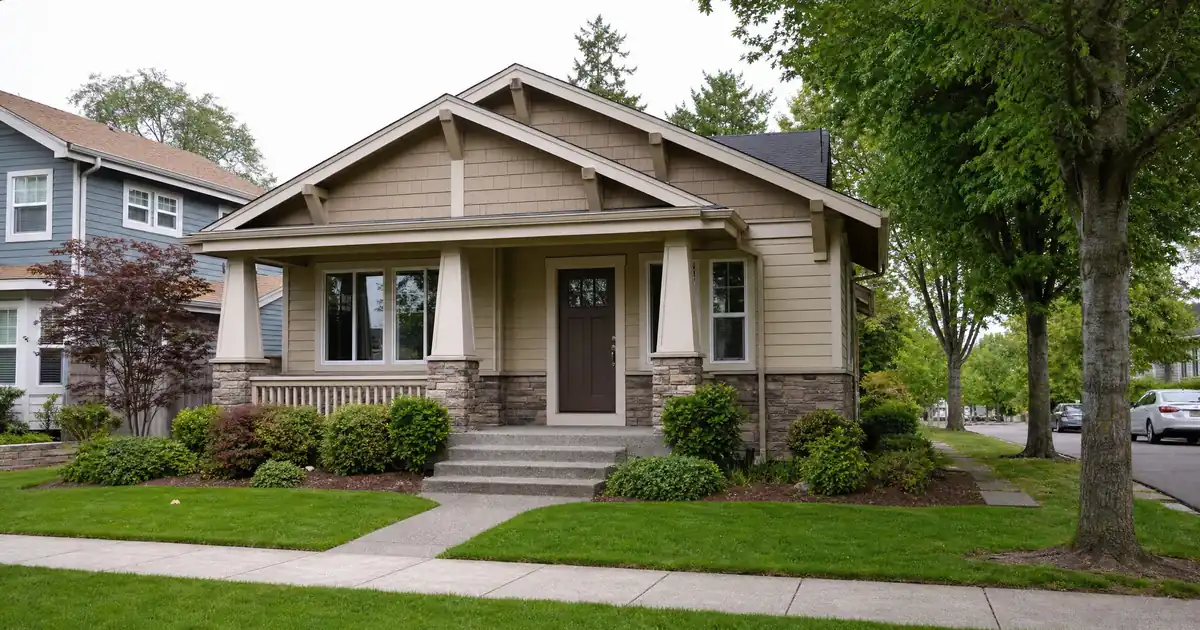
1099-only Loan Vs DSCR HELOC — The Quick Read: A 1099-only loan reviews a self-employed borrower using gross 1099 earnings instead of traditional personal-income documentation. Borrowers can use it to purchase or refinance a primary residence, second home, or investment property. A DSCR HELOC — at least the version Lendmire’s wholesale network currently offers — is a revolving equity line against a property an investor already owns. Despite the label, this specific program is reviewed on the borrower’s debt-to-income ratio, not on rent covering the payment. One product proves personal earning power with a different set of documents. The other unlocks equity already sitting in a rental, subject to its own credit and vesting rules.
Both products fall under the non-QM umbrella. But they solve different problems. A borrower choosing between them is really answering two separate questions: “How do I prove I can afford this?” and “How do I get cash out of a property I already own without a full refinance?”
How large a line the equity supports in your market.
An equity line is sized by combined loan-to-value, occupancy, and credit — not by rental coverage. Switch the occupancy or the credit band and the ceiling moves with it.
Investment-property lines require a 700 minimum credit score. Second-home tiers reach 640; primary-residence tiers reach 600.
A debt-to-income ratio above 45% requires 680+ credit. Profiles under 640 are limited to single-family homes. At least 75% of the approved line is drawn at closing. Ceilings, floors, and caps update from Lendmire’s centralized guideline source.
Line estimate
Illustrative estimate only — not a quote, Loan Estimate, approval, or commitment to lend. The rate is an editable assumption; equity-line pricing is variable through both the draw and repayment periods and never converts to fixed. Occupancy and credit drive the ceiling together: investment property runs to 70% combined LTV with a 700 credit floor and a $500,000 cap; a second home runs to 90% at a 640 floor with a $500,000 cap; a primary residence reaches up to 90% at a 600 floor, and its $750,000 maximum line applies only at 75% combined LTV or below with 720+ credit and a full appraisal. Lines above $500,000 require a full appraisal. Credit, debt-to-income, property type, and full underwriting review all affect the final line.
Key Takeaways
- A 1099-only loan is reviewed around the person. It uses 1-2 years of 1099-NEC income instead of traditional personal-income documentation.
- Lendmire’s investor equity line is marketed under the DSCR umbrella. But on the investment-property tier, it is actually reviewed on DTI against the interest-only payment at the maximum draw — not rent-to-PITIA.
- Title vesting is the sharpest structural split. A 1099-only loan tracks a personal Social Security number. This equity line only permits an individual borrower or a revocable living trust — never an LLC.
- The investment tier of the equity line tops out at 70% CLTV and a $500,000 line size. It has a 700 credit floor.
- The two products can be sequenced. A line can fund a purchase or renovation now. A lump-sum DSCR term loan (true rent-to-PITIA underwriting, LLC-eligible) can pay it off later.
Side-by-Side
| Factor | 1099-Only Loan | DSCR HELOC (Lendmire network) |
|---|---|---|
| Review basis | Borrower’s averaged 1099 income | Borrower DTI vs. interest-only payment at max draw |
| Documentation | 1-2 yrs of Form 1099-NEC | Income doc (e.g., bank statements) plus 700+ credit |
| Best-fit use | New purchase or refinance | Cash access on a property already owned |
| Title vesting | Individual, tied to SSN | Individual or revocable living trust only, no LLC |
| Draw/repayment | Standard amortizing term | 5-yr interest-only draw, 25-yr repay (investment tier) |
| Line size / exposure | Sized to the transaction | Up to $500,000; 3-line cap, $750,000 combined |
Key Terms Defined
1099-NEC — the IRS form a business files to report nonemployee compensation. Businesses use it when they pay $600 or more to a contractor, freelancer, or self-employed worker in a calendar year, per the IRS.
DSCR (debt-service coverage ratio) — a coverage measure used on true property-income loans. It compares rent to the full monthly payment (principal, interest, taxes, insurance, and HOA where applicable). A ratio at or above 1.00 is a common floor on select DSCR programs. It is never a universal or federally required minimum.
CLTV (combined loan-to-value) — the total of all liens against a property, including the new line, divided by the property’s value. It’s the number that caps how much equity a line can reach.
Business-purpose loan — financing made to acquire, improve, or hold non-owner-occupied rental property rather than for personal consumer use. This classification is why lenders underwrite DSCR loans differently from a standard owner-occupied mortgage.
Entity vesting — whose name sits on title and the note: an individual, a trust, or a business entity such as an LLC.
What Is a 1099-Only Loan
A 1099-only loan replaces tax-return income verification with 1-2 years of 1099-NEC forms. The lender then applies a lender-set expense factor to gross receipts instead of relying on the borrower’s actual write-offs. That’s the reverse of how a conventional underwrite shrinks income after deductions. The IRS confirms the reporting threshold sits at $600 today. It rises to $2,000 for payments made after the close of this year. That matters because it’s the same document a borrower hands the lender to prove income.
This product is a personal-income underwrite from start to finish. It qualifies the individual, not the property. So it works across primary residences, second homes, and investment purchases or refinances — anywhere the borrower’s own earning history is the deciding factor. Because it’s tied to a Social Security number, a 1099-only loan typically doesn’t vest in an LLC the way a business-purpose DSCR loan commonly does.
One recurring friction point comes up often: a borrower whose current-year 1099 income spikes well above the prior year’s average often can’t get the full spike counted. Programs commonly cap how much of a year-over-year jump gets blended into the qualifying average. So continuity of payer relationships tends to matter as much as gross dollars.
What Is a DSCR HELOC
Here’s the part most comparisons skip: the label “DSCR HELOC” doesn’t automatically mean the line is qualified on rental income. Across the non-QM industry, some programs badge a revolving line as a DSCR HELOC but actually underwrite the draw against the borrower’s personal debt-to-income ratio. That’s exactly how the investor equity line in Lendmire’s current wholesale network works.
On the investment-property tier, qualification runs on DTI measured against the interest-only payment calculated on the maximum draw amount, not a rent-to-PITIA ratio. The tier tops out at 70% CLTV up to a $500,000 line. It has a 700 credit floor that doesn’t move even at 720 — credit above 700 buys eligibility headroom, not additional leverage, on this specific tier. Bank-statement income is accepted for the deposit analysis at a 680 minimum. But since the investment tier already floors at 700, bank-statement income is rarely the binding constraint on this product. DTI itself caps at 50%, tightening to 45% for credit profiles between 600 and 679. Anything past 45% requires at least a 680 score.
Structurally, the investment tier runs a single draw shape: a 5-year interest-only draw period followed by a 25-year fully amortizing repayment. At least 75% of the approved line must be drawn at closing. A single-bureau credit report no older than 90 days governs the file, with no rescores permitted. Derogatory events follow a 7-year foreclosure/4-year short-sale-or-deed-in-lieu seasoning path on investment files. The network also caps a borrower at three of these lines at once. Combined exposure is held to $750,000 across them at this draw structure. A borrower already carrying more than 15 financed properties isn’t eligible for a new line.
The title requirement is the detail that trips up the most investors: fee simple or leasehold vesting must sit with the individual borrower or an inter vivos revocable living trust. LLCs, corporations, partnerships, and irrevocable trusts cannot hold title on this equity line. That’s the sharpest structural difference from a true lump-sum DSCR term loan, where LLC vesting is standard. A property already deeded to an LLC needs a vesting change before this line applies, or a DSCR cash-out refinance instead, described in Lendmire’s complete DSCR loans guide. Lines at or below $500,000 ordinarily run on an automated valuation rather than a traditional appraisal. So this investment tier is structurally almost always in the AVM lane. A borrower can still request a full appraisal, but most files don’t need one.
This equity line is also currently available only through Lendmire’s 16 full-service states. That’s narrower than the network’s DSCR term-loan footprint, which spans 39 states plus Washington, D.C. That gap matters when an investor’s property sits outside those 16 states. The term-loan program may still reach it. The equity line won’t.
DSCR loans generally are designed for non-owner-occupied investment property. Because they’re business-purpose investor loans, lenders review them differently from a standard owner-occupied mortgage — a distinction the Doss Law business-purpose explainer lays out plainly for rental-property financing generally.
When the 1099-Only Loan Is the Better Fit
This product wins when the barrier is proving personal income, not accessing equity. A real estate agent, consultant, or gig-economy earner often runs into this exact problem: legitimate write-offs make their traditional personal-income documentation understate actual cash flow. They often look weak on paper to a conventional underwriter but strong on a 1099 basis. Say the transaction is a purchase — a primary residence, a second home, or an investment property bought with cash still needed at closing. A 1099-only loan solves that exact problem, because it’s built around the borrower’s earning history rather than any single property’s rent roll.
It also fits when the borrower doesn’t yet own the property that would otherwise secure an equity line. There’s no revolving draw to qualify for here. There’s no title-vesting restriction pushing toward a trust. There’s no existing-property requirement — just a purchase or refinance underwritten on the person.
Some investors wonder whether the classic lump-sum DSCR term loan (property-income based, LLC-eligible, coverage ratio driven) might fit a purchase better than a 1099-only loan. Investors can dig into that structure through Lendmire’s complete DSCR loans guide — the two are not competing products, they’re answering different qualification questions.
When the DSCR HELOC Is the Better Fit
This line wins when the property is already owned, equity has built up, and the investor wants access without disturbing the existing first mortgage or restarting a full purchase underwrite. Because it’s revolving, a draw can fund a renovation, a down payment on the next acquisition, or a reserve cushion. Only the amount actually drawn accrues interest during the draw period.
It’s a stronger fit for a borrower who already holds the property in an individual name or is willing to vest it in a revocable living trust — not an LLC — and who can clear a 700 credit floor along with DTI at or under 45-50%, depending on score tier. The textbook use case is an investor sitting on meaningful equity in one rental, wanting flexible access rather than a lump sum, and comfortable with the 5-year interest-only draw followed by a 25-year repayment.
DSCR vs. conventional financing
Two common ways to finance an investment property in this market. They qualify you differently — here’s how investors weigh them.
Why investors choose it
- Qualifies on the property’s rental income — no personal tax returns, W-2s, or pay stubs needed to document income.
- No personal debt-to-income ceiling to clear, so existing mortgages and obligations don’t cap your borrowing the same way.
- Can be closed in an LLC, keeping the property inside a business entity.
- Built for scaling — not held to the limit on number of financed properties that conventional financing applies.
- Underwriting centers on the deal: generally qualifies when the rent covers the payment, a 1.00x coverage ratio being a common baseline (confirmed in underwriting).
- Designed specifically for investment property, including long-term and, where the program allows, short-term rentals.
Where it’s strong
- Often the lowest ongoing financing cost for a buyer who fully qualifies on personal income — a fit for a first property or a cost-first purchase.
Trade-offs for investors
- Requires full personal income documentation and must fit within a debt-to-income limit — salary, existing debts, and other mortgages all count.
- Typically held in your personal name rather than a business entity.
- Caps how many financed properties you can carry, which can become a ceiling as a portfolio grows.
- Evaluates you as a borrower as much as the property, which usually means more paperwork.
How investors usually choose: a first or single property often optimizes for the lowest financing cost; portfolio builders often optimize for leverage, vesting in an LLC, and scaling past conventional caps. The right answer depends on your goals, the property, and current guidelines — both paths run through select lenders in Lendmire’s wholesale network, with eligibility and terms confirmed in underwriting.
For investors comparing this revolving structure against a standalone home equity loan or a full cash-out refinance, Lendmire’s write-ups on HELOC vs. Home Equity Loan for Investment Property and HELOC vs. Cash-Out Refinance on a Short-Term Rental break down the mechanical trade-offs in more depth than fits here.
Can You Combine or Sequence Them?
Yes, and this is where the two products actually complement each other rather than compete. Picture an investor who is short on personal-income documentation but sits on equity in an existing rental. This investor could draw the equity line to fund a down payment on the next purchase. Then they could use a 1099-only loan on that new purchase if personal 1099 income supports it — or a lump-sum DSCR term loan if the new property’s rent supports the payment instead.
The reverse sequence shows up too: an investor draws the equity line to renovate a property, stabilizes the rent roll, then refinances the whole balance into a fixed lump-sum DSCR term loan once the property’s income can carry the coverage ratio on its own. This moves the investor out of a DTI-qualified revolving structure and into an LLC-eligible, property-income structure. Investors weighing interest-only draw periods against a fully amortized term structure at that stage can review Interest-Only vs. Fully Amortized DSCR for Short-Term Rentals for how that transition typically plays out.
A Worked Comparison, No Dollars Attached
Picture an investor who already owns one rental free of significant equity draw and is eyeing a second acquisition. Path one: draw against the first property’s equity, up to 70% CLTV on the investment tier, qualifying on personal DTI against the interest-only payment at the maximum draw. No rent calculation is involved, and title stays in the investor’s individual name or a revocable trust. Path two: apply for a 1099-only loan on the new purchase, sized against typical purchase leverage in the 75-80% LTV range on most files, qualifying on 1-2 years of averaged 1099 income rather than the new property’s rent.
Neither path touches the acquiring property’s own rental income at the qualification stage. One leans on equity already built, the other on personal earning history. A true DSCR term loan is the product that shifts the qualification question to the new property itself. Rent is measured against the full payment, and select programs start a coverage floor around 1.00, adjusted for leverage and terms on files that fall short of that floor.
The Balanced Verdict
Neither product is the “better” loan in the abstract — they answer different questions. A 1099-only loan is the right tool when the person, not the property, needs to prove creditworthiness for a new purchase or refinance. The investor equity line marketed as a DSCR HELOC is the right tool when equity already exists in a property and the investor wants revolving access without a fresh purchase underwrite. But it comes with real strings: a 700 credit floor, a 70% CLTV ceiling, a $500,000 cap, and title vesting locked to an individual or revocable trust. An investor expecting an LLC-friendly, rent-based line under that “DSCR” label needs to know upfront that this specific network product doesn’t work that way; the lump-sum DSCR term loan is the product built for that.
This is not legal or tax advice. Loan program terms, eligibility, and state availability change, and every file is reviewed individually against current lender guidelines. Investors should consult a qualified attorney or CPA about how either structure applies to their own situation before acting on it. Investors weighing where either strategy leaves their overall equity position afterward can also review HELOC vs. Cash-Out Refinance on a Short-Term Rental for how a full refinance stacks up against a revolving draw over time.
If comparing these two paths against an actual property and credit profile, Lendmire can help investors line up which programs their file fits, based on credit tier, existing equity, and entity structure — reach the team at 828-256-2183 or request a quote directly through Lendmire’s mortgage quote form.
Frequently Asked Questions
Can a 1099-only loan close in the name of an LLC?
Typically no. A 1099-only loan is a personal-income underwrite tied to the borrower’s own Social Security number and 1099 history. So it generally closes in an individual’s name rather than an entity. An investor who wants LLC vesting on an investment purchase usually looks at a lump-sum DSCR term loan instead, subject to program eligibility.
Does Lendmire’s DSCR HELOC actually use rental income to qualify?
No, not on the investment-property tier available today. It is reviewed on the borrower’s debt-to-income ratio measured against the interest-only payment at the maximum draw amount, with a 700 credit floor and 70% CLTV ceiling. Rent isn’t part of the qualification math on this specific line, even though the product sits under the broader DSCR umbrella.
Can an investor use a 1099-only loan and an equity line together over time?
Yes. A common sequence draws the equity line against an existing rental to fund the next acquisition or a renovation. Then it places permanent financing once the new property is stabilized — a 1099-only loan if personal income supports it, or a DSCR term loan if the property’s rent supports the coverage ratio.
What credit score does an investment property equity line need?
The investment tier floors at 700, and that floor doesn’t move even for stronger profiles. A 720 score buys the same 70% CLTV as a 700 score on this specific tier, since credit above the floor affects eligibility headroom rather than added leverage.
Is Lendmire’s DSCR HELOC available in every state?
No. It’s currently offered only in Lendmire’s 16 full-service states, a narrower footprint than the network’s DSCR term-loan coverage. An investor’s property location can determine which of the two products is even on the table.
About Lendmire
Lendmire — NMLS# 2371349 — is a mortgage brokerage that specializes in DSCR investor loans. It helps arrange financing across 40 markets, including Washington, D.C., through wholesale and investor-lending channels. The model centers on property-level rental income reviewed by the lender rather than W-2 documentation, subject to lender guidelines, suiting entity-owned and multi-property investors. Lendmire holds Scotsman Guide Top Mortgage Workplace recognition for 2025 and 2026.
Lendmire’s Top Mortgage Workplace recognition is documented by Scotsman Guide 2025 Top Mortgage Workplace and Scotsman Guide 2026 Top Mortgage Workplace.
Get Started
Ready to find the right loan for you?
In about 30 seconds you can review financing options available for your home or investment property. No commitment required.
Informational only. Not a Loan Estimate, approval, or commitment to lend. Program availability and eligibility are subject to lender guidelines, credit approval, property review, and underwriting.
References
1. IRS – Form 1099-NEC and Independent Contractors FAQ
2. Doss Law, PC – Business Purpose Exemption Simplified
Brandon Miller
Founder & CEO, Mortgage Loan Originator, Lendmire LLC
- Mortgage Loan Originator · NMLS# 1129696 · Verify on NMLS Consumer Access
- North Carolina Real Estate Broker · License# 343312 · Verify on NCREC
- North Carolina Insurance Producer · License# 19053198 · Property, Casualty, Life, Health · Verify on NAIC SBS
- Lendmire LLC · Firm NMLS# 2371349 · Verify firm licensure
Disclosure information. Lendmire is a state-licensed mortgage brokerage under NMLS# 2371349. Lendmire is not a depository institution, direct lender, or financial advisor — all loans referenced are placed through wholesale lender partners and are subject to each lender's underwriting standards. This article is provided for general informational purposes and is not a commitment to lend, nor does it constitute financial, legal, or tax advice. Loan programs, terms, rates, and qualification standards change without notice and depend on borrower profile, property type, and the state in which the subject property is located. Equal Housing Opportunity provider. NMLS Consumer Access: nmlsconsumeraccess.org.


