
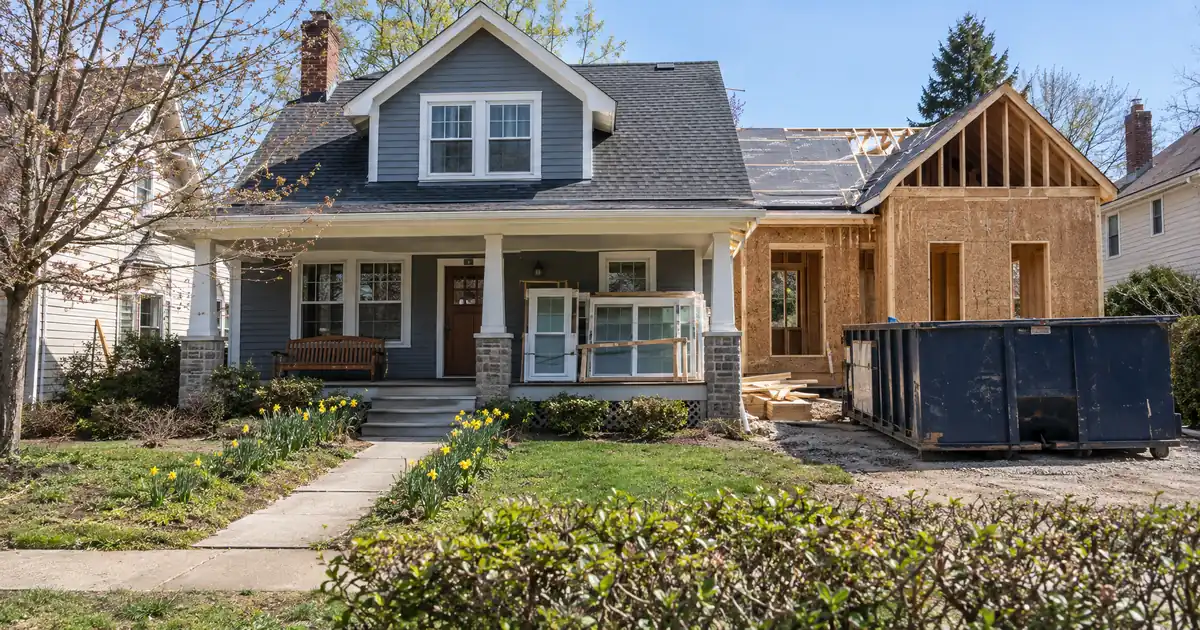
Your rehab is done, the tenant is in, and the hard money note is coming due. Now you need a lender who will pay it off and, ideally, hand some of your capital back. Who that lender is depends on how long you have owned the property, what the lender’s appraiser says it is worth, and whether the rent covers the new loan.
The Quick Read: A cash-out refinance after rehab is a second loan that pays off your short-term hard money note and, if the numbers allow, returns the leftover equity as cash. The loan is sized on the lender’s own appraisal and the rent coverage, not on your after-repair estimate, so the result stays unknown until the appraisal lands.
- A DSCR cash-out refinance on an investment property tops out around 75% LTV and typically looks for about 6 months of ownership, measured from title recording.
- A hard money lender’s own refinance line is capped lower, at up to 65% of value, and varies by lender, property, and experience.
- Seasoning, appraised value, and rent coverage are three separate gates. Passing one does not excuse another.
- Line up the exit lender before the bridge closes, because the bridge term must outlast seasoning, lease-up, and underwriting.
DSCR Cash-Out Calculator
Run the cash-out numbers in your market
Rate source: Freddie Mac 30-yr average via FRED® — Federal Reserve Bank of St. Louis · effective Oct 29, 2026
Prefilled with starting assumptions — enter your property’s value, balance, taxes, and insurance for a more accurate picture.
Program parameters update from Lendmire’s centralized guideline source. Taxes and insurance are editable estimates.
As of Oct 29, 2026 · General Freddie Mac market benchmark, not a Lendmire loan offer. Property value, balance, taxes, and insurance are editable estimates. Maximum loan-to-value varies by lender, program, property type, and seasoning. Not a Loan Estimate, approval, or commitment to lend. Program availability and eligibility are subject to lender guidelines, credit approval, property review, and underwriting.
Key Terms Defined
Seasoning is the waiting period a lender wants between buying a property and refinancing it on appraised value. Most programs measure it from the date the purchase deed was recorded.
Cost basis is your purchase price plus documented rehab spending. Inside the seasoning window, a lender that will close at all usually sizes the loan on this figure.
Payoff-only refinance means the new loan covers only the old loan and closing costs. It becomes a cash-out refinance once proceeds exceed that.
LTV (loan-to-value) is the loan amount divided by the appraised value. Loan-to-cost works the same way but divides by what you spent.
DSCR (debt service coverage ratio) is the property’s monthly rent divided by its monthly PITIA: principal, interest, taxes, insurance, and any association dues. Clearing 1.00 means rent covers that payment. It does not mean the property cash flows, because repairs, vacancy, management, and utilities sit outside the calculation.
Broker here means a mortgage broker. Lendmire is one, and it arranges financing through select lenders in its wholesale network across 41 markets, including Washington, D.C.
Who Actually Does the Cash-Out Refinance?
Two kinds of lender can do it: a hard money lender through its own refinance line, or a long-term DSCR lender that pays the hard money note off. Most investors finishing a BRRRR end up with the second type, because the DSCR loan is built to be held for years.
| Factor | Hard money refinance line | DSCR loan exit |
|---|---|---|
| Cash-out ceiling | Up to 65% of value | Around 75% LTV (investment property) |
| Term | 6-18 months, interest-only | 30-year fixed spine |
| Prepayment penalty | None on the hard money program | Varies by program |
| Best fit | Needs more runway, not a long-term hold | Stabilized, rented property |
The names of the lenders behind each column change, and so do their guidelines. The better question is which lender fits your property, credit profile, leverage need, and paperwork. A broker that shops several wholesale lenders can match the file to a program instead of fitting you to one lender’s sheet. Lendmire’s hard money exit refinance program covers that handoff.
How Underwriting Treats a Post-Rehab Refinance
Underwriting follows a fixed sequence. Knowing it lets you plan the timing backward from the closing table.
1. The clock. Finishing the rehab does not start seasoning. On most programs the clock runs from the date the purchase deed was recorded. A DSCR cash-out refinance typically looks for about 6 months from that date.
2. The value basis. Inside the window, a lender that closes at all typically sizes on cost basis. After seasoning, it sizes on appraised value.
3. The lender’s appraisal. The lender orders its own appraiser. That appraisal sets value for the LTV limit and market rent for the coverage test. Your after-repair estimate is a planning number, not an underwriting input.
4. The rent schedule. On a one-unit property, the rent opinion usually comes on the Single-Family Comparable Rent Schedule, Form 1007. On two- to four-unit properties, appraisers typically use the Small Residential Income Property Appraisal Report, Form 1025. These are agency form names only. DSCR loans are not agency products.
5. Two limits, one loan. The lender sizes the loan at the lower of the value-based cap and the rent-coverage cap. A DSCR loan starts at 1.00 coverage on select programs. A separate select-lender path takes coverage below 1.00, with leverage and terms adjusted.
6. The payoff. The bridge payoff is principal drawn, plus accrued interest, extension fees, and any exit fee. A DSCR cash-out refinance at about 75% LTV leaves cash only if that number plus closing costs comes in under the loan.
What Each Gate Tests, and How It Fails
| Gate | What the lender checks | How it fails |
|---|---|---|
| Seasoning | About 6 months from title recording | Bridge matures first |
| Appraisal | Lender’s value vs. LTV cap | Value lands short |
| Coverage | Rent vs. full PITIA | Loan shrinks to fit rent |
| Credit and reserves | Score tiers, about 6 months PITIA | Leverage tier drops |
On credit, a 620 floor exists in parts of the network. Most DSCR programs want around 660, and 700 or higher opens the strongest leverage tiers. Reserves typically run about 6 months of PITIA and step up to about 9 months on loans above $1,500,000. Standard programs go up to $3,000,000. All of this varies by lender, borrower, and property, and none of it is a commitment to lend.
A Worked Example With a Low-Appraisal Test
Run the numbers on a modeled deal using placeholder units, not market data. Say the lender’s appraisal comes in at 100 units. Assume the hard money payoff is 68 units and closing costs are 3 units. Assume rent coverage clears the test, so the 75% LTV cap is the binding limit. Every figure here varies by lender and program — guidelines, property type, leverage, and credit profile all apply.
Cash back equals the new loan, minus the payoff, minus closing costs. The break-even appraisal is (68 + 3) ÷ 0.75, or about 94.7 units.
| Appraisal result | Loan at 75% LTV | Cash back or cash needed |
|---|---|---|
| 100 units | 75 units | About 4 units back |
| 95 units | 71.25 units | Roughly break-even |
| 90 units | 67.5 units | About 3.5 units due at closing |
A 5% value miss turns a cash-out into a payoff that barely clears. A 10% miss turns it into a check you write. That is why you underwrite the purchase on a conservative appraisal, not on the most optimistic ARV in your spreadsheet.
If the appraisal lands low, you have four responses. Bring cash, take a smaller loan, wait and reappraise, or submit stronger comps with an itemized rehab scope.
Coverage can shrink the loan too. If the rent supports less loan than the value cap allows, the rent sets the limit. Clearing 1.00 also tells you nothing about repairs or vacancy, so keep your own cash-flow math separate from the lender’s ratio.
When the Bridge Matures Before Seasoning Ends
Hard money terms run 6-18 months, interest-only, with no prepayment penalty on the program. That sounds like plenty of room until a rehab runs long. If the note comes due before the exit lender will size on appraised value, you have four moves.
| Option | What it costs | When it fits |
|---|---|---|
| Payoff-only refinance | Gives up cash back | You need out, equity can wait |
| Extension | More fees and carry | A few weeks short of seasoning |
| Bring cash | Capital stays in the deal | Gap is small |
| Wait | Carry continues | Term has room left |
The payoff-only route is a different line from cash-out. On a DSCR loan, a rate-and-term refinance on an investment property has an LTV ceiling of 85% and returns no cash at closing. The trap is classification. If you roll in extra costs or draws and proceeds exceed the payoff plus closing costs, the lender treats the file as a cash-out, and the 75% cap applies. Ask how the lender classifies the file before you submit.
One Lender for Both Loans, or Two?
Some investors prefer one relationship from purchase through refinance. Others get better terms by splitting the bridge and the exit. The split usually wins on the long-term loan, because a DSCR lender is built to hold rental debt, while a hard money lender is built to fund fast projects and get repaid.
The tradeoff is coordination. With two lenders, you manage two payoff statements, two appraisals, and a handoff date. With one, you accept the leverage and terms that lender offers, including its refinance cap of up to 65% of value on the hard money side.
Practitioner view: on files like these, the bridge term and the exit lender’s seasoning rule are rarely lined up when the investor first calls. Matching them before the purchase closes is the more affordable fix. Brokers see this often, and it costs far less to solve on paper than at maturity.
Build the Exit File Before You Need It
Lenders ask for the same pieces on nearly every post-rehab refinance. Gather them while the project is still fresh.
- The hard money note and draw history
- The payoff statement and lien release
- Rehab receipts, budget, and settlement statement
- A signed lease at a strong rent, ahead of the appraisal
- Insurance and, if you hold title in an LLC, entity documents, subject to lender program eligibility
Check title before you change it. Moving the deed into an LLC after purchase can affect how a lender reads the seasoning clock, so ask first. Order the appraisal right after you apply, and ask about seasoning in your first conversation.
How to Vet an Exit Lender Before You Buy
Ask these before the bridge closes.
- When does the seasoning clock start, and does it run from title recording?
- Do you size on cost basis inside the window, or decline the file?
- Who orders the appraisal, and how is rent determined?
- What is the LTV cap on a cash-out, and how do you classify a refinance that returns cash?
- What are the reserve and credit tiers at my loan size?
- Do you accept title in an LLC, and does a deed change reset anything?
Where the General Rule Breaks
Delayed financing does not rescue most hard money purchases. Fannie Mae’s Selling Guide lists a Delayed Financing Exception for cash-out refinances, and it still applies cash-out eligibility rules and pricing. It is built for an all-cash purchase, and a property-secured hard money loan generally does not fit. Even when it applies, proceeds are limited to documented cost, not post-rehab value. This is an agency contrast only. DSCR loans follow their own guidelines.
A maxed-out bridge leaves nothing. If your bridge was funded near its limits, the payoff can swallow the new loan even on a fully seasoned file.
Some property types are not offered. Manufactured homes (single- and double-wide), log homes, and barndominiums fall outside the network’s DSCR programs.
Lenders vary. Some advertise no seasoning on renovated properties, and others require it. Ask before the bridge closes, not after.
Choosing Your Path
Match the move to your situation.
- Seasoned, rented, and appraising near plan: a DSCR cash-out refinance on an investment property, up to about 75% LTV, typically after about 6 months from title recording.
- Bridge maturing early: a payoff-only refinance, an extension, or cash at closing, depending on how short you are.
- Thin margin or aggressive ARV: wait, bring cash, or skip the cash-out and take the payoff.
- Needing more runway on the same project: a hard money refinance line, with the lower cap of up to 65% of value.
For the next layer, see how Lendmire’s DSCR cash-out refinance lenders to complete the BRRRR cycle article covers that exit. The complete DSCR loans guide covers the loan type from the ground up.
Frequently Asked Questions
Can I refinance right after the rehab finishes?
Usually only on cost basis, if a lender will close inside the seasoning window at all. Finishing the rehab does not start the seasoning clock. On most DSCR programs, cash-out on appraised value typically follows about 6 months from title recording. Each lender writes its own terms.
Is paying off hard money automatically a cash-out refinance?
No. A refinance is payoff-only when proceeds cover just the bridge payoff and closing costs. It turns into a cash-out once proceeds exceed that. The classification matters because a DSCR cash-out on an investment property caps near 75% LTV, while a rate-and-term caps at 85% with no cash back. Final terms depend on lender guidelines, property type, leverage, and the borrower’s complete credit picture.
Will I get all my money back?
Not always. Cash back depends on the lender’s appraisal, the LTV cap, rent coverage, the grown bridge payoff, and closing costs. Fully recovering your capital is possible on some files and out of reach on others. The sensitivity table above shows how fast a modest appraisal miss erases the cash.
What if the appraisal comes in low?
Your options are to bring cash, accept a smaller loan, wait and reappraise, or submit comps and an itemized rehab scope. An improvement may support a higher appraised value, depending on comps and underwriter review. Plan a backup before the bridge matures.
Can a strong coverage ratio waive seasoning?
No. Coverage, seasoning, and appraised value are separate gates. A DSCR loan can clear 1.00 on rent and still be too early to size on appraised value. Coverage below 1.00 is available through select lenders in the network, with leverage and terms adjusted.
Next Step
If you are buying, rehabbing, or refinancing an investment property on a short timeline and want to see how the numbers work, Lendmire can help you compare hard money options based on the project, the exit plan, leverage, and your goals. Call 828-256-2183 or request a quote. Qualification is subject to lender guidelines and is not a commitment to lend.
Finishing a rehab is the easy half of the cycle. The refinance only works for investors who timed the exit before they bought.
About Lendmire
A DSCR-focused mortgage broker, Lendmire (NMLS# 2371349) places investor financing across 41 markets — 40 states plus Washington, D.C. — with DSCR eligibility generally reviewed by the lender on property cash flow instead of tax returns, subject to lender guidelines. Scotsman Guide named Lendmire a Top Mortgage Workplace in 2025 and 2026.
Get Started
Ready to find the right loan for you?
See your offer in seconds. No credit pull, no obligation.
Informational only. Not a Loan Estimate, approval, or commitment to lend. Program availability and eligibility are subject to lender guidelines, credit approval, property review, and underwriting.
References
1. Fannie Mae Appraiser Forms and Property Underwriting
2. Fannie Mae Selling Guide B2-1.3-03, Cash-Out Refinance Transactions
This article is part of Lendmire’s hard money loan program — full qualification details, guidelines, and scenarios live on the program page.
Related reading: How a Lender Counts Reserves on a BRRRR Cash-Out Refinance · Top Hard Money Cash-Out Refinance Providers to Tap Equity From a Rental Property · DSCR vs. Conventional Cash-Out Refinance for a St. Charles MO Rental
Brandon Miller
Founder & CEO, Mortgage Loan Originator, Lendmire LLC
- Mortgage Loan Originator · NMLS# 1129696 · Verify on NMLS Consumer Access
- North Carolina Real Estate Broker · License# 343312 · Verify on NCREC
- North Carolina Insurance Producer · License# 19053198 · Property, Casualty, Life, Health · Verify on NAIC SBS
- Lendmire LLC · Firm NMLS# 2371349 · Verify firm licensure
Compliance and disclosures. Lendmire (NMLS# 2371349) is a licensed mortgage broker and is not a direct lender, depository institution, financial advisor, or tax professional. Content in this article is general market analysis and educational information — not financial, legal, or tax advice for any specific situation. Lendmire does not guarantee loan approval; every transaction is subject to underwriting by the funding lender. Mortgage pricing and loan program guidelines are subject to change at any time without notice and vary by borrower characteristics, property type, and state regulations. Lendmire complies with Equal Housing Opportunity. Licensure verification: NMLS Consumer Access.