
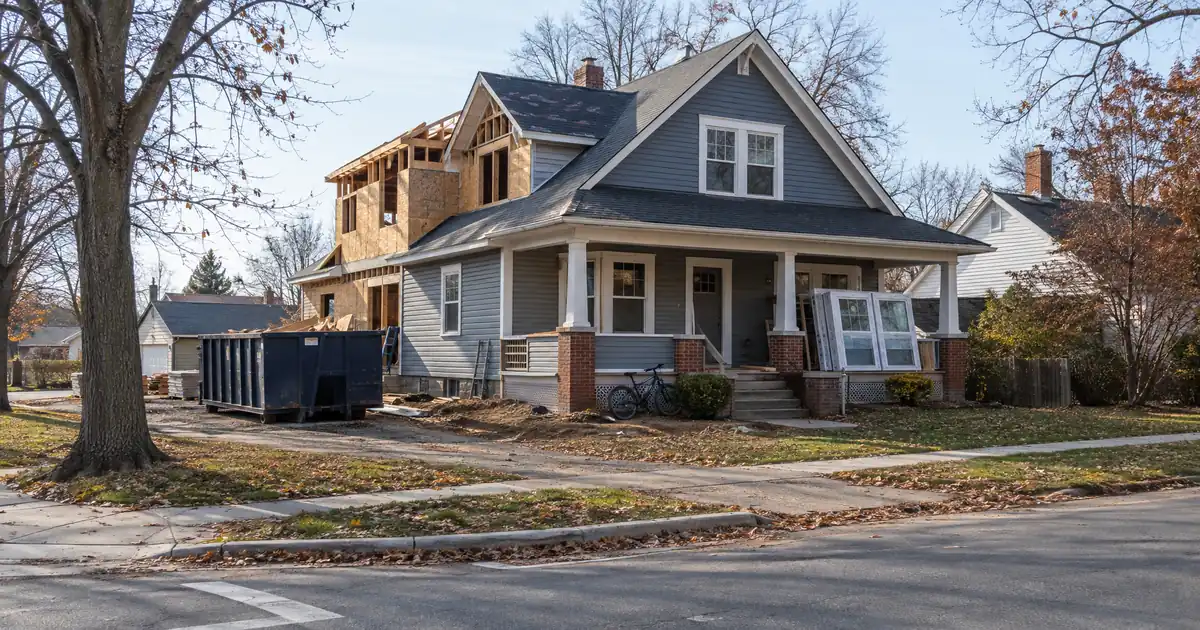
The Quick Read: The best program for an LLC-owned rental depends on the property, the payoff balance, and the exit plan, because no single program fits every file. The phrase can mean two different loans: a new hard money loan on the property, or a long-term DSCR cash-out loan that pays off an existing hard money note. In either case the LLC can stay the borrower and the titleholder, and a personal guarantee usually sits behind the note.
- Hard money cash-out and rate/term refinances typically top out around 65% of value, with terms of 6-18 months, interest-only, and no prepayment penalty.
- A long-term DSCR cash-out typically reaches about 75% LTV on a standard rental, with about 6 months of ownership seasoning as the common expectation.
- The hard money payoff comes out of proceeds first, so cash to the borrower is the remainder after payoff, accrued interest, and costs.
- Every figure here varies by lender, property, and experience, and none is a commitment to lend.
What Does “Hard Money Cash-Out Refinance” Mean on an LLC-Owned Rental?
The phrase covers two different paths. The first path is a hard money loan used as the new loan. The second path is a long-term DSCR cash-out loan used to replace a hard money loan that is already on the property.
On the first path, an investor refinances an LLC-owned rental into another short-term, asset-based loan. Hard money is underwritten on the property, the plan, and the exit, not on personal income. Across the wholesale network, cash-out and rate/term refinances on this product run up to 65% of value. Terms run 6-18 months, interest-only, with no prepayment penalty. Loan amounts go up to $5,000,000, and larger by exception. The property is non-owner-occupied residential, 1-4 units. All of this varies by lender, property, and experience.
On the second path, the hard money loan is the old loan. The LLC bought or rehabbed the property with short-term money, the property is now leased, and a DSCR loan replaces the note. DSCR loans are designed for non-owner-occupied investment properties, and they qualify primarily on property-level rental income covering the payment, subject to lender guidelines. They are reviewed differently from a standard owner-occupied mortgage.
An investor who asks for a “hard money cash-out program” may be describing either path, so it helps to name which one the file needs. The first path works best when the plan includes a sale or a later takeout, since the term ends at 18 months at most. An investor who needs longer runway than that is better served by long-term financing, and Lendmire brokers that exit once the property is stabilized.
How Underwriting Treats the Refinance, Step by Step
1. Entity review. The lender confirms the LLC exists, who owns it, and who signs. Entity names must match across the articles, the operating agreement, the insurance policy, and the title commitment.
2. Appraisal and rent support. The appraisal sets value. For a single-family rental, the appraiser typically adds a rent schedule (Form 1007). For a 2-4 unit property, an operating income statement (Form 1025) supports the income.
3. Leverage test. The loan cannot exceed the program’s maximum on appraised value. On a standard rental cash-out, that ceiling is about 75% LTV across most of the network. On a hard money refinance, it is up to 65% of value. Each figure is subject to lender guidelines and a complete review of property type, leverage, and credit.
4. Coverage test. DSCR compares monthly rent to the full monthly obligation on the new, larger loan: principal, interest, taxes, insurance, and any HOA dues. Coverage of 1.00 is where many select programs start, and stronger ratios open better terms and leverage. A separate select-lender path goes below 1.00, with leverage and terms adjusted.
5. Seasoning check. If the LLC bought recently, the lender checks how long it has held the property. About 6 months is the common expectation for maximum cash-out, and the settlement statement documents it. Leverage, reserves, and pricing vary by lender and program; the final terms follow the full file review.
6. Guarantor review. The guarantor’s credit gets pulled. A 620 floor exists in parts of the network, most programs want around 660, and 700+ unlocks the strongest leverage tiers.
7. Payoff and title. The payoff statement on the hard money note drives the sizing. Title must clear so the new lender sits in first position at closing.
Passing step 4 does not mean the property cash flows. DSCR measures rent against the housing payment only. Repairs, vacancy, management, utilities, and capital reserves sit outside the calculation. A property can clear 1.00 and still run thin in a bad quarter.
Why Is the Cash-Out Smaller Than the Equity?
The payoff comes first. Proceeds retire the hard money balance, accrued interest, exit fees, and closing costs, and only the remainder reaches the borrower. That remainder is the number most worth calculating before a refinance is committed to.
Run it as percentages of appraised value. Say the new DSCR loan is sized at the 75% cash-out ceiling, and the hard money payoff, interest, and costs together equal about 68% of value. The investor nets the difference, roughly 7% of value, before reserves are set aside. On those inputs the cash-out is real but small. Final terms depend on the lender’s guidelines, the property type, and the borrower’s complete credit picture.
Now flip the case. If the payoff and costs equal about 76% of value, the new loan cannot cover them at that ceiling. The investor brings cash to closing, and the transaction is a refinance with a shortfall, not a cash-out. This happens when the rehab ran over budget, when the appraisal came in light, or when the investor financed a high share of project cost up front.
There is a classification point too. If proceeds only cover the payoff and costs, lenders treat the file as a rate-and-term refinance. That can matter for pricing and for the leverage tier that applies.
Conservative planning works backward. Take the expected appraised value, apply the leverage cap, subtract the full payoff stack, and see what remains. If the answer is thin, the better move may be to wait for rents to rise or for more seasoning, not to force a refinance at the maturity date.
Which Structures Exist?
Different structures serve different stages of the same property. The right pick depends on how stabilized the asset is and how long the investor plans to hold it.
| Structure | Typical leverage | Review basis | Best fit |
|---|---|---|---|
| Hard money cash-out or rate/term | Up to 65% of value | Asset, plan, exit | Short hold, light stabilization |
| Hard money bridge purchase | Up to 80% of purchase price | Asset, plan, exit | Buy now, fix or lease later |
| DSCR cash-out refinance | About 75% LTV | Rent against payment | Stabilized, leased rental |
| DSCR cash-out, short-term rental | About 70% | Rental coverage, hosting history | Seasoned STR with documented history |
The DSCR structures vary more than most investors expect. The spine is the 30-year fixed. Select lenders in the network offer 40-year terms and interest-only periods, and ARM structures exist for investors who want them. On DSCR programs, loan sizes run from roughly $100,000 up to $3,000,000 on most, and above $2,500,000 the network generally holds to 30-year fixed structures. Hard money is a separate product, with loan amounts up to $5,000,000. For short-term rental collateral, expect a 640+ score and about 12 months of hosting history. Short-term rental rules can vary by city, county, HOA, and property type, so investors should confirm local rules before relying on projected rental income.
The related question is how to exit a note that is already coming due. Lendmire’s piece Best Short-Term Rental Cash-Out Refinance Program to Pay Off a Hard Money Loan covers that case in detail.
How to Judge “Best” Without a Ranking
No honest ranking exists, because the best program for your situation depends on the file. A broker that shops a wholesale network can match the scenario to a program, but it cannot name a winner in advance. These are the criteria that decide fit.
| Criterion | What to check |
|---|---|
| Entity closing | Does the program close in the LLC’s name? |
| Guarantor rules | How many guarantors, and what ownership share? |
| Seasoning | Does the clock start at purchase or at deed? |
| Sizing basis | Appraised value, cost basis, or both? |
| Prepayment terms | Any penalty if the plan changes? |
| Property type | Is the asset type on the eligible list? |
Guarantor rules vary the most. A multi-member LLC may need every owner above a certain percentage to sign. The threshold differs by program, so a file with a 25% minority partner works in one program and stalls in another.
Property type also decides eligibility before any math runs. DSCR on manufactured homes (single- and double-wide), log homes, and barndominiums is not offered in the network. Hard money covers 1-4 unit non-owner-occupied residential, and nothing outside that sheet should be assumed.
Credit is the last filter. Hard money starts at a 620 score, with additional conditions below 660. First-time investors qualify at the lower leverage tiers, and the top tier is reserved for experienced investors with documented completed projects. A larger down payment helps the payment and the coverage ratio, but it never erases leverage caps, credit floors, reserve rules, or property eligibility. The strongest files clear both tests: enough equity and enough rental coverage.
Where the General Rule Breaks
Several edge cases change the plan, and most of them involve title.
The property is still in a personal name. Do not deed it into the LLC while the hard money loan is outstanding. The federal due-on-sale framework protects only specific transfers on residential property of fewer than five units, and a transfer into an LLC is not on that list. As one attorney explainer puts it, leaving the clause unenforced is a matter of practice and not protection. The cleaner path is to vest the LLC at the refinance closing, so the old loan pays off at the same table.
Inside the seasoning window. A recent purchase can trigger a cost-basis cap, which limits the new loan to a share of what the LLC actually paid plus documented rehab. In that case the refinance may work only as a payoff, with little or no cash out. Seasoning is a separate test from coverage. Strong rent does not shorten it.
A multi-member or layered LLC. A holding company owned by another LLC adds documents. The lender will want the ownership chain traced to the individuals who guarantee. A missing page in that chain can stall a file.
A foreign-state LLC. An LLC formed in one state and holding property in another may need a foreign-qualification filing. Lenders typically ask for evidence of it.
Portfolio notes. One note across several properties is a separate product. Coverage is measured on the pool, and one weak property drags the number.
For contrast only, conventional rules work the opposite way. Fannie Mae’s Selling Guide lets time held by a majority-owned LLC count toward its six-month ownership test, but the title must move out of the LLC to the individual borrower before closing. That rule governs loans sold to Fannie Mae. It does not govern DSCR loans, which close with the LLC as borrower, subject to program eligibility.
The File Checklist That Prevents Stalls
The friction comes from missing or mismatched paperwork. A clean package includes:
- Articles of organization and the operating agreement, with every member and percentage shown.
- A certificate of good standing and the EIN letter.
- An authorizing resolution naming who signs for the LLC.
- Insurance with the LLC as named insured, matching the property address and the entity name exactly.
- The hard money payoff statement, with a per-day figure so the lender can size the payoff at the closing date.
- The lease or leases, plus rent history if the lender asks for it.
- Reserves documentation, usually bank statements showing the funds are seasoned and sitting in the guarantor’s or LLC’s accounts.
Reserves vary by lender, leverage, loan size, and transaction type. Conservative rate-and-term files at modest leverage under $1,500,000 can see reserves waived. Around 9 months of PITIA is typical for loans above that size, and a cash-out file is not the place to assume a waiver.
A name mismatch is a preventable problem. A policy issued to the investor personally, a title commitment showing a slightly different LLC name, or a bank account in a prior entity’s name each generate a cure request. Fixing them takes a day of calls but can hold a file for much longer.
What Goes Wrong and Who Should Not Do This
Four failure modes account for most of the trouble.
Low appraisal. Value is the base of every leverage test. If the appraisal comes in light, the new loan shrinks and the payoff may not fit. A well-documented reconsideration request, built on recent in-neighborhood sales and condition adjustments, is a routine step, but it does not always recover the number.
Rent shortfall. If the lease rent covers the full payment on the new, larger loan by less than the program’s floor, the loan amount gets cut or the deal works to a different program. A cash-out raises the payment, so a property that covered the old debt can miss on the new one.
An untested exit. Hard money has a maturity date. An investor who has not checked appraisal, rent, and seasoning against the plan before the term runs out ends up negotiating an extension from a weak position. Start the exit conversation well before maturity.
Double closing costs. Starting with hard money and refinancing into long-term debt means two sets of costs. That is the price of the short-term structure, and it should be in the budget at purchase.
This path is the wrong one for a few investors. A property that is vacant, mid-rehab, or not yet leased usually cannot support a DSCR takeout. An investor who needs a payment low enough to hold through a long vacancy should size the loan more conservatively or wait. And an investor who assumes the LLC removes personal liability should read the guaranty first, because the LLC is a title and liability structure, not a route to non-recourse borrowing.
The upside, when the file fits, is repeatability. The cash-out can fund the next acquisition, and long-term DSCR debt replaces short-term interest-only debt with a structure the property can carry.
Key Terms Defined
Seasoning: the length of time the borrower has held title before a cash-out refinance, documented by the settlement statement.
Vesting: the name in which title is held, which for these files is the LLC.
Personal guarantee: a separate signed document in which an individual agrees to repay the LLC’s loan.
Rate-and-term refinance: a refinance that only pays off the existing loan and costs, with no cash to the borrower.
Cost basis: what the borrower paid for the property plus documented rehab, used by some lenders as a sizing cap.
Reserves: liquid funds held after closing, usually counted in months of PITIA.
Next Step
If you are buying, rehabbing or refinancing an investment property on a short timeline and want to see how the numbers work, Lendmire can help you compare hard money options based on the project, the exit plan, leverage, and your goals. Lendmire is a mortgage broker arranging financing through select lenders in its wholesale network, across 41 markets including Washington, D.C. Call 828-256-2183 or request a quote. For the full program picture, the complete DSCR loans guide covers how the long-term side works.
This article is general information, not legal or tax advice. Readers should consult a qualified professional, such as an attorney or CPA, about their own situation.
Frequently Asked Questions
Can an LLC-owned rental get a cash-out refinance without deeding it out of the LLC?
Yes, through DSCR programs that close with the LLC as borrower, subject to program eligibility. A personal guarantee typically accompanies the note. Deeding the property out is a conventional-lending habit that these programs do not require.
Is hard money or DSCR the better choice for cash-out on a stabilized rental?
It depends on the plan. Hard money cash-outs are capped around 65% of value and run 6-18 months, interest-only. A DSCR cash-out reaches about 75% LTV on a standard rental and uses longer-term structures. A leased, seasoned property usually fits DSCR better, and a short hold may fit hard money.
How much seasoning does an LLC need before cash-out?
About 6 months of ownership is the common expectation for maximum cash-out across most of the network. Terms vary by program, and inside the window a cost-basis cap can leave the refinance as payoff-only.
Does clearing a 1.00 coverage ratio mean the rental cash flows?
No. DSCR compares rent to the housing payment only, so repairs, vacancy, management, utilities, and capital costs sit outside it. Select programs start at 1.00, and a separate select-lender path goes below 1.00 with leverage and terms adjusted.
Does the LLC protect me from personal liability on the loan?
Not on these files. The LLC holds title and the guarantor signs a separate guaranty, so the lender can look to the individual. The guarantor’s credit is also reviewed, and 700+ opens the strongest leverage tiers.
About Lendmire
Lendmire is a non-QM mortgage brokerage (NMLS# 2371349) arranging DSCR investor loans in 41 markets, including Washington, D.C., through wholesale and investor-lending channels. DSCR loans are evaluated by the lender on rental income rather than personal income, subject to lender guidelines — a fit for LLC-owned portfolios, self-employed investors, and operators scaling beyond conventional loan caps. Recognized as a Scotsman Guide Top Mortgage Workplace in 2025 and 2026.
Get Started
Ready to find the right loan for you?
See your offer in seconds. No credit pull, no obligation.
Informational only. Not a Loan Estimate, approval, or commitment to lend. Program availability and eligibility are subject to lender guidelines, credit approval, property review, and underwriting.
References
1. FedLaws: Garn-St Germain Act Due-on-Sale Triggers and Exceptions
2. The Chicago Land Lawyer: Transferring Property into an LLC
3. Fannie Mae Selling Guide: Cash-Out Refinance Transactions
This article is part of Lendmire’s hard money loan program — full qualification details, guidelines, and scenarios live on the program page.
Related reading: DSCR Cash-Out Refinance Requirements for Two Cash-Outs in a Row · Best Short-Term Rental Cash-Out Refinance Program When the Ratio Falls Below 1.0 · DSCR Cash-Out vs Hard Money to Pay Off a Private Note
Brandon Miller
Founder & CEO, Mortgage Loan Originator, Lendmire LLC
- Mortgage Loan Originator · NMLS# 1129696 · Verify on NMLS Consumer Access
- North Carolina Real Estate Broker · License# 343312 · Verify on NCREC
- North Carolina Insurance Producer · License# 19053198 · Property, Casualty, Life, Health · Verify on NAIC SBS
- Lendmire LLC · Firm NMLS# 2371349 · Verify firm licensure
Legal disclosures. Lendmire (NMLS# 2371349) is a state-licensed mortgage brokerage that arranges financing through wholesale lender relationships. Lendmire is not a direct lender, depository institution, or registered financial advisor. The discussion above is general informational content about real estate financing — it is not financial, legal, or tax advice, and readers should consult licensed professionals for guidance on their individual circumstances. Loan inquiries are subject to lender underwriting; this article does not represent a commitment to lend. Loan terms, rates, and qualification standards vary by borrower, property, and state, and are subject to change at any time. Equal Housing Opportunity. NMLS Consumer Access: nmlsconsumeraccess.org.