
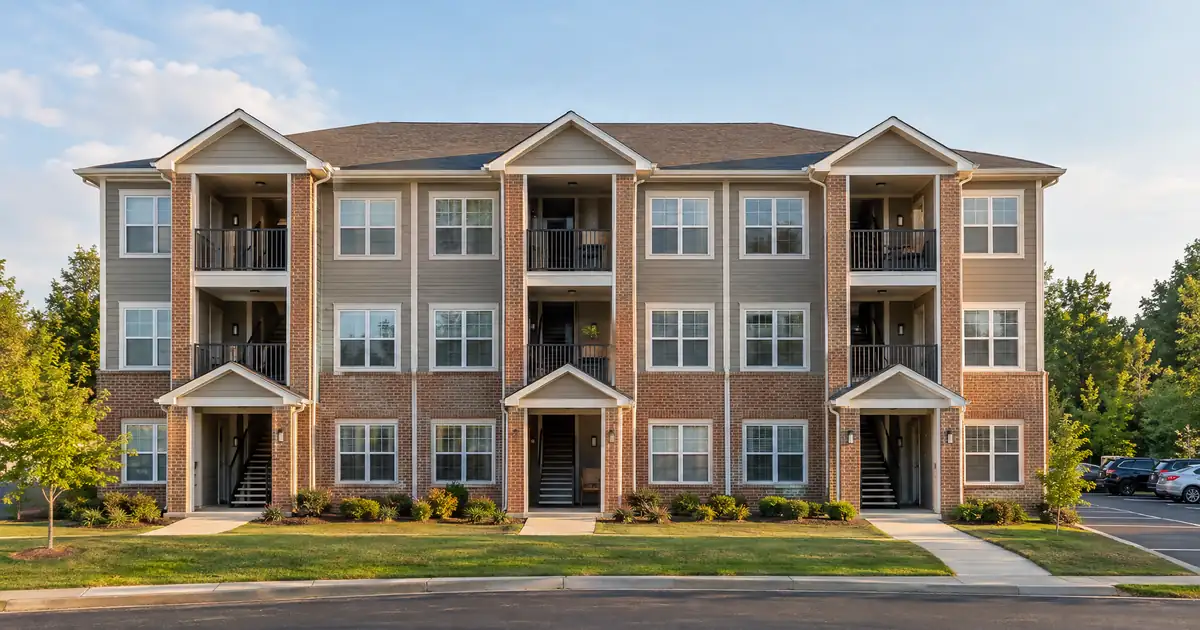
The Quick Read: The best program for a duplex, triplex or fourplex depends on the building’s condition and your exit: a hard money cash-out refinance typically tops out at 65% of value, runs 6 to 18 months interest-only, and works as a bridge, while a seasoned, leased building often pulls more through long-term DSCR financing.
- Hard money cash-out is sized on the property, the plan and the exit, so it fits buildings that are unstabilized, partly vacant or mid-rehab.
- Terms are short, so the exit decides whether the loan was a good idea.
- DSCR (debt service coverage ratio, which compares rent to the full monthly payment) suits leased, seasoned buildings and has no maturity date.
- Every figure here varies by lender, property and experience, and nothing is a commitment to lend.
What Is a Hard Money Cash-Out Refinance on a 2-4 Unit?
It is a short-term, asset-based loan that pays off your existing debt on a two-to-four unit rental and hands you the leftover equity. The lender cares most about the property’s value, your plan for it and how you will get out. Your personal income matters far less.
Lendmire is a mortgage broker, not a lender. It places these files with select lenders in a wholesale network, with hard money loans for 1-4 unit non-owner-occupied residential property across 41 markets, including Washington, D.C. Across that network, cash-out and rate-and-term refinances on hard money typically run up to 65% of value. Loans go up to $5,000,000, and larger by exception. Terms run 6 to 18 months, interest-only, with no prepayment penalty. There are no multi-year options on this program.
The 65% cap is the number most investors don’t expect. Hard money purchase and rehab loans can run much higher against cost, but a refinance is sized against what the building is worth today. A lower cap with a short maturity is the price of the flexibility.
What Does “Best Program” Mean Here?
There is no single best program, only the best program for your situation. A broker that shops several wholesale lenders can match the file to the program. The criteria that matter, in rough order:
1. Leverage against value. How much cash-out the cap typically leaves after your payoff and costs, subject to lender guidelines.
2. Term and runway. Whether 6 to 18 months is enough to finish the work, lease up and refinance.
3. Exit readiness. Whether the building is likely to qualify for the next loan when the note matures, subject to lender guidelines at that time.
4. Property fit. Whether the building is a legal 2-4 unit and fits the program’s eligibility.
5. Total cost. Origination and extension costs belong in your math, even though this article does not quote pricing.
Two lenders in the same network can answer differently on the same duplex. One may count a vacant unit at market rent, while another wants a signed lease. That is why the lender that writes a given file depends on the property, your credit profile, your experience and the plan.
Hard Money vs. DSCR Cash-Out: Which Lane Fits?
Hard money is bridge debt, and DSCR is the long-term lane. The first is built for buildings in transition, and the second is built for buildings that already perform.
| Factor | Hard money cash-out | DSCR cash-out |
|---|---|---|
| Typical fit | Transitional or unstabilized | Leased and seasoned |
| Underwriting basis | Property, plan, exit | Rent vs. full payment |
| Max leverage | Up to 65% of value | Around 75% LTV on standard rentals |
| Term | 6-18 months, interest-only | 30-year fixed spine |
| Main risk | Maturity date | Coverage after cash-out |
DSCR leverage on a cash-out refinance of a standard rental tops out around 75% LTV across most of the network. About 6 months of ownership is the common seasoning expectation. Credit floors start at 620 in parts of the network, most programs want about 660, and 700+ unlocks the strongest tiers. Reserves commonly run around 6 months of PITIA (principal, interest, taxes, insurance and association dues), but they vary by lender, leverage and loan size. You can read the full mechanics in Lendmire’s complete DSCR loans guide.
On leverage alone, DSCR usually pulls more. So why would anyone choose hard money? Because DSCR has gates that a transitional building can fail: seasoning, a rent history, and coverage that clears the program’s floor. Coverage of 1.00 is where many select programs start. A separate select-lender path takes coverage below 1.00, with leverage and terms adjusted. Hard money has no coverage gate, so it can fund a building those programs cannot.
Which Lane Fits Your Property Right Now?
| Property situation | Usual lane | Why |
|---|---|---|
| Stabilized, leased, owned 6+ months | DSCR cash-out | More leverage, no maturity |
| Just rehabbed, not yet seasoned | Hard money, or wait | Cost basis may cap proceeds |
| Vacant or unfinished units | Hard money | No rent history to test |
| Strong equity, thin rent coverage | Hard money, or sub-1.00 DSCR | Coverage is the binding limit |
| Existing hard money note, building leased | DSCR payoff or cash-out | Takes out the maturity risk |
Many investors treat this as one decision when it is really a timing decision. A building that fails DSCR today because it is half-leased may pass in a few months. If your note has runway, waiting can buy you more leverage and a longer term.
Why 2-4 Units Underwrite Differently
A two-to-four unit building is residential property with income-property mechanics. It is not commercial, and it is not a single-family house with extra bedrooms. Three things change.
The appraisal form. For two-to-four unit properties, the appraiser typically uses Form 1025, the small residential income property report. Fannie Mae’s Selling Guide lists Form 1025 for these buildings and Form 1007, the rent schedule, for one-unit investment properties. Those are form names only. DSCR and hard money programs don’t follow agency loan rules, but the appraisal form is the same one you will see on most of these files.
Rents are counted unit by unit. The report captures rent for each unit, and the lender pools them into one income figure. A vacant unit may be counted at market rent, or excluded, depending on the lender.
The legal unit count controls. A fourplex marketed as four units but permitted as three can create problems with eligibility, appraisal and the exit loan. Confirm legal unit count before you apply. Five or more units move into commercial underwriting, where this article’s parameters stop applying.
Hard money also covers the no-frills case: non-owner-occupied residential property of 1-4 units. Commercial, land, hospitality and owner-occupied properties are not on the sheet.
Run the Two Tests: Equity and Rent Coverage
Every file clears two tests, and the smaller answer wins. The first test is equity: the cap times value, minus your payoff and costs. The second is rent coverage, which only matters on the DSCR path. Here is a modeled example using percentages and ratios only.
Strong file. Assume a fourplex with a hard money payoff well below appraised value. A hard money cash-out at its maximum leverage leaves the difference between the payoff and the cap as cash before closing costs. A DSCR cash-out at a higher LTV leaves more, but the bigger loan also raises the debt service the rent has to cover. If the building covered its debt service comfortably before the refinance, the larger loan will bring coverage closer to the minimum. That can still clear a 1.00 floor on a select program, but with less cushion. Every figure here varies by lender and program — guidelines, property type, leverage, and credit profile all apply.
Thin file. Assume a duplex with a payoff equal to 68% of value. That is already above the 65% hard money cap, so a refinance would need cash from you at closing. The same balance fits inside a DSCR cash-out cap, but only if rent coverage and seasoning pass. If coverage falls short, equity alone will not fix it. Some select lenders in the network will review sub-1.00 coverage, with leverage and terms adjusted.
A larger down payment or a smaller loan can lift coverage, but it never erases leverage caps, credit floors, reserve rules or property eligibility. The strongest files clear both tests.
Passing the coverage test also does not mean the building cash flows. The ratio compares rent to PITIA only. Repairs, vacancy, management, utilities and capital expenses sit outside it.
Seasoning, Payoff-Only and Cash-Out
Seasoning is the waiting period between buying the property and refinancing it. It is lender policy, not law, and on the DSCR side about 6 months is the common expectation for full cash-out. Inside that window, many programs size the loan on cost basis, meaning your purchase price plus documented rehab, instead of a fresh appraisal. A rehab that created a lot of value can leave that equity locked until seasoning passes.
A payoff-only refinance, which retires the old note and returns no cash, is usually treated as a rate-and-term refinance. Cash beyond the payoff and costs makes it cash-out. Seasoning and coverage are separate tests, so a strong coverage ratio does not waive the wait.
A documented all-cash buyer may qualify for delayed financing, a lender-dependent exception to the wait. It does not waive coverage, reserves, the appraisal or the leverage cap.
Where the General Rule Breaks
- The appraisal comes in light. Leverage is a percentage of the lender’s value, not your after-repair estimate. A low appraisal means less cash-out, or cash from you at closing.
- Hard money into more hard money. Many hard money lenders will not refinance an existing hard money note into a new one. Long-term investor financing is the usual way out.
- Credit below 660. Hard money starts at a 620 minimum score with additional conditions below 660. First-time investors qualify at the lower leverage tiers.
- Short-term rental collateral. Leverage runs lower and lenders want hosting history. Short-term rental rules can vary by city, county, HOA, and property type, so investors should confirm local rules before relying on projected rental income.
- Ineligible property types. Manufactured homes, log homes and barndominiums are not offered in the DSCR network.
- Entity title. LLC ownership is common on these files, subject to lender program eligibility.
Because both loan types are business-purpose, they are reviewed differently from a standard owner-occupied mortgage. Business-purpose credit is exempt from the consumer rules in Regulation Z, which is why underwriting centers on the property.
Plan the Exit Before You Close
The maturity date is the main risk of any hard money loan. A 6-to-18-month term feels long on day one and short in month ten, when the lease-up runs late or the appraisal lands light. Build the exit before you sign.
1. Pin down the target loan: DSCR cash-out, DSCR payoff, or a sale.
2. Test coverage against the larger payment, not the old balance.
3. Count seasoning from the date title was recorded, then add a buffer.
4. Start the take-out application well before maturity, not at maturity.
There is no prepayment penalty on the hard money side, so paying it off early costs nothing in penalties. Many investors refinance out of hard money into long-term DSCR financing once the property is stabilized, and Lendmire brokers that path. If you are still weighing it, Lendmire’s piece Best Short-Term Rental Cash-Out Refinance Program to Pay Off a Hard Money Loan covers the takeout in detail.
What to Do With the Proceeds
Cash-out proceeds fund the next deal, but each deal adds debt and shrinks your cushion. Before you pull the maximum, count what you keep: reserves, coverage on the building you just refinanced, and the next purchase’s own coverage. A building that barely clears coverage after a maximum pull has little room if a unit goes vacant. Lendmire’s article Best Short-Term Rental Cash-Out Refinance Program on a Two-to-Four Unit Rental shows how the same building looks on the short-term rental side.
Key Terms Defined
Hard money loan: short-term, asset-based debt sized on the property and the plan rather than on your income.
Cash-out refinance: a new loan that pays off the old one and returns the leftover equity to you.
LTV: loan-to-value, the loan amount as a percentage of the property’s appraised value.
Loan-to-cost: the loan as a percentage of what you paid plus documented rehab.
DSCR: the monthly rent divided by the full monthly payment, including taxes, insurance and dues.
Seasoning: the waiting period between buying a property and refinancing it.
Payoff-only refinance: a refinance that retires the old loan and returns no cash.
Frequently Asked Questions
Can I do a hard money cash-out refinance on a duplex, triplex or fourplex?
Yes, on non-owner-occupied 1-4 unit residential property, subject to lender guidelines. Cash-out typically goes up to 65% of value, and the term runs 6 to 18 months, interest-only. Terms vary by lender, property and experience.
How soon after buying can I cash out?
It depends on the program. Many programs size on cost basis inside the seasoning window, and about 6 months is the common DSCR expectation for full cash-out. Hard money may be more flexible, but you get a lower cap, and delayed financing may apply for all-cash buyers.
Does it make sense to use hard money if I plan to refinance into DSCR?
It can, when the building is not ready for DSCR today, for example during a rehab or a lease-up. Plan the take-out first and start it well before maturity. If the building already performs and is seasoned, going straight to DSCR may skip the bridge entirely.
What if my rent coverage is weak?
Hard money does not test rent coverage, so it can bridge the gap while you raise rents or fill units. On the DSCR side, coverage of 1.00 is where many select programs start. Select lenders in the network will review below 1.00, with leverage and terms adjusted.
Is a fourplex commercial financing?
No. One to four units is residential property for financing purposes, while five or more units move into commercial underwriting. The legal unit count on the permit and appraisal is what counts, not how the listing describes the building.
Next Step
If you are buying, rehabbing or refinancing an investment property on a short timeline and want to see how the numbers work, Lendmire can help you compare hard money options based on the project, the exit plan, leverage, and your goals.
About Lendmire
Lendmire, NMLS# 2371349, is a mortgage brokerage focused on investor financing, arranging DSCR loans in 40 states plus Washington, D.C. — 41 markets total. Qualification is based on the property’s income rather than personal income documentation, subject to lender guidelines, making it a fit for LLC-held rentals and scaling portfolios. Scotsman Guide named Lendmire a Top Mortgage Workplace in both 2025 and 2026.
Get Started
Ready to find the right loan for you?
See your offer in seconds. No credit pull, no obligation.
Informational only. Not a Loan Estimate, approval, or commitment to lend. Program availability and eligibility are subject to lender guidelines, credit approval, property review, and underwriting.
References
2. CFPB: Regulation Z § 1026.3, Exempt Transactions
This article is part of Lendmire’s hard money loan program — full qualification details, guidelines, and scenarios live on the program page.
Related reading: Short-Term Rental Cash-Out Refinance Requirements When Your Mortgage Is Almost Paid Off · How a Lender Counts Reserves on a BRRRR Cash-Out Refinance · Top Hard Money Cash-Out Refinance Providers to Tap Equity From a Rental Property
Brandon Miller
Founder & CEO, Mortgage Loan Originator, Lendmire LLC
- Mortgage Loan Originator · NMLS# 1129696 · Verify on NMLS Consumer Access
- North Carolina Real Estate Broker · License# 343312 · Verify on NCREC
- North Carolina Insurance Producer · License# 19053198 · Property, Casualty, Life, Health · Verify on NAIC SBS
- Lendmire LLC · Firm NMLS# 2371349 · Verify firm licensure
Compliance and disclosures. Lendmire (NMLS# 2371349) is a licensed mortgage broker and is not a direct lender, depository institution, financial advisor, or tax professional. Content in this article is general market analysis and educational information — not financial, legal, or tax advice for any specific situation. Lendmire does not guarantee loan approval; every transaction is subject to underwriting by the funding lender. Mortgage pricing and loan program guidelines are subject to change at any time without notice and vary by borrower characteristics, property type, and state regulations. Lendmire complies with Equal Housing Opportunity. Licensure verification: NMLS Consumer Access.