
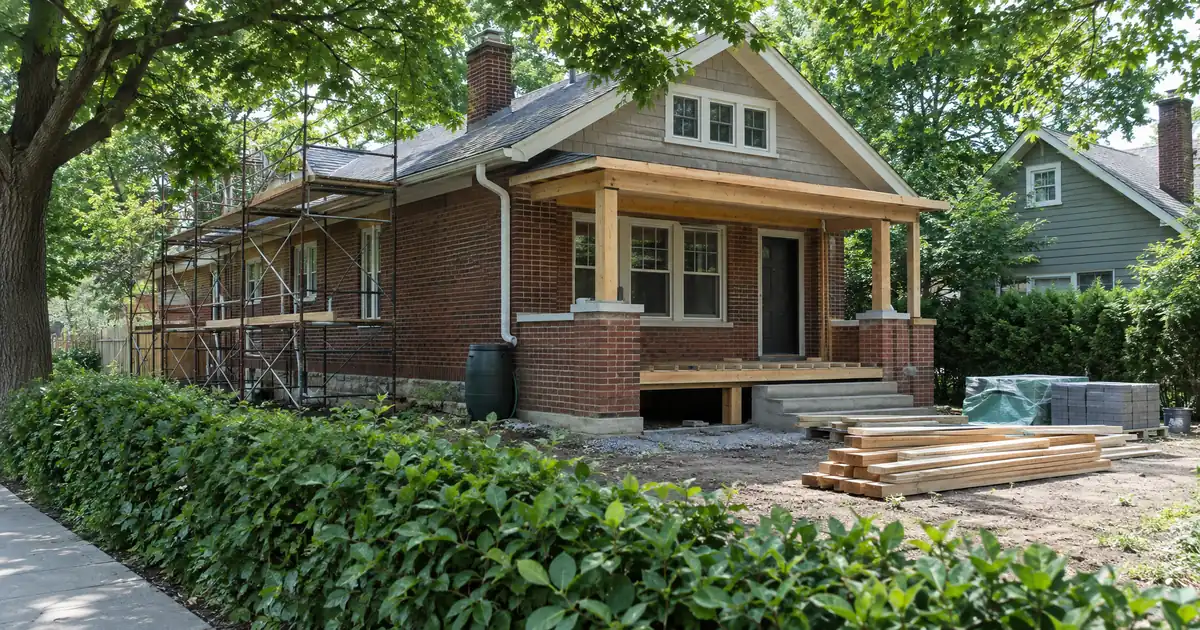
The Quick Read: The best program is the one that fits your property’s condition, your equity, and your exit plan. No single program wins for every investor. On a single-unit rental, hard money cash-out is a short-term, interest-only, asset-based loan that returns cash only at modest leverage. A long-term DSCR loan is often the better home once the property is finished and rented.
- Hard money cash-out and rate/term refinances typically reach up to 65% of value on most files, varying by lender, property, and experience.
- Terms run 6-18 months, interest-only, with no prepayment penalty.
- A 620 credit score is the typical minimum, with added conditions below 660.
- Many investors refinance out of hard money into long-term DSCR financing once the property is stabilized.
- Nothing here is a commitment to lend. Every file is underwritten individually.
What Does “Hard Money Cash-Out Refinance” Actually Mean?
The phrase covers two different transactions, and mixing them up causes most of the confusion.
The first is an exit. You owe a short-term bridge loan on a finished rental. You refinance into a long-term loan, usually a DSCR loan. Any cash left after the payoff and costs is your cash-out.
The second is a hard money loan used as the refinance itself. A private lender sizes a short-term, interest-only loan on the property’s value and the strength of your plan. Corporate Finance Institute describes hard money as asset-based, short-term, and sized off real estate collateral. That matches how these loans work across the network.
Neither is automatically “best.” The right choice depends on where the property sits today.
Key Terms Defined
- Cash-out refinance: a new loan larger than the payoff, with the extra cash going to you.
- Rate/term refinance: a new loan that pays off the old one and closing costs, with no cash back.
- LTV (loan-to-value): the loan amount divided by the property’s appraised value.
- Seasoning: how long you must hold title before a lender allows cash-out.
- DSCR (debt service coverage ratio): monthly rent divided by the full monthly payment, meaning principal, interest, taxes, insurance, and any association dues (PITIA).
- Balloon maturity: the date the whole remaining balance comes due.
What Does “Best” Mean for One Rental?
“Best” is a fit test, not a ranking. Lendmire is a mortgage broker, not a lender. It shops a wholesale network and matches your scenario to a program, so it never names a winner. Five questions decide the match:
1. Property status. Is it vacant, mid-rehab, leased, or stabilized?
2. Equity. How much of the value is actually yours?
3. Timeline. Do you need a bridge for months or a hold for years?
4. Exit. What pays off the loan when the term ends?
5. Borrower profile. Credit, experience, and documented projects all move leverage.
The lenders that write this business set terms based on those answers. The best program for your situation looks different from the best program for someone else’s.
Which Path Fits Which Property?
| Property status | Usual fit | Main tradeoff |
|---|---|---|
| Vacant or mid-rehab | Hard money | Short term, balloon risk |
| Finished, leased, unseasoned | Hard money or wait for DSCR | Seasoning clock |
| Leased and seasoned | DSCR cash-out | Prepayment penalty common |
| Near the leverage cap | Rate/term only | Little or no cash back |
| Owned with a lien at purchase | Seasoning-based cash-out | Cash-buyer shortcuts usually unavailable |
Vacant or unfinished properties fit hard money, and DSCR generally does not. A DSCR loan needs a rentable property with rent to measure.
How Is the Transaction Underwritten, Step by Step?
Here is how a file moves through review.
1. Confirm the property is finished and rentable. For a long-term takeout, the appraisal must support the balance, and rent must cover the new payment. The new loan must close before the old note matures.
2. Check seasoning. Across most of the network, about six months of ownership counted from the recorded deed is the common expectation for cash-out. Some lenders view it differently, so this varies by lender.
3. Order the payoff and a new appraisal. The new loan is sized off current value, not your old payoff balance.
4. Classify the deal. Payoff plus closing costs is a rate/term refinance. Cash above that makes it cash-out, which carries tougher seasoning and a lower leverage cap.
5. Run the coverage test. For a DSCR takeout, rent is divided by PITIA. Select programs start at 1.00, while stronger ratios open better leverage. A separate select-lender path takes coverage below 1.00 with leverage and terms adjusted.
6. Close and disburse. Cash left after payoff and costs goes to you.
One caution applies to step 5. Clearing 1.00 does not mean positive cash flow. Repairs, vacancy, management, utilities, and capex sit outside the calculation.
What Leverage Can You Realistically Expect?
On a hard money cash-out or rate/term refinance, leverage typically tops out at up to 65% of value. That is lower than most investors expect, and it is the number that shrinks your check.
Compare it with the long-term side. On a standard single-unit rental, DSCR cash-out tops out around 75% LTV across most of the network. Short-term-rental collateral caps lower, at 70% on cash-out. The exact numbers vary by lender and program and follow a full review of property, leverage, and credit.
Hard money’s higher figures belong to other transactions. Fix-and-flip leverage is measured against project cost, not value, and it applies to purchase-and-rehab deals, not a cash-out on a finished rental. Bridge purchases without rehab reach up to 80% of purchase price. Do not mix these up with a cash-out ceiling.
Loan amounts run up to $5,000,000, with larger sizes by exception. Smaller balances vary by lender.
A Worked Illustration in Ratios
Say you own a finished single-unit rental under a hard money note. You want to cash out and pay it off. Run it this way, using modeled assumptions rather than sourced market data.
- Appraised value comes in at your target.
- Leverage on the new hard money refinance is capped at 65% of value, which sets the maximum loan amount.
- The payoff and closing costs come out of that maximum loan amount first.
- What remains is your cash-out.
The headline leverage is never the check. The payoff and costs eat into it first. If the appraisal lands short, a planned cash-out can turn into a refinance that needs money from you.
Now run the exit. If the same property is leased and seasoned, a DSCR cash-out at up to 75% LTV on a standard rental, with rent comfortably covering PITIA at 1.00 or better, may leave more cash and a longer runway. That trade comes with a likely prepayment penalty, which hard money does not carry. Qualification stays subject to lender guidelines, credit approval, and property review.
Where the General Rule Breaks
Low appraisal. Your cash-out shrinks, or disappears.
Cost-basis structures. A small handful of lenders in the market let a refinance up to total cost basis count as rate/term, even earlier in the seasoning window. Cost basis means purchase price plus rehab and holding costs. These are rare, and pricing and terms adjust.
Delayed financing for cash buyers. Cash buyers can sometimes pull purchase money back soon after closing. A lien at purchase generally breaks that test, so a hard money purchase is generally not a cash buy. Fannie Mae’s Selling Guide describes the agency version of this exception. DSCR programs set their own rules, so treat that only as contrast.
Ineligible property types. Manufactured homes (single- and double-wide), log homes, and barndominiums are not offered in the DSCR programs. An owner holding one needs a different exit. Hard money collateral is limited to non-owner-occupied residential property of 1-4 units.
Short-term-rental collateral. Leverage caps lower than a standard rental. Short-term rental rules vary by city, county, HOA, and property type, so confirm local rules before relying on projected rental income.
What If the Term Ends Before the Exit?
Hard money terms run 6-18 months. There are no multi-year options. If the refinance does not close in time, you have four realistic choices:
- Ask the lender for an extension, if the file supports it.
- Replace the note with another short-term loan.
- Sell the property.
- Bring cash to the table to cover a shortfall.
Warning signs show up early: an appraisal below plan, rent that does not cover PITIA, or a seasoning clock that runs past maturity. Start the takeout conversation well before the note comes due.
When Hard Money Cash-Out Is Not the Best Choice
Skip it when:
- The property is stabilized and you plan to hold for years. Interest-only short-term debt with a balloon is the wrong tool.
- You need the highest possible cash back. Up to 65% of value is a low ceiling next to DSCR cash-out at around 75% on a standard rental.
- You have no credible exit. A short term with no takeout is a maturity problem waiting to happen.
- The property is a manufactured home, log home, or barndominium. Those are not offered in the DSCR programs, so the long-term exit is closed.
- Your credit is below the typical 620 minimum.
Hard money wins when the property is vacant, mid-rehab, or unseasoned, and when no prepayment penalty matters because you will refinance soon. For the long-term side, see Lendmire’s complete DSCR loans guide, and for the same single-unit question on the long-term side, Lendmire’s piece on the best DSCR cash-out refinance program on a single-unit rental property.
What Should You Prepare Before You Apply?
Lenders look at the property, the plan, and the exit more than your paystubs. Underwriting stays asset-based, but you still need to show up with a clean file.
- Current payoff statement for any existing note
- Proof of title and the date you acquired it
- Rehab scope and receipts, if work is complete
- A lease or rent schedule for a DSCR takeout
- Entity documents, if the property sits in an LLC, subject to lender program eligibility
- Documentation of completed projects, since experience moves leverage
These loans are made for non-owner-occupied investment properties. Because they are business-purpose loans, they are reviewed differently from a standard owner-occupied mortgage. The CFPB’s commentary on Regulation Z explains how business purpose is determined, and eCFR section 1026.3 sets the exemption itself. These loans skip consumer-mortgage disclosures such as the Loan Estimate, though other laws can still apply.
Frequently Asked Questions
Can you do a cash-out refinance with a hard money loan?
Yes, but at modest leverage. Cash-out and rate/term refinances typically reach up to 65% of value, varying by lender, property, and experience. Terms run 6-18 months, interest-only. It fits best when the property is not yet ready for long-term financing.
Can I refinance a hard money loan into a long-term loan?
Usually, once the property is finished, rented, and past the seasoning window. Many investors refinance into long-term DSCR financing once the property is stabilized, and Lendmire brokers that path. The appraisal must support the balance and rent must cover the new payment.
How long must I own the property before cashing out?
About six months of ownership is the common expectation on a DSCR cash-out across the network, counted from the recorded deed. Cost-basis structures at some lenders can shorten that, with adjusted terms.
Is a single-unit rental treated differently from a 2-4 unit?
Hard money covers 1-4 unit non-owner-occupied residential property, so single-unit qualifies. For a long-term takeout, the rent on a one-unit property is documented through a lease or appraisal rent schedule, and leverage tiers follow property type and borrower profile.
Does passing the coverage test mean the rental cash flows?
No. The coverage test compares rent to PITIA only. Repairs, vacancy, management, utilities, and capex sit outside it, so run a full operating budget before you rely on the cash.
About Lendmire
Lendmire — NMLS# 2371349 — is a DSCR and non-QM mortgage brokerage with investor loan programs in 41 markets, including Washington, D.C. DSCR eligibility is commonly reviewed by the lender around property-level rent rather than personal income documentation, subject to lender guidelines, and the brokerage helps arrange financing for LLC-owned portfolios beyond conventional financed-property limits. Recognized by Scotsman Guide as a Top Mortgage Workplace in 2025 and 2026.
Get Started
Ready to find the right loan for you?
See your offer in seconds. No credit pull, no obligation.
Informational only. Not a Loan Estimate, approval, or commitment to lend. Program availability and eligibility are subject to lender guidelines, credit approval, property review, and underwriting.
References
1. Corporate Finance Institute: Hard Money Loan
2. Fannie Mae Selling Guide: Cash-Out Refinance Transactions
3. CFPB: Regulation Z Official Interpretations
This article is part of Lendmire’s hard money loan program — full qualification details, guidelines, and scenarios live on the program page.
Related reading: DSCR vs. Conventional Cash-Out Refinance for a St. Charles MO Rental · Short-Term Rental Cash-Out Refinance Requirements When Your Mortgage Is Almost Paid Off · How a Lender Counts Reserves on a BRRRR Cash-Out Refinance
Brandon Miller
Founder & CEO, Mortgage Loan Originator, Lendmire LLC
- Mortgage Loan Originator · NMLS# 1129696 · Verify on NMLS Consumer Access
- North Carolina Real Estate Broker · License# 343312 · Verify on NCREC
- North Carolina Insurance Producer · License# 19053198 · Property, Casualty, Life, Health · Verify on NAIC SBS
- Lendmire LLC · Firm NMLS# 2371349 · Verify firm licensure
Legal disclosures. Lendmire (NMLS# 2371349) is a state-licensed mortgage brokerage that arranges financing through wholesale lender relationships. Lendmire is not a direct lender, depository institution, or registered financial advisor. The discussion above is general informational content about real estate financing — it is not financial, legal, or tax advice, and readers should consult licensed professionals for guidance on their individual circumstances. Loan inquiries are subject to lender underwriting; this article does not represent a commitment to lend. Loan terms, rates, and qualification standards vary by borrower, property, and state, and are subject to change at any time. Equal Housing Opportunity. NMLS Consumer Access: nmlsconsumeraccess.org.