
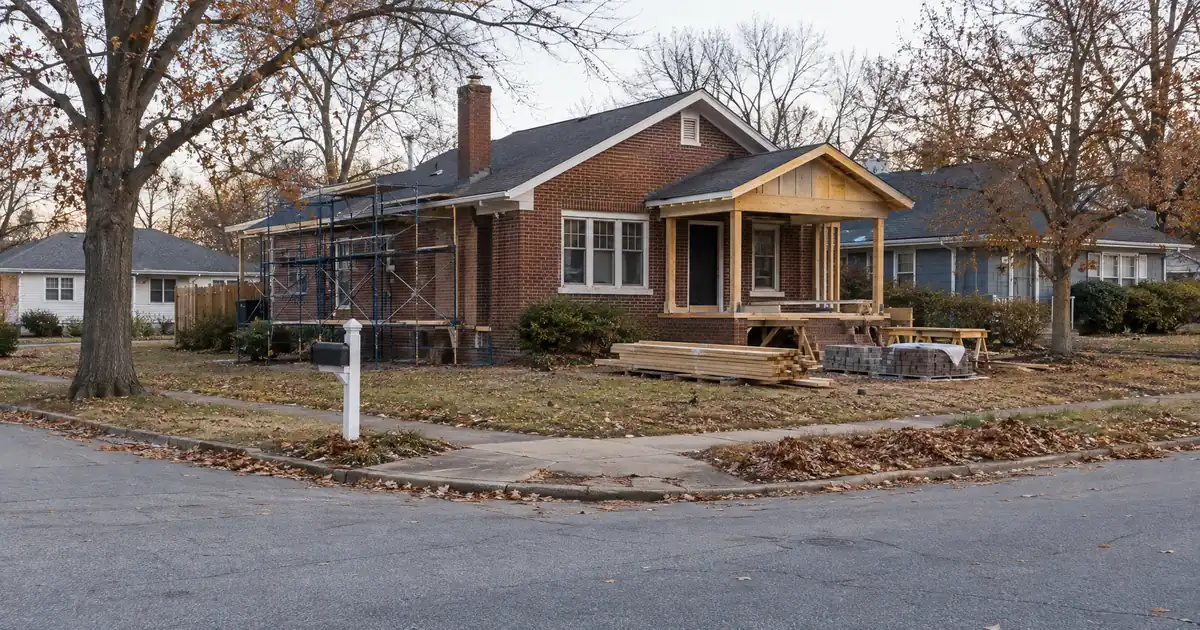
The Quick Read: A hard money cash-out refinance replaces your current loan with a short-term, asset-based loan that pays off the old lien and sends the leftover equity to you, and the “flexible” part comes from underwriting the property, the plan, and the exit rather than your personal income.
- Cash-out and rate-and-term hard money refinances typically top out at 65% of value, well below the cost-based leverage on a purchase or rehab.
- Terms generally run 6 to 18 months, interest-only, with no prepayment penalty.
- A 620 credit score is the typical minimum, with added conditions below 660.
- The collateral must be non-owner-occupied residential property, 1 to 4 units.
- Which program fits depends on the property, your credit profile, your experience, and the exit plan. Every figure here varies by lender, property, and experience.
What Does “Hard Money Cash-Out Refinance” Actually Mean?
Investors use the phrase for two different transactions. The first is a new hard money loan that pulls equity out of a property you already own. The second is the more common path: hard money buys and rehabs the property, then a longer-term loan takes it out and may return some cash.
Both matter, but they are not the same file. The first is a short-term loan sized at up to 65% of value. The second is a handoff from a bridge lender to a long-term lender, and the flexible terms investors want usually live in that handoff.
Hard money is also not the same as private money. Hard money underwrites the collateral first. It looks at the property, the plan, and the exit, and it leans less on personal income documents. That is why it can fit self-employed investors and portfolio builders. It does not mean there is no underwriting. Credit still matters, and a 620 minimum is typical.
How the Transaction Works, Step by Step
1. Scenario and property review. The broker collects the property address, unit count, current payoff, a rough value, and what the cash is for. The property has to be non-owner-occupied residential, 1 to 4 units.
2. Lender match. Lendmire is a mortgage broker. It works with a network of wholesale lenders and matches the scenario to a program. Lenders differ on leverage, experience requirements, and extension terms, so the match matters.
3. Appraisal. The new lender orders its own valuation. That value sets the loan, not your after-repair estimate. On rental-style files the appraisal may also include a rent schedule. Fannie Mae’s form names are a useful reference: Form 1007 covers single-family comparable rents and Form 1025 covers two- to four-unit properties. Those forms belong to agency loans. Hard money programs set their own appraisal and valuation requirements.
4. Payoff and title. The new loan pays off the existing lien. Clearing title means a payoff statement, a lien release, and a clean title commitment. Gaps here stall files more often than credit does.
5. Cash back. What remains after payoff and costs goes to the borrower.
The sizing rule is simple. The loan equals the leverage cap times the appraised value. Cash back equals the new loan minus the payoff minus closing costs.
A Worked Example With Index Numbers
Run the numbers on a modeled file. These are assumptions, not market data, and they use index units instead of dollars.
Assume the current payoff is 100 units. Assume exit costs are 3 units. At a 65% cash-out cap, the break-even appraisal is (100 + 3) ÷ 0.65, or about 158.5 units. Below that value, the new loan cannot even cover payoff and costs. Terms vary by lender guidelines, property type, leverage, credit profile, and full file review.
At an appraisal of 170 units, the 65% cap allows a loan of about 110.5 units. That leaves roughly 7.5 units of cash after payoff and costs. At 150 units, the loan caps near 97.5 units. The payoff alone exceeds it, and the borrower would need to bring cash to close.
Equity looks different once the lender’s cap is applied. A property worth well above the payoff can still return little cash. That gap is why cash-out files need the break-even calculation before the appraisal is ordered. The loan is also sized on the full new balance, so interest accrues on the cash taken out as well.
What “Flexible Cash-Out Terms” Really Covers
Flexibility is not one feature. It is a set of choices, and some are fixed by the program while others vary by lender.
| Term lever | What it means | Why investors care |
|---|---|---|
| Term length | Typically 6 to 18 months | Matches the exit plan |
| Payment structure | Interest-only | Keeps carry light |
| Prepayment | No prepayment penalty | Exit when ready |
| Leverage cap | Up to 65% of value on cash-out | Sets cash back |
| Entity borrower | Varies by lender | Fits LLC holdings |
Two points deserve attention. First, the current program has no multi-year options. An investor who needs more runway than 18 months is really looking for long-term rental financing, not a longer bridge. Second, extensions and exit fees vary by lender, property, and experience. They add carry cost while the payoff balance rises, so the exit plan should work backward from maturity.
Loan size runs up to $5,000,000, with larger loans by exception. Smaller balances vary by lender.
When It Works and When It Doesn’t
Hard money cash-out works when three things line up. The property has meaningful equity at a realistic appraisal. The cash has a defined use, such as the next acquisition or a rehab. And the exit is mapped before closing, whether that is a sale or a long-term refinance.
It fits an investor who owns a stable rental free and clear and wants down-payment money for the next deal. It fits a borrower whose income is hard to document but whose property is strong. It fits a short-hold plan where the bridge is only a stepping stone.
It works poorly in other cases:
- Thin equity. At a 65% cap, a property with thin equity returns little or no cash.
- No exit. A 6 to 18 month term with no refinance or sale plan becomes a balloon problem.
- Wrong collateral. Owner-occupied homes, land, commercial, industrial, and hospitality property are not on the program sheet.
- Long holds. Anyone planning to keep cash-out money invested for years should compare long-term financing, because a bridge is built to be repaid.
Short-term rental rules can vary by city, county, HOA, and property type, so investors should confirm local rules before relying on projected rental income.
Edge Cases Where the General Rule Breaks
Payoff-only versus cash-out. If any cash comes back, the lender treats the loan as cash-out, and the 65% cap applies. Some investors do a payoff-only refinance first to stop the bridge clock, then take cash later. That costs two sets of closing costs.
Appraisal shortfall. If the appraisal lands below payoff plus costs, the options are limited. Bring cash, pay down the balance, extend the current bridge, wait, or sell. An appraisal reconsideration with recent in-neighborhood sales and a documented scope of improvements sometimes recovers part of the gap. It is not guaranteed.
Cost basis versus appraisal. Early in a hold, some lenders size on cost plus documented improvements instead of the new appraisal. That is lender-specific. It makes the settlement statement, draw history, and invoices the key support documents for a recently purchased property.
Debt coverage at the exit. An interest-only bridge carries a light payment. A long-term loan sized to the same payoff, plus taxes and insurance, carries a heavier one. The rent-to-debt ratio can fall at the exit even though the deal looked fine at purchase. DSCR compares rent only to principal, interest, taxes, insurance, and HOA dues. Clearing it does not mean the property cash flows, because repairs, vacancy, management, utilities, and capex sit outside the calculation.
Business-purpose status. These are business-purpose investor loans, so they are reviewed differently from a standard owner-occupied mortgage. The Federal Register’s ability-to-repay rule treats investment-purpose loans as business-purpose loans. The test looks at the purpose of the loan. A property that is not a true non-owner-occupied investment does not qualify for this program.
How a Broker Helps You Find the Right Fit
No single lender is the best fit for every file. The lenders that write this product vary by property, credit profile, leverage need, documentation, and experience. A broker that shops several wholesale lenders can match a scenario to the program that suits it.
What lenders look at is consistent across the network:
- Property. Residential, non-owner-occupied, 1 to 4 units. Condition, location, and a realistic value matter.
- Borrower. A 620 credit score is typically the minimum, with added conditions below 660. First-time investors can qualify at lower leverage tiers.
- Plan. Cash-out use, timeline, and exit.
- Experience. On purchase and rehab files, documented completed projects change leverage. On a cash-out, the cap is the same across experience levels, but how the lender treats the file can differ.
Ask any lender the same questions. What is the extension structure? What are the exit fees? Is the entity borrower accepted? How are draws handled if there is a rehab component? What value does the lender use, and how does it treat a recent purchase? Answers vary, and they are where flexibility becomes real.
Exit Strategy: Plan the Takeout Before You Sign
Many investors refinance out of hard money into long-term rental financing once the property is stabilized. Lendmire brokers that path through DSCR loans, which qualify primarily on property-level rental income covering the payment, subject to lender guidelines. The complete DSCR loans guide walks through the product.
The decision between a bridge cash-out and a long-term exit comes down to how long you will hold. A bridge cash-out gives access to equity at a lower leverage cap and a short term. A long-term cash-out is sized on rent coverage and typically offers more runway. Lendmire’s article DSCR Cash-Out Refinance Lenders for Investors Who Need Flexible Cash-Out Terms covers that long-term side.
Alternatives Compared
| Factor | Hard money cash-out | Long-term DSCR cash-out |
|---|---|---|
| Underwriting focus | Property, plan, exit | Rent versus full payment |
| Typical term | 6 to 18 months | Long-term |
| Payment structure | Interest-only | Varies by program |
| Best for | Short hold, bridge | Stabilized rental |
| Main risk | Maturity balloon | Rent coverage |
Neither is better in the abstract. The right choice depends on the property, how long you plan to hold it, and whether the rent covers the debt.
Documents to Prepare
Entity documents, a payoff statement, a settlement statement from the original purchase, the draw history and invoices if rehab was funded, proof of insurance, a signed lease if the property is rented, and a one-page plan for the proceeds. For a recently acquired property, the settlement statement and improvement receipts often decide how the lender sizes the file. Missing entity documents and stale insurance are the preventable gaps.
Key Terms Defined
Seasoning: the minimum time you must own a property before a lender will use a new appraisal instead of your cost basis.
Cash-out refinance: a new loan that pays off the old one and returns the leftover equity as cash.
Balloon: the lump-sum principal payment due at the end of an interest-only term.
Loan-to-cost: the loan amount as a percentage of purchase price plus rehab cost, used on purchase and rehab files.
PITIA: principal, interest, taxes, insurance, and association dues, the full monthly obligation DSCR is measured against.
Payoff-only refinance: a refinance that retires the existing loan and returns no cash.
Frequently Asked Questions
Can you do a cash-out refinance with a hard money loan?
Yes, within limits. Cash-out and rate-and-term hard money refinances typically go up to 65% of value, varying by lender, property, and experience. The collateral must be non-owner-occupied residential property, 1 to 4 units, and nothing here is a commitment to lend.
Can you roll one hard money loan into another?
Sometimes, but it is not a given. A new lender sizes the loan on its own appraisal and cap, so the payoff has to fit under the cap with room for costs. If it doesn’t, the file needs cash, a paydown, or a different exit.
What credit score do lenders look for?
A 620 minimum is typical, with additional conditions below 660. First-time investors qualify at the lower leverage tiers. Underwriting stays asset-based, so the property, plan, and exit carry the file.
How long can I keep the loan?
Terms typically run 6 to 18 months, interest-only, with no prepayment penalty. There are no multi-year options on the current program. Investors who need longer runway usually refinance into long-term rental financing.
What can I use the cash for?
Common uses are a down payment on the next property, a rehab, or reserves. The use should match the plan on the file, because lenders review the exit and the purpose together.
Next Step
If you are buying, rehabbing or refinancing an investment property on a short timeline and want to see how the numbers work, Lendmire can help you compare hard money options based on the project, the exit plan, leverage, and your goals. Reach the team at 828-256-2183 or request a quote.
About Lendmire
Lendmire (NMLS# 2371349) is a DSCR-focused mortgage broker that arranges investor financing through select lenders in its wholesale network across 41 markets, including Washington, D.C. It is a broker, not a lender, and every file is reviewed by the lender subject to its guidelines. Scotsman Guide named Lendmire a Top Mortgage Workplace in both 2025 and 2026.
Get Started
Ready to find the right loan for you?
See your offer in seconds. No credit pull, no obligation.
Informational only. Not a Loan Estimate, approval, or commitment to lend. Program availability and eligibility are subject to lender guidelines, credit approval, property review, and underwriting.
References
1. Form 1007 covers single-family comparable rents and Form 1025 covers two- to four-unit properties
2. Federal Register: Ability-to-Repay and Qualified Mortgage Standards Under the Truth in Lending Act
This article is part of Lendmire’s hard money loan program — full qualification details, guidelines, and scenarios live on the program page.
Related reading: How a Lender Counts Reserves on a BRRRR Cash-Out Refinance · DSCR vs. Conventional Cash-Out Refinance for a St. Charles MO Rental · Short-Term Rental Cash-Out Refinance Requirements When Your Mortgage Is Almost Paid Off
Brandon Miller
Founder & CEO, Mortgage Loan Originator, Lendmire LLC
- Mortgage Loan Originator · NMLS# 1129696 · Verify on NMLS Consumer Access
- North Carolina Real Estate Broker · License# 343312 · Verify on NCREC
- North Carolina Insurance Producer · License# 19053198 · Property, Casualty, Life, Health · Verify on NAIC SBS
- Lendmire LLC · Firm NMLS# 2371349 · Verify firm licensure
Legal disclosures. Lendmire (NMLS# 2371349) is a state-licensed mortgage brokerage that arranges financing through wholesale lender relationships. Lendmire is not a direct lender, depository institution, or registered financial advisor. The discussion above is general informational content about real estate financing — it is not financial, legal, or tax advice, and readers should consult licensed professionals for guidance on their individual circumstances. Loan inquiries are subject to lender underwriting; this article does not represent a commitment to lend. Loan terms, rates, and qualification standards vary by borrower, property, and state, and are subject to change at any time. Equal Housing Opportunity. NMLS Consumer Access: nmlsconsumeraccess.org.