
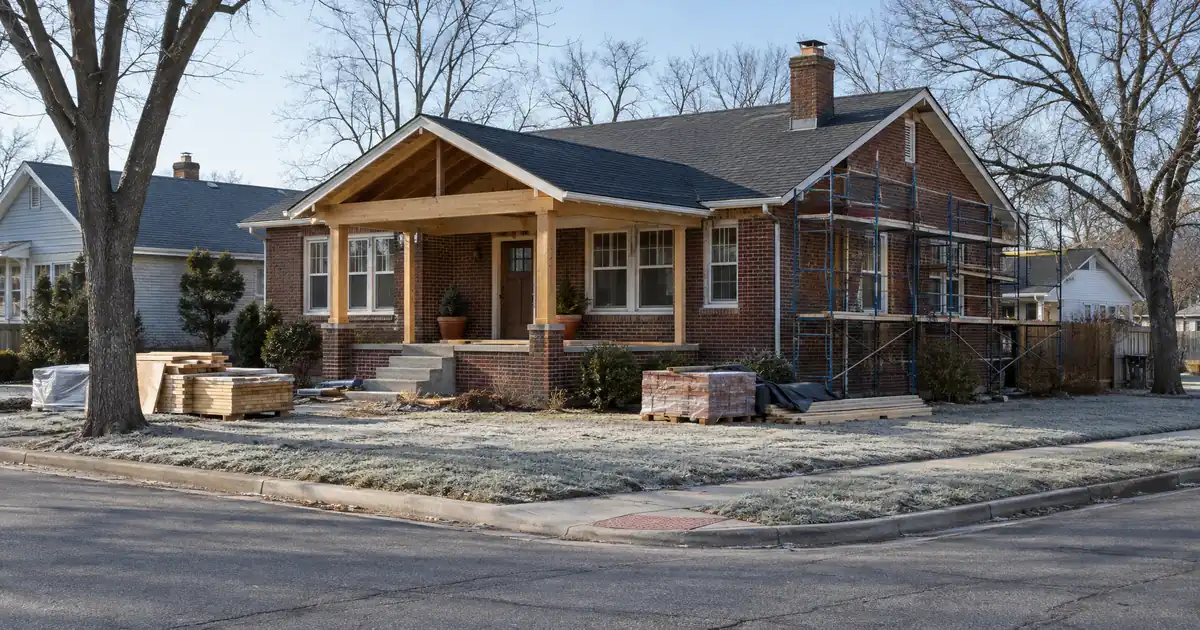
The Quick Read: The best program for a rental you have owned under a year depends on how you bought it, how much equity the appraiser will recognize, and whether the rent covers the new payment. In practice, many investors use a hard money loan to buy and rehab, then pay it off with a DSCR cash-out refinance once the property is leased and seasoned.
- A hard money cash-out refinance, where hard money is the new lender, typically tops out around 65% of value. A DSCR cash-out on a standard rental tops out around 75% LTV.
- Across most of Lendmire’s wholesale network, about 6 months of ownership is the common expectation for value-based cash-out sizing.
- Inside that window, lenders generally size on the lower of appraised value or your cost. That often means little cash back, or a payoff that needs cash from you.
- Delayed financing, a seasoning exception for cash buyers, generally does not apply if a loan was recorded at purchase, which includes hard money.
- Check the math before you order an appraisal: the new loan must cover the old payoff plus closing costs.
What Does “Best” Mean for a Rental Under a Year?
The best program is the one whose sizing rules, leverage cap and waiting period match your timeline and how you bought the property. No single program wins for everyone. Lendmire is a mortgage broker that arranges investor financing through select lenders in its wholesale network, across 41 markets including Washington, D.C. It does not lend directly, so the useful question is which type of program fits your file.
Think of “best” as five tests:
- Sizing basis: does the lender size on appraised value, or on your cost?
- Leverage: how much of that basis will it lend against?
- Waiting period: does time on title matter, and for how long?
- Carry: what do you pay while you wait, including double closing costs?
- Exit risk: what happens if the bridge loan matures before the refinance works?
Here is how the three common routes compare on those tests. Every figure varies by lender, property, and experience, and none is a commitment to lend.
| Route | Sizing basis | Typical ceiling | Cash back |
|---|---|---|---|
| Hard money cash-out refinance | Value | Up to 65% of value | Possible, often modest |
| DSCR cash-out, past seasoning | Appraised value | Around 75% LTV (standard rental) | Yes, if value allows |
| DSCR cash-out, inside window | Lower of value or cost | Around 75% LTV of that lower number | Often little or none |
Rate-and-term refinances sit outside this table because they pay off the old loan without returning meaningful cash. They often face lighter waiting rules than cash-out, which matters later here.
Key Terms Defined
Hard money loan: a short-term loan sized on the property’s value and the investor’s plan rather than on personal income. Hard money lending is asset-based and usually interest-only.
Bridge loan: short-term financing that carries you until a longer-term loan replaces it. A bridge loan is the role hard money plays in a buy, rehab and refinance plan.
Cash-out refinance: a new loan that pays off the old one and hands you the difference.
DSCR (debt service coverage ratio): the monthly rent divided by the full monthly obligation of principal, interest, taxes, insurance and any HOA dues (PITIA). A ratio of 1.00 means rent equals that obligation.
Seasoning: the time a lender wants you to have owned the property, or held a loan on it, before it will trust appraised value over what you paid.
Title seasoning vs. value seasoning: title seasoning is time on recorded title. Value seasoning is how long before the lender sizes on appraisal instead of cost.
Delayed financing: a seasoning exception for buyers who paid cash. It returns roughly what you put in, not post-rehab value.
Payoff-only refinance: a rate-and-term refinance that retires the old loan and returns little or no cash at closing.
How Underwriting Treats a Rental Owned Under a Year
Lenders in the network treat a recent purchase cautiously because the price you paid is the best evidence of value until time passes. Programs in the network commonly expect about 6 months of ownership from the day title records. Before that, they size on the lower of the appraisal or your cost, subject to lender guidelines.
DSCR loans are designed for non-owner-occupied investment properties. Because they are business-purpose investor loans, they are reviewed differently from a standard owner-occupied mortgage.
The deal works through the same steps on almost every placement:
1. The hard money loan closes. The bridge funds the purchase and the rehab. Its term needs to outlast three things: the seasoning window, lease-up, and the appraisal. A 6-month term on a heavy rehab is a trap. Many rehabbers choose terms inside the 6 to 18 month range for that reason.
2. The rehab finishes and the unit is leased. The exit lender wants a signed lease, a security deposit and first month’s rent documented. Missing lease evidence is a common reason files stall.
3. The appraisal comes in. The new lender sizes on its own appraisal, never your after-repair estimate. The appraisal includes a rent schedule, and for 2-4 unit properties the appraiser uses an operating income form built for small residential income property.
4. The lender sizes the loan. The new loan equals the leverage cap times the value basis. Cash back equals the new loan minus the old payoff minus closing costs.
5. Coverage is tested. The rent the lender uses is divided by PITIA at the new loan size. A bigger loan lowers the ratio.
Four gates decide the outcome: seasoning, appraisal, rent coverage, and the leverage cap. Clearing one does not clear the others. A strong appraisal does not rescue a weak lease, and strong rent does not lift a loan past its cap.
What the coverage gate really tests
Across the network, 1.00 is where select programs start, and stronger ratios open better pricing and leverage. A separate select-lender path takes coverage below 1.00, with leverage and terms adjusted. DSCR compares rent to PITIA only. Clearing 1.00 does not mean the property produces positive cash flow, because repairs, vacancy, management, utilities and capital spending sit outside the calculation.
Which Route Fits Your Situation?
Your purchase method and your status on the rehab decide the route more than any other factor. Use this table as a starting map, then confirm the details with the lenders your file fits.
| Where you are | Likely route | Main catch |
|---|---|---|
| Bought with cash, owned under 6 months | Delayed financing style cash-out | Returns roughly cost, not rehab value |
| Bought with hard money, rehab underway | Finish rehab, extend bridge if needed | Term must outlast seasoning |
| Hard money, rehab done, leased, under 6 months | Payoff-only refinance, or wait | Value basis is the lower of appraisal or cost |
| Hard money, past about 6 months, leased | DSCR cash-out on appraised value | 75% cap, coverage and closing costs |
| Bought with conventional financing, under 6 months | Rate-and-term, or wait | Standard seasoning applies |
Two rows deserve more explanation.
The hard money buyer who is done and leased at month four. This investor is in the tightest spot. The loan is too young for value-based sizing, and a recorded purchase loan rules out the cash-buyer exception. The realistic choices are a payoff-only refinance that locks long-term financing and keeps equity for a later cash-out, or a short bridge extension until seasoning clears. The first option costs a second closing. The second costs more carry. Neither is free, so the better choice depends on how much equity you expect the appraisal to show.
The cash buyer. Delayed financing waives seasoning only. Coverage, reserves, appraisal and leverage all still apply. It is a way to recover capital you put in, not a way to cash out a rehab gain.
Hard Money as the Cash-Out Lender Itself
If hard money is the new lender, a cash-out or rate-and-term refinance typically runs up to 65% of value. Loan amounts go up to $5,000,000, with larger loans by exception. Terms run 6 to 18 months, interest-only, with no prepayment penalty. A 620 credit score is the minimum, with additional conditions below 660.
These programs cover non-owner-occupied residential property of 1-4 units. Underwriting stays asset-based, looking at the property, the plan and the exit. All of this varies by lender, property, and experience, and nothing here is a commitment to lend.
Hard money cash-out makes sense in a narrow situation. You need equity out of a property that cannot yet meet long-term rental requirements, such as a unit that is not leased. The ceiling is lower than DSCR cash-out, and you still owe an exit at maturity. Many investors refinance out of hard money into long-term DSCR financing once the property is stabilized, and Lendmire brokers that path.
For purchase-and-rehab bridge loans, leverage is measured against cost. Fix-and-flip programs run up to 93% of project cost for investors with 5+ completed projects, 90% of project cost with 2+, and 85% of project cost with fewer. Every tier is capped at 75% of after-repair value. Those cost-based figures matter in the next section.
A Worked Example: Cost Basis vs. Appraised Value
The same appraisal can return cash or demand cash from you, depending on the seasoning window. This example uses modeled assumptions, not market data. It indexes your total project cost to 100 so you can swap in your own figures.
Assume a hard money bridge funded at 90% of project cost. The payoff is therefore 90, before any extension fees.
- Inside the window, value basis is cost. The new loan at 75% of 100 equals 75. That is 15 short of the payoff, before closing costs. You would bring cash.
- Past seasoning, appraisal at 110% of cost. In this case the new loan at 75% of 110 equals 82.5. That is still 7.5 short of the payoff.
- Past seasoning, appraisal at 120% of cost. Here the new loan equals 90, which just pays off the bridge. Closing costs still need to come from somewhere.
- Past seasoning, appraisal at 140% of cost. With this value the new loan equals 105. After the payoff, 15 remains before closing costs, which is real cash back.
Now consider hard money as the cash-out lender at 65% of value. Against a bridge that funded 90% of project cost, the appraised value would need to be well above the original cost just to retire the payoff, since 65% of value must cover a payoff equal to 90% of cost. The tiered structure matters here: bridge advances are sized on cost, not on value, and the highest advance levels are reserved for borrowers with more completed projects. That is why high-leverage bridge buyers usually plan a DSCR exit rather than a hard money refinance.
A modest appraisal miss can turn a small cash-out into a cash-to-close shortfall, because the loan shrinks with every point of value lost. This is also why the bridge advance level matters so much. The more of your cost the bridge covers, the more value headroom you need at exit.
The bring-cash test
Run this before you pay for an appraisal. Use a conservative value estimate, because the new lender will use its own appraisal, not yours.
1. Pick your value basis. Inside the seasoning window, use the lower of your realistic appraised value or your total cost. Past seasoning, use your realistic appraised value.
2. Find the maximum new loan. Multiply that value basis by the leverage cap: around 75% for a standard rental DSCR cash-out, or up to 65% if hard money is the new lender.
3. Add up what you owe. Total the bridge payoff, any extension or exit fees, and the closing costs on the new loan.
4. Compare. If the maximum new loan is larger than what you owe, the difference is your cash back. If it is smaller, the gap is the cash you bring to closing.
5. Stress it. Drop the value by 5% to 10% and run it again. If the answer flips from cash back to bring cash, the file has little headroom.
In the example above, the cost-basis case fails at step four, while the 140% case clears it with room to spare.
Where the General Rule Breaks
Hard money purchases and delayed financing. Delayed financing depends on a cash purchase. If a loan was recorded at purchase, the condition generally fails and standard seasoning applies. A hard money purchase is a recorded loan, so this exception usually does not help you. Treat that as a practitioner reading of how lenders in the network apply the rule, since each lender sets its own.
The agency contrast. The Fannie Mae Selling Guide has a delayed financing exception for cash buyers on agency loans, and cash-out pricing applies to it. It does not govern DSCR loans, so do not assume your DSCR lender follows it.
Credit for improvements. A lender may give some credit for documented rehab spending, but only through the appraisal and underwriter review. A rehab may support a higher appraised value, depending on comps and underwriter review. In one pattern we see, proceeds are capped at the lower of the current appraisal or the purchase price plus documented improvements. Keep every invoice and draw record.
Rate-and-term first, cash-out later. If you refinance rate-and-term now, you get no meaningful cash at closing, but the equity stays in the property for a later cash-out. If you wait for seasoning, you get value-based sizing. That is a trade between a second closing and extra carry on the bridge.
A bridge that matures too early. If the hard money term ends before seasoning clears, you face an extension or a payoff-only refinance.
Short-term rentals. Cash-out on short-term rental collateral tops out around 70% LTV, versus 75% on standard rentals. Expect a 640+ credit score and about 12 months of hosting history. Short-term rental rules can vary by city, county, HOA, and property type, so investors should confirm local rules before relying on projected rental income. Final terms depend on the lender’s guidelines, the property type, and the borrower’s complete credit picture.
Ineligible property types. DSCR financing through the network is not offered on manufactured homes (single- and double-wide), log homes, or barndominiums.
Common Mistakes on Early Refinances
- Assuming hard money means no seasoning. Seasoning varies by program, and a hard money purchase does not remove the DSCR lender’s waiting period.
- Sizing on your after-repair estimate. The exit lender uses its own appraisal.
- Skipping the lease file. A signed lease, deposit and first month’s rent are part of the package, and missing lease evidence is a common stall point.
- Missing the improvement record. An itemized list of capital improvements helps the appraiser, and invoices support any value credit.
- Ignoring double closing costs. You pay closing costs on the bridge and again on the exit.
- Treating 1.00 as profit. Coverage at 1.00 says the rent matches PITIA. It says nothing about repairs, vacancy or management.
- Letting the bridge term run short. The term has to outlast seasoning, lease-up and the appraisal together.
What the Decision Looks Like in Practice
Start with your exit and work backward. Before you buy, line up the exit lender and confirm which value they will use, which rent they will use, and what waiting period applies. Then pick a bridge term that fits those answers with room to spare.
Next, decide whether you want cash back or only a payoff. The CFPB’s consumer guide to using home equity notes that lenders typically require 10 to 20 percent equity to remain after a cash-out. That guide is aimed at homeowners, but the logic carries over: a cash-out has to leave a cushion. For rentals, the network’s cash-out ceiling does that work.
A larger down payment on a purchase can lower the payment and lift the ratio, but it never erases leverage caps, credit floors, reserve rules or property eligibility. The strongest files clear both tests: enough equity and enough rental coverage. On long-term rental DSCR loans, typical credit expectations in the network are around 660, with a 620 floor in parts of the network and 700+ unlocking the strongest leverage tiers. Short-term rental programs can set their own score and hosting-history requirements, so confirm those separately. Reserves vary by lender, leverage, loan size and transaction type, and commonly run around 6 months of PITIA.
If your property is already past the common 6-month mark and leased, Lendmire’s piece Best DSCR Cash-Out Refinance Program on a Rental Owned Less Than a Year covers that route directly. For the full picture of how these loans work, see the complete DSCR loans guide.
Frequently Asked Questions
Can I do a cash-out refinance on a rental I bought with hard money less than a year ago?
Yes, but how much cash you get depends on time on title. Past about 6 months, many programs in the network size on appraised value, up to around 75% LTV on a standard rental cash-out. Earlier than that, sizing generally uses the lower of appraisal or cost, which often leaves little or nothing after the bridge payoff.
Does a hard money purchase qualify for delayed financing?
Generally not. Delayed financing assumes a cash purchase, and a loan recorded at closing fails that condition. Your file would normally fall under standard seasoning instead, though each lender sets its own rules.
Is a hard money cash-out refinance a better choice than a DSCR cash-out?
Usually it depends on whether the property meets long-term rental requirements. Hard money cash-out runs up to 65% of value, with 6 to 18 month terms, while DSCR cash-out on a standard rental runs around 75% LTV. If the unit is leased and seasoned, DSCR usually gives more room. If it is not, hard money can bridge the gap, subject to lender guidelines.
What if my appraisal comes in low?
A low appraisal shrinks the new loan, and the shortfall lands on you at closing. At a 75% cap, each percent of lost value cuts about 0.75 percent of value from the loan. Running the bring-cash test above with a conservative value before ordering the appraisal protects you from that surprise.
Does clearing 1.00 coverage mean the rental is cash-flow positive?
No. DSCR compares rent to PITIA only. Repairs, vacancy, management, utilities and capital spending are outside the calculation. Coverage below 1.00 is available through select lenders in the network, with leverage and terms adjusted.
Next Step
If you are buying, rehabbing or refinancing an investment property on a short timeline and want to see how the numbers work, Lendmire can help you compare hard money options based on the project, the exit plan, leverage, and your goals. The right path for a rental owned under a year turns on your purchase method and appraisal headroom, so mapping the exit before the bridge closes tends to matter more than choosing a program afterward.
About Lendmire
Lendmire — NMLS# 2371349 — is a DSCR and non-QM mortgage brokerage with investor loan programs in 41 markets, including Washington, D.C. DSCR eligibility is commonly reviewed by the lender around property-level rent rather than personal income documentation, subject to lender guidelines, and the brokerage helps arrange financing for LLC-owned portfolios beyond conventional financed-property limits. Recognized by Scotsman Guide as a Top Mortgage Workplace in 2025 and 2026.
Get Started
Ready to find the right loan for you?
See your offer in seconds. No credit pull, no obligation.
Informational only. Not a Loan Estimate, approval, or commitment to lend. Program availability and eligibility are subject to lender guidelines, credit approval, property review, and underwriting.
References
1. Fannie Mae Selling Guide B2-1.3-03, Cash-Out Refinance Transactions
2. CFPB, Using Home Equity guide
This article is part of Lendmire’s hard money loan program — full qualification details, guidelines, and scenarios live on the program page.
Related reading: How to Get an Investor Cash-Out Refinance in TX, CA, NJ or FL · How Soon Can a Hard Money Cash-Out Refinance Close Before Your Balloon Date? · Best DSCR Cash-Out Refinance Program Above the Conforming Loan Limit
Brandon Miller
Founder & CEO, Mortgage Loan Originator, Lendmire LLC
- Mortgage Loan Originator · NMLS# 1129696 · Verify on NMLS Consumer Access
- North Carolina Real Estate Broker · License# 343312 · Verify on NCREC
- North Carolina Insurance Producer · License# 19053198 · Property, Casualty, Life, Health · Verify on NAIC SBS
- Lendmire LLC · Firm NMLS# 2371349 · Verify firm licensure
Disclosure information. Lendmire is a state-licensed mortgage brokerage under NMLS# 2371349. Lendmire is not a depository institution, direct lender, or financial advisor — all loans referenced are placed through wholesale lender partners and are subject to each lender's underwriting standards. This article is provided for general informational purposes and is not a commitment to lend, nor does it constitute financial, legal, or tax advice. Loan programs, terms, rates, and qualification standards change without notice and depend on borrower profile, property type, and the state in which the subject property is located. Equal Housing Opportunity provider. NMLS Consumer Access: nmlsconsumeraccess.org.