
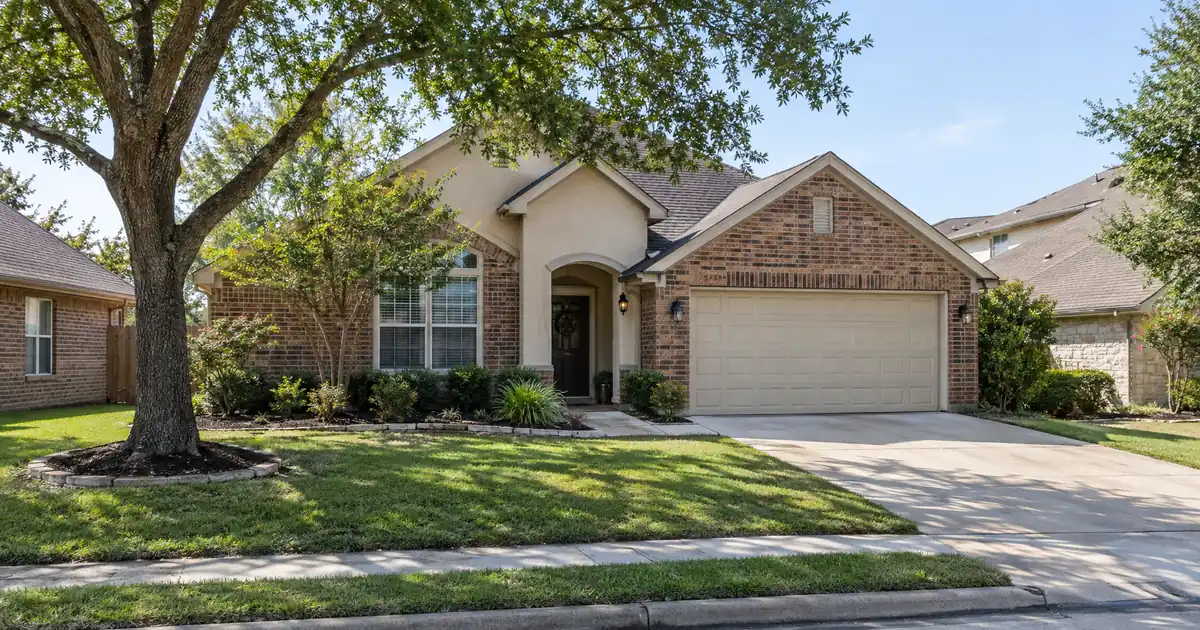
The Quick Read: A Texas HELOC is a revolving line secured by your homestead, and the state constitution caps total liens at 80% of the home’s value, requires a 12-day wait before closing, allows only one such loan at a time, and bars card access, so the line behaves more like a structured, lawyer-reviewed loan than a flexible credit card. The rules attach to the home you live in, not to your rentals.
- Combined debt on the homestead cannot exceed 80% of fair market value when the line is established.
- Texas law requires a waiting period between your application or receipt of the state notice and closing, and you also get a short window after closing to cancel. Exact timing varies by file and lender.
- Only one of these equity loans can sit on the home at a time, and a HELOC counts as that one loan.
- Texas sets a minimum for each draw after closing.
- A rental property is a different transaction. Its financing follows lender program rules, not the homestead rules.
What Is a HELOC Under Texas Law?
A HELOC in Texas is one of three loan types that share a single constitutional framework. Texas A&M’s Real Estate Research Center groups them as cash-out refinances, home equity loans, and lines of credit, all governed by Section 50(a)(6) of the state constitution. It also notes that the borrower must keep at least 20% equity in the home.
How large a line the equity supports in Texas.
An equity line is sized by combined loan-to-value, occupancy, and credit — not by rental coverage. Switch the occupancy or the credit band and the ceiling moves with it.
Investment-property lines require a 700 minimum credit score; second-home lines start at a 640 minimum and primary-residence lines at 600, and the combined-LTV ceiling steps down as the credit band drops on primary-residence and second-home lines and holds on investment-property lines; the line cap steps down on primary-residence lines and holds at every tier on investment-property and second-home lines.
A debt-to-income ratio above 45% requires 680+ credit. Profiles under 640 are limited to single-family homes. At least 75% of the approved line is drawn at closing. Ceilings, floors, and caps update from Lendmire’s centralized guideline source.
Line estimate
Illustrative estimate only — not a quote, Loan Estimate, approval, or commitment to lend. The rate is an editable assumption; equity-line pricing is variable through both the draw and repayment periods and never converts to fixed. Occupancy and credit drive the ceiling together: an investment property tops out at 70% combined LTV (minimum credit 700, line cap $500,000); a second home tops out at 90% combined LTV (minimum credit 640, line cap $500,000), with the ceiling stepping down as the credit band drops (the cap holds at every tier); a primary residence tops out at 80% combined LTV (minimum credit 600), and its $750,000 maximum line is available only at 75% combined LTV or below with a 700-or-better credit profile (720 on the longer-runway program) and a full appraisal. Lines above $500,000 require a full appraisal. Credit, debt-to-income, property type, and full underwriting review all affect the final line.
A line works in two phases. You draw during an interest-only period, then repay on a fully amortizing schedule. The Texas overlay changes how you get in, how much you can take, and how you can use the line.
Across the wholesale network of lenders Lendmire works with, this is a standalone line in first or second lien position. Lendmire is a mortgage broker, not the lender. Home equity lines are arranged in the 16 states where it offers full-service lending, and Texas is one of them.
Why Does Texas Treat Home Equity Differently?
Texas protects the homestead from forced sale for most debts, and equity borrowing is a narrow exception to that protection. Article XVI, Section 50 of the Texas Constitution sets the shield. Subsection (a)(6) lists the conditions under which a lender may take a lien against the home for equity borrowing.
Two layers of rules apply. The first layer covers every equity loan: the 80% combined cap, the waiting period, the one-loan limit, and consent from each owner and spouse. The second layer is aimed at lines of credit only. It covers fee timing, who can change the terms, how you reach the money, and who prepares the closing documents.
The state’s financial regulators write the detailed rules. The Finance Commission’s home equity lending chapter includes sections for HELOC advances, for when a line is treated as established, and for its maximum principal.
How the Process Runs, Step by Step
Here is the sequence a homestead line follows from application to first draw.
1. Confirm the property is your homestead. Homestead status arises by operation of law. It is a legal fact, not a label you choose. A Texas law firm’s homestead explainer notes that the protections cannot be waived and are not easily lost.
2. Application and the state notice. The lender delivers the Notice Concerning Extensions of Credit, a form required under the Texas home equity rules. The 12-day clock runs from the later of the application date or the date you receive the notice. Many borrowers assume it runs from the application alone. It does not.
3. Valuation and the 80% test. The lender adds the first mortgage, the line limit, and any other lien, then divides by fair market value. On lines at or below $500,000, the network ordinarily runs an automated valuation. A full appraisal is required on every line above $500,000, and you can request one on a smaller line.
4. Credit and income review. The network reads one bureau score tied to the primary wage earner, and the report can be no more than 90 days old at closing. Debt-to-income tops out at 50%, and it drops to 45% for scores from 600 to 679. The qualifying payment is the interest-only amount calculated on the maximum draw.
5. Closing. A Texas line closes only at the office of the lender, an attorney, or a title company. A Texas-licensed attorney must prepare or review the documents. Expect a terms-and-conditions agreement and a notarized home equity affidavit in the package, and a fair-market-value acknowledgment signed at the table.
6. The cancel window, then the first draw. You have a right to cancel after closing, and the line opens once that window has passed. On the network’s lines, at least 75% of the line is drawn at closing.
How Much Can You Borrow?
The ceiling is a percentage of value, not a dollar amount. Take the home’s fair market value, multiply by 80%, and subtract what you already owe. What remains is the most the line can be.
Picture a homeowner whose first mortgage equals 50% of the home’s value. The line can use at most the remaining 30%. If the first mortgage sits at 65%, the room shrinks to 15%. The test is measured on the date the line is established, so a value that moves later does not retroactively break the loan.
Credit tiers can push the ceiling lower than 80%. On a primary residence in the network, a 640 score supports the 80% figure, a 620 score steps down to 70%, and a 600 score to 60%. The network’s matrix tiers above 80% never apply to a Texas homestead, because the state cap controls. Lines above $500,000 are available on primary residences only, need a 700 credit profile or better (720 on the longer 5-year draw structure), cap at 75% combined, and require a full appraisal. The maximum line is $750,000.
What Changes After Closing?
The line is not a credit card, and the Texas rules make that literal. Card and debit-card access is prohibited. Each advance must be at least $4,000 in Texas, which rules out small, frequent withdrawals. The lender cannot change the line’s terms unilaterally.
Fees are front-loaded by design. Origination and similar charges can be taken only when the line is established, so annual fees and non-usage fees are not allowed. The overall fee cap is 2% of the original principal. It used to be 3%. Survey, title, and appraisal charges sit outside the cap, per a Texas compliance training overview.
Two draw structures exist in the network. One runs a 3-year interest-only draw followed by a 17-year repayment. The other runs a 5-year draw followed by 25 years of repayment. Pricing floats across both phases and never converts to a fixed term. Each figure belongs to its own structure, so confirm which one a quote reflects.
An older rule capped draws once the balance passed 50% of home value. A later constitutional amendment removed that limit. Guides that still cite it are out of date.
One Lien at a Time (and Seasoning)
Only one Section 50(a)(6) loan can sit on a Texas homestead at once. A HELOC and a cash-out refinance cannot be stacked. If a prior cash-out loan or equity line is on the home, it has to be paid off before a new line can attach.
On the network’s primary-residence files, a 12-month seasoning period applies as well. Spouse consent matters here too. Each owner and each owner’s spouse must consent to the lien, and the 12-day notice should reach a non-borrowing spouse. Files stall at this step when one signature is missing or a divorce decree is unclear.
A rate-and-term refinance is a different animal. It is not an equity loan, so these rules do not attach. A refinance out of home equity status can add only closing costs, not cash.
Where the General Rule Breaks
Several edge cases change the answer.
- Acreage. Texas properties are limited to 10 acres in the network. A larger rural homestead can be legally protected and still fall outside the program.
- Title vesting. The borrower must hold title individually or in a revocable living trust. LLCs, corporations, partnerships, and irrevocable or land trusts cannot hold title. A homestead deeded to an LLC needs a vesting change first. A deed carrying a condition such as a repurchase option can also be attacked under Section 50(c).
- Moving out. Once the home stops being your homestead, the equity framework no longer governs it. That is a question of fact and law, not preference.
- Listed properties. A property that is listed for sale, or was listed within the past 60 days, is ineligible in Texas.
- Property type. Single-family, 2-4 unit, PUD, townhome, and condominium (including non-warrantable) properties can be eligible. Manufactured homes, co-ops, condotels, log homes, and agricultural or mixed-use zoning are not.
- Violations. The lender, not the borrower, carries the penalty risk. An uncured violation can cost the lender its principal and interest. That is why Texas files get so much document scrutiny.
What Does This Mean for an Investor?
The homestead rules protect the home you live in. They do not govern a rental. A lien on a rental property is an ordinary non-homestead lien, so the 12-day wait, the one-lien rule, and 12-month seasoning apply to primary residences only. Texas second homes and investment properties are eligible as non-homestead transactions.
The ceilings differ by occupancy. On an investment property, the network’s line caps at 70% combined, requires a 700 credit profile, tops out at $500,000, and runs only the 5-year draw and 25-year repayment structure. On a second home, the minimum score is 640, with higher leverage available at stronger scores. The 90% combined tier exists only at 720 or better, and it never applies to a homestead.
Using a homestead line to fund a rental purchase carries a plain risk. If the rental underperforms, the home that secures the line is the collateral. A strong file clears both tests: enough equity and enough cash flow from the property.
The alternative sits on the rental itself. A DSCR cash-out refinance qualifies primarily on property-level rental income covering the payment, subject to lender guidelines. The homestead rules do not touch it. Across the network, cash-out generally tops out near 75% LTV on standard rentals, and about 6 months of seasoning is the common expectation. Credit floors start around 620 in parts of the network, with most programs wanting about 660 and 700 or better for the strongest leverage. Coverage of 1.00 is where select programs start, and a separate select-lender path goes below 1.00 with leverage and terms adjusted. Clearing 1.00 is not the same as positive cash flow, since repairs, vacancy, and management sit outside the ratio. The complete DSCR loans guide covers those mechanics.
Key Terms Defined
Homestead: The home you occupy as your residence, which Texas protects from forced sale for most debts.
Section 50(a)(6): The constitutional provision that lets lenders place an equity lien on a homestead under strict conditions.
Combined loan-to-value (CLTV): All liens on the property added together, divided by its fair market value.
Draw period: The early phase of a line when you can borrow and pay interest only.
Repayment period: The later phase when the balance amortizes and no new draws are made.
Seasoning: The waiting time required after a prior equity loan or purchase before a new loan can attach.
Common Misconceptions
Texas does not ban borrowing against a rental. The constitution shields the homestead, and a rental follows its own lender program.
A HELOC and a cash-out refinance cannot coexist on the same homestead, because both are Section 50(a)(6) loans.
Texas law does not set a credit score minimum. Score floors come from lender programs, which vary.
A Texas homestead has no dollar cap. The limits are about acreage, not value.
Frequently Asked Questions
Can I use a Texas HELOC to buy a rental property?
Yes, the money can be spent on a purchase, but the line is secured by your homestead. If the rental underperforms, your own home carries the risk. Combined debt on the home must also stay within the 80% cap, and each draw must meet the $4,000 minimum.
Can I open a HELOC on a rental I already own in Texas?
Yes, subject to lender guidelines. A rental is a non-homestead property, so the homestead waiting period and one-lien rule do not apply. On the network, an investment-property line caps at 70% combined, needs a 700 credit profile, and tops out at $500,000.
How long must I wait between application and closing?
At least 12 days after the later of your application or your receipt of the state notice, plus 3 days afterward to cancel. Plan for that gap on any time-sensitive purchase.
Can I put a HELOC and a cash-out refinance on the same home?
No. Both fall under Section 50(a)(6), and only one such loan can be secured by the home at a time. On primary-residence files in the network, a 12-month seasoning period also applies.
Can my LLC take out the line?
No. LLCs, corporations, partnerships, and irrevocable or land trusts cannot hold title on these lines. The property must be vested in you individually or in a revocable living trust. A property already in an LLC needs a vesting change or a DSCR cash-out instead.
If you are considering a home equity line and want to see how the numbers work, Lendmire can help you compare HELOC options based on the property, the equity available, credit profile, combined leverage, and your goals. Reach the team at 828-256-2183 or request a quote.
Texas homestead law rewards the borrower who checks occupancy, title, and existing liens before looking at leverage.
About Lendmire
As a mortgage broker (NMLS# 2371349), Lendmire helps homeowners and real estate investors in its 16 full-service states open home equity lines of credit arranged through wholesale lenders. Lendmire is never the lender; line amounts, ceilings and terms are set by the lender under its guidelines. Scotsman Guide named Lendmire a Top Mortgage Workplace in both 2025 and 2026.
Get Started
Ready to find the right loan for you?
See your offer in seconds. No credit pull, no obligation.
Informational only. Not a Loan Estimate, approval, or commitment to lend. Program availability and eligibility are subject to lender guidelines, credit approval, property review, and underwriting.
References
1. Texas Real Estate Research Center, Texas A&M
2. Texas Constitution, Article XVI, Section 50
3. Cornell LII, 7 TAC Chapter 153 Home Equity Lending
4. Doss Law, Texas Homestead Protections
5. Compliance Pathways, Texas Home Equity Overview
This article is part of Lendmire’s HELOC & home equity loan program — full qualification details, guidelines, and scenarios live on the program page.
Related reading: How an Investment Property HELOC Works in a Living Trust · How an Investment Property HELOC Works on a Newly Built Home · How an Investment Property HELOC Works While a Divorce Is Pending
Brandon Miller
Founder & CEO, Mortgage Loan Originator, Lendmire LLC
- Mortgage Loan Originator · NMLS# 1129696 · Verify on NMLS Consumer Access
- North Carolina Real Estate Broker · License# 343312 · Verify on NCREC
- North Carolina Insurance Producer · License# 19053198 · Property, Casualty, Life, Health · Verify on NAIC SBS
- Lendmire LLC · Firm NMLS# 2371349 · Verify firm licensure
Important disclosures. Lendmire (NMLS# 2371349) is a licensed mortgage brokerage. Lendmire is not a direct lender, depository institution, or financial advisor. All loan inquiries are subject to lender underwriting; this article does not constitute a commitment to lend. Rates, terms, and program guidelines are subject to change without notice and vary by borrower profile, property type, and state. Information in this article is general in nature and is not financial, legal, or tax advice. Equal Housing Opportunity. NMLS Consumer Access: nmlsconsumeraccess.org.