
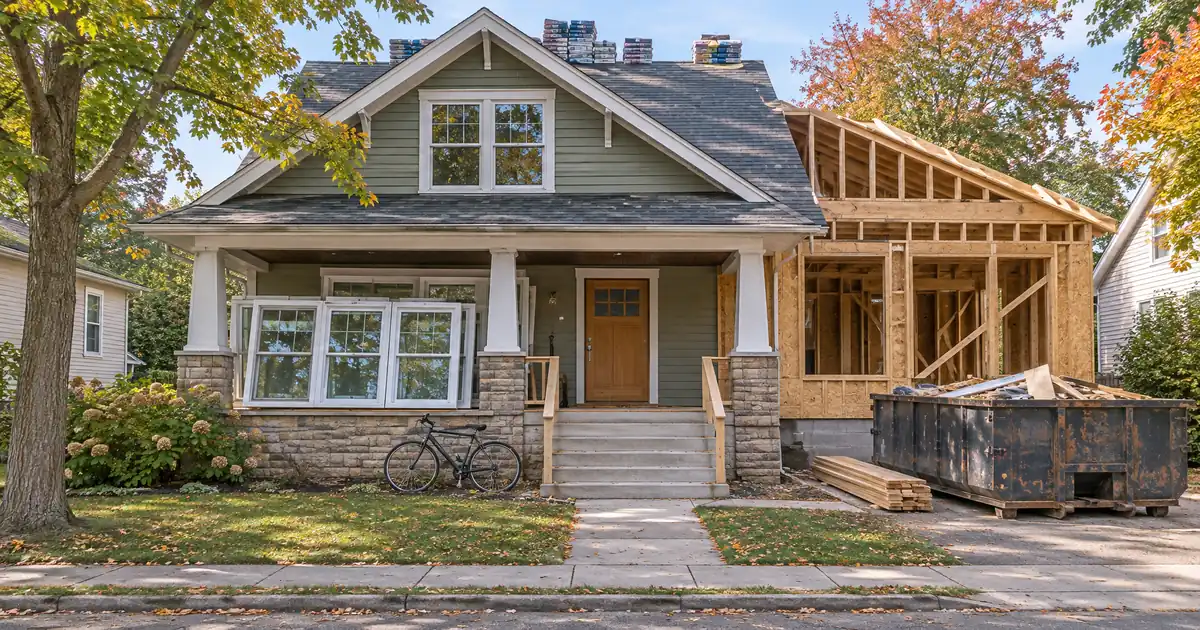
The Quick Read: A DSCR HELOC suits an investor who wants to keep a good first mortgage in place and pull equity from a rented property through a second lien, while a DSCR cash-out refinance suits an investor who is ready to replace the first mortgage with one larger loan and take a single lump sum. Neither product finances a vacant, mid-rehab flip directly. Both turn equity in a rental you already hold into capital for the flip. The right choice usually comes down to the existing first mortgage, how the property is titled, and how the money will be used.
- A DSCR HELOC adds a lien and leaves the first mortgage alone. A cash-out refinance removes the first mortgage and writes a new one.
- Both qualify primarily on the rental’s income covering the payment, subject to lender guidelines.
- A flip that stalls leaves the rental carrying the debt in either case.
Side-by-Side
The table compares the DSCR HELOC parameters across Lendmire’s wholesale network with published industry norms for the cash-out refinance. All items are subject to underwriting and vary by program.
| Factor | DSCR HELOC (network) | DSCR Cash-Out (industry norms) |
|---|---|---|
| Structure | Revolving line, second lien or first lien | Closed-end new first lien |
| Existing first mortgage | Stays in place on a second lien | Paid off and replaced |
| Review basis | Rent coverage of 1.10x on a stress payment | Rent coverage; the floor varies by program |
| Personal income | Not calculated | Generally not calculated |
| Property types | 1-4 units, condos, PUDs, townhomes | Broadly similar; varies by program |
| Entity vesting | LLC allowed, with member guarantees | LLC common, with a personal guarantee |
| Seasoning | 6 months since the last note date and 6 months on title | Varies by program |
| Reserves | None required | Commonly required |
| Cash delivery | At least 80% drawn at closing, later draws available | One lump sum at closing |
The sections below explain why each row matters for a flip.
What Each Option Actually Is
The term DSCR HELOC is used loosely in the market. Some lenders apply it to closed-end second mortgages, and a few apply it to cash-out refinances. Here it means a revolving line of credit.
On Lendmire’s network, the line is a standalone second lien behind the first mortgage the owner keeps. It can also be a standalone first lien on a rental with no mortgage. It is never closed together with a purchase, and it is never placed on the owner’s own home. The rent qualifies the line, so there is no traditional personal-income documentation, W-2s, or personal income calculation. The borrower’s credit and the property file are still reviewed.
A DSCR cash-out refinance works differently. A new, larger first mortgage pays off the old one, and the borrower receives the difference. It is a closed-end loan, and the whole balance is reset in one transaction.
The easiest summary is add versus replace. A HELOC adds a lien. A cash-out replaces the first lien.
The complete DSCR loans guide covers the wider DSCR product family.
When the DSCR HELOC Is the Better Fit
The first mortgage is a good one. A cash-out refinance reprices the entire balance, including the part that is already financed. A second-lien line leaves that first loan untouched. An investor who likes the existing first mortgage has a structural reason to add a lien rather than replace it.
The rental sits in an LLC. The members sign as guarantors, and a title holder who is not a borrower signs a non-borrowing owner acknowledgment. The people on the line need not be the people on the first mortgage.
The investor wants to keep personal income out of the file. Qualification rests on the property’s rent rather than personal income. The rent has to clear 1.10x against a fully amortizing payment on the entire credit limit at a stress rate, and taxes and insurance are not part of that payment. Rent is the lesser of the appraisal’s market rent and the lease, unless three months of receipts support a lease above market. A lease in place is still required, and the receipts only matter when the lease is above market rent. A two-to-four-unit property can have at most one vacant unit. On a second lien, confirm on the file how the lender treats the first-mortgage payment, since the lender’s coverage calculation governs.
The amount is moderate. Second-lien lines run from $50,000 to $500,000, with combined loan-to-value up to 70% at a 720 credit score or better, through select programs. Combined loan-to-value means the first mortgage balance plus the new line, divided by the property’s value. Below 720 there is no second-lien tier. Exact terms depend on the lender’s guidelines, property type, leverage, and a full review of the borrower’s file.
The structure carries these traits:
- Draw rules. At least 80% of the line is drawn at closing. Later draws are at least $5,000 each.
- Terms. The line carries a 5-year interest-only draw period, a 25-year repayment period, and a 30-year maturity. The rate is variable.
- Valuation. Lines to $400,000 use an automated valuation with a property inspection report, or a full interior appraisal. Larger lines take a full interior appraisal.
- Exposure. A borrower can hold at most 5 loans or $2,500,000 with the program.
The draw rule is the main tradeoff for a flip. The line is not a pay-as-you-go budget for staged rehab work. Most of it is drawn on day one, and interest runs on the drawn balance whether or not the money has been spent. Investors who want to release cash as each rehab phase completes may find the structure mismatched.
The 70% combined ceiling is also a real constraint. A rental with a large first mortgage may leave little room beneath it. The worked example below shows why.
The CFPB describes the general shape of a home equity line: a revolving line with a draw period followed by a repayment period, during which payments often rise sharply. Lendmire’s program is built around a 5-year draw and a 25-year repayment phase. An investor whose flip runs long should plan for the point when interest-only payments end.
When the DSCR Cash-Out Refinance Is the Better Fit
The cash-out refinance fits when the first mortgage is a candidate for replacement, or when the investor needs one large sum that a second-lien line cannot reach.
The existing first mortgage is not worth keeping. If the current loan is short on term, awkward in structure, or already due for replacement, a cash-out solves two problems at once. The investor clears the old lien and receives cash from one closing.
The investor needs more than a second lien allows. A second lien on Lendmire’s network stops at 70% combined loan-to-value and a $500,000 line. A first-lien refinance structure is a different product, with its own leverage and loan-size rules, and those vary by program.
The property is not a fit for the HELOC lane. The HELOC lane excludes rural-designated property, condotels, row homes, leaseholds, land trusts, and age-restricted communities. It also excludes mixed-use property, modular and log homes, and a property listed for sale in the prior two months. A cash-out refinance may be available on some of these through other programs. Eligibility varies, so the property type should be checked early.
The investor wants a single, fixed lump sum. Cash-out proceeds arrive at once. There is no draw period and no repayment-phase switch. The borrower owes a single new first mortgage.
The costs of replacing a first lien are real, and the points below walk through them.
- The new balance resets everything. A bigger cash-out raises the payment and lowers the coverage ratio. A rental that cleared easily before may sit near the floor after the refinance.
- Prepayment terms are common. Many DSCR cash-out loans carry a prepayment penalty. An investor who may sell or refinance again soon should ask about it before committing.
- Reserves are commonly asked for. The HELOC lane requires none, but cash-out programs often expect reserves, which varies by program.
On a flip, the cash-out has one more cost. The investor is paying to reset a first mortgage whose only job was to sit there while the flip ran. If the first mortgage was already well suited, that reset is a price paid for no structural gain.
Where a Flip Complicates Both Options
A flip is a short-hold plan, and these products are built around long-hold rental collateral. That mismatch shapes the decision more than any single parameter.
DSCR financing measures rent. A vacant, mid-rehab flip has no rent to measure, so a DSCR loan on the flip property itself is rarely the right tool. This article therefore covers the route of drawing capital from a rental the investor already owns.
Either option puts the debt on the source rental, not on the flip. That makes the downside plain.
If the flip sells on plan, the investor repays the line or the larger loan from proceeds. If the flip stalls, the rental keeps carrying the debt. With a HELOC, interest runs on the drawn balance throughout the draw period. With a cash-out, the new first-mortgage payment is due every month. The flip’s problems become the rental’s problems.
The source rental’s rent also has to keep covering the new debt. A coverage ratio that clears on paper does not guarantee that real cash flow stays comfortable, since the ratio tests rent against a stress payment rather than the payments the investor actually owes.
Seasoning matters for sequencing. A rental bought or refinanced inside the last 6 months is not eligible for the HELOC (that clock runs from the last note date to the new note date), and the owner must have held title for 6 months (settlement date to note date). Lendmire’s article DSCR HELOC vs. DSCR Cash-Out Refinance for Investors Weighing Delayed Financing covers the related timing question for recent purchases. Cash-out programs set their own seasoning, which varies.
Business-purpose treatment is also part of the picture. DSCR loans are designed for non-owner-occupied investment properties. Because they are business-purpose investor loans, they are reviewed differently from a standard owner-occupied mortgage. The CFPB’s commentary on exempt transactions treats credit to acquire, improve, or maintain a non-owner-occupied rental as business-purpose credit. RESPA’s coverage rule, 12 CFR 1024.5, exempts business-purpose loans and allows reliance on that test. A primary-home line used to fund a flip is a different product and is outside this comparison.
A Worked Example in Ratios
Run the combined-leverage math for a rental with a first mortgage.
Say the rental is valued at 100% of its appraised value, and the first mortgage balance sits at 50% of that value. The second-lien ceiling is 70% combined, subject to underwriting. That leaves room for a line of up to 20% of value.
Now say the first mortgage balance is 60% of value. The same ceiling leaves room for only 10% of value. Rental equity is the constraint, and a larger first mortgage shrinks the line.
For a cash-out refinance, the question runs the other way. The new, larger loan has to carry its own coverage. If the rent only just clears the floor before cash-out, adding more balance can push the ratio below it. If the rent comfortably covers the existing obligation, there may be room to increase the loan.
The same rental can clear one test and miss the other. The HELOC test is 1.10x on a stress payment across the whole credit limit. The cash-out test is the program’s coverage floor on the full new payment. These tests are illustrative, and the lender’s own calculation governs.
The pattern is simple. Strong equity with a good first mortgage points toward the line. A weak first mortgage or a need for larger proceeds points toward the refinance.
Key Terms Defined
DSCR. The debt-service coverage ratio, which divides the property’s monthly rent by its qualifying monthly payment.
Combined loan-to-value (CLTV). The first mortgage balance plus the new line, divided by the property’s value.
Second lien. A loan secured behind the first mortgage, so the first lender is repaid first in a default.
Draw period. The stretch when a line of credit can be borrowed against, with interest-only payments on the drawn balance in this program.
Seasoning. The required time since a purchase or refinance before a new loan is allowed.
Fix-and-flip loan. A short-term loan that funds the purchase and rehab of a property meant for resale.
The Verdict
Pick the DSCR HELOC when the existing first mortgage is worth keeping and the rental has equity room beneath the 70% combined ceiling. It also fits when the amount needed falls within a line of $50,000 to $500,000, and when the investor wants the rent, not personal income, to carry the file. It also works when the rental sits in an LLC.
Pick the DSCR cash-out refinance when the first mortgage is due for replacement or the investor needs more proceeds than a second lien can supply. Expect a full reset, a larger payment on the property, and possibly a prepayment penalty.
Reconsider both when the flip timeline is uncertain. Both options put the debt on a rental that has to keep paying. A separate short-term bridge loan keeps the flip’s risk away from the rental, at the cost of a separate loan and its own exit. That tradeoff depends on the investor’s tolerance for risk to the rental, which neither product removes.
Frequently Asked Questions
Can a DSCR HELOC fund the purchase of a flip property?
Not in the same closing. The line is never closed together with a purchase. It is secured by a rental the owner already holds. The investor draws against that rental’s equity and uses the proceeds toward the flip. Whether proceeds are allowed for a given purpose is confirmed with the lender.
How does seasoning work on a DSCR HELOC?
Two six-month clocks apply: the line is not available on a rental bought or refinanced in the last 6 months (last note date to new note date), and title must have been held for 6 months (settlement date to note date). A recent refinance on the source rental can therefore delay the line.
Does a DSCR HELOC require reserves?
No reserves and no cash to close are required on the program, subject to underwriting. Cash-out refinance programs often ask for reserves, which varies by lender. An investor comparing the two should confirm reserve rules for each before choosing.
Can the rental sit in an LLC?
Yes, the HELOC program allows entity vesting, with the members signing as guarantors. Cash-out programs also commonly allow entity vesting with a personal guarantee. Revolving lines from other sources may not allow it, so title structure is worth settling first.
What happens if the flip does not sell on time?
The debt stays on the source rental. On a HELOC, interest continues on the drawn balance, and the repayment period begins when the draw period ends. On a cash-out, the new first-mortgage payment continues every month. Plan for a longer hold than the flip budget assumes.
Next Step
If you are considering a home equity line on a rental property and want to see how the numbers work, Lendmire can help you compare DSCR HELOC options based on the property, the rent, the equity available, credit profile, combined leverage, and your goals. Lendmire is a mortgage broker and arranges financing through select lenders in its wholesale network. This is not a commitment to lend.
About Lendmire
Lendmire is a mortgage brokerage (NMLS# 2371349) arranging DSCR home equity lines of credit — standalone first or second liens on non-owner-occupied one-to-four-unit rentals, qualified on rent — through a wholesale lending network in 15 of its 16 licensed states (every licensed state except Tennessee). Eligibility is determined by the lender on each file. Scotsman Guide named Lendmire a Top Mortgage Workplace in both 2025 and 2026.
Get Started
Ready to find the right loan for you?
See your offer in seconds. No credit pull, no obligation.
Informational only. Not a Loan Estimate, approval, or commitment to lend. Program availability and eligibility are subject to lender guidelines, credit approval, property review, and underwriting.
References
2. CFPB – Regulation Z § 1026.3, Exempt transactions
3. Cornell LII – 12 CFR 1024.5, Coverage of RESPA
This article is part of Lendmire’s DSCR HELOC program — full qualification details, guidelines, and scenarios live on the program page.
Related reading: Can You Use a DSCR HELOC to Pay a Tenant to Move Out? · How to Qualify for a DSCR HELOC for Investors Comparing Lender Types · How to Qualify for a DSCR HELOC to Finance an Investment Property for Investors
Brandon Miller
Founder & CEO, Mortgage Loan Originator, Lendmire LLC
- Mortgage Loan Originator · NMLS# 1129696 · Verify on NMLS Consumer Access
- North Carolina Real Estate Broker · License# 343312 · Verify on NCREC
- North Carolina Insurance Producer · License# 19053198 · Property, Casualty, Life, Health · Verify on NAIC SBS
- Lendmire LLC · Firm NMLS# 2371349 · Verify firm licensure
Disclosure information. Lendmire is a state-licensed mortgage brokerage under NMLS# 2371349. Lendmire is not a depository institution, direct lender, or financial advisor — all loans referenced are placed through wholesale lender partners and are subject to each lender's underwriting standards. This article is provided for general informational purposes and is not a commitment to lend, nor does it constitute financial, legal, or tax advice. Loan programs, terms, rates, and qualification standards change without notice and depend on borrower profile, property type, and the state in which the subject property is located. Equal Housing Opportunity provider. NMLS Consumer Access: nmlsconsumeraccess.org.