
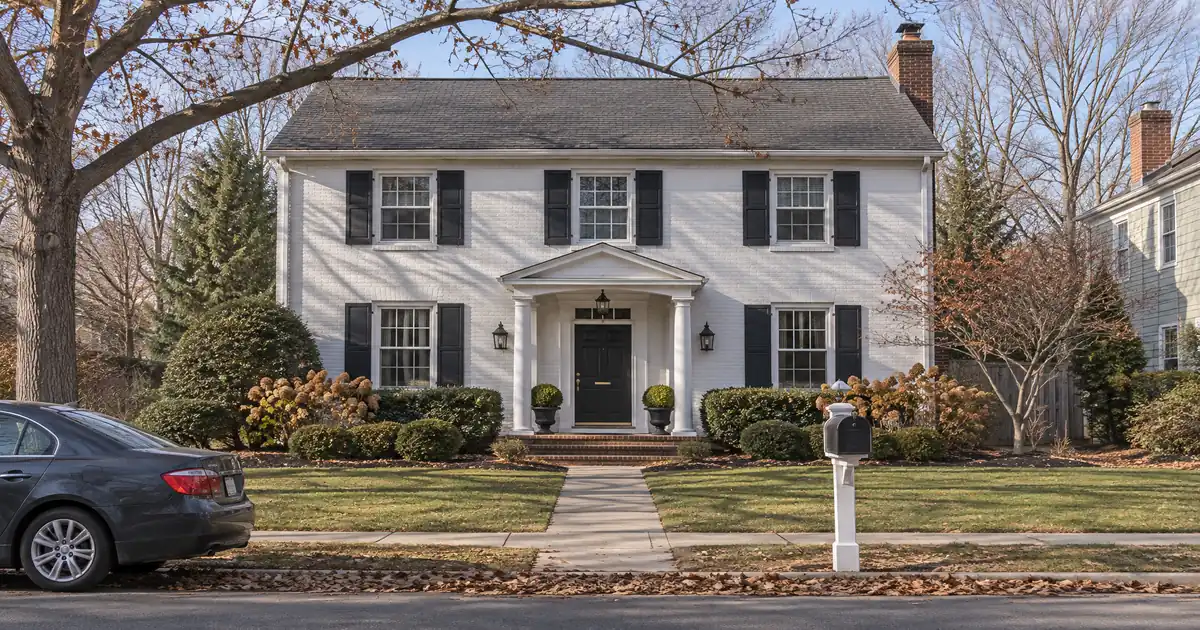
The Quick Read: Usually the cap is 70% combined loan-to-value on a second lien at a 720 score or better, or what the rent can carry at 1.10x coverage, whichever is lower. Divorce adds a gate, because with both spouses on title the line generally needs written consent from both or a court order. The size formula itself does not change, and the program reviews the file on the rental’s income, subject to underwriting.
- Size: Lines run from $50,000 to $500,000 on a second lien, subject to lender guidelines.
- Equity test: First mortgage plus the new line, divided by value, cannot pass 70% on a second lien.
- Rent test: Rent must cover a stress payment on the whole line at 1.10x or better.
- Court: A pending case may bar new liens until both spouses agree or a judge permits it.
Neither spouse’s salary, support payments or post-split income drop enters the math. That is the main appeal for a rental owner in the middle of a case.
Key Terms Defined
DSCR (debt service coverage ratio) is the rental’s gross monthly rent divided by the qualifying payment on the loan. A 1.10x reading means rent runs 10% above that payment.
HELOC (home equity line of credit) is a revolving line secured by a property you own. Here the property is a rental, not a home you live in.
Second lien is a loan that sits behind the first mortgage you keep. A first lien is the same line on a rental with no mortgage.
CLTV (combined loan-to-value) is the first mortgage balance plus the new line, divided by the property’s value. On a first lien with no other mortgage, the figure is plain LTV.
Non-borrowing owner is a person on title who is not on the line. That person still signs the lien and a short acknowledgment.
Guarantor is a person, often an LLC member, who signs personally to back the borrowing entity.
What Sets the Size of the Line?
Two tests set the size, and the lower result wins. One looks at equity and the other looks at rent.
The equity test. On a second lien, the line plus your first mortgage cannot pass 70% CLTV, and that tier needs a 720 credit score or better. There is no second-lien tier below 720. Lines on this program start at $50,000 and top out at $500,000. These specifics are subject to lender guidelines and a full review of property, leverage, and credit.
On a rental with no mortgage, the line is a first lien. Leverage then runs up to 75% LTV at a 740 score or better, and 70% LTV from 700 to 739, on lines up to $500,000. Larger first-lien lines, up to $1,000,000, carry a 65% LTV ceiling at 720 or better. A lower valuation or a declining-market flag can trim these ceilings further, all subject to underwriting. Terms depend on the lender’s guidelines, the property type, the leverage, and a full review of the credit profile.
The rent test. The lender divides gross monthly rent by a fully amortizing payment on the entire credit limit, calculated at a stress rate above the starting rate. It does not use only the balance you draw. Taxes and insurance are not part of that qualifying payment. Rent is the lesser of the appraisal’s market rent and the lease, unless three months of receipts support a lease above market. A lease must be in place. A two-to-four-unit building can have at most one vacant unit. Confirm on the file how the lender treats the first-mortgage payment on a second lien, because the lender’s own coverage calculation governs.
Big lines can fail on rent even when equity looks generous. That is the quiet trap on a modestly rented property with a lot of equity. For the broader picture of how rent and leverage cap any DSCR loan, see Lendmire’s complete DSCR loans guide.
A Worked Example, in Percentages
Take a jointly owned duplex with a first mortgage equal to 45% of its appraised value. At 70% CLTV and a 720 score, the new line could be up to 25% of value, before the rent test. Say the rent clears 1.10x on a stress payment for a line that size. Then equity is the binding limit.
Now change one input. Say the first mortgage equals 60% of value. The equity room shrinks to 10% of value, and on a modest property that can fall under the $50,000 minimum. The line simply does not fit.
Now go the other way. Say the first mortgage is small, but rent only reaches 1.0x on the full line. The lender would look at a smaller line until the coverage reaches the floor. Lower leverage is the lever that helps, since a smaller line means a smaller stress payment.
One draw rule also matters in a divorce. At least 80% of the line is drawn at closing, and later draws must be at least $5,000. This is not a line to open and leave idle. A spouse who opens it with plans to hold it in reserve will not find that structure available.
Who Signs When Both Spouses Are on Title?
Everyone on title signs the lien. Federal credit rules generally bar a lender from demanding that a non-applicant spouse sign the note. But 12 CFR 1002.7 lets a lender require the signatures needed under state law to make the property available on default. In practice, that means the mortgage or deed of trust, and not necessarily the note.
Here is how the roles usually break down:
| Role | Signs the note? | Signs the lien? |
|---|---|---|
| Borrower on the line | Yes | Yes |
| Spouse on title, not a borrower | No | Yes, plus acknowledgment |
| LLC member | As guarantor | Per entity documents |
The borrowers on the new line do not have to be the borrowers on the first mortgage. The LLC can stay on title, subject to program terms, with members signing as guarantors. A quitclaim deed signed before closing does not simplify anything, because it moves title and leaves the first mortgage untouched. An unrecorded deed does not change who owns the property.
Can a Court Order Block the Line Before the Lender Does?
Yes. Many states put automatic restraints on both spouses once a case is filed. Some of them bar placing a lien or mortgage on marital property without written consent or court permission. WomensLaw.org describes one such state order, and rules differ widely from place to place.
A new HELOC is a lien. So the usual route is a signed written consent, or a stipulated order entered by the court, that expressly allows the new line. Ask the family-law attorney for that document first. A lender and a title company will want it in the file. Without it, the equity in a jointly titled rental stays frozen in practice, however large it looks on paper.
Lendmire’s piece Can You Get an Investment Property HELOC During a Divorce With Both Spouses? goes deeper on the consent side.
What Happens to Existing Joint Debt?
Both spouses stay liable until the line is paid off or refinanced. A decree can assign who pays and can require one spouse to cover the other. But as Nolo explains, a decree does not bind the lender or remove a name from the loan documents. Only a refinance, an assumption with release, a modification or an express lender release does that.
Two consequences follow:
- If you draw on a new line during the case, your soon-to-be ex is personally liable for it only if they are a borrower on the line. A spouse who is on title but not a borrower signs the lien, not the note, so the draw is not their debt, though the property still secures it. Missed payments land on the credit reports of the borrowers on the line.
- A second lien never removes a departing owner from the first mortgage. Using a line to buy out a spouse leaves that spouse on the first mortgage.
If a joint line already exists on the property, deal with it before opening another one.
DSCR HELOC, Cash-Out Refinance, or Sale?
The right tool depends on what you are trying to do with the equity.
| Option | Keeps the first mortgage? | Removes ex from first mortgage? |
|---|---|---|
| DSCR HELOC | Yes | No |
| DSCR cash-out refinance | Replaces it | Can, if only one spouse is on the new loan |
| Sale | Paid off | Yes |
| Assumption with release | Keeps it | Yes, if the lender releases |
A line suits a spouse who is keeping the rental, has a first mortgage worth keeping, and needs cash without disturbing it. It is the wrong tool for a buyout, because it leaves the departing owner on the first mortgage. A cash-out refinance replaces that loan and can release that owner. A buyout after the decree is often the cleaner path, because title and loan names can then be reset in one step.
What the File Looks Like
Across the wholesale network Lendmire works with, this program carries a few fixed features:
- Valuation: Lines up to $400,000 use an automated valuation with a property inspection report, or a full interior appraisal. Larger lines take a full interior appraisal. Appraisal waivers are not accepted.
- Title: A full title policy goes on first liens and on second liens above $400,000. Smaller second liens use an owner-and-encumbrance report.
- Credit: 720 on a second lien and 700 on a first lien, with no 30-day mortgage late in the last 12 months. A bankruptcy, foreclosure, short sale or deed-in-lieu needs 48 months of distance.
- Seasoning: A rental bought or refinanced inside the last 6 months is not eligible (that clock runs from the last note date to the new note date), and the owner must have held title for 6 months (settlement date to note date).
- Reserves: None required, and no cash to close.
- Exposure: At most 5 loans or $2,500,000 per borrower with the program.
- Terms: A 5-year interest-only draw period, then a 25-year repayment period, on a 30-year maturity. The rate is variable.
Some properties fall outside the program: rural-designated property, condotels, row homes, leaseholds, and a rental listed for sale in the prior 2 months. A home you or your spouse lives in is also out, because this is never a line on an owner-occupied home. If one spouse is awarded the house and moves in, it is not a rental.
Borrowers must be U.S. citizens, permanent residents, or non-permanent residents with a Social Security number. Foreign nationals and ITIN borrowers are not eligible. The program is offered in 15 of Lendmire’s 16 licensed states, every licensed state except Tennessee. All terms are subject to underwriting, and Lendmire is a broker, not the lender.
Pre-Application Checklist
1. Pull the deed and a title report, and confirm exactly who is on title and how.
2. Ask your attorney whether automatic restraints apply, and get the written consent or order.
3. Confirm the first-mortgage balance, and any joint line already open.
4. Gather the lease, rent receipts if the lease runs above market, and the property’s insurance.
5. Check your 6-month seasoning clocks.
6. Decide whether a cash-out refinance or a sale fits your plan better than a line.
Frequently Asked Questions
Can I get a DSCR HELOC if my spouse refuses to sign?
Generally no, when your spouse is on title. Every owner of record signs the lien, even one who is not a borrower, so the property cannot be encumbered without them. A court order permitting the line can change that. Ask your attorney whether your case supports one.
Does my spouse’s income or my drop in income affect the amount?
No. The line qualifies primarily on property-level rental income covering the payment, subject to lender guidelines, and the owner’s income is never calculated. Your credit score still sets the leverage tier, and mortgage history still counts.
Can I use the line to buy out my spouse?
It can supply cash, but a second lien does not remove your spouse from the first mortgage. If the goal is a clean exit for both of you, a cash-out refinance that replaces the first mortgage is usually the better fit.
Does the divorce decree take my ex off a loan we both signed?
No. A decree can assign payment duties between you, but it does not bind the lender. Both names stay on the loan until it is paid, refinanced, assumed with release, or the lender releases one borrower.
How long must I own the rental before a line is possible?
Two six-month waiting periods apply: one runs from the last purchase or refinance, and the other runs from the date you took title. The file requirements section above explains how each is measured.
Next Step
If you are considering a home equity line on a rental property and want to see how the numbers work, Lendmire can help you compare DSCR HELOC options based on the property, the rent, the equity available, credit profile, combined leverage, and your goals. Bring the title report and the court paperwork, and talk through the structure with your family-law attorney in parallel. Divorce timelines vary widely.
About Lendmire
Lendmire (NMLS# 2371349) is a mortgage broker licensed for consumer lending in 16 states. DSCR home equity lines of credit — revolving lines on non-owner-occupied one-to-four-unit rentals, qualified on the property’s rent instead of the owner’s personal income — are arranged through wholesale lenders in 15 of those 16 states (every licensed state except Tennessee), and every line is underwritten by the lender under its program guidelines. Scotsman Guide named Lendmire a Top Mortgage Workplace in both 2025 and 2026.
Get Started
Ready to find the right loan for you?
See your offer in seconds. No credit pull, no obligation.
Informational only. Not a Loan Estimate, approval, or commitment to lend. Program availability and eligibility are subject to lender guidelines, credit approval, property review, and underwriting.
References
2. WomensLaw.org – Automatic Economic Restraining Order
3. Nolo – Foreclosure and Divorce
This article is part of Lendmire’s DSCR HELOC program — full qualification details, guidelines, and scenarios live on the program page.
Related reading: How Much Can You Borrow on a DSCR HELOC Without Changing the Deed? · How Much Can You Borrow on a DSCR HELOC as a Trucker With Equipment Costs? · DSCR HELOC Requirements for Sizing How Much Equity to Borrow
Brandon Miller
Founder & CEO, Mortgage Loan Originator, Lendmire LLC
- Mortgage Loan Originator · NMLS# 1129696 · Verify on NMLS Consumer Access
- North Carolina Real Estate Broker · License# 343312 · Verify on NCREC
- North Carolina Insurance Producer · License# 19053198 · Property, Casualty, Life, Health · Verify on NAIC SBS
- Lendmire LLC · Firm NMLS# 2371349 · Verify firm licensure
Required disclosures. Lendmire (NMLS# 2371349) operates as a licensed mortgage broker, not a direct lender or depository. The discussion in this article is general in nature and should not be relied upon as financial, legal, or tax advice — every investment scenario is unique and should be reviewed by a qualified professional. Any loan inquiry is subject to lender underwriting, and this article is not a commitment to lend or a guarantee of approval. Mortgage rates, loan terms, and program guidelines vary by borrower, property, and state, and may change without notice. Equal Housing Opportunity. Verify licensure at NMLS Consumer Access.