
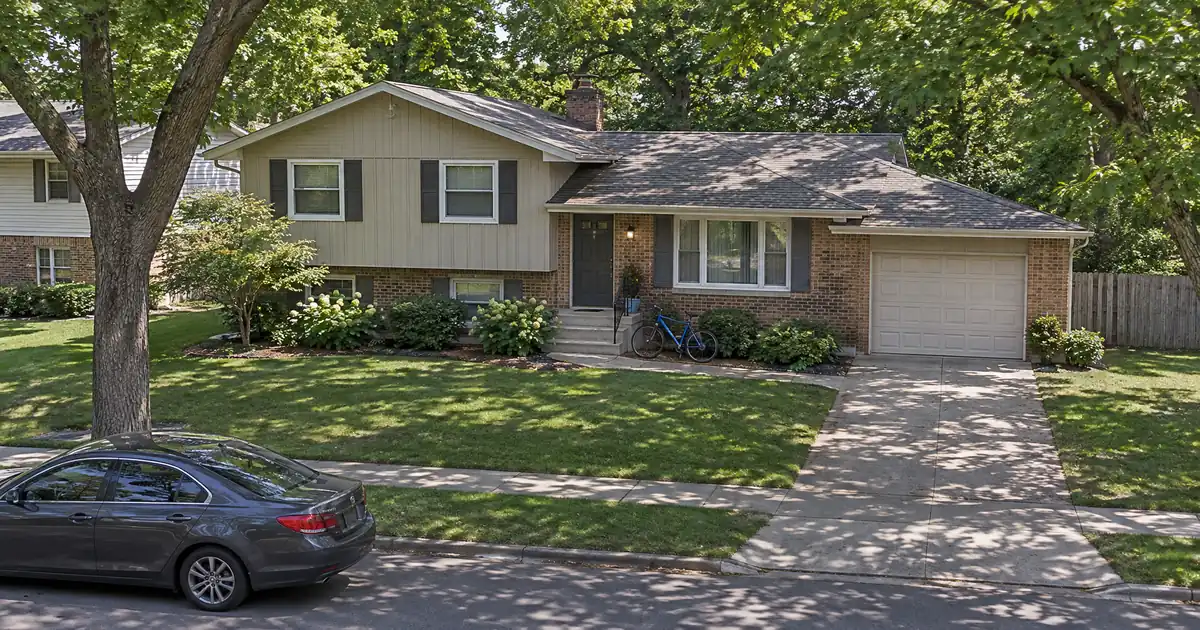
The Quick Read: It depends on three gates: whether a court order lets you place a lien, whether the property is titled in your own name, and whether you qualify on your own. If you clear all three, the ceiling is a formula: value times the lender’s maximum combined loan-to-value, minus every lien already recorded. On an investment property in Lendmire’s network, that ceiling is 70% CLTV, with a maximum line of $500,000, subject to lender guidelines.
- Age, retirement, and divorce do not change the formula. They change who must sign and how much equity is truly yours.
- Investment lines in the network need a 700 minimum credit score. Scores of 720 and 700 both reach 70% CLTV.
- Debt-to-income tops out at 50% and is tested on the interest-only payment at the maximum draw.
- The line must be titled in an individual or a revocable living trust. LLC-owned rentals do not fit.
- Availability is limited to Lendmire’s 16 full-service states, narrower than its 41-market DSCR footprint.
How Is the Maximum Line Calculated?
The cap is value times the allowed CLTV, minus every lien. The CFPB’s HELOC booklet explains that lenders take a percentage of appraised value and subtract what is owed. The booklet’s 75 percent figure is its own consumer example, not an investment-property rule. The CFPB also defines home equity as the home’s value minus what you owe on the mortgage.
How large a line the equity supports.
An equity line is sized by combined loan-to-value, occupancy, and credit — not by rental coverage. Switch the occupancy or the credit band and the ceiling moves with it.
Investment-property lines require a 700 minimum credit score; second-home lines start at a 640 minimum and primary-residence lines at 600, and the combined-LTV ceiling steps down as the credit band drops on primary-residence and second-home lines and holds on investment-property lines; the line cap steps down on primary-residence lines and holds at every tier on investment-property and second-home lines.
A debt-to-income ratio above 45% requires 680+ credit. Profiles under 640 are limited to single-family homes. At least 75% of the approved line is drawn at closing. Ceilings, floors, and caps update from Lendmire’s centralized guideline source.
Line estimate
Illustrative estimate only — not a quote, Loan Estimate, approval, or commitment to lend. The rate is an editable assumption; equity-line pricing is variable through both the draw and repayment periods and never converts to fixed. Occupancy and credit drive the ceiling together: an investment property tops out at 70% combined LTV (minimum credit 700, line cap $500,000); a second home tops out at 90% combined LTV (minimum credit 640, line cap $500,000), with the ceiling stepping down as the credit band drops (the cap holds at every tier); a primary residence tops out at 90% combined LTV (minimum credit 600), and its $750,000 maximum line is available only at 75% combined LTV or below with a 700-or-better credit profile (720 on the longer-runway program) and a full appraisal. Lines above $500,000 require a full appraisal. Credit, debt-to-income, property type, and full underwriting review all affect the final line.
On an investment property in the network, the ceiling is 70% CLTV. Picture a rental with a $600,000 value and an existing first mortgage equal to 40% of that value. A 70% CLTV leaves room for a line of up to 30% of value, which sits under the $500,000 maximum. Now picture a paid-off rental. The 70% CLTV still applies, so the line cannot exceed 70% of value, and the $500,000 cap binds first on any property worth more than about $714,000. A paid-off rental is not unlimited borrowing.
Two things shrink the number in a divorce. A spouse may have a claim on part of the equity. And a decree can assign that equity in a way that leaves less usable than the title suggests.
NerdWallet says investment HELOC maximums can reach 80%, though many lenders sit lower. That is a market-wide statistic. The network figure for an investment property is 70% CLTV.
Gate One: Can You Place a Lien During the Divorce?
In many cases, you cannot place a lien during a divorce without the other spouse’s consent or a court order. Many states restrain both spouses from encumbering property once a case is filed. Massachusetts Rule 411, as explained by Bowditch, prohibits taking on debts that burden the other party’s credit, including a home equity line or second mortgage. Montana’s automatic order, per WomensLaw, bars liens on marital property without written consent or court permission.
These are examples, not a national rule. Restrictions vary by state, and they can reach separate or pre-marital property too. Ask your divorce attorney before you apply, and get any consent or order in writing. A lender will want to see it.
Gate Two: Title and Vesting
An investment line must be held by the individual borrower or a revocable living trust. LLCs, corporations, partnerships, and irrevocable, blind, or land trusts cannot hold title. This is the sharpest structural difference from a DSCR loan.
If the rental sits in an LLC, there are two paths. Change the vesting before applying, or use a DSCR cash-out refinance instead. The property must also be eligible: single-family, 2-4 units, PUD, townhome, or condominium, including non-warrantable condos. Manufactured homes, co-ops, condotels, log homes, commercial, mixed-use, and agricultural-zoned properties are not eligible.
A quitclaim deed moves ownership, not debt. If your ex is still on the first mortgage, the decree does not release them from the lender. They stay liable until the loan is refinanced, assumed, or paid off. A joint line that is already open works the same way, so close or freeze it early.
Gate Three: Qualifying Solo as a Retiree
Retirement income counts. A creditor cannot discount income because it comes from an annuity, pension, or other retirement benefit. It may weigh how likely the income is to continue. The test is whether your debt-to-income works, not whether pension income is allowed.
Here is how the network’s investment line tests you:
| Factor | Investment line terms |
|---|---|
| Minimum credit | 700 |
| Max CLTV | 70% |
| Max line | $500,000 |
| Max DTI | 50% |
| Payment tested | Interest-only on the maximum draw |
| Valuation | Usually automated, no traditional appraisal |
Pension, Social Security, and IRA distributions can all feed the DTI calculation. If a pension was split by QDRO, only the share you keep counts. An ERISA plan usually needs the QDRO to divide it, while IRAs follow the divorce agreement. Alimony or support you receive can be counted if it is likely to be paid consistently. A creditor cannot ask about it unless it tells you that you need not reveal it.
The Structure Fixed-Income Borrowers Should Stress-Test
The investment line runs a 5-year interest-only draw followed by a 25-year fully amortizing repayment. At least 75% of the line is drawn at closing. Pricing floats through both the draw and repayment periods and never converts to fixed.
That has three consequences for a retiree.
1. The payment at closing is based on a mostly drawn balance, not a small starting balance.
2. When repayment begins, the payment steps up because principal is added.
3. A floating structure means the payment can move during both periods.
Run the stress test at full draw, with the repayment step-up, against your fixed income. The qualifying test uses the interest-only payment on the maximum draw, but your budget should look past the draw period.
Worked Example: Funding a Buyout
Say a retiree keeps a duplex in the divorce and owes the ex-spouse a share of the equity. Walk through the steps.
1. Take the appraised value and multiply by 70%. That is the CLTV ceiling. 2. Subtract the first mortgage and every other lien. 3. Subtract any equity the decree or spouse’s claim leaves out of your reach. 4. Compare the remainder with the $500,000 cap and the buyout amount you actually owe. 5. Test whether your pension, Social Security, and other income carry the DTI at 50% or less on the interest-only payment at the maximum draw.
If the buyout exceeds the remainder at step four, the line is the wrong size. If the DTI fails at step five, the personal-income route is closed. A retiree in that spot may do better with a DSCR cash-out refinance, which qualifies primarily on property-level rental income covering the payment, subject to lender guidelines. Lendmire’s piece on comparing an investment property HELOC with a DSCR cash-out refinance in a divorce walks through that decision.
When Is a HELOC the Wrong Tool?
| Situation | Better path |
|---|---|
| Rental held in an LLC | DSCR cash-out refinance |
| Need to release your ex from the old loan | Refinance of the first mortgage |
| Buyout exceeds 70% CLTV room | Sale, asset trade, or cash-out |
| DTI fails on fixed income | Rent-based DSCR loan |
| Court has not authorized a lien | Wait for consent or an order |
| Retiree will move into the rental | Different occupancy program entirely |
A HELOC leaves the first mortgage in place. A cash-out refinance can replace it and release the ex-spouse from the old loan. DSCR cash-out on a standard rental tops out around 75% LTV across most of the network, with about 6 months of seasoning as the common expectation, depending on the lender. Credit floors start around 620 in parts of the network, and most programs want around 660. A separate select-lender path takes coverage below 1.00, with leverage and terms adjusted. Clearing 1.00 is not the same as positive cash flow, since repairs, vacancy, and management sit outside the calculation.
Reserves vary by lender, leverage, and loan size. They commonly run around 6 months of PITIA. The complete DSCR loans guide covers how these pieces fit together.
Timing: Before Filing, During the Case, After the Decree
| Stage | What to expect |
|---|---|
| Before filing | Lien placement is usually unrestricted, but a draw taken now can be pulled into the property division |
| During the case | Restraining orders may bar new liens without written consent or a court order |
| After the decree | Title, assignment of the property, and any consent documents are in place |
A lender will typically ask for the decree or settlement, title and vesting documents, credit, a lease, and insurance. Pension and Social Security award letters are verified through third-party records. For a rental, plan on that full document set.
Key Terms Defined
CLTV: Combined loan-to-value, the total of all liens divided by the property’s value.
HELOC: A revolving line of credit secured by property equity, with a draw period and a repayment period.
DTI: Debt-to-income, the share of your income that goes to debt payments.
DSCR: Debt service coverage ratio, a property’s rent compared with its full monthly housing obligation.
QDRO: A court order that divides a retirement plan between spouses.
Vesting: The legal form in which title to the property is held.
Frequently Asked Questions
Can a retiree with no wage income get an investment property HELOC?
Yes, if pension, Social Security, IRA distributions, and other documented income carry a DTI of 50% or less. Credit must be 700 or better on an investment line. Retirement income cannot be discounted just because it is retirement income, but the ratio still has to work.
Can I open a HELOC on my rental while the divorce is pending?
Often only with written consent from your spouse or a court order. Many states automatically restrain both spouses from encumbering property after filing. Confirm your state’s rules with your attorney before applying.
What is the most I can borrow on an investment property line?
The cap is $500,000 and 70% CLTV, whichever is lower after existing liens. Lines above $500,000 are available only on primary residences. Subject to lender guidelines and full file review.
Does a quitclaim deed take my ex off the mortgage?
No. It moves ownership, not the debt. Your ex stays liable to the lender until the loan is refinanced, assumed, or paid off.
What if my rental is in an LLC?
An investment line cannot be held in an LLC. You would need to change the vesting, or use a DSCR cash-out refinance, subject to lender program eligibility.
If you are considering a home equity line and want to see how the numbers work, Lendmire can help you compare HELOC options based on the property, the equity available, credit profile, combined leverage, and your goals. Call 828-256-2183 or request a quote.
About Lendmire
As a mortgage broker (NMLS# 2371349), Lendmire helps homeowners and real estate investors in its 16 full-service states open home equity lines of credit arranged through wholesale lenders. Lendmire is never the lender; line amounts, ceilings and terms are set by the lender under its guidelines. Scotsman Guide named Lendmire a Top Mortgage Workplace in both 2025 and 2026.
Get Started
Ready to find the right loan for you?
See your offer in seconds. No credit pull, no obligation.
Informational only. Not a Loan Estimate, approval, or commitment to lend. Program availability and eligibility are subject to lender guidelines, credit approval, property review, and underwriting.
References
3. NerdWallet – HELOC on investment property
4. Bowditch – Massachusetts Rule 411
5. WomensLaw
This article is part of Lendmire’s investment property HELOC program — full qualification details, guidelines, and scenarios live on the program page.
Related reading: Can You Get an Investment Property HELOC With No Limit? · Can You Get an Investment Property HELOC After a Denial on Returns? · How Much Can You Borrow on a DSCR HELOC on That Property?
Brandon Miller
Founder & CEO, Mortgage Loan Originator, Lendmire LLC
- Mortgage Loan Originator · NMLS# 1129696 · Verify on NMLS Consumer Access
- North Carolina Real Estate Broker · License# 343312 · Verify on NCREC
- North Carolina Insurance Producer · License# 19053198 · Property, Casualty, Life, Health · Verify on NAIC SBS
- Lendmire LLC · Firm NMLS# 2371349 · Verify firm licensure
Compliance and disclosures. Lendmire (NMLS# 2371349) is a licensed mortgage broker and is not a direct lender, depository institution, financial advisor, or tax professional. Content in this article is general market analysis and educational information — not financial, legal, or tax advice for any specific situation. Lendmire does not guarantee loan approval; every transaction is subject to underwriting by the funding lender. Mortgage pricing and loan program guidelines are subject to change at any time without notice and vary by borrower characteristics, property type, and state regulations. Lendmire complies with Equal Housing Opportunity. Licensure verification: NMLS Consumer Access.