
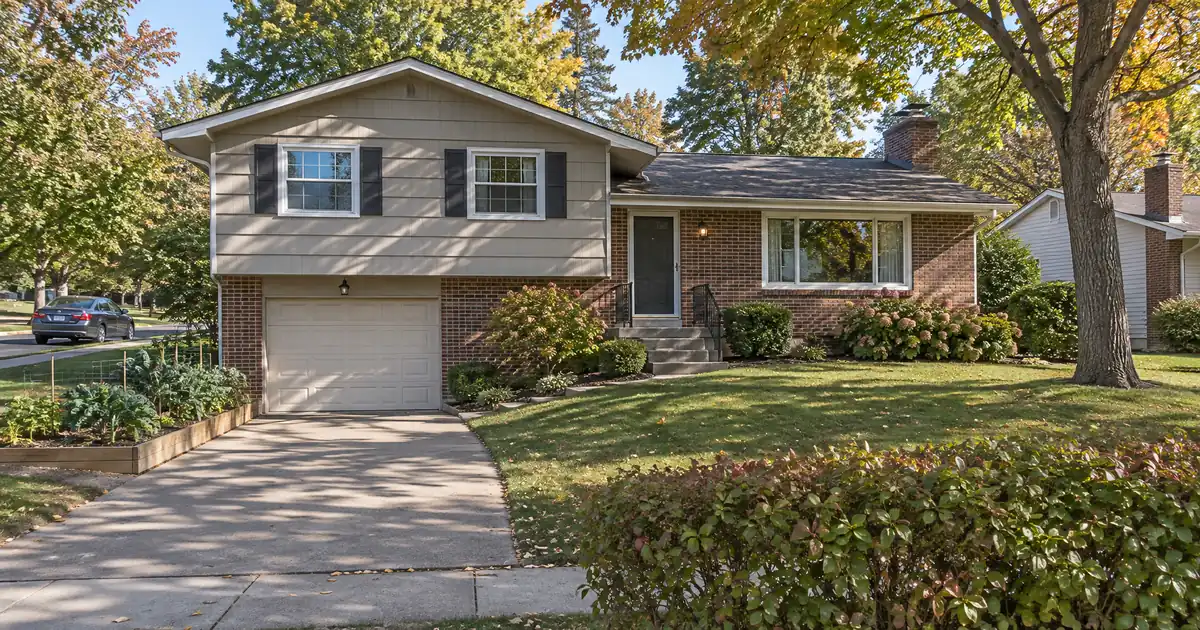
The Quick Read: An investment property HELOC usually reaches approval without a traditional appraisal, because the lender sets value with an automated model while it underwrites you, the borrower, on credit, debt and title. The credit limit stays provisional until that model returns a value. A rental’s income does not qualify the line the way it does on a DSCR loan.
- On an investment property, the ceiling is 70% combined loan-to-value (CLTV), counting the first mortgage plus the new line.
- Investment lines run from $25,000 to $500,000, with a 700 minimum credit score.
- Because the line cannot exceed $500,000, it ordinarily uses automated valuation, though a secondary valuation or a full appraisal can still be required in some files.
- The line can only be held by an individual or a revocable living trust, never an LLC.
- Everything here is subject to lender guidelines and full file review. It is not a commitment to lend.
What “Approval Before an Appraisal” Actually Means
Approval before an appraisal means the borrower side of the file clears first. Credit, debt load, title and property type get reviewed while value is still an estimate. The value then comes from a model, not from an appraiser walking the house.
How large a line the equity supports.
An equity line is sized by combined loan-to-value, occupancy, and credit — not by rental coverage. Switch the occupancy or the credit band and the ceiling moves with it.
Investment-property lines require a 700 minimum credit score; second-home lines start at a 640 minimum and primary-residence lines at 600, and the combined-LTV ceiling steps down as the credit band drops on primary-residence and second-home lines and holds on investment-property lines; the line cap steps down on primary-residence lines and holds at every tier on investment-property and second-home lines.
A debt-to-income ratio above 45% requires 680+ credit. Profiles under 640 are limited to single-family homes. At least 75% of the approved line is drawn at closing. Ceilings, floors, and caps update from Lendmire’s centralized guideline source.
Line estimate
Illustrative estimate only — not a quote, Loan Estimate, approval, or commitment to lend. The rate is an editable assumption; equity-line pricing is variable through both the draw and repayment periods and never converts to fixed. Occupancy and credit drive the ceiling together: an investment property tops out at 70% combined LTV (minimum credit 700, line cap $500,000); a second home tops out at 90% combined LTV (minimum credit 640, line cap $500,000), with the ceiling stepping down as the credit band drops (the cap holds at every tier); a primary residence tops out at 90% combined LTV (minimum credit 600), and its $750,000 maximum line is available only at 75% combined LTV or below with a 700-or-better credit profile (720 on the longer-runway program) and a full appraisal. Lines above $500,000 require a full appraisal. Credit, debt-to-income, property type, and full underwriting review all affect the final line.
Every HELOC has a valuation. The question is which kind. Bills.com describes a ladder: an automated valuation model (AVM), a desktop valuation, or a full appraisal. When the model is unreliable, the lender can step up to the next rung.
Across the wholesale network Lendmire works with, investment lines at or below $500,000 ordinarily run the automated valuation. A higher CLTV may trigger a secondary valuation. The borrower can also ask for a full appraisal in any case.
So the sequence matters. Conditional approval confirms you fit the program. Final approval confirms the property supports the line you asked for.
How Underwriting Treats the File, Step by Step
Underwriting a rental HELOC runs on the borrower first and the property second. Here is the order a file moves through.
1. Borrower screen. The lender pulls credit and checks debts. Investment lines need a 700 minimum score, and the maximum debt-to-income ratio is 50%. The test uses the interest-only payment calculated on the maximum draw, not on what you plan to draw.
2. Title and vesting screen. The line must sit on a property held by an individual or a revocable living trust. LLCs, corporations, partnerships, and irrevocable, blind or land trusts cannot hold title. A rental already deeded to an LLC needs a vesting change first, or a different product.
3. Property-type screen. Single-family homes, 2-4 unit properties, PUDs, townhomes and condominiums, including non-warrantable condos, are eligible. Manufactured homes, co-ops, condotels, log homes, commercial, mixed-use and agricultural zoning are not offered.
4. Valuation. The model reads public records and recent sales and returns a value. Nobody visits the property in this lane.
5. CLTV math. The lender adds every lien on the property and divides by the value. The line is roughly the value times the 70% ceiling, minus the first mortgage balance, and the $500,000 cap applies on top.
6. Final underwriting. The credit report must be no more than 90 days old at closing. Title and insurance get confirmed, and the line is set.
Rental income is not the qualifying basis in step one. This is the sharpest contrast with a DSCR loan, which qualifies primarily on property-level rental income covering the payment, subject to lender guidelines.
The Valuation Methods Compared
The valuation method decides how firm your number is before closing. This table shows how each one works and what it does to the approval.
| Method | How it works | Effect on approval |
|---|---|---|
| AVM | Model uses records and sales | Sets the limit; no visit |
| Desktop valuation | Reviewer checks data remotely | Backstop for weak AVMs |
| Full appraisal | Appraiser inspects the property | Firmest value; borrower can request it |
An AVM cannot see inside the house. Renovations may not register in the model. A rental with a new kitchen and new roof can come back looking like its older neighbors.
Thin comparable sales cause the opposite problem. In areas with few recent sales, or for unusual homes, the model cannot produce a reliable value. The file then escalates to a desktop valuation or a full appraisal.
How the Value Sets the Line (A Worked Example in Percentages)
The value sets the line because the 70% ceiling applies to whatever number the model returns. Take a rental where the first mortgage sits at 50% of the modeled value. That leaves 20 points of value as the maximum new line, and the $500,000 cap still applies on top.
Now suppose the model returns a lower value than you expected. The 70% ceiling applies to the lower number. The first mortgage balance does not move, so every dollar the model shaves off value comes out of your line at 70 cents. A modest gap in value can shrink the line by a much larger share of its size.
Low-leverage rentals fit best. A property with a small first mortgage has room under the ceiling even if the model comes in light.
Conditional Approval Versus Final Approval
The two approvals clear different things. This table shows what is settled at each stage.
| Item | Conditional stage | Final stage |
|---|---|---|
| Credit and DTI | Reviewed | Report must be current |
| Title and vesting | Screened | Confirmed |
| Property type | Screened | Confirmed |
| Property value | Estimated | Set by AVM or appraisal |
| Credit limit | Provisional | Fixed |
Conditions can change between the two. A lower model value shrinks the limit. Taking on new debt moves the debt-to-income math.
Be careful with marketing that says no appraisal or suggests approval may be instant. Such wording speaks only to the valuation step, not to the rest of underwriting, and any approval remains subject to the lender’s review of the file.
Structure: What You Are Signing Up For
An investment line is a standalone line in first or second lien position. It runs a 5-year interest-only draw followed by a 25-year fully amortizing repayment. At least 75% of the line is drawn at closing, and pricing floats through both periods without converting to fixed.
The CFPB describes a HELOC as an open-end line you can borrow against repeatedly during a draw period, followed by a repayment period when borrowing stops. The CFPB’s HELOC booklet adds that these lines typically carry variable rather than fixed interest.
That variable structure is a real planning issue. The payment you see during the draw period is not the payment you will carry once repayment begins. Size the line against the repayment period, not the draw period.
Where the General Rule Breaks
The general rule is that an investment line closes in the automated lane. Several cases break it.
Thin-comp and unusual properties. A rural rental or a one-of-a-kind building can fail the model’s reliability test. The file then escalates to a desktop valuation or full appraisal.
Renovated rentals. If the model undervalues upgrades, the borrower can request a full appraisal. That costs flexibility but can lift the value.
High CLTV requests. A request near the 70% ceiling may trigger a secondary valuation even though the line is under $500,000.
LLC-owned rentals. The line cannot close with an LLC on title. A DSCR cash-out refinance is the usual alternative, since DSCR review runs off the property’s rent.
Listed properties. In several states, a property listed for sale, or listed within the past 60 days, is ineligible.
Portfolio size and exposure. A borrower is limited to three lines, and an owner of more than 15 financed properties is not eligible.
Availability. Lendmire’s HELOC placement runs through 16 full-service states: AL, CA, CO, FL, GA, IN, MI, MT, NM, NC, OH, PA, TN, TX, VA and WA. That is narrower than its DSCR footprint of 41 markets, including Washington, D.C.
Bank availability. One BiggerPockets thread has investors describing difficulty getting a HELOC on a non-owner property from large retail lenders. Those are anecdotes, but they match what the network’s own structure suggests: this is a specialty product, not a default one.
What Appraisal Forms Do and Do Not Do Here
Appraisal forms for rental income do not drive a HELOC. The 1007 rent schedule and the 1025 small residential income form belong to DSCR and agency-style appraisal work. A HELOC valuation supports value and equity only, not a rent-coverage calculation.
A regulatory note belongs here, with a caveat. An interagency rule on AVM quality control, summarized by the FHFA, targets confidence in model estimates, protection against data manipulation, conflicts of interest, random sample testing and nondiscrimination. Its scope is a consumer’s principal dwelling, so it does not cover an investment property. It does show where AVM governance is heading.
HELOC or DSCR Cash-Out: The Decision
The decision turns on what each product tests. A HELOC tests your personal capacity. A DSCR loan tests the property’s income against its monthly obligation.
| Factor | Investment HELOC | DSCR cash-out |
|---|---|---|
| Reviewed on | Borrower credit and DTI | Property rent vs. PITIA |
| Max leverage | 70% CLTV | About 75% LTV, standard rentals |
| Title | Individual or revocable trust | LLC possible, per program terms |
| Valuation | AVM lane up to $500,000 | Appraisal-based |
| Structure | Revolving line, floating pricing | Term loan; 30-year fixed spine |
An investor with strong rents but heavy personal debt can stall on a HELOC and still fit a DSCR file. An investor with a clean personal profile and a small first mortgage may prefer the line’s revolving access.
Coverage matters on the DSCR side. 1.00 is where many select programs start, and stronger ratios open better pricing and leverage. A separate select-lender path takes coverage below 1.00, with leverage and terms adjusted. Clearing 1.00 is not the same as positive cash flow, since repairs, vacancy, management and capex sit outside the ratio.
Key Terms Defined
CLTV. Combined loan-to-value is every lien on the property divided by its value.
AVM. An automated valuation model estimates value from public records and recent sales.
Draw period. The stretch when you can borrow against the line, interest-only on this product.
Repayment period. The stretch after the draw ends, when borrowing stops and the balance amortizes.
Conditional approval. A yes on the borrower and file that still waits on a confirmed value.
Pre-Valuation Checklist
A cleaner file gives the model and the underwriter fewer gaps to review.
- Confirm title is in your name or a revocable living trust.
- Pull a current mortgage statement so the first-lien balance is exact.
- List any renovations with dates, in case you request a full appraisal.
- Confirm the property type is eligible.
- Check that your credit report will be under 90 days old at closing.
Next Step
If you are considering a home equity line and want to see how the numbers work, Lendmire can help you compare HELOC options based on the property, the equity available, credit profile, combined leverage, and your goals. Reach the team at 828-256-2183 or request a quote.
Frequently Asked Questions
Is an appraisal required for an investment property HELOC?
Not for lines at or below $500,000, which ordinarily run an automated valuation. A higher CLTV may trigger a secondary valuation, and a borrower may request a full appraisal in any case. Because an investment line caps at $500,000, it sits in the automated lane by structure.
Can I skip the valuation entirely?
No. Every HELOC has a valuation, and the method varies. What changes is that the model replaces the appraiser visit.
Does rental income count toward qualifying?
No. The line is underwritten on credit, debts and the borrower’s income, not on the property’s rent. A DSCR loan is the product that is reviewed on rental coverage.
What happens if the model values my property low?
The 70% CLTV ceiling applies to the lower number, so the line shrinks. You can request a full appraisal if you believe the model missed upgrades.
Can an LLC hold the property?
No. Only an individual or a revocable living trust can hold title. A rental already in an LLC needs a vesting change, or a DSCR cash-out instead.
About Lendmire
Lendmire (NMLS# 2371349) is a mortgage broker. Home equity lines of credit — on a primary residence, a second home or an investment property — are arranged through wholesale lenders in Lendmire’s 16 full-service states, and every line is underwritten by the lender under its program guidelines. Scotsman Guide named Lendmire a Top Mortgage Workplace in both 2025 and 2026.
Get Started
Ready to find the right loan for you?
See your offer in seconds. No credit pull, no obligation.
Informational only. Not a Loan Estimate, approval, or commitment to lend. Program availability and eligibility are subject to lender guidelines, credit approval, property review, and underwriting.
References
1. Bills.com
2. CFPB: What Is a Home Equity Line of Credit HELOC
4. BiggerPockets – HELOC on rental properties
This article is part of Lendmire’s investment property HELOC program — full qualification details, guidelines, and scenarios live on the program page.
Related reading: Can You Get an Investment Property HELOC With No Minimum Draw Requirement? · Can You Get an Investment Property HELOC Before Your Return Is Filed? · Can You Get an Investment Property HELOC After a Quitclaim Deed?
Brandon Miller
Founder & CEO, Mortgage Loan Originator, Lendmire LLC
- Mortgage Loan Originator · NMLS# 1129696 · Verify on NMLS Consumer Access
- North Carolina Real Estate Broker · License# 343312 · Verify on NCREC
- North Carolina Insurance Producer · License# 19053198 · Property, Casualty, Life, Health · Verify on NAIC SBS
- Lendmire LLC · Firm NMLS# 2371349 · Verify firm licensure
Disclosure information. Lendmire is a state-licensed mortgage brokerage under NMLS# 2371349. Lendmire is not a depository institution, direct lender, or financial advisor — all loans referenced are placed through wholesale lender partners and are subject to each lender's underwriting standards. This article is provided for general informational purposes and is not a commitment to lend, nor does it constitute financial, legal, or tax advice. Loan programs, terms, rates, and qualification standards change without notice and depend on borrower profile, property type, and the state in which the subject property is located. Equal Housing Opportunity provider. NMLS Consumer Access: nmlsconsumeraccess.org.