
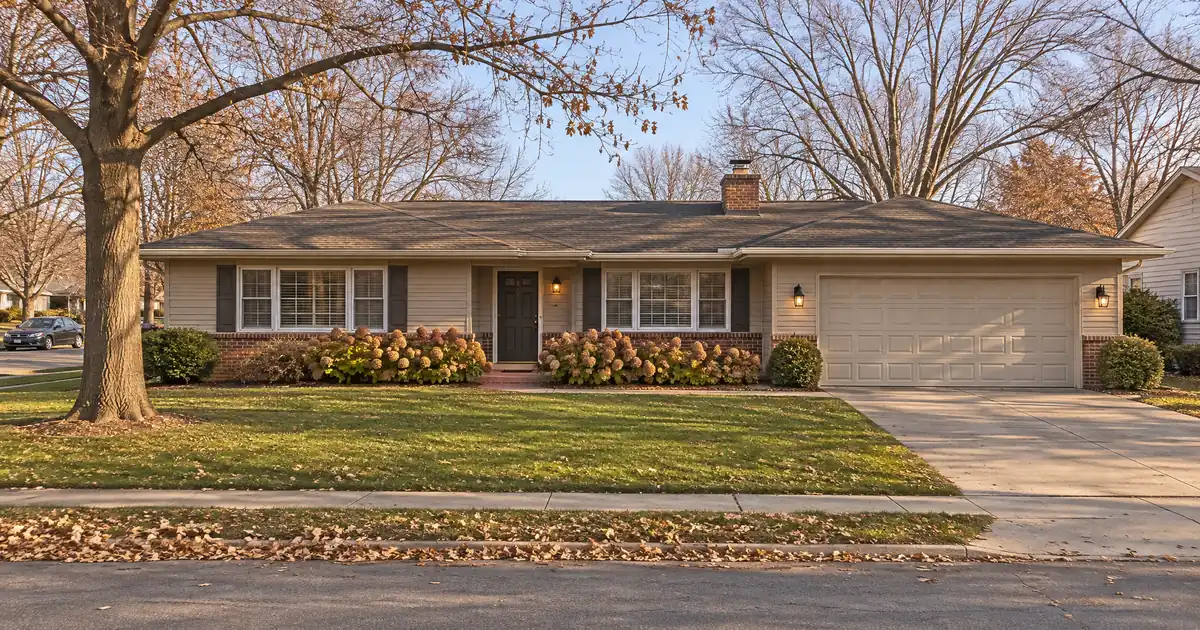
The Quick Read: Usually not on a property that is gutted or not yet rentable, but it can work when the rental is already livable and carries real equity today. A home equity line is sized on the property’s as-is value, not on what it will be worth after the work.
- On Lendmire’s network, an investment-property line caps at 70% combined loan-to-value (CLTV), with a 700 minimum credit score and a $500,000 maximum line.
- Valuation is typically automated at this line size, so it may not reflect work in progress.
- Title must sit with an individual or a revocable living trust. An LLC cannot hold title on these lines.
- A gutted or half-finished property is usually a better fit for short-term rehab financing, then a DSCR refinance once it is rent-ready.
- Availability is limited to Lendmire’s 16 full-service states, which is narrower than its DSCR footprint.
A HELOC is an equity product. It is not a construction loan. That one fact explains most of the answer below.
How large a line the equity supports.
An equity line is sized by combined loan-to-value, occupancy, and credit — not by rental coverage. Switch the occupancy or the credit band and the ceiling moves with it.
Investment-property lines require a 700 minimum credit score; second-home lines start at a 640 minimum and primary-residence lines at 600, and the combined-LTV ceiling steps down as the credit band drops on primary-residence and second-home lines and holds on investment-property lines; the line cap steps down on primary-residence lines and holds at every tier on investment-property and second-home lines.
A debt-to-income ratio above 45% requires 680+ credit. Profiles under 640 are limited to single-family homes. At least 75% of the approved line is drawn at closing. Ceilings, floors, and caps update from Lendmire’s centralized guideline source.
Line estimate
Illustrative estimate only — not a quote, Loan Estimate, approval, or commitment to lend. The rate is an editable assumption; equity-line pricing is variable through both the draw and repayment periods and never converts to fixed. Occupancy and credit drive the ceiling together: an investment property tops out at 70% combined LTV (minimum credit 700, line cap $500,000); a second home tops out at 90% combined LTV (minimum credit 640, line cap $500,000), with the ceiling stepping down as the credit band drops (the cap holds at every tier); a primary residence tops out at 90% combined LTV (minimum credit 600), and its $750,000 maximum line is available only at 75% combined LTV or below with a 700-or-better credit profile (720 on the longer-runway program) and a full appraisal. Lines above $500,000 require a full appraisal. Credit, debt-to-income, property type, and full underwriting review all affect the final line.
Why Do Lenders Hesitate on a Rental Under Renovation?
Because the line is sized on today’s value, and a property mid-renovation usually has a depressed or unclear value today. A rehab loan funds work against the after-repair value. A HELOC does not. The lender looks at what the property is worth as it sits, subtracts existing liens, and applies a CLTV cap.
Three things drive the hesitation:
- Condition. A torn-up kitchen, open walls, or missing systems can fail a lender’s habitability standard.
- Occupancy and legal use. A property that is not rentable as it sits is hard to treat as a functioning rental.
- Valuation. An automated model sees the pre-renovation or partly demolished state at best. It does not see the budget, the contractor scope, or the finished plan.
Lenders also differ on how they treat the work itself. Agency guidance for multifamily properties that are not yet stabilized, for example, asks appraisers to report hypothetical conditions and to account for renovation costs and timing. That is a multifamily agency document and does not govern DSCR loans or equity lines. It is useful only as a picture of how a careful appraiser handles a property in the middle of a project.
Key Terms Defined
HELOC: A revolving line of credit secured by equity in a property, drawn as needed.
As-is value: What the property is worth in its current condition, before any planned work is finished.
After-repair value: What the property is expected to be worth once the renovation is complete.
CLTV: Combined loan-to-value, which adds the new line to every existing lien and divides by the property value.
Credit-based versus rent-qualified: A HELOC is qualified on personal credit and debt-to-income. A DSCR loan is qualified primarily on property-level rental income covering the payment, subject to lender guidelines.
Seasoning: The time a property or loan has been in place before a lender will treat it as stable.
What Does the Investment HELOC Actually Allow?
On Lendmire’s network, an investment-property line tops out at 70% CLTV and $500,000, with a 700 minimum credit score. There is no leverage tier above 70% on an investment property, and a score above 700 buys eligibility rather than more leverage. Higher CLTV ceilings exist only on primary residences and second homes, and those do not apply here. Every figure is subject to lender guidelines and full file review, and Lendmire brokers these lines through select wholesale partners as a broker, never as the lender.
Several other program points matter for a project property:
- Valuation. Because an investment line cannot exceed $500,000, it sits in the automated-valuation lane. A borrower may request a full appraisal in any case, and that is the realistic route on a property with visible work underway.
- Structure. Investment lines run a 5-year interest-only draw period followed by a 25-year repayment period. At least 75% of the line is drawn at closing, and pricing floats rather than converting to fixed.
- Draws. After closing, the minimum subsequent draw is generally $1,000, with a higher minimum in Texas.
- Qualification. Debt-to-income tops out at 50%, and the line is qualified on the interest-only payment calculated on the maximum draw.
- Property types. Single-family, 2-4 units, PUD, townhome, and condominium are eligible. Manufactured homes, co-ops, condotels, log homes, commercial, mixed-use, and agricultural zoning are not.
- Exposure. A borrower is limited to three lines, and an owner with more than 15 financed properties is not eligible.
Two practical points follow. First, the 90% CLTV figure you may see in market advertising applies to primary residences with a 720 or better profile, never to an investment line. Second, other institutions may advertise higher investment-line leverage than this network allows. On this network, the investment ceiling is 70%.
Can the Line Be Opened When the Work Is Only Partly Done?
Only when the property is already a functioning or readily rentable rental with equity you can document today. The workable case is cosmetic or partial work on a habitable rental: a unit turn, a kitchen refresh, a roof, or a bathroom. The building stands, the systems run, and the as-is value already reflects most of what a buyer would pay.
Here is how the stages typically sort out:
| Renovation stage | Lease status | HELOC on this property | Next best step |
|---|---|---|---|
| Cosmetic work, unit still livable | Leased or leasable | Plausible with equity | Request a full appraisal if the work is visible |
| One unit offline in a 2-4 unit | Other units leased | Possible, lender-dependent | Document the lease roll and the project scope |
| Systems or structure open | Vacant | Unlikely | Short-term rehab financing |
| Gutted or uninhabitable | Vacant | Very unlikely | Rehab financing, then a DSCR refinance |
| Addition or unit-count change | Any | Likely a problem | Confirm legal use before applying |
| Titled in an LLC | Any | Not eligible as titled | Retitle, or use a DSCR cash-out |
The line between “light work while leased” and “not rentable as it sits” is not a fixed rule. The lender’s valuation and condition review decide it. A full appraisal gives you the cleanest read, and it can still come in low.
Does Title or Property Status Change the Answer?
Yes. Title is a hard gate on these lines. Fee simple or leasehold title must be held by the individual borrower or an inter vivos revocable living trust. LLCs, corporations, partnerships, and irrevocable, blind, or land trusts cannot hold title. This is the sharpest structural difference from a DSCR loan. A property already deeded to an LLC needs a vesting change, or a DSCR cash-out refinance instead.
Other status items can also stall an application:
- A property listed for sale, or listed within the past 60 days, is ineligible in Indiana, North Carolina, Pennsylvania, Tennessee, Texas, and Washington.
- A change in unit count or legal use during the project can push the property outside the eligible types above.
- Open permits, an unclear scope, or a lapse in insurance can raise questions during review, even when the network does not list a specific rule for them.
How Does a Later DSCR Refinance Fit In?
It is the usual exit for a project property. Once the work is done and the unit is rent-ready, the rental income can support a different kind of file. A DSCR loan is reviewed primarily on property-level rental income covering the payment, subject to lender guidelines. Across Lendmire’s wholesale network, a cash-out refinance typically tops out around 75% LTV on a standard rental, with about 6 months of seasoning as the common expectation. Credit minimums vary, with a 620 floor in parts of the network, around 660 on most programs, and 700 or better for the strongest leverage tiers.
Many select programs set their starting point at a coverage ratio of 1.00, where rent equals the full monthly obligation. A separate select-lender path takes coverage below 1.00, with leverage and terms adjusted. Clearing 1.00 is not the same as positive cash flow, because repairs, vacancy, management, utilities, and capex all sit outside the calculation, which compares rent to the full monthly obligation only.
A HELOC opened before that refinance adds a second lien and a payment, and the portion drawn at closing is already in place. That can pull down the coverage ratio on the later file, and the line may need to be paid off or subordinated at the refinance. Lendmire’s complete DSCR loans guide covers how those files are structured.
What Are the Alternatives When a HELOC Does Not Fit?
Cash-out refinance, short-term rehab or bridge financing, and a DSCR refinance after stabilization are the common substitutes. Many banks do not offer equity lines on investment properties at all, and some steer investors to cash-out refinance instead. Here is how the options compare:
| Option | Sized on | Best fit | Main drawback |
|---|---|---|---|
| Investment HELOC | As-is equity, credit, DTI | Livable rental with real equity | Floating pricing; title limits |
| Cash-out refinance | Current value and rent | Stabilized rental | Replaces the existing first lien |
| Rehab or bridge loan | After-repair value | Gutted or heavy-rehab property | Short term; needs an exit |
| DSCR refinance | Rent covering the payment | Rent-ready, leased property | Needs a finished, rentable condition |
A worked sequence for a heavy rehab looks like this. An investor buys a property that is not rentable, funds the work with short-term rehab financing, finishes and leases the unit, and then moves to a DSCR refinance once the property is stabilized and the rent schedule describes a finished home. The HELOC, if used at all, belongs at the end of that chain on a seasoned property, not at the start.
Can You Borrow Against a Different Property to Fund the Work?
Yes, and it is often the cleaner route. If you own a seasoned, equity-rich rental elsewhere, a line against that property is sized on its own as-is value and condition. The renovation property does not need to qualify at all. The same investment-line limits apply: 70% CLTV, a 700 minimum credit score, individual or revocable-trust title, and a $500,000 maximum line.
The cost is that you are placing a lien on a second asset to fund the first. If the project overruns or the exit slips, both properties carry the exposure.
Do Not Use a HELOC If…
- The property is gutted, open to the weather, or not legally habitable.
- The as-is value is too low to leave meaningful equity after existing liens.
- The property is titled in an LLC and you cannot retitle it.
- You cannot cover the floating payment if the project stalls.
- The project will change the unit count or legal use.
- You would be drawing funds long before the contractor needs them. Interest accrues on drawn money, so a large line you do not need yet is a cost.
What Documents Support the File?
A project file reads best when it shows the work is controlled. Gather these before applying:
- The contractor scope and a line-item budget
- Permits, where the work requires them
- Proof of current insurance on the property
- Current lease or rent roll for any occupied units
- Title documents showing how the property is vested
- Mortgage statements for every existing lien
- A request for a full appraisal if you want the work reflected
Clean documents do not guarantee approval. They leave the lender fewer gaps to chase.
What About Taxes and Risk?
Tax treatment can depend on how the funds are used and how the property is held. Borrowers should keep clear records and speak with a qualified tax professional before relying on any deduction. For general background, IRS Publication 527 describes the rules for rental property, including when a property counts as placed in service. White Coat Investor also discusses how funds drawn against the same property being renovated are treated.
The larger risk is the lien itself. A line secured by a rental puts that property at risk if payments stop, and a floating payment can rise while the project is still earning nothing.
Frequently Asked Questions
Can I get a HELOC on a rental that is vacant during renovation?
Vacancy alone is not the barrier. Condition and rentability are. A vacant but habitable rental with equity can be reviewed, while a gutted property usually cannot. Eligibility depends on the lender’s valuation and condition review, and a full appraisal is the usual way to show the as-is value.
Will the lender count the value the renovation will add?
Typically no. The line is sized on as-is value. Improvements may support a higher appraised value once finished, depending on comps and underwriter review, but cash spent on the work does not automatically count until the appraisal reflects it.
What is the maximum CLTV on an investment-property line?
On an investment property, the ceiling is 70% CLTV on Lendmire’s network, with a 700 minimum credit score and a maximum line of $500,000. Market surveys may report higher figures at other institutions, but those do not describe this network.
Can my LLC open the line?
No. LLCs, corporations, and partnerships cannot hold title on these lines. Title must sit with an individual or a revocable living trust.
Is a DSCR loan an option while the work is still underway?
Generally not. A DSCR file relies on an appraisal and rent schedule that describe a finished, rentable property. The usual path is short-term financing for the work, then a DSCR refinance once the unit is rent-ready.
Is this available in every state?
No. Equity lines are available only in Lendmire’s 16 full-service states, which is narrower than its 41-market DSCR footprint, which covers 40 states plus Washington, D.C.
If you are considering a home equity line and want to see how the numbers work, Lendmire can help you compare HELOC options based on the property, the equity available, credit profile, combined leverage, and your goals. Call 828-256-2183 or request a quote.
About Lendmire
Lendmire — NMLS# 2371349 — is a mortgage broker that arranges home equity lines of credit in its 16 full-service states through wholesale lenders, on primary residences, second homes and investment properties. Every line is subject to the lender’s guidelines and full underwriting. Scotsman Guide named Lendmire a Top Mortgage Workplace in both 2025 and 2026.
Get Started
Ready to find the right loan for you?
See your offer in seconds. No credit pull, no obligation.
Informational only. Not a Loan Estimate, approval, or commitment to lend. Program availability and eligibility are subject to lender guidelines, credit approval, property review, and underwriting.
References
1. Freddie Mac multifamily appraisal guidance on non-stabilized properties
This article is part of Lendmire’s investment property HELOC program — full qualification details, guidelines, and scenarios live on the program page.
Related reading: Can You Get an Investment Property HELOC While Still on the Original Home Loan? · How Much Can You Borrow on a DSCR HELOC on a Rental That Still Has a First Mortgage? · Can You Get an Investment Property HELOC When Rental Income Qualifies You?
Brandon Miller
Founder & CEO, Mortgage Loan Originator, Lendmire LLC
- Mortgage Loan Originator · NMLS# 1129696 · Verify on NMLS Consumer Access
- North Carolina Real Estate Broker · License# 343312 · Verify on NCREC
- North Carolina Insurance Producer · License# 19053198 · Property, Casualty, Life, Health · Verify on NAIC SBS
- Lendmire LLC · Firm NMLS# 2371349 · Verify firm licensure
Compliance and disclosures. Lendmire (NMLS# 2371349) is a licensed mortgage broker and is not a direct lender, depository institution, financial advisor, or tax professional. Content in this article is general market analysis and educational information — not financial, legal, or tax advice for any specific situation. Lendmire does not guarantee loan approval; every transaction is subject to underwriting by the funding lender. Mortgage pricing and loan program guidelines are subject to change at any time without notice and vary by borrower characteristics, property type, and state regulations. Lendmire complies with Equal Housing Opportunity. Licensure verification: NMLS Consumer Access.