
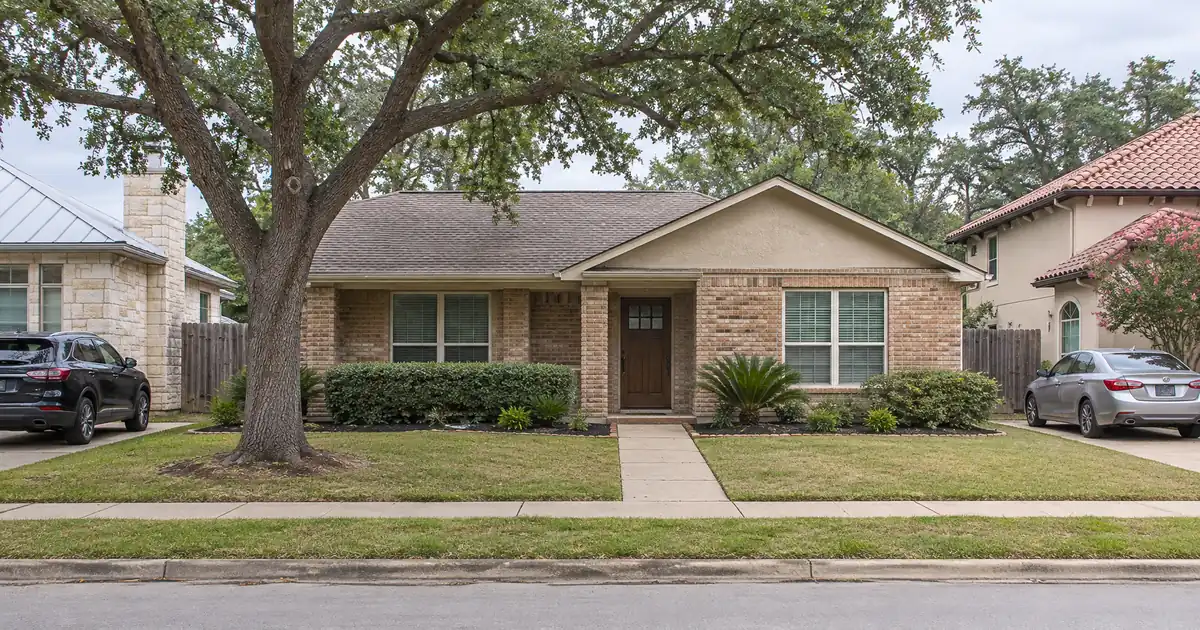
The Quick Read: A Texas homestead HELOC to build an ADU is a home equity line governed by the state constitution, and it is sized on the home’s value today, not on what the finished ADU will be worth. The line is capped at 80% combined loan-to-value on a primary residence in Texas, and it runs on the owner’s personal credit and income, not on projected ADU rent.
- Texas allows only one home equity lien on a homestead at a time, so a HELOC takes the single slot.
- Each draw after closing must be at least $4,000, with no card or check access.
- A DSCR loan is a different tool: it fits an income-producing rental, not raw construction on a homestead.
Texas treats home equity lending differently from most states. The rules sit in the state constitution, and they shape every step of an ADU build. This guide walks through how the line is sized, how the draws work, where the rules bite, and what the investor decision looks like.
How large a line the equity supports in Texas.
An equity line is sized by combined loan-to-value, occupancy, and credit — not by rental coverage. Switch the occupancy or the credit band and the ceiling moves with it.
Investment-property lines require a 700 minimum credit score; second-home lines start at a 640 minimum and primary-residence lines at 600, and the combined-LTV ceiling steps down as the credit band drops on primary-residence and second-home lines and holds on investment-property lines; the line cap steps down on primary-residence lines and holds at every tier on investment-property and second-home lines.
A debt-to-income ratio above 45% requires 680+ credit. Profiles under 640 are limited to single-family homes. At least 75% of the approved line is drawn at closing. Ceilings, floors, and caps update from Lendmire’s centralized guideline source.
Line estimate
Illustrative estimate only — not a quote, Loan Estimate, approval, or commitment to lend. The rate is an editable assumption; equity-line pricing is variable through both the draw and repayment periods and never converts to fixed. Occupancy and credit drive the ceiling together: an investment property tops out at 70% combined LTV (minimum credit 700, line cap $500,000); a second home tops out at 90% combined LTV (minimum credit 640, line cap $500,000), with the ceiling stepping down as the credit band drops (the cap holds at every tier); a primary residence tops out at 80% combined LTV (minimum credit 600), and its $750,000 maximum line is available only at 75% combined LTV or below with a 700-or-better credit profile (720 on the longer-runway program) and a full appraisal. Lines above $500,000 require a full appraisal. Credit, debt-to-income, property type, and full underwriting review all affect the final line.
What Is a Homestead HELOC for an ADU?
A homestead HELOC is a revolving line secured by the home you live in. You borrow only what the build needs, in draws, and you pay interest on the drawn balance. Used for an ADU, it funds the contractor in stages while the detached unit or garage conversion goes up.
In Texas, the line falls under a specific section of the state constitution. The Texas Real Estate Research Center at Texas A&M explains that Article XVI, Section 50 governs home equity lending, and that the Finance Commission of Texas and the Texas Credit Union Commission interpret it through rules that courts can review. An ADU does not exempt the loan from any of this. It is a home equity transaction like any other.
Key Terms Defined
Homestead: The property you occupy as your primary residence, which Texas protects from most liens.
HELOC: A revolving line of credit secured by your home, drawn in pieces during a draw period.
Combined loan-to-value (CLTV): All debt secured by the home, added together, divided by the home’s value.
ADU: An accessory dwelling unit, such as a backyard cottage or converted garage, on the same lot as the main home.
Improvement lien: A lien tied to a written builder contract for new construction, separate from a home equity line.
DSCR: Debt service coverage ratio, which compares a rental property’s income to its monthly payment.
How Does Underwriting Treat the Line, Step by Step?
Underwriting a Texas homestead line follows a fixed order, and the first failed test ends the file. Here is how it runs.
1. Homestead status is confirmed. If the property is the owner’s primary residence, the home equity rules apply and cannot be waived. If it is not a homestead, it is an ordinary loan against real estate.
2. The 80% test runs on today’s value. The constitution’s notice language says the maximum principal, added to all other debts secured by the home, may not exceed 80 percent of fair market value on the date the line is established, as shown in the Texas Constitution text on FindLaw. Because the test uses that date, the ADU’s future value does not count. This is the main sizing limit.
3. The 12-day notice is delivered. The constitutional text on Justia says the loan may not close before the 12th day after the lender gives the owner a written notice on a separate instrument.
4. Personal qualification is reviewed. A HELOC runs on credit, income, and debt-to-income. Across the wholesale network, the home equity line programs generally cap DTI at 50%, with 45% for credit profiles from 600 to 679, subject to lender guidelines.
5. Value is established. Lines at or below $500,000 ordinarily use an automated valuation, though a full appraisal can be required or requested. Lines above $500,000 need a full appraisal.
6. Closing happens at an authorized location. Texas has closing-location rules, and attorney review is part of a clean file.
Which Network Figures Apply?
Brokered through select wholesale partners, the primary-residence line is a standalone line that sits in the single home equity lien position Texas allows on a homestead. On a Texas primary residence, combined leverage caps at 80%, and the higher tiers in the general matrix never apply. Credit tiers matter: a 640 score fits the 80% tier on a primary residence, while lower scores step down to 70% or 60% with smaller maximum lines. The minimum credit score on a primary residence is 600.
Most draw structures use a 3-year or 5-year interest-only draw followed by full amortization. At least 75% of the line is drawn at closing, so only the remainder is available for later draws as the build needs it, and interest is charged on the drawn balance. Pricing floats and does not convert to fixed. All figures are subject to lender guidelines and full file review.
What Draw Rules Apply in Texas?
The Texas A&M research center lists the HELOC mechanics that apply to Texas lines:
- Each single advance during the draw period must be at least $4,000.
- The owner may not use a credit card, debit card, or similar device to take an advance.
- Each payment during the draw period must equal or exceed accrued interest.
For a build, this pairs reasonably with contractor milestones: foundation, framing, rough-ins, finishes. Interest accrues only on the drawn balance. The draw-period payment is typically interest-only, which keeps carrying costs lower during construction but leaves the principal untouched until repayment begins.
Where Does the General Rule Break?
Several edge cases change the answer on a Texas homestead.
The one-lien rule. Texas allows only one home equity lien on the homestead at a time. A closed-end home equity loan and a HELOC both occupy that slot. An existing cash-out or home equity loan blocks a new HELOC until it is paid off.
The improvement-lien alternative. Section 50(a)(5) allows a lien for new construction when the work is contracted in writing before materials arrive or labor begins. Per Sandler Law Group, both spouses must sign on a family homestead, and the contract is executed at the lender’s office, a title company, or an attorney’s office. Extra requirements apply to repairs of existing improvements, which matters for a garage conversion versus a detached new build. That distinction is one for counsel to settle before contracts are signed.
Business-purpose loans on a homestead. A forward cash-out loan on a homestead must be a compliant consumer home equity loan. Doss Law states that if the loan were written as a business-purpose loan instead, it would be a noncompliant, unenforceable lien. So a DSCR product cannot simply replace the HELOC while the property is the owner’s homestead.
Penalties for noncompliance. An uncured violation can carry severe consequences, including potential forfeiture of principal and interest. That remedy is generally understood to be limited to breaches of the constitution’s listed obligations, so have a Texas attorney review the file and confirm every required step is documented before closing.
Local ADU legality. Texas has no statewide ADU law. Whether an ADU is allowed depends on city zoning and recorded deed restrictions, so confirm both before applying.
How Do the Options Compare?
| Option | Sized on | Fit for an ADU build |
|---|---|---|
| Homestead HELOC | Today’s value, 80% CLTV cap | Flexible draws, uses the one lien slot |
| Fixed home equity loan | Today’s value, 80% CLTV cap | Lump sum, same single-lien rule |
| Improvement lien | Builder contract | Tied to one contractor, new construction |
| DSCR cash-out | Rent vs. payment | Needs a rentable, non-homestead property |
What Does the Investor Decision Look Like?
Equity, not rent, sizes the line. Projected ADU rent earns no credit in a HELOC file. A DSCR loan flips that: it compares a property’s rent to its payment, but only for an income-producing rental. Typical DSCR programs across the wholesale network start at a 1.00 floor on select programs, with stronger ratios opening better leverage, and cash-out refinances top out around 75% LTV with about 6 months of seasoning. A separate select-lender path takes coverage below 1.00, with leverage and terms adjusted. Clearing 1.00 is not the same as positive cash flow, since repairs, vacancy, and management sit outside the calculation. Final terms depend on the lender’s guidelines, the property type, and the borrower’s complete credit picture.
The common sequence is two steps. Fund the build with equity, then, once the ADU is complete and leased, look at refinancing the finished rental asset. In Texas, the homestead rules are the gate. Whether the property can sit outside homestead status is a fact-and-counsel question, not something a loan program settles. The complete DSCR loans guide covers how those programs work once an asset is truly income-producing.
Picture an owner with a home worth enough that 80% combined leverage leaves room above the existing mortgage. The line funds the slab and framing. If costs overrun and the line is already at its cap, the owner has no way to raise it, because the cap was set on the original value. Build a contingency into the line size from the start.
For deeper comparison, Lendmire’s article on whether an investment property HELOC makes sense for an ADU build covers the non-homestead side.
What Is Not Eligible?
Under the wholesale network’s equity line programs, title must sit with the individual borrower or a revocable living trust. LLCs, corporations, and partnerships cannot hold title. Manufactured homes, co-ops, condotels, log homes, and commercial or agricultural zoned properties are not eligible. Texas properties are limited to 10 acres. A property listed for sale, or listed within the past 60 days, is ineligible in Texas. Tax treatment varies; consult a qualified professional.
Frequently Asked Questions
Can a HELOC fund an ADU on my Texas homestead?
Yes, if the line is a compliant home equity line and your combined debt stays within the 80% cap. The ADU itself does not change the rules. The cap is tested on today’s value, so the line size depends on current equity.
Will the finished ADU’s value raise my line?
No. The 80% test is run on the date the line is established. Only construction or renovation products credit after-completion value.
Can I have a HELOC and a home equity loan at once?
No. Texas allows one home equity lien on a homestead at a time, and both products occupy that slot. An existing cash-out or home equity loan must be paid off first.
How do draws work during construction?
Each advance must be at least $4,000, and you cannot access the line with a card. Payments during the draw period must at least cover accrued interest.
Can a DSCR loan replace the HELOC on a homestead?
Not while the property is your homestead. A DSCR loan fits an income-producing rental and does not fund raw construction. After the ADU is built and rented, whether a refinance is possible depends on the property’s status, which is a question for counsel and the lender.
If you are considering a home equity line and want to see how the numbers work, Lendmire can help you compare HELOC options based on the property, the equity available, credit profile, combined leverage, and your goals. Lendmire arranges financing as a broker through select lenders in its wholesale network across 41 markets, including Washington, D.C., and equity lines are available in its 16 full-service states, which include Texas.
About Lendmire
Lendmire is a mortgage brokerage (NMLS# 2371349) arranging home equity lines of credit — primary-residence, second-home and investment-property lines — through a wholesale lending network in its 16 full-service states. Eligibility is determined by the lender on each file. Scotsman Guide named Lendmire a Top Mortgage Workplace in both 2025 and 2026.
Get Started
Ready to find the right loan for you?
See your offer in seconds. No credit pull, no obligation.
Informational only. Not a Loan Estimate, approval, or commitment to lend. Program availability and eligibility are subject to lender guidelines, credit approval, property review, and underwriting.
References
1. Texas Real Estate Research Center, Texas A&M
2. Texas Constitution Art. XVI §50
3. Texas Constitution Art. XVI §50
5. Doss Law
This article is part of Lendmire’s HELOC & home equity loan program — full qualification details, guidelines, and scenarios live on the program page.
Related reading: How Much Can You Borrow on a DSCR HELOC With Minimal Paperwork? · How an Investment Property HELOC Works to Fund Business Equipment · How Much Can You Borrow on a DSCR HELOC With a Solar Lien or an Unpermitted ADU?
Brandon Miller
Founder & CEO, Mortgage Loan Originator, Lendmire LLC
- Mortgage Loan Originator · NMLS# 1129696 · Verify on NMLS Consumer Access
- North Carolina Real Estate Broker · License# 343312 · Verify on NCREC
- North Carolina Insurance Producer · License# 19053198 · Property, Casualty, Life, Health · Verify on NAIC SBS
- Lendmire LLC · Firm NMLS# 2371349 · Verify firm licensure
Disclosure information. Lendmire is a state-licensed mortgage brokerage under NMLS# 2371349. Lendmire is not a depository institution, direct lender, or financial advisor — all loans referenced are placed through wholesale lender partners and are subject to each lender's underwriting standards. This article is provided for general informational purposes and is not a commitment to lend, nor does it constitute financial, legal, or tax advice. Loan programs, terms, rates, and qualification standards change without notice and depend on borrower profile, property type, and the state in which the subject property is located. Equal Housing Opportunity provider. NMLS Consumer Access: nmlsconsumeraccess.org.