
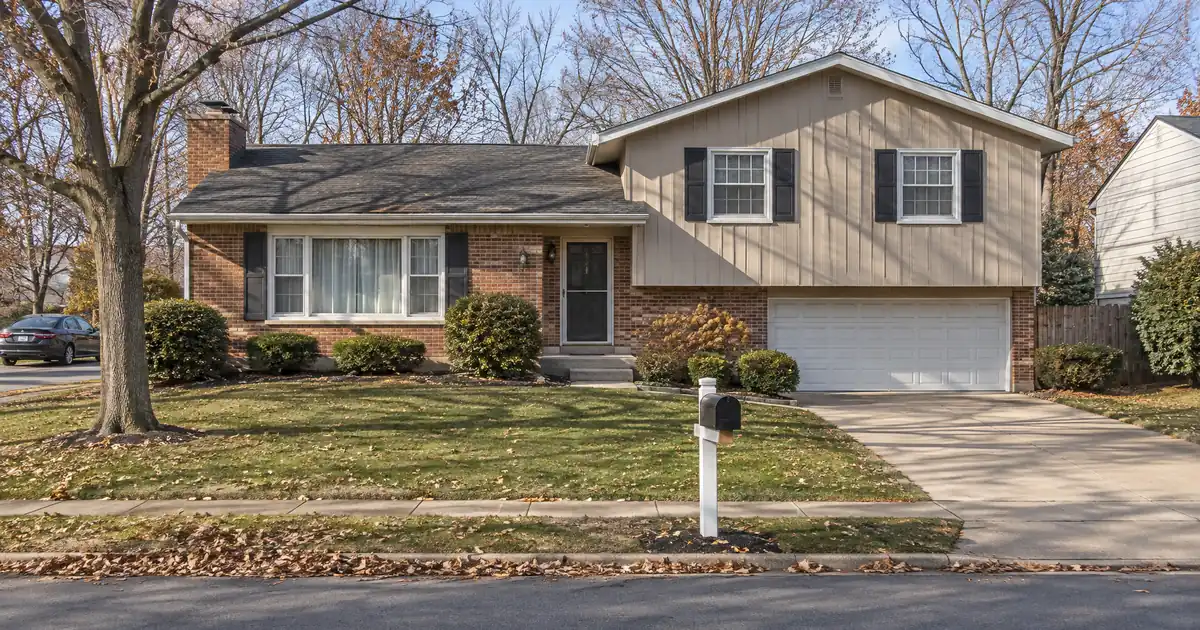
The Quick Read: In most cases, an unfiled tax return does not stop a DSCR HELOC. The line qualifies on the rental’s income covering a stress payment on the full credit limit, subject to lender guidelines. The lender therefore weighs rent, credit, valuation, and property facts rather than your personal return. The one exception is a line underwritten on personal income, which is a different product and needs the filing.
- The rent decides coverage, not your return. The minimum is 1.10x.
- Rent used for lender review is the lesser of the appraisal’s market rent and the lease, unless three months of receipts support a lease above market.
- Credit, valuation, lien position, and property type still get a full review, subject to underwriting.
- A line labeled HELOC that asks for returns is the personal-income type, and an unfiled return stalls it.
- Not filing still has costs outside the loan file, so file or extend properly.
Does a DSCR HELOC Need a Filed Tax Return?
No. A DSCR HELOC on a rental is a home equity line secured by the investment property, and it is reviewed on the property’s rent. Through the select programs in Lendmire’s wholesale network, the lender does not calculate your personal income. It does not ask for W-2s, pay stubs, or a debt-to-income ratio, subject to lender guidelines.
So the filing status of your return is mostly beside the point. A return is the proof a lender uses when your income is the thing being measured. Here the thing being measured is the rental.
The word HELOC is where borrowers get tripped up. Some lenders sell an investment-property HELOC that is underwritten on personal income. That product needs your returns, or some other income proof, and an unfiled return is a real obstacle there. Ask one question first: what does this line qualify on, the rent or my income? If the answer is your income, the rest of this article describes a different loan.
Lendmire is a mortgage broker, not a lender. It places DSCR HELOC files with wholesale lenders in its network, so the broker’s job is matching the property to the program that fits. The right program for you depends on the property type, credit, leverage you need, and how the property is held.
What Does the Lender Review Instead of the Return?
The lender reviews everything attached to the property and the borrower’s credit. The return is not on the list, but the file is far from empty.
| Item | Reviewed? | Why it matters |
|---|---|---|
| Lease in place | Yes | Required to qualify the rent |
| Appraiser’s market rent | Yes | Caps or confirms the lease |
| Credit report | Yes | Sets the leverage tier |
| Valuation | Yes | Sets value for combined leverage |
| Title and lien position | Yes | Confirms second or first lien |
| Personal tax return | Not used to qualify | Rent carries the file |
| W-2s, pay stubs, DTI | Not calculated | Owner income is not measured |
The lender documents the rent, the lease, the credit report, and the valuation. Think of it as a property-first review rather than a lighter one.
This also explains why many investors prefer it. Depreciation and write-offs shrink the taxable income on a return, sometimes to almost nothing, even when the rental throws off healthy cash.
Extended, Late, or Never Filed: Does It Matter?
For the DSCR math, none of the three changes the coverage number. They matter in other ways, and it helps to know which status you are in.
| Status | What it means | Effect on a rent-qualified line |
|---|---|---|
| Filed on extension | Filing deadline moved, payment still due | Not used to qualify |
| Filed late | Deadline passed with no extension | Not used to qualify |
| Never filed | No return exists | Not used to qualify, but see below |
An extension is automatic for individuals who request one by the April due date. Per the IRS guidance on extensions to file, it moves the filing deadline to October 15 and gives no extra time to pay. If you owe tax, interest and penalties can still build on that unpaid balance.
That last point is where an unfiled return can touch a loan file indirectly. Your rental line is qualified on rent, so unpaid tax does not enter the coverage math. A tax lien, though, can appear on a credit report or a title search, and lenders see those. Filing status itself is not a qualifying factor on a rent-qualified line, but a lien is a separate lender question. If October 15 has passed and your return is still unfiled, talk to your CPA first. That is a tax problem to fix whatever lender you use.
Tax treatment varies; consult a qualified professional.
How the Coverage Test Works Without Your Return
Coverage is gross monthly rent divided by the qualifying payment. Through the programs we place files with, the minimum is 1.10x, subject to underwriting. The payment is a fully amortizing payment on the entire credit limit at a stressed start rate, not on the balance you drew. That is a structural feature of a line, because the lender sizes the test on the whole commitment.
Taxes and insurance are not part of the qualifying payment on this line. On a second lien, confirm on the file how the lender treats the first-mortgage payment, because that treatment is the lender’s own coverage calculation and can change the result.
Rent is the lesser of the appraisal’s market rent and the lease, unless three months of receipts support a lease above market. The appraiser’s market rent comes from Form 1007, the rent schedule. A two-to-four-unit property uses the multi-unit equivalent, Form 1025.
Run the numbers this way, with modeled ratios rather than dollars. Say the lease supports 1.30x coverage on the stress payment, but the appraiser’s market rent supports only 1.15x. Coverage counts at 1.15x. That clears the 1.10x floor with a thin cushion. Now say the lease alone supports 1.05x. That falls short, and a stronger lease, a larger equity cushion, or a smaller line may change the picture, subject to lender review.
This is where most deals tighten, and the missing return is not the cause. A low rent schedule or a lease signed below market is the more common pressure point. A lease in place is required, so a vacant rental does not fit this line, and a two-to-four-unit building may have at most one vacant unit.
What Sets the Leverage and the Line Size?
Two things set the leverage: lien position and credit score. The lender measures combined loan-to-value (CLTV) on a second lien and loan-to-value (LTV) on a first lien, both against the valuation.
- Second lien behind the first mortgage you keep: up to 70% CLTV at a 720 score or better, on lines of $50,000 to $500,000. There is no second-lien tier below 720.
- First lien on a rental with no mortgage: up to 75% LTV at 740 or better and 70% LTV from 700 to 739, on lines up to $500,000. Lines above $500,000, up to $1,000,000, run at 65% LTV at 720 or better. Final terms depend on the lender’s guidelines, the property type, and the borrower’s complete credit picture.
All of these are ceilings, subject to underwriting, and not offers. A declining-market flag lowers the ceiling by 5 points. A first lien exists only when the rental has no mortgage.
The draw period is 5 years of interest-only payments on the drawn balance, followed by a 25-year repayment period and a 30-year maturity, with a variable rate. At least 80% of the line is drawn at closing, and later draws are at least $5,000.
For valuation, lines up to $400,000 use an automated valuation with a property inspection report, or a full interior appraisal. Larger lines take a full interior appraisal. Appraisal waivers are not accepted.
On credit, expect no 30-day mortgage late in the last 12 months, and 48 months since a bankruptcy, foreclosure, short sale, or deed-in-lieu. No reserves are required. Exposure is capped at 5 loans or $2,500,000 per borrower with the program.
Two six-month clocks apply to the property itself. A rental bought or refinanced inside the last 6 months is not eligible (that clock runs from the last note date to the new note date), and the owner must have held title for 6 months (settlement date to note date).
Rural-designated property, row homes, condotels, leaseholds, and a few other types sit outside this program. Your LLC can stay on title, subject to program terms, with the members signing as guarantors. Foreign nationals and ITIN borrowers are not eligible. The program is offered in 15 of Lendmire’s 16 licensed states, every licensed state except Tennessee. The complete DSCR loans guide covers the wider DSCR framework.
When a Return Still Comes Up
A return comes up in three situations. The first is the personal-income HELOC described above. The second is a hybrid program that weighs property income alongside other items, which varies by program. The third is a lender that requests a signed transcript authorization at closing as a quality-control step, which is different from relying on the return to qualify. A transcript exists only after the IRS processes a filed return, so an unfiled return would leave nothing to pull.
DSCR loans are designed for non-owner-occupied investment properties. Because they are business-purpose investor loans, they are reviewed differently from a standard owner-occupied mortgage. The federal ability-to-repay final rule treats investment-purpose loans as business-purpose loans, which is why personal income verification is not built into this structure. Lenders still document the business purpose and check occupancy.
When you talk to any lender, ask these four questions:
1. Does this line qualify on the rent or on my income?
2. How do you count rent when my lease and the appraiser’s market rent differ?
3. What payment do you use for the coverage test, and on what balance?
4. Will you pull a transcript at any point, and for what purpose?
The answers tell you quickly whether your filing status matters at all. A broker that shops several wholesale lenders can screen for this before you spend money on an appraisal.
What Should You Gather Before You Apply?
Assemble the evidence that supports rent, since rent decides the file.
- The signed lease for every unit.
- Three months of rent receipts, especially if the lease sits above market.
- Your credit report details, including any recent mortgage lates.
- The first mortgage statement, if you are asking for a second lien.
- Entity documents, if the LLC holds title.
- The rental’s purchase or refinance date, to check both six-month clocks.
A second-lien line leaves your first mortgage in place, while a refinance replaces it.
Key Terms Defined
DSCR (debt service coverage ratio): monthly rent divided by the qualifying payment. A result of 1.10x means rent is 110% of that payment.
HELOC: a revolving line of credit secured by property. You draw against a limit, with a draw period followed by repayment.
Second lien: a loan recorded behind your first mortgage. It gets paid second if the property is sold or foreclosed.
CLTV (combined loan-to-value): the first mortgage balance plus the new line, divided by the property’s value.
Stress payment: a hypothetical payment on the full credit limit at a higher start rate, used only to test coverage.
Form 1007: the appraiser’s rent schedule, which estimates market rent for a single-family rental.
Frequently Asked Questions
Can I get a DSCR HELOC if I filed an extension?
Yes, in most cases, because the line is reviewed on the rent and not on your return. The extension moves your filing deadline but not your payment deadline. Confirm with your CPA that any tax due is paid, since a lien could show up in credit or title.
What if my return is overdue and I never filed?
The coverage math is unaffected on a rent-qualified line. The lender will still review credit and title, where unpaid tax or a lien can surface. Fix the filing with your CPA, because the risk sits outside the loan.
Does the lender still check my income at all?
Not on a rent-qualified line, where no personal income is calculated and no debt-to-income ratio is used. The program reviews rent, the lease, credit, valuation, title, and the property. Through select programs, qualification is subject to lender guidelines and underwriting.
What if my property is new or has no rent history?
A signed lease in place is required, and the lender compares it with the appraiser’s market rent. If the lease sits above market, three months of receipts can support it. A vacant property does not fit this line.
How do I know if a HELOC needs returns?
Ask whether it is reviewed on property rent or on personal income. A lender that asks for returns, W-2s, or a debt-to-income ratio is underwriting your income. A broker can sort the two types before you apply.
Seeing How Your Numbers Work
If you are considering a home equity line on a rental property and want to see how the numbers work, Lendmire can help you compare DSCR HELOC options based on the property, the rent, the equity available, credit profile, combined leverage, and your goals. Call 828-256-2183 or request a quote. Programs change, and every file is underwritten individually, and nothing here is a commitment to lend.
About Lendmire
Lendmire (NMLS# 2371349) is a mortgage brokerage serving landlords and real estate investors in 16 licensed states. DSCR home equity lines of credit on non-owner-occupied one-to-four-unit rentals are arranged through wholesale lending channels in 15 of those states (every licensed state except Tennessee); Lendmire brokers the line and the lender underwrites each application on the property’s rent, credit and leverage. Scotsman Guide named Lendmire a Top Mortgage Workplace in both 2025 and 2026.
Get Started
Ready to find the right loan for you?
See your offer in seconds. No credit pull, no obligation.
Informational only. Not a Loan Estimate, approval, or commitment to lend. Program availability and eligibility are subject to lender guidelines, credit approval, property review, and underwriting.
References
1. IRS – Get an extension to file your tax return
2. Federal Register – Ability-to-Repay and Qualified Mortgage Standards final rule
This article is part of Lendmire’s DSCR HELOC program — full qualification details, guidelines, and scenarios live on the program page.
Related reading: Can You Get a DSCR HELOC When Speed and Convenience Matter Most? · How Much Can You Borrow on a DSCR HELOC for Landlords Choosing a Lender? · DSCR HELOC Requirements When You’re Not on the Mortgage
Brandon Miller
Founder & CEO, Mortgage Loan Originator, Lendmire LLC
- Mortgage Loan Originator · NMLS# 1129696 · Verify on NMLS Consumer Access
- North Carolina Real Estate Broker · License# 343312 · Verify on NCREC
- North Carolina Insurance Producer · License# 19053198 · Property, Casualty, Life, Health · Verify on NAIC SBS
- Lendmire LLC · Firm NMLS# 2371349 · Verify firm licensure
Compliance and disclosures. Lendmire (NMLS# 2371349) is a licensed mortgage broker and is not a direct lender, depository institution, financial advisor, or tax professional. Content in this article is general market analysis and educational information — not financial, legal, or tax advice for any specific situation. Lendmire does not guarantee loan approval; every transaction is subject to underwriting by the funding lender. Mortgage pricing and loan program guidelines are subject to change at any time without notice and vary by borrower characteristics, property type, and state regulations. Lendmire complies with Equal Housing Opportunity. Licensure verification: NMLS Consumer Access.