
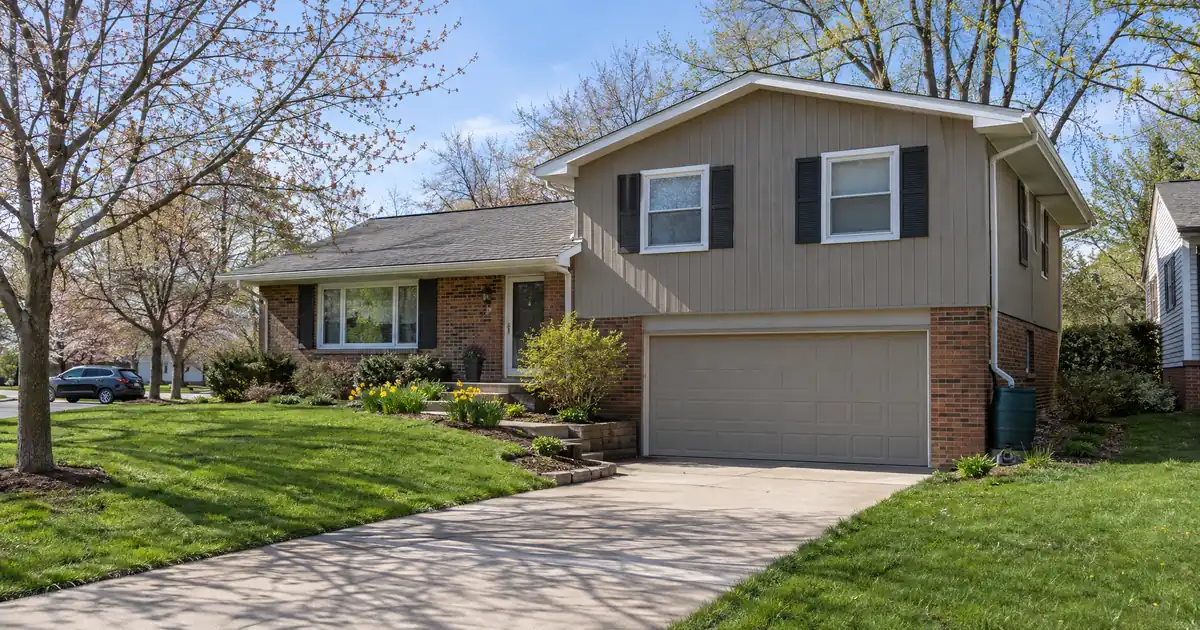
The Quick Read: Solar panels do not disqualify a rental from a rent-qualified home equity line, but a lien tied to the panels can. What matters is how the system is owned and what is recorded against the property, because a recorded solar loan, a fixture filing, or a tax-bill assessment usually puts the rental outside the program. Panels that are owned outright, or a lease with no recorded claim on the real estate, are a much easier file, subject to lender guidelines and underwriting.
- Ownership structure matters more than the panels: owned, financed, leased, power purchase agreement (PPA), or a PACE assessment each leave a different record on title.
- The rent test is the same with or without solar: a 1.10x minimum on a stress payment over the whole line.
- A solar lien is outside this program, so clear it before applying or consider a cash-out refinance instead.
- Panels do not add rent, and owned panels may help value only if comps and the appraiser support it.
- Second-lien leverage tops out at 70% CLTV at a 720 credit score or better, through select programs. The exact numbers vary by lender and program and follow a full review of property, leverage, and credit.
What Is a DSCR HELOC on a Rental?
A DSCR HELOC is a revolving line of credit on a non-owner-occupied one-to-four-unit rental, qualified on the property’s rent instead of the owner’s personal income. It is written as a standalone second lien behind the first mortgage the owner keeps, or as a standalone first lien on a rental with no mortgage. It is never offered on the owner’s own home or a second home.
DSCR loans are designed for non-owner-occupied investment properties. Because they are business-purpose investor loans, they are reviewed differently from a standard owner-occupied mortgage. The file carries no traditional personal-income documentation, W-2s, pay stubs, or debt-to-income ratio. The rental’s income is what qualifies it, subject to lender guidelines. The owner’s LLC can stay on title, subject to program terms. The members sign as guarantors, and a title holder who is not a borrower signs an acknowledgment and the security instrument.
Across Lendmire’s wholesale network, this product is offered in 15 of Lendmire’s 16 licensed states, every licensed state except Tennessee. Lendmire is the broker. The wholesale lender reviews and approves each file.
The leverage tiers depend on the lien position:
| Lien position | Credit score | Maximum leverage |
|---|---|---|
| Second lien, lines to $500,000 | 720 or better | 70% CLTV |
| First lien, lines to $500,000 | 740 or better | 75% LTV |
| First lien, lines to $500,000 | 700 to 739 | 70% LTV |
| First lien, $500,000 to $1,000,000 | 720 or better | 65% LTV |
Lines start at $50,000. These are ceilings, not offers, and everything is subject to underwriting. For a broader look at how rent-qualified lending works, see Lendmire’s complete DSCR loans guide.
Key Terms Defined
DSCR (debt service coverage ratio): monthly rent divided by the qualifying payment, which shows whether the rental covers its own debt.
CLTV (combined loan-to-value): the first mortgage balance plus the new line, divided by the property’s value.
UCC-1: a financing statement that tells the public a lender or equipment owner has a claim on specific equipment, such as solar panels.
Fixture filing: a version of the UCC-1 recorded against the property’s legal description, so it appears in the title history.
PPA (power purchase agreement): a contract where a provider owns the panels and the owner pays for the power they produce.
PACE: a loan for improvements, often solar, repaid through the property tax bill and secured by a tax lien.
How Underwriting Actually Treats the File, Step by Step
The deal works through the same checkpoints as any DSCR HELOC, and solar is added as one more item to classify and clear. The sequence below is how a wholesale lender typically works through it.
Step 1: Confirm the property and borrower fit. The line must sit on a non-owner-occupied single-family home, PUD, townhome, condominium, or two-to-four-unit property, or a lot of up to 10 acres. Rural-designated property, row homes, condotels, leaseholds, and a few other types are outside it. Borrowers must be U.S. citizens, permanent residents, or non-permanent residents with a Social Security number. Foreign nationals and ITIN borrowers are not eligible.
Step 2: Run the rent test. The minimum is 1.10x. The qualifying payment is a fully amortizing payment on the entire credit limit at a stress rate above the start rate. Taxes and insurance are not part of it. A bigger line means a bigger qualifying payment, even if most of it sits undrawn. Rent is the lesser of the appraisal’s market rent and the lease, unless three months of receipts support a lease above market. A lease in place is required. A two-to-four-unit property can have at most 1 vacant unit. On a second lien, confirm on the file how the lender treats the first-mortgage payment, because the lender’s own coverage calculation governs.
Step 3: Check credit and exposure. A second lien needs a 720 score. A first lien, which exists only on a rental with no mortgage, needs at least 700, and the score sets the tier: 740 or better reaches 75% LTV on lines up to $500,000, while 700 to 739 reaches 70% LTV. There can be no 30-day mortgage late in the last 12 months, and 48 months must have passed since a bankruptcy, foreclosure, short sale, or deed-in-lieu. No reserves are required. A borrower can hold at most 5 loans or $2,500,000 with the program.
Step 4: Value the property and search title. Lines to $400,000 use an automated valuation with a confidence score of 85 or better plus a property inspection report, or a full interior appraisal. Larger lines take a full interior appraisal. Appraisal waivers are not accepted. Title work is where solar surfaces. A full title policy is required on a first lien and on second liens above $400,000, and smaller second liens get an owner-and-encumbrance report. Skyline Title Support notes that title companies pair a UCC search with the title search so filings show up before the closing table, and that a fixture filing is indexed against the property’s legal description.
Step 5: Classify the solar system. Underwriting asks for the solar contract and any loan or lease agreement. Then the lender sorts the system into one of the structures below.
Step 6: Check seasoning and draw rules. A rental bought or refinanced inside the last 6 months is not eligible (that clock runs from the last note date to the new note date), and the owner must have held title for 6 months (settlement date to note date). At least 80% of the line is drawn at closing, the closing draw is never less than $50,000, and later draws are at least $5,000. The draw period is 5 years of interest-only payments on the drawn balance, followed by a 25-year repayment period and a 30-year maturity. The rate is variable.
How Does Each Solar Structure Change the Answer?
Ownership and recording decide the outcome. A system with no recorded claim on the property is a different file from one with a lien behind it.
| Solar setup | What is recorded | Effect on this line |
|---|---|---|
| Owned outright | Nothing on title | No solar lien; standard file |
| Leased or PPA | Often an equipment UCC-1 | Lender reviews; provider may need to consent |
| Solar loan, equipment filing only | UCC-1 on the panels | Gray zone; the lender decides |
| Solar loan, fixture filing | Filing in the title history | Usually treated as a solar lien |
| Recorded solar deed of trust | A true junior lien | Solar lien; pay off first |
| PACE assessment | Tax-bill lien | Solar lien; pay off first |
The program excludes a property with a solar lien. An equipment-only UCC-1 is the judgment call, and the lender’s review of the specific filing decides it. The lender’s written guidelines on each file control, so treat the table as the usual pattern rather than a promise.
The Association for Consumer Law and Practice resource on solar panel liens explains why the gray zone exists. Most solar loans and leases produce a UCC-1 financing statement rather than a mechanic’s lien, and the fixture-filing version is the one that enters the property’s title history. The same filing type can be minor in one file and a deal-breaker in another, depending on what the lender sees on the title report.
Does the Solar Payment Count in the Coverage Ratio?
On this line, the qualifying payment is principal and interest on the full credit limit at the stress rate. A solar loan or lease payment is not in that calculation, and neither are taxes or insurance. Panels also do not add to rent. Rent is documented through the lease and the appraiser’s Form 1007 market-rent schedule, and utility savings are not a coverage input.
That does not make the solar obligation free. A lease or PPA payment still comes out of real cash flow, and an investor who buys a rental with leased solar inherits that contract. If rent only just clears 1.10x, a lease escalator can leave the property technically qualified and financially thin. This is where the investor’s own cash-flow math should be stricter than the lender’s.
PACE Is the One That Behaves Differently
PACE is a tax assessment, not a normal solar loan, and it carries priority a mortgage-style lien does not. The Consumer Financial Protection Bureau describes PACE loans as secured by a property tax lien and often promoted for solar panels. It also says the repayment obligation stays with the property even if the owner sells. The agency’s study of California and Florida found PACE raised borrowers’ property taxes by 88 percent on average, so the tax line on a PACE rental can look very different from its neighbors.
Priority is the bigger problem for a lender. The Federal Housing Finance Agency explains that a first-lien PACE assessment can be advanced to super-priority status over existing mortgages. It also notes that some PACE programs are structured as secondary liens that do not threaten first-lien priority, so treatment varies by state and program.
For a second-lien line, a PACE assessment sitting ahead of both mortgages is exactly the kind of senior claim a lender wants gone. Expect payoff or exclusion rather than a negotiated subordination. Because this program’s qualifying payment leaves taxes out, the assessment is not a rent-test problem here. Its lien priority is the problem.
What Does the Leverage Math Look Like With a Solar Balance?
A solar payoff competes with the new line for the same equity, because the combined-leverage cap does not grow to make room for it. Run the numbers on percentages of value, using these inputs as modeled assumptions rather than market data.
Say a rental carries a first mortgage equal to 52% of its value. At a 720 score, the second-lien ceiling is 70% CLTV, which leaves 18 points of room. If a solar balance equal to 6 points of value has to be cleared out of the line’s proceeds, only 12 points of usable cash remains. Whether a payoff at the closing table is allowed is a lender decision on the file.
The sequencing choice has a flip point. If the investor can clear the solar balance from other cash, the full 18 points stays available. If the balance can only be cleared from the equity itself, the line is smaller than it first appears, and the project the proceeds were meant to fund may not pencil. Test that before ordering an appraisal.
A declining-market flag lowers the ceiling by 5 points, and Philadelphia lines carry a ceiling 10 points lower. First-lien lines above $500,000 sit at the 65% LTV ceiling. All of it is subject to underwriting. Final terms depend on the lender’s guidelines, the property type, and the borrower’s complete credit picture.
Do Panels Add Value to the Appraisal?
Do not build an equity case on a solar premium. Owned panels may support a higher appraised value, depending on comps and underwriter review, and only when ownership is documented. Leased and PPA panels generally add nothing, because the owner does not own the equipment. If the paperwork is missing, the panels are usually assigned no value.
Treat any premium as a bonus rather than an input. The 70% CLTV cap is measured against the appraised figure, and an appraiser who ignores the panels leaves the math unchanged. For lines above $400,000, a full interior appraisal on Form 1004, 1073, or 1025 is required, and the appraiser will want the solar documents either way.
Where Does the General Rule Break?
Each of these edge cases can change the answer, and none of them is visible from the panels alone.
- Equipment-only filing versus a recorded claim on the real estate. The two look similar in a title search and carry very different weight. A UCC-1 limited to the panels is a different conversation from a deed of trust or fixture filing.
- Overbroad filings. A filing that wrongly claims the whole property may need an amendment or termination, called a UCC-3, before the lender is comfortable.
- Lease consent. A leased system may need the provider’s cooperation before a new lien goes on. Telling the third-party owner early gives them time to handle the filing.
- A provider that has gone out of business. A stale filing with no one left to release it can stall a file. A title company can often find the successor holder, but plan for extra time on that step. (Plan, not promise: the lender decides what it will accept.)
- LLC title. Vesting in an LLC does not change solar treatment, but the lease or loan may be in the individual’s name. Align the names before the file goes in.
- Roof-mounted equipment and insurance. Disclose the system to the insurance agent.
HELOC or Cash-Out Refinance When Solar Is Involved?
A cash-out refinance can fit better when a solar lien has to be cleared, while a line is the better tool when the first mortgage should stay in place. A cash-out refinance replaces the first mortgage and can pay off a solar lien in the same transaction. A DSCR HELOC leaves existing liens where they are.
| Factor | DSCR HELOC | DSCR cash-out refinance |
|---|---|---|
| First mortgage | Stays in place | Replaced |
| Solar lien | Must be cleared first | Can be paid off at closing |
| Access to equity | Draws within the line | One lump sum |
| Best when | The first mortgage is worth keeping | A lien or loan structure needs resetting |
The tradeoff is cost and structure. Replacing a first mortgage resets its terms, so an investor holding a first mortgage worth keeping may prefer to clear the solar balance separately and keep the line. An investor with PACE or a recorded solar deed of trust and a first mortgage that is not worth keeping should price the refinance first.
What Should You Do Before Applying?
Resolve the solar question before the application, because every other step of the file depends on it. A practical sequence looks like this:
1. Classify the system. Pull the solar contract, along with any loan or lease agreement, and note whether it is owned, financed, leased, a PPA, or PACE.
2. Check what is recorded. Order a title report and a UCC search so the filings surface early.
3. Ask the provider for documents. Request a payoff or release letter, or confirmation that any filing is equipment-only.
4. Decide the clearing path. Payoff from other cash, a lease buyout, a UCC-3 termination, or a cash-out refinance that replaces the first mortgage.
5. Re-run the coverage and leverage math. Confirm the rent still clears 1.10x on the full line and the CLTV fits under the cap after any payoff.
The honest read is that a clean, owned system is barely a factor, while a PACE assessment or recorded solar deed of trust is a gating item. If the lien cannot be cleared at a sensible cost, the better move may be to choose a different tool rather than force the file.
Frequently Asked Questions
Can a leased solar system stay on a rental that gets a DSCR HELOC?
Often it can stay, but the lender reviews it. A lease or PPA usually leaves an equipment-focused UCC-1 rather than a mortgage on the property, and the lender decides whether that filing is acceptable. The provider may need to consent, so ask early. If the lender wants the filing cleared, a lease buyout is the usual route.
Does a solar loan payment count against the 1.10x coverage test?
No, the qualifying payment is principal and interest on the full line at the stress rate, and the solar payment is not part of it. The payment still reduces the rental’s actual cash flow. A recorded solar loan can separately make the property ineligible because it is a lien.
Can I use HELOC proceeds to pay off the solar loan?
Sometimes, but the cleaner path is to clear it first. Because the program excludes a property with a solar lien, many files need the lien resolved before closing rather than out of proceeds. A payoff out of proceeds also shrinks usable equity under the combined-leverage cap, so the net cash can be well below the headline line.
Does owning the panels outright help the file?
It helps by removing the lien question entirely. Owned panels leave nothing on title and may support a higher appraised value, depending on comps and underwriter review. They do not add rent, so the 1.10x coverage test is unchanged.
Is a cash-out refinance better when a solar lien is in the way?
It can be, because it replaces the first mortgage and can pay off the solar lien in the same transaction. It also resets the first mortgage, so it is a poor fit for an investor with a first mortgage worth keeping. The decision turns on the existing first mortgage and the size of the solar balance.
Next Step
If you are considering a home equity line on a rental property and want to see how the numbers work, Lendmire can help you compare DSCR HELOC options based on the property, the rent, the equity available, credit profile, combined leverage, and your goals. Reach the team at 828-256-2183 with the solar documents and a recent title report in hand, since those two items decide most of this file.
About Lendmire
Lendmire (NMLS# 2371349) is a mortgage broker licensed for consumer lending in 16 states. DSCR home equity lines of credit — revolving lines on non-owner-occupied one-to-four-unit rentals, qualified on the property’s rent instead of the owner’s personal income — are arranged through wholesale lenders in 15 of those 16 states (every licensed state except Tennessee), and every line is underwritten by the lender under its program guidelines. Scotsman Guide named Lendmire a Top Mortgage Workplace in both 2025 and 2026.
Get Started
Ready to find the right loan for you?
See your offer in seconds. No credit pull, no obligation.
Informational only. Not a Loan Estimate, approval, or commitment to lend. Program availability and eligibility are subject to lender guidelines, credit approval, property review, and underwriting.
References
1. Skyline Title Support – Solar UCC liens and fixture filings at closing
2. Association for Consumer Law and Practice – Solar panel liens
3. Consumer Financial Protection Bureau – Proposed PACE protections release
4. Federal Housing Finance Agency – Statement on Certain Super-Priority Liens
This article is part of Lendmire’s DSCR HELOC program — full qualification details, guidelines, and scenarios live on the program page.
Related reading: DSCR HELOC Requirements When a Series LLC Owns Your Rental · DSCR HELOC Requirements for a Travel-Nurse Mid-Term Rental · DSCR HELOC Requirements on a Rental When the Owner Died Without a Will
Brandon Miller
Founder & CEO, Mortgage Loan Originator, Lendmire LLC
- Mortgage Loan Originator · NMLS# 1129696 · Verify on NMLS Consumer Access
- North Carolina Real Estate Broker · License# 343312 · Verify on NCREC
- North Carolina Insurance Producer · License# 19053198 · Property, Casualty, Life, Health · Verify on NAIC SBS
- Lendmire LLC · Firm NMLS# 2371349 · Verify firm licensure
Legal disclosures. Lendmire (NMLS# 2371349) is a state-licensed mortgage brokerage that arranges financing through wholesale lender relationships. Lendmire is not a direct lender, depository institution, or registered financial advisor. The discussion above is general informational content about real estate financing — it is not financial, legal, or tax advice, and readers should consult licensed professionals for guidance on their individual circumstances. Loan inquiries are subject to lender underwriting; this article does not represent a commitment to lend. Loan terms, rates, and qualification standards vary by borrower, property, and state, and are subject to change at any time. Equal Housing Opportunity. NMLS Consumer Access: nmlsconsumeraccess.org.