
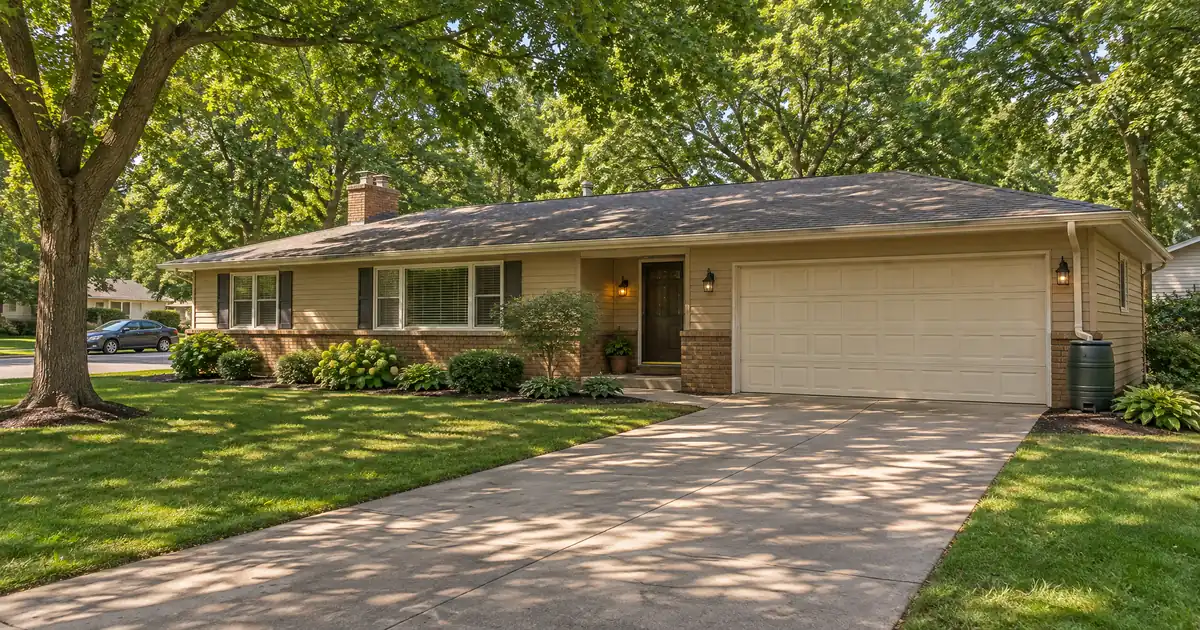
The Quick Read: Usually, yes, but only when you can document it and show it has continued for a while. A second job is easiest to use once it has run alongside your main job for about two years. A job you started recently often won’t count. Each HELOC lender sets its own policy, so treatment varies.
- A W-2 second job is judged on pay stubs, W-2s, and tax returns.
- A 1099 or gig side business is judged on net income after deductions.
- Cash you can’t trace to a tax return generally can’t be used.
- Side income only matters if it changes your debt-to-income result.
How Do Lenders Treat a Second Job on a HELOC?
A second job counts when it is stable, documented, and needed. Lenders want proof the income will continue. They look at how long you have held both jobs and whether the pay is steady.
How large a line the equity supports.
An equity line is sized by combined loan-to-value, occupancy, and credit — not by rental coverage. Switch the occupancy or the credit band and the ceiling moves with it.
Investment-property lines require a 700 minimum credit score; second-home lines start at a 640 minimum and primary-residence lines at 600, and the combined-LTV ceiling steps down as the credit band drops on primary-residence and second-home lines and holds on investment-property lines; the line cap steps down on primary-residence lines and holds at every tier on investment-property and second-home lines.
A debt-to-income ratio above 45% requires 680+ credit. Profiles under 640 are limited to single-family homes. At least 75% of the approved line is drawn at closing. Ceilings, floors, and caps update from Lendmire’s centralized guideline source.
Line estimate
Illustrative estimate only — not a quote, Loan Estimate, approval, or commitment to lend. The rate is an editable assumption; equity-line pricing is variable through both the draw and repayment periods and never converts to fixed. Occupancy and credit drive the ceiling together: an investment property tops out at 70% combined LTV (minimum credit 700, line cap $500,000); a second home tops out at 90% combined LTV (minimum credit 640, line cap $500,000), with the ceiling stepping down as the credit band drops (the cap holds at every tier); a primary residence tops out at 90% combined LTV (minimum credit 600), and its $750,000 maximum line is available only at 75% combined LTV or below with a 700-or-better credit profile (720 on the longer-runway program) and a full appraisal. Lines above $500,000 require a full appraisal. Credit, debt-to-income, property type, and full underwriting review all affect the final line.
A HELOC is an open-end line. You borrow, repay, and borrow again. It sits behind your first mortgage as a second lien, or it can stand alone in first position.
The usual benchmark is two years. That figure shows up in agency underwriting, too. As a contrast only, Fannie Mae’s Selling Guide recommends a two-year history for each income source when someone holds multiple jobs. It allows a shorter history, no less than 12 months, when there are positive offsetting factors. That guide governs closed-end agency loans, not HELOCs or DSCR files. It simply shows where the two-year rule of thumb comes from.
What Does a Lender Need to See?
Expect to document four things: the type of income, its history, its amount, and its source. For a W-2 second job, lenders typically ask for recent pay stubs, W-2s, and tax returns. For a 1099 side business, they ask for tax returns and the 1099s.
When pay varies, as with overtime, bonuses, or side-business profit, the lender may average the variable portion over a period of time. A rising trend helps. A falling one shrinks what counts.
Deposits alone don’t prove income. A lender can’t treat money landing in your account as income until it confirms where the money came from. That is why cash earnings you never reported rarely help. If you want that work to count later, it has to appear on a filed return first.
W-2 Second Job vs. 1099 Side Hustle
The difference is how the income is measured. A second W-2 job is a wage. A side business is self-employment, so lenders look at net profit, not gross receipts.
| Income type | Typical proof | Common lender caution |
|---|---|---|
| Second W-2 job | Pay stubs, W-2s | Short history |
| 1099 or gig work | 1099s, tax returns | Net income after write-offs |
| Small business | Tax returns, statements | Losses and heavy deductions |
| Rental income | Lease, Schedule E | Many HELOC lenders won’t count it |
Heavy write-offs are the trap. A side business that grossed well but showed little profit on the return counts for little. Lenders go by the return, not by what you earned before deductions.
When Does the Second Job Not Matter?
Often, the second job adds nothing to the approval. HELOC approval turns on credit, equity, and debt-to-income, or DTI, which is your monthly debts divided by your monthly income. If your main income already clears the DTI limit, the extra job changes nothing.
Think of two borrowers with the same main salary and the same home. The first carries modest debts and clears DTI easily. The second carries heavy debts and sits near the limit. The second job helps only the second borrower, because it lowers the ratio.
On the network’s HELOC programs, DTI tops out at 50%, but that ceiling is reserved for stronger credit: a ratio above 45% requires at least a 680 score, and profiles from 600 to 679 are capped at 45%. These figures are subject to lender guidelines and a full file review.
Side income also doesn’t raise how much you can borrow by itself. Equity sets the ceiling. Market surveys such as Experian’s HELOC explainer report that lenders typically want you to keep 15% to 20% equity in the home. Income only decides whether you can carry the payment.
What Counts for a New Second Job?
A job held under about a year generally can’t be used. Even the agency contrast sets a 12-month floor. Some lenders accept shorter histories in fields where part-time or contract work is normal, but you shouldn’t count on it.
Seasonal and variable income is averaged. A strong year followed by a weak one gets blended, not taken at the peak.
If your side job is new, the cleaner move is to qualify on your main income and leave the second job out. Disclosing it helps only when it is documented and long enough to be used. A thin, undocumented stream can raise questions without adding qualifying income.
Does the Property Type Change the Answer?
Yes, and this is where investors should slow down. The network’s HELOC programs vary by occupancy, and the investment tier is the tightest.
| Occupancy | Max CLTV | Minimum score | Max line |
|---|---|---|---|
| Primary residence | 90% (720+ only) | 600 | $500,000 at 90% CLTV; $750,000 at 75% CLTV, 700+ (720 on the longer-runway program) |
| Second home | 90% (720+ only) | 640 | $500,000 |
| Investment property | 70% | 700 | $500,000 |
The 90% ceiling exists only at a 720 or better credit profile. These programs run in Lendmire’s 16 full-service states. Title must sit with you personally or in a revocable living trust. An LLC can’t hold title on these lines.
If your main income is thin and a second job is propping it up, an investment-property line is a hard fit. That is where many investors look at a different structure.
When a DSCR Loan Fits Better
A HELOC is underwritten on you: your credit, income, DTI, and equity. A DSCR loan is reviewed primarily on property-level rental income covering the payment, subject to lender guidelines. Your second job doesn’t enter the calculation.
DSCR means debt service coverage ratio. You divide the monthly rent by the monthly payment covering principal, interest, taxes, insurance, and any association dues. Clearing 1.00 means rent covers that payment. It doesn’t mean positive cash flow, because repairs, vacancy, management, and utilities sit outside the math.
For investors whose income is hard to document, a DSCR loan can be a cleaner path. Credit requirements vary by tier: most programs want around a 660 score, while select programs reach 85% LTV with roughly a 700-plus score. A cash-out refinance tops out around 75% LTV, with about six months of seasoning commonly expected. Coverage of 1.00 is where select programs start, and a separate select-lender path goes below 1.00 with leverage and terms adjusted. Loan sizes run up to $3,000,000 on standard programs (smaller balances available through select lenders). DSCR loans are business-purpose investor loans, so they are reviewed differently from a standard owner-occupied mortgage.
The strongest files clear both tests: enough equity and enough rental coverage. A bigger down payment can lift coverage, but leverage caps, credit floors, and reserve rules still apply. DSCR isn’t free of paperwork, either. The lender still reviews the lease, credit, and property value. Lendmire’s complete DSCR loans guide walks through those requirements.
A pattern investors use: pull from a primary-home line for a down payment, then refinance into a DSCR loan after the property is rented. Plan for the line to be reduced or frozen along the way. A lender may stop further draws if your home’s value drops significantly, as the CFPB’s HELOC explainer notes.
Key Terms Defined
HELOC: An open-end credit line secured by your home that you can borrow against repeatedly.
DTI (debt-to-income): Your monthly debt payments divided by your gross monthly income.
CLTV (combined loan-to-value): All loans secured by the property, added together, divided by its value.
Documented income: Income a lender can verify with W-2s, 1099s, tax returns, or similar records.
DSCR: Monthly rent divided by the monthly payment on the property.
Before You Apply: A Checklist
1. Pull two years of W-2s, 1099s, and tax returns.
2. Confirm the second job appears on your return.
3. Total your monthly debts and check your DTI with and without the side income.
4. Check your equity against the CLTV limits for your occupancy.
5. Confirm how the home is titled.
6. If the property is a rental, price a DSCR option alongside the line.
Frequently Asked Questions
Can I use a second job I started three months ago?
Rarely. Lenders want continuity, and even agency rules set a 12-month floor. Qualify on your main income, or wait until the job has a longer record.
Is a gig side hustle treated like a second job?
No. A gig or freelance business is underwritten as self-employment, usually from net income on your tax returns. Write-offs shrink the amount that counts.
Does side income raise how much I can borrow?
Not directly. Your equity and credit set the maximum line. Income only decides whether you clear the DTI limit and can carry the payment.
Can cash income count if I don’t report it?
Generally not. Lenders must be able to trace and verify income, and unreported cash has no paper trail. Reporting it on a return starts building a history for later use.
Is a DSCR loan better if my income is hard to document?
It can be, for a rental property. A DSCR loan is reviewed primarily on property-level rental income covering the payment, subject to lender guidelines, so your second job isn’t part of the math.
If you are considering a home equity line and want to see how the numbers work, Lendmire can help you compare HELOC options based on the property, the equity available, credit profile, combined leverage, and your goals. Reach the team at 828-256-2183 or request a quote.
About Lendmire
Lendmire, NMLS# 2371349, is a mortgage brokerage that arranges home equity lines of credit through wholesale lending partners in its 16 full-service states. Lines on primary residences, second homes and investment properties are each reviewed individually by the lender under the program’s occupancy, credit and combined-loan-to-value guidelines. Scotsman Guide named Lendmire a Top Mortgage Workplace in both 2025 and 2026.
Get Started
Ready to find the right loan for you?
See your offer in seconds. No credit pull, no obligation.
Informational only. Not a Loan Estimate, approval, or commitment to lend. Program availability and eligibility are subject to lender guidelines, credit approval, property review, and underwriting.
References
1. Fannie Mae Selling Guide B3-3.2-02
2. Experian: What Is a Home Equity Line of Credit
3. CFPB: What Is a Home Equity Line of Credit
This article is part of Lendmire’s HELOC & home equity loan program — full qualification details, guidelines, and scenarios live on the program page.
Related reading: DSCR HELOC Requirements for Business Expansion Capital · How a HELOC and a Cash-Out Refinance Cap Your Borrowing Limit · DSCR HELOC Requirements and Timeline for Landlords
Brandon Miller
Founder & CEO, Mortgage Loan Originator, Lendmire LLC
- Mortgage Loan Originator · NMLS# 1129696 · Verify on NMLS Consumer Access
- North Carolina Real Estate Broker · License# 343312 · Verify on NCREC
- North Carolina Insurance Producer · License# 19053198 · Property, Casualty, Life, Health · Verify on NAIC SBS
- Lendmire LLC · Firm NMLS# 2371349 · Verify firm licensure
Legal disclosures. Lendmire (NMLS# 2371349) is a state-licensed mortgage brokerage that arranges financing through wholesale lender relationships. Lendmire is not a direct lender, depository institution, or registered financial advisor. The discussion above is general informational content about real estate financing — it is not financial, legal, or tax advice, and readers should consult licensed professionals for guidance on their individual circumstances. Loan inquiries are subject to lender underwriting; this article does not represent a commitment to lend. Loan terms, rates, and qualification standards vary by borrower, property, and state, and are subject to change at any time. Equal Housing Opportunity. NMLS Consumer Access: nmlsconsumeraccess.org.