
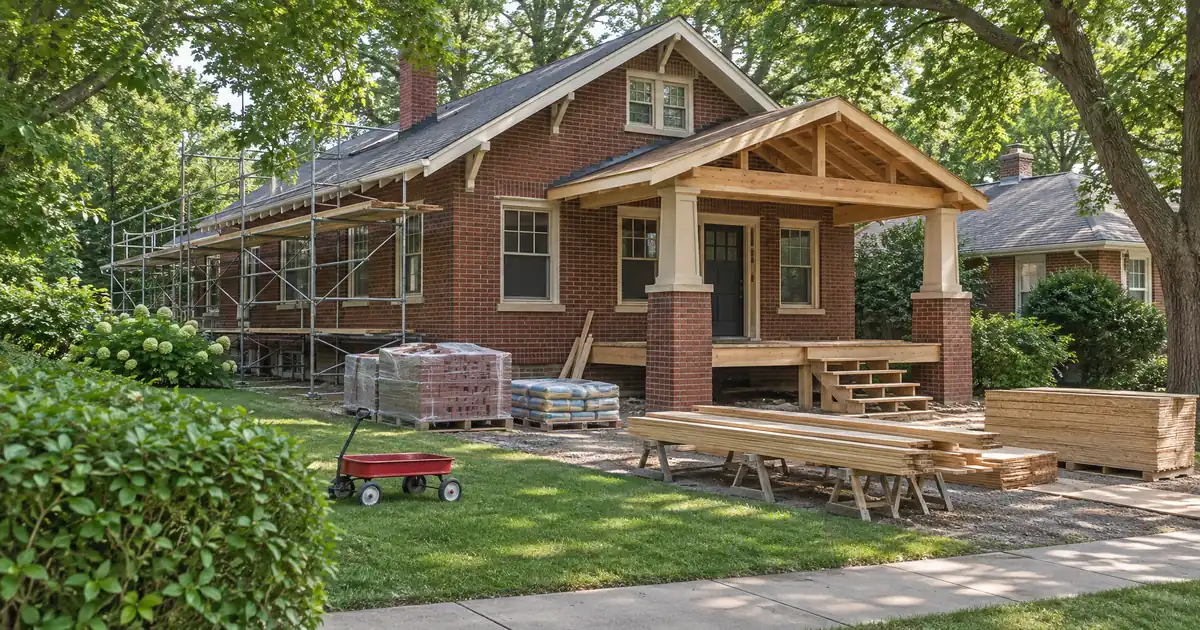
The Quick Read: Usually very little, and often nothing above the hard money payoff, because a DSCR cash-out refinance at zero title seasoning is typically sized on your cost basis rather than the appraised value, and the 75% cash-out loan-to-value cap on an investment property then applies to that lower number. DSCR means debt service coverage ratio, a test of whether the property’s rent covers its monthly obligation.
- Cost basis means what you paid plus the rehab you can document. The appraisal does not count.
- The hard money payoff can exceed what a cost-based loan allows, which means you bring cash to closing instead of taking it out.
- The extra equity from your rehab usually becomes reachable after about six months of ownership, measured from title recording.
- Delayed financing rarely rescues a hard money purchase, because the loan put a lien on the property.
- Every figure here varies by lender, property, and experience. Nothing is a commitment to lend.
Why Does Day Zero Pay So Little?
The lender has no seasoned proof of value. A property you just bought, even one you just rehabbed, has one hard number behind it: what you paid and what you spent. So the lender sizes the loan on the lower of the appraisal or that cost basis.
Across our wholesale network, a DSCR cash-out refinance on an investment property tops out around 75% loan-to-value, and about six months of ownership is the common expectation before the full appraised value is trusted. Inside that window, the 75% gets applied to cost.
Here is the part that surprises people. A finished rehab does not start the clock. A signed lease does not start it either. The clock runs from the date title recorded in your name.
Hard money usually funds a large slice of your project. Fix-and-flip programs commonly fund 85% to 93% of project cost, depending on how many projects you have completed, and every tier is capped at 75% of after-repair value. These figures vary by lender, property, and experience. A cost-based DSCR loan capped near 75% can land below that payoff. So the new loan may barely retire the bridge. Sometimes it falls short.
Key Terms Defined
Title seasoning is how long your name has been on the recorded deed. Lenders use it as a waiting period before they treat your value as proven.
Cost basis is the purchase price plus rehab costs you can prove with invoices, proof of payment, and the settlement statement.
Loan-to-value (LTV) is the loan divided by the property’s value, and the lender’s value basis sets the maximum loan. Corporate Finance Institute lays out the formula.
Payoff-only refinance is a new loan that covers only the hard money principal, accrued interest, exit fees, and closing costs. You get no cash back.
Cash-out refinance is any refinance that puts cash in your hands beyond the payoff and costs. Seasoning and lower leverage limits apply.
Delayed financing is an agency exception that lets cash buyers borrow against a recent purchase. It is not a DSCR product.
What Do the Numbers Look Like? Three Scenarios
Run the numbers on a modeled deal. Every input below is an assumption, expressed as a percent of cost basis, and not market data. Assume your hard money payoff sits at 90% of cost basis, and the DSCR cash-out cap is 75% of the lower value.
| Appraisal vs. cost | Value used | Max loan | Against 90% payoff |
|---|---|---|---|
| Below cost (90%) | 90% | 67.5% | 22.5 points short |
| Equal to cost (100%) | 100% | 75% | 15 points short |
| Above cost (130%) | 100% | 75% | 15 points short |
| Seasoned, appraisal at 130% | 130% | 97.5% | 7.5 points over |
Read the first three rows. A higher appraisal changed nothing, because the lender still used cost. The shortfall is cash you bring to closing, and it grows once you add accrued interest, exit fees, and closing costs.
The last row is the payoff for waiting. Once the appraisal counts, the same 75% cap applies to a bigger number. Yet even there, the cushion over the payoff is thin before closing costs. A deal that looked rich on paper can still return modest cash.
One more effect matters. A bigger loan means a bigger monthly obligation against the same rent, so the coverage ratio falls as cash-out rises. DSCR compares rent to principal, interest, taxes, insurance, and any association dues. It is not the same as positive cash flow, since repairs, vacancy, management, and utilities sit outside it. The DSCR program sets its minimum coverage at 1.00, and stronger ratios can open better terms, though both vary by lender, property, and experience.
Which Path Fits Your Deal?
| Path | Cash back | Value basis | Best when |
|---|---|---|---|
| Payoff-only now | None | Cost or appraisal | Bridge is maturing |
| Early cash-out | Small, often zero | Lower of cost or appraisal | You can document heavy rehab |
| Seasoned cash-out | Largest | Appraised value | Bridge term allows the wait |
A payoff-only refinance returns no cash, so seasoning matters less. Cash-out is where the waiting period bites. Payoff-only now plus cash-out later means two sets of closing costs, which is the real price of the shortcut.
For longer-term context, many investors refinance out of hard money into long-term DSCR financing once the property is stabilized, and Lendmire brokers that path through its hard money exit refinance program. The DSCR loan carries its own leverage, credit, and reserve rules, which differ from the hard money terms. Reserves commonly run around six months of the full monthly obligation, vary by lender and loan size, and step up on larger balances.
Why Doesn’t Delayed Financing Rescue a Hard Money Purchase?
Delayed financing is built for people who paid cash. A hard money loan is a lien on the property you just bought. That generally breaks the test, because the purchase was financed.
For agency contrast only, the Fannie Mae Selling Guide describes a delayed financing exception to its cash-out waiting period. It also states that all other cash-out eligibility requirements still apply, along with cash-out pricing. So even the exception waives the wait and nothing else. It limits proceeds to documented cost and eligible costs, with no credit for rehab value.
DSCR loans are not agency products. Some non-agency lenders borrow the idea loosely, and each sets its own version. Ask directly how a lender treats a purchase funded by a lien.
Two edge cases come up. If your purchase funds came from a lien on a different property, a lender may treat the purchase as cash, but that is lender-dependent. And if the purchase funds came from an entity account while the refinance is in your personal name, the mismatch can stall the file. Match the borrowing entity to the one that paid, subject to lender program eligibility.
A separate route is a new hard money loan that does the cash-out. That is a different product. Cash-out and rate-and-term refinances on the hard money side run up to about 65% of value, and the figure varies by lender, property, and experience.
What Happens If the Bridge Matures First?
Hard money terms run 6 to 18 months and are interest-only. Seasoning on the DSCR cash-out side is about six months of ownership, measured from title recording. A short bridge can mature right as that window closes, so the two clocks can collide.
Here is how to plan around it.
1. Count the months left on your bridge before you rehab, not after.
2. If the bridge matures before the seasoning window clears, a payoff-only DSCR loan is the usual stopgap. You pay off the bridge and take no cash.
3. Then cash-out later, after the seasoning clock runs, with a second set of closing costs.
4. Check the DSCR loan’s prepayment terms before you accept it. A penalty can lock you in and make the later cash-out more expensive.
5. If an extension is available, compare its cost against the cost of two closings.
The better answer depends on the rehab size, the lease timeline, and how much cash you need back. Waiting usually returns more cash, but it costs bridge interest and carries maturity risk. There is no universal winner here.
Common Mistakes at Zero Seasoning
Assuming the finished rehab resets the value. Before the seasoning window clears, the lender uses cost. Finishing the work does not change that.
Treating a hard money purchase as a cash purchase. The property secured the loan, so it usually does not qualify as cash.
Calling every payoff a cash-out. Only cash back to you beyond the payoff and costs makes it a cash-out.
Skipping the paper trail. Cost basis only counts if you can prove it. Keep invoices, canceled checks, and the settlement statement together.
Planning the whole BRRRR on month-zero proceeds. BRRRR stands for buy, rehab, rent, refinance, repeat, and the University of San Diego’s BRRRR overview describes how the refinance step is supposed to recycle your capital. At zero seasoning, the refinance often returns less than the plan assumed, and you may owe cash at closing.
Ignoring the coverage test. A larger loan pushes the DSCR down, and the property must still pass on rent. The strongest files clear both tests: enough equity and enough rental coverage. A larger down payment never erases leverage caps, credit floors, reserve rules, or property eligibility. Manufactured homes, log homes, and barndominiums are not offered in these programs.
Pre-Closing Checklist
Gather these before you ask for a quote.
- Purchase settlement statement
- Rehab invoices and proof of payment
- Hard money payoff letter, including accrued interest and exit fees
- Lease and appraisal with a rent schedule
- Clean title
- Proof the borrowing entity matches the entity that paid
Then ask each lender these questions.
- Do you size cash-out on cost or appraisal inside the seasoning window?
- Does a hard money purchase qualify for any delayed financing treatment?
- How do you count rehab costs?
- What is the prepayment structure?
- What are the credit and reserve expectations at my leverage? DSCR credit tiers run 620, 660, 680, and 700, with 620 as the floor, and the score you hold shapes the leverage available to you.
For the full picture of how these loans work, see our complete DSCR loans guide.
Frequently Asked Questions
Can I refinance a hard money loan right after I buy?
Yes, if the new loan only pays off the bridge and costs. That is a payoff-only refinance. If the new loan would return cash beyond the payoff, the cash-out rules apply, including the seasoning window.
How is the loan sized when I have no seasoning?
It is typically sized on the lower of the appraisal or your cost basis. The cash-out cap, around 75% on an investment property across most of the network, is then applied to that figure. Programs differ, so confirm with each lender.
Does finishing the rehab let me use the new appraised value?
Not inside the seasoning window. About six months from title recording is the common expectation on cash-out refinances. After that, the appraised value generally comes into play, subject to lender guidelines.
Can I use delayed financing after a hard money purchase?
Generally not, because a hard money loan leaves a lien on the property. A purchase funded by a lien on a different property may be treated as cash by some lenders, but that is lender-specific.
Is it worth doing payoff-only now and cash-out later?
It depends on the maturity of your bridge and what the second closing costs. You pay closing costs twice, and a prepayment penalty on the first DSCR loan can add to the cost. If the bridge allows the wait, waiting usually returns more cash.
Next Step
If you are buying or refinancing a rental property and want to see how the numbers work, Lendmire can help you compare DSCR loan options based on the property income, credit profile, leverage, and investor goals. Lendmire is a broker that arranges financing through select lenders in its wholesale network across 41 markets, including Washington, D.C. Qualification is subject to lender guidelines, and nothing here is a commitment to lend.
About Lendmire
Lendmire — NMLS# 2371349 — is a DSCR and non-QM mortgage brokerage with investor loan programs in 41 markets, including Washington, D.C. DSCR eligibility is commonly reviewed by the lender around property-level rent rather than personal income documentation, subject to lender guidelines, and the brokerage helps arrange financing for LLC-owned portfolios beyond conventional financed-property limits. Recognized by Scotsman Guide as a Top Mortgage Workplace in 2025 and 2026.
Get Started
Ready to find the right loan for you?
See your offer in seconds. No credit pull, no obligation.
Informational only. Not a Loan Estimate, approval, or commitment to lend. Program availability and eligibility are subject to lender guidelines, credit approval, property review, and underwriting.
References
1. Corporate Finance Institute: Loan to Value Ratio
2. Fannie Mae Selling Guide, B2-1.3-03: Cash-Out Refinance Transactions
3. University of San Diego: The BRRRR Method
This article is part of Lendmire’s hard money loan program — full qualification details, guidelines, and scenarios live on the program page.
Brandon Miller
Founder & CEO, Mortgage Loan Originator, Lendmire LLC
- Mortgage Loan Originator · NMLS# 1129696 · Verify on NMLS Consumer Access
- North Carolina Real Estate Broker · License# 343312 · Verify on NCREC
- North Carolina Insurance Producer · License# 19053198 · Property, Casualty, Life, Health · Verify on NAIC SBS
- Lendmire LLC · Firm NMLS# 2371349 · Verify firm licensure
Disclosure information. Lendmire is a state-licensed mortgage brokerage under NMLS# 2371349. Lendmire is not a depository institution, direct lender, or financial advisor — all loans referenced are placed through wholesale lender partners and are subject to each lender's underwriting standards. This article is provided for general informational purposes and is not a commitment to lend, nor does it constitute financial, legal, or tax advice. Loan programs, terms, rates, and qualification standards change without notice and depend on borrower profile, property type, and the state in which the subject property is located. Equal Housing Opportunity provider. NMLS Consumer Access: nmlsconsumeraccess.org.