
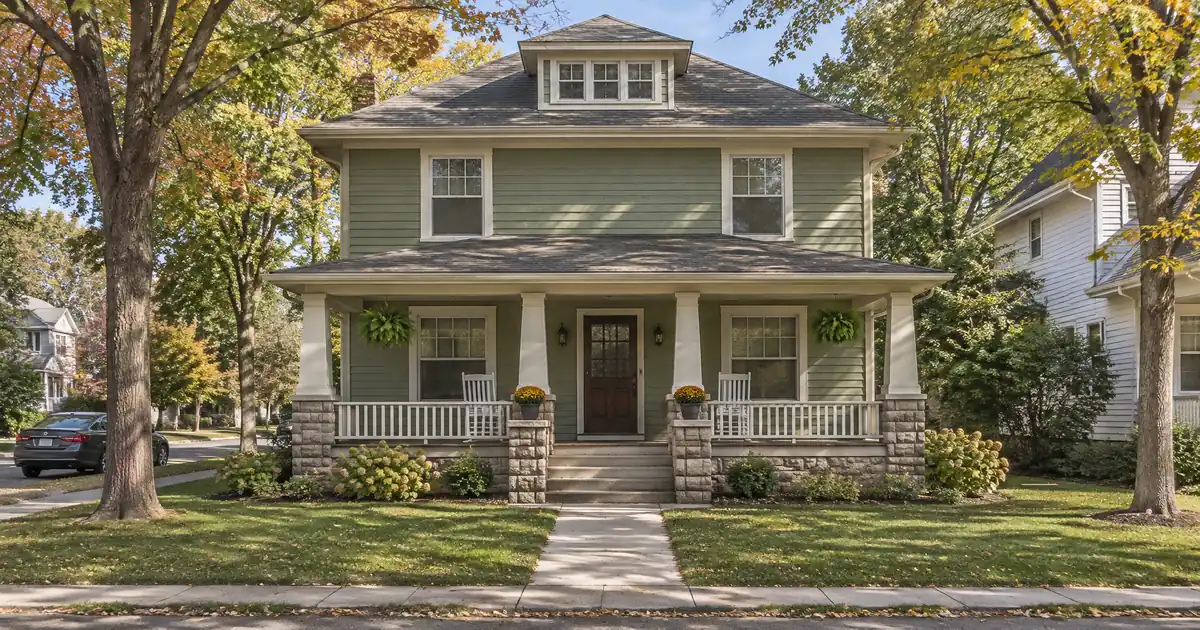
The Quick Read: Both DSCR options attach to a non-owner-occupied rental, never to the home you live in, so the real choice is between a standalone line of credit that leaves the first mortgage alone and a cash-out refinance that replaces it with a larger loan.
- Primary home: neither DSCR product is written on the home you live in. Equity there comes from a consumer HELOC or a consumer cash-out, both reviewed on your personal income.
- DSCR HELOC: a standalone second lien (or a first lien on a rental with no mortgage), qualified on the rent, subject to underwriting.
- DSCR cash-out refinance: a new first lien that pays off the old one and hands you the difference as a lump sum.
- The deciding variable: whether the existing first mortgage is worth keeping and whether you need money once or in stages.
The Primary-Home Problem
The title pairs two investor products with a primary home. That pairing does not work, and it is better to say so before comparing anything.
A DSCR loan is a business-purpose investor loan. It is designed for non-owner-occupied investment properties, and the borrower certifies that they will not live in the property. The DSCR HELOC that Lendmire’s wholesale network places follows the same line. It is a home equity line on a one-to-four-unit rental, and it is never offered on an owner-occupied home or a second home.
So what does a first-time equity borrower with a primary home actually do? Two things are possible:
1. Pull equity from the primary home with a consumer HELOC or consumer cash-out refinance. Both are reviewed on the person: credit, income, and debt-to-income. Bankrate describes the structural split. A cash-out replaces the whole mortgage balance, while a HELOC leaves the current mortgage in place.
2. Own a rental already, and pull its equity with a DSCR product. This is the real comparison here.
If you own a primary home and no rental, a DSCR cash-out has nothing to attach to. A common path is to use home equity as the down payment and reserves on the first rental, then put DSCR financing on that rental. The two loans sit on different properties and follow different rules.
The rest of this article assumes you hold a rental with equity and are choosing between the two DSCR tools. For the broader picture, see Lendmire’s complete DSCR loans guide.
Key Terms Defined
DSCR (debt service coverage ratio): the rent divided by the payment the lender uses to test the loan. A higher number means more cushion.
Second lien: a loan recorded behind the first mortgage. The first mortgage stays in place.
First lien: the loan with top priority on the property. A cash-out refinance creates a new one, and a line on a rental with no mortgage is also a first lien.
CLTV (combined loan-to-value): the first mortgage balance plus the new line, divided by the property value. It applies to second liens.
LTV (loan-to-value): a single loan divided by value. It applies to first liens.
Draw period: the stretch when you can borrow against the line and pay interest on what you have drawn.
Seasoning: how recently the property was bought or refinanced, and how long you have held title.
Side-by-Side
The DSCR HELOC column reflects the program Lendmire places through its wholesale network, subject to underwriting. The cash-out column reflects published industry norms, which vary by lender.
| Factor | DSCR HELOC | DSCR Cash-Out (industry norms) |
|---|---|---|
| Review basis | Rent covering a stress test | Rent against the new payment |
| Personal income review | None calculated | Typically not calculated |
| First mortgage | Stays in place | Paid off and replaced |
| Lien position | Second lien, or first if no mortgage | New first lien |
| How funds arrive | Revolving line with draws | Lump sum |
| Property types | 1-4 units, condos, PUDs, townhomes | Commonly 1-4 unit rentals |
| Entity vesting | LLC allowed, members guarantee | LLC commonly allowed |
| Valuation | Automated valuation or appraisal | Appraisal with rent schedule |
| Seasoning | 6 months since last note date and 6 months on title | Varies by lender |
| Reserves | None required | Often reviewed |
Entity vesting on the cash-out side depends on program guidelines, so confirm eligibility before assuming an LLC works.
When the DSCR HELOC Is the Better Fit
The DSCR HELOC is the stronger fit when you want to keep a first mortgage you like and take equity in stages. Because the line sits behind the existing loan, nothing about the first mortgage changes. That is the main reason borrowers prefer a line to a refinance, and Experian frames the difference the same way: a second mortgage versus a new mortgage, and draws versus a lump sum.
The structure. Lines start at $50,000. At least 80% of the line is drawn at closing, and the closing draw is never less than $50,000. Later draws are at least $5,000 each. The draw period is five years of interest-only payments on what is drawn, followed by a 25-year fully amortizing repayment period, with a 30-year maturity. The rate is variable.
The coverage test. Qualification runs on the rent, with no traditional personal-income documentation, W-2s, pay stubs, or personal debt-to-income calculation, subject to lender guidelines. The minimum is 1.10x. The test divides gross monthly rent by a stress payment: a fully amortizing payment on the entire credit limit at the start rate plus 2 percentage points. Taxes and insurance are not part of that payment. Rent is the lesser of the appraisal’s market rent and the lease, unless three months of receipts support a lease above market. A lease must be in place, and a two-to-four-unit property may have at most one vacant unit. How the lender treats the first-mortgage payment in a second-lien test should be confirmed on the file, because the lender’s own calculation governs.
- Second lien: up to 70% CLTV at a 720 credit score or better, on lines up to $500,000.
- First lien on a rental with no mortgage: up to 75% LTV at 740 or better and 70% LTV from 700 to 739, on lines up to $500,000.
- First-lien lines above $500,000, up to $1,000,000: 65% LTV at 720 or better. Terms vary by lender guidelines, property type, leverage, credit profile, and full file review.
A borrower who keeps a first mortgage can only take a second lien, which requires a 720 score. A first lien, with its 700 floor, exists only on a rental with no mortgage. Exact terms depend on lender and investor guidelines, credit profile, reserves, and property review.
The file. Lines to $400,000 use an automated valuation with a property inspection report, or a full interior appraisal. Larger lines take a full interior appraisal. Appraisal waivers are not accepted. No reserves and no cash to close are required. The program allows at most 5 loans or $2,500,000 per borrower. A rental bought or refinanced inside the last 6 months is not eligible (that clock runs from the last note date to the new note date), and the owner must have held title for 6 months (settlement date to note date).
Several property types fall outside this lane: rural-designated property, condotels, row homes, leaseholds, land trusts, and mixed-use. Borrowers must be U.S. citizens, permanent residents, or non-permanent residents with a Social Security number. The program is offered in 15 of Lendmire’s 16 licensed states, every licensed state except Tennessee.
Where it fits a first-time equity borrower. Picture an owner who bought a rental years ago, holds it in an LLC, and carries a first mortgage they would not want to replace. Equity is available, but the plan is to fund a down payment now and possibly a repair budget later. A line keeps both options open. The tradeoff is that the stress test applies to the entire limit whether or not it is drawn, so a larger line is a harder test. Sizing the line to the plan rather than to the maximum lowers the payment in that test and makes the coverage number easier to meet.
When the DSCR Cash-Out Refinance Is the Better Fit
A DSCR cash-out refinance is the better tool when you need one large sum, or when the existing first mortgage is a poor fit anyway. It also works when the property does not meet this particular line’s rules.
Think of a landlord with a rental outside the HELOC lane. Maybe it is a row home, or it was refinanced within the last six months. Or the landlord might want more than the program allows on a second lien. A cash-out replaces the first loan and pays out the difference in one lump. There is one payment and one lien, and no variable-rate draw period to manage.
Industry norms, which vary by lender, generally look like this. The lender reviews the lease or a market rent estimate and an appraisal with a rent schedule, using Form 1007 for a single-family property or Form 1025 for two-to-four units. It also reviews insurance and entity documents when the property is vested in an LLC. Borrower credit and reserves are usually reviewed alongside the property. Some programs go below a 1.00x ratio with compensating factors, such as lower leverage or stronger reserves. Others set the bar higher.
The coverage effect. A cash-out enlarges the loan, which lowers the coverage number. A rental that clears today can fail after a cash-out. For a first-timer, that matters more than the product label. Run the test on the new, larger loan before assuming the old coverage carries over.
Proceeds use. A business-purpose loan is reviewed differently from a standard owner-occupied mortgage. Under Regulation Z, credit to acquire, improve, or maintain a non-owner-occupied rental is treated as business purpose. Using proceeds for personal spending can change how a loan is classified, so keep the use of funds tied to the investment.
For how the cash-out approach works across investment properties, see Lendmire’s cash-out refinance on investment property page.
How the Coverage Test Differs in Practice
Both products qualify primarily on property-level rental income covering the payment, subject to lender guidelines. They do not measure the same payment.
The HELOC test uses a stress payment on the entire limit. That means a borrower who intends to draw 80% of a large line is still tested on 100%. The cash-out test uses the new loan’s payment. In both cases, the ratio uses gross rent, so it ignores vacancy, repairs, management, and capital costs. A passing ratio does not mean the property cash flows.
Two rules of thumb apply. If the property barely clears the HELOC’s 1.10x test at the line you want, a smaller line is the first lever. If a cash-out only clears with no cushion, the next dollar of insurance or tax growth erases the margin.
Mistakes First-Time Equity Borrowers Make
Treating the primary home as the collateral. The DSCR route ends the moment the borrower plans to live in the property. Occupancy is certified, and moving in can trigger the loan’s occupancy terms.
Sizing the line by equity alone. The stress test sets the ceiling, not the equity.
Ignoring the seasoning clocks. A recent purchase or refinance can disqualify a rental from the line even with ample equity.
Forgetting the combined leverage. On a second lien, the existing first mortgage counts toward the 70% CLTV ceiling, so a larger first balance leaves a smaller line.
Skipping the sequencing option. A line now and a cash-out later is possible, though the later refinance would pay off the line along with the first mortgage. Think through both steps before starting the first.
The same two options on a condo are covered in Lendmire’s comparison of a DSCR HELOC and a cash-out refinance on a condo.
The Balanced Verdict
The honest answer depends on three things: the first mortgage, the cash need, and the property.
- Choose the DSCR HELOC if the existing first mortgage is worth keeping, the property fits the program, and you want funds in stages. The tradeoff is a variable rate and a stress test on the whole line.
- Choose the DSCR cash-out if you need a single large sum, want one lien, or the property falls outside the line’s rules. The tradeoff is replacing the first mortgage and a lower coverage number on a larger loan.
- Choose neither if you own no rental. The primary home calls for a consumer product, and DSCR financing starts when the rental does.
Both tools reward the same preparation: a lease in place, a clean credit profile, and an honest coverage number. If you are considering a home equity line on a rental property and want to see how the numbers work, Lendmire can help you compare DSCR HELOC options based on the property, the rent, the equity available, credit profile, combined leverage, and your goals. Call 828-256-2183 to start the conversation.
Frequently Asked Questions
Can I use a DSCR HELOC or DSCR cash-out on my primary home?
No. Both are investor products for non-owner-occupied rentals, and the DSCR HELOC is never offered on an owner-occupied home or a second home. Equity in your primary residence comes from a consumer HELOC or cash-out refinance, which look at your personal income.
How long do I have to own a rental before a DSCR HELOC is available?
Two six-month clocks apply: the line is not available on a rental bought or refinanced in the last 6 months (last note date to new note date), and title must have been held for 6 months (settlement date to note date). A DSCR cash-out refinance has its own seasoning rules, which vary by lender.
Can my LLC hold the property for either option?
Often, yes. The DSCR HELOC allows vesting in the owner’s LLC on investment property, with the members signing as guarantors, subject to underwriting. Cash-out programs commonly allow it too, though eligibility depends on the lender’s program terms.
Which option keeps my current first mortgage?
The DSCR HELOC does. It sits behind the first mortgage as a standalone second lien, so the existing loan stays as it is. A cash-out refinance pays the first mortgage off and replaces it.
Does a higher rent guarantee I qualify?
No. Credit tier, leverage, property type, and valuation all feed the decision, and every file is underwritten individually.
About Lendmire
Lendmire is a mortgage brokerage (NMLS# 2371349) arranging DSCR home equity lines of credit — standalone first or second liens on non-owner-occupied one-to-four-unit rentals, qualified on rent — through a wholesale lending network in 15 of its 16 licensed states (every licensed state except Tennessee). Eligibility is determined by the lender on each file. Scotsman Guide named Lendmire a Top Mortgage Workplace in both 2025 and 2026.
Get Started
Ready to find the right loan for you?
See your offer in seconds. No credit pull, no obligation.
Informational only. Not a Loan Estimate, approval, or commitment to lend. Program availability and eligibility are subject to lender guidelines, credit approval, property review, and underwriting.
References
1. Bankrate: Home equity loan, HELOC or cash-out refi
2. Experian: Home equity loan vs. HELOC vs. cash-out refinance
3. CFPB: Regulation Z, 12 CFR 1026.3
This article is part of Lendmire’s DSCR HELOC program — full qualification details, guidelines, and scenarios live on the program page.
Related reading: DSCR HELOC Requirements to Unlock Equity From a Short-Term Rental · 5 DSCR HELOC Options When Exiting a Hard Money Loan With Rental Equity · Best DSCR HELOC Program to Borrow a Smaller Amount Against Rental Property Equity
Brandon Miller
Founder & CEO, Mortgage Loan Originator, Lendmire LLC
- Mortgage Loan Originator · NMLS# 1129696 · Verify on NMLS Consumer Access
- North Carolina Real Estate Broker · License# 343312 · Verify on NCREC
- North Carolina Insurance Producer · License# 19053198 · Property, Casualty, Life, Health · Verify on NAIC SBS
- Lendmire LLC · Firm NMLS# 2371349 · Verify firm licensure
Disclosure information. Lendmire is a state-licensed mortgage brokerage under NMLS# 2371349. Lendmire is not a depository institution, direct lender, or financial advisor — all loans referenced are placed through wholesale lender partners and are subject to each lender's underwriting standards. This article is provided for general informational purposes and is not a commitment to lend, nor does it constitute financial, legal, or tax advice. Loan programs, terms, rates, and qualification standards change without notice and depend on borrower profile, property type, and the state in which the subject property is located. Equal Housing Opportunity provider. NMLS Consumer Access: nmlsconsumeraccess.org.