
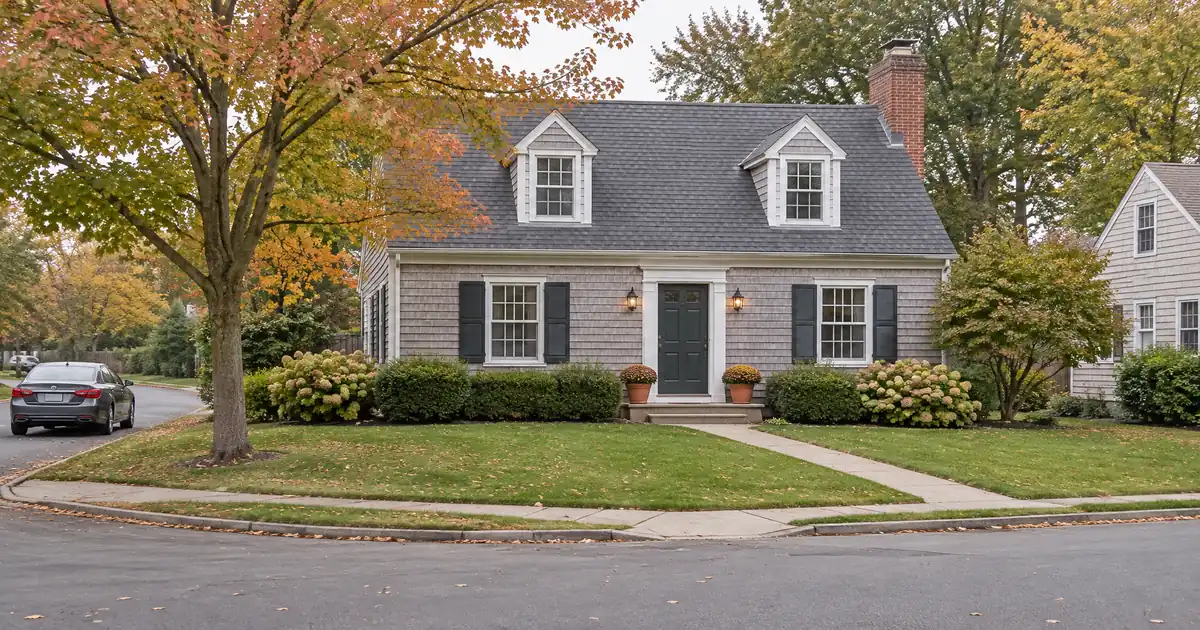
The Quick Read: Not directly, because retiring does not cancel or call your line, but it can weaken the line in two ways: the lender may freeze or shrink the unused part once your documented income drops, and the draw period still ends on the date in your agreement, which starts a higher repayment phase. The balance you already borrowed stays due either way.
- Retirement alone is not a default, and your contract controls what happens next.
- A freeze or limit cut hits the unused portion, and it can happen while your payments are current.
- Interest-only payments end when the draw ends, so the monthly obligation jumps once repayment begins.
- Your best planning window is before your last paycheck, while employment income is still easy to document.
Does Retiring Cancel or Call Your HELOC?
No. Stopping work is not an event of default in standard line agreements, so the lender has no automatic right to demand payoff because you retired. The contract spells out what lets a lender end the line early, and a quiet retirement is not on that list.
How large a line the equity supports.
An equity line is sized by combined loan-to-value, occupancy, and credit — not by rental coverage. Switch the occupancy or the credit band and the ceiling moves with it.
Investment-property lines require a 700 minimum credit score; second-home lines start at a 640 minimum and primary-residence lines at 600, and the combined-LTV ceiling steps down as the credit band drops on primary-residence and second-home lines and holds on investment-property lines; the line cap steps down on primary-residence lines and holds at every tier on investment-property and second-home lines.
A debt-to-income ratio above 45% requires 680+ credit. Profiles under 640 are limited to single-family homes. At least 75% of the approved line is drawn at closing. Ceilings, floors, and caps update from Lendmire’s centralized guideline source.
Line estimate
Illustrative estimate only — not a quote, Loan Estimate, approval, or commitment to lend. The rate is an editable assumption; equity-line pricing is variable through both the draw and repayment periods and never converts to fixed. Occupancy and credit drive the ceiling together: an investment property tops out at 70% combined LTV (minimum credit 700, line cap $500,000); a second home tops out at 90% combined LTV (minimum credit 640, line cap $500,000), with the ceiling stepping down as the credit band drops (the cap holds at every tier); a primary residence tops out at 90% combined LTV (minimum credit 600), and its $750,000 maximum line is available only at 75% combined LTV or below with a 700-or-better credit profile (720 on the longer-runway program) and a full appraisal. Lines above $500,000 require a full appraisal. Credit, debt-to-income, property type, and full underwriting review all affect the final line.
A HELOC (home equity line of credit) is a revolving line secured by a property you own. On an investment property, the line works the same way as on a primary home, with tighter limits.
Across Lendmire’s wholesale network, an investment property line tops out at 70% CLTV (combined loan-to-value, meaning your first mortgage plus the line, divided by the property’s value). The maximum line is $500,000 and the minimum credit score is 700, all subject to lender guidelines and full file review. Primary homes can reach higher leverage, but that does not carry over to a rental.
Those numbers describe a new line. An existing line follows the terms you signed, so your first job is to read that agreement.
The Draw Clock Keeps Running
The draw period is the stretch when you can borrow, and it ends on a fixed date whether or not you retire. When it ends, the repayment period begins, and you can no longer pull funds.
Most plans run on that two-phase structure. The federal consumer-finance regulator’s HELOC brochure explains that some plans allow interest-only payments during the draw and that payments can change even if you do not borrow more. It also warns that payments often rise significantly in repayment, and that some plans require the full balance as a lump sum at the end.
On an investment property, the network’s lines run one structure. You get a 5-year interest-only draw, followed by a 25-year fully amortizing repayment, meaning each payment includes principal. The line is variable-priced for its whole life and does not convert to fixed. At least 75% of a new line is drawn at closing, so many borrowers use it more like a loan than a standby reserve.
Picture an investor who drew most of a line during the interest-only window. Say rent covered that interest-only payment at 1.5x. That figure is modeled, not a market fact. Once principal joins the payment, the cushion can shrink a lot, even though the rent never changed.
Retirement makes this harder because the repayment jump can arrive just as your paycheck disappears. That is why the date matters more than the retirement.
Key Terms Defined
Draw period: the window when you can borrow against the line and repay as you like.
Repayment period: the phase after the draw, when you can no longer borrow and must pay down the balance on a schedule.
Interest-only payment: a payment that covers only interest, so the principal balance does not shrink.
Amortizing payment: a payment that includes both interest and principal, so the balance falls over time.
Balloon: a structure that requires the whole remaining balance at the end of the term or draw.
CLTV: combined loan-to-value, the total of all loans against the property divided by its value.
Freeze: a lender action that blocks new draws on the unused part of a line, without erasing what you already owe.
When Can the Lender Freeze or Shrink Your Line?
A lender can freeze or reduce your line only in specific situations, and two of them matter to a retiring investor. Under CFPB’s Regulation Z rule on home equity plans, the lender may stop further advances or lower the limit if the property’s value falls significantly below its appraised value for the plan. It may also act if it reasonably believes you cannot meet repayment obligations because of a material change in your financial circumstances.
Those are separate triggers. A retiree can be frozen on a value drop even with strong rental income, and a retiree can be frozen on an income drop even if the value has climbed.
The agency’s official commentary lists a significant decrease in the consumer’s income as an example of a material change. Dropping from a salary to retirement income can fit that description, depending on how the lender weighs it. The rule does not define a “significant” value decline in dollar terms, so contracts and lender policies fill in the gap.
The protections that come with the rule are worth knowing:
- The lender must send written notice if it freezes or cuts the line.
- The freeze lasts only while the triggering circumstance exists, and the lender must reinstate the line if you ask and no other ground remains.
- The lender cannot cut the limit below your outstanding balance if doing so would force a higher payment.
- Outside the listed circumstances, a lender cannot suspend or reduce the line unless it could also terminate and accelerate the loan.
A freeze does not forgive anything. Your existing balance remains due on the same schedule.
A freeze also does not require a missed payment. Many borrowers assume that a clean payment history makes the line untouchable, but it does not protect you from a value-based or income-based action. Not using the line does not protect it either, because the lender’s risk review drives the decision, not your usage.
One more point on calling the line. Acceleration, meaning a demand for full payoff, is limited to a short list of grounds, such as fraud or failure to pay. Retirement is not one of them.
What Happens When the Draw Period Ends?
Your access stops, and your payment changes to cover principal as well as interest. If your plan is a balloon structure, the full remaining balance comes due instead. Check your agreement to see which one you have.
Bank regulators have flagged this transition as a risk. A law-firm summary of that guidance says lenders are expected to contact borrowers six to nine months before the draw ends. It also says the guidance encourages refinance, workout and modification options for higher-risk borrowers.
That is supervisory guidance, not a borrower right. Treat any outreach as a courtesy, and do not wait for it.
Can You Get a New Line After You Retire?
Yes, in some cases, but the file looks different. A new line is sized on documented income, credit and debt-to-income ratio (DTI, your monthly debts divided by your monthly income). Retirement income is documented with Social Security award letters, pension letters and account-withdrawal statements.
On the network’s investment lines, the maximum DTI is 50%. The line is qualified on the interest-only payment calculated on the maximum draw, so a large limit makes the test harder even if you plan to draw little.
Credit above 700 does not buy more leverage on an investment line. The minimum credit score is 700, and an investment line tops out at 70% CLTV (combined loan-to-value), so a higher score helps eligibility but not the cap.
Title is the structural catch. These lines require the individual borrower or a revocable living trust to hold title. An LLC, a corporation, a partnership, or an irrevocable or land trust cannot hold title, so a rental already deeded to an LLC needs a different route. The network’s HELOC lines are also available only in the 16 states where Lendmire offers full-service lending, which is narrower than its DSCR footprint.
If your income recently dropped, Lendmire’s piece How to Get an Investment Property HELOC When Your Income Is Lower Than Last Year covers that scenario in more depth.
Your Exit Options Compared
You have four basic paths, and the right one depends on how your rents, equity and timeline line up.
| Option | How it works | Main risk |
|---|---|---|
| Pay down early | Cut principal during the draw | Ties up cash |
| Refinance into a fixed-term loan | Replace the line before the draw ends | Needs qualifying income |
| Rent-qualified cash-out (DSCR) | Property rent is tested against its payment | Leverage and reserve rules |
| Sell or pay off the property | Retire the debt with sale proceeds | Gives up the asset |
Paying down principal during the draw softens the later jump, since a smaller balance means a smaller amortizing payment. It works best when you have idle cash and a long runway.
A rent-qualified loan is the path most relevant to a retiring investor, because it tests the rental instead of your paycheck. This is a DSCR loan, built for investment properties, and it qualifies primarily on property-level rental income covering the payment, subject to lender guidelines. DSCR (debt service coverage ratio) is monthly rent divided by the monthly PITIA, which is principal, interest, taxes, insurance and any HOA dues.
A few typical ranges from select lenders in the network:
- A cash-out refinance on a standard rental tops out around 75% LTV, with about 6 months of seasoning as the common expectation.
- Coverage of 1.00 is where select programs start, and stronger ratios open better pricing and leverage. A separate select-lender path takes coverage below 1.00, with leverage and terms adjusted.
- Credit of about 660 is what most programs want, a 620 floor exists in parts of the network, and 700 or higher unlocks the strongest tiers.
- Reserves vary by lender, leverage and loan size, and are commonly around 6 months of PITIA.
Clearing 1.00 does not mean the property produces positive cash flow. The calculation compares rent to PITIA only, so repairs, vacancy, management, utilities and capital expenses sit outside it.
DSCR loans can close in an LLC’s name, subject to lender program eligibility, which a HELOC cannot do. That is the sharpest structural difference between the two. For more detail, see the complete DSCR loans guide.
A cash-out refinance pulls equity out of a property you already own. Using that equity to fund the next purchase is a different goal, covered in Lendmire’s piece on borrowing against rental equity for the next purchase.
Which Path Fits Your Situation?
The right choice usually follows from how your numbers look today.
If your rents cover the payment with room to spare, a rent-qualified refinance deserves a serious look, since the test is on the property. This works when the rental is held in your name or an eligible entity and the equity is real.
If coverage is thin, the amortizing payment is the problem. Paying down principal now, or a select-lender sub-1.00 path with adjusted leverage and terms, may be worth running. Adjusted terms can mean less leverage or different pricing, so compare them against the cost of waiting.
If you want out of landlording, selling may be the cleanest answer. Run the sale math against the loan balance first, since the existing balance stays due regardless.
Combining paths is also possible: pay down part of the balance, then refinance the remainder while the rents are strong. That depends on your equity and your reserves, and it deserves a real file review.
Your Next 12 Months, Step by Step
Start with the agreement and work forward from there.
1. About 12 months before retirement: Find the draw end date, the freeze and reduction language, and whether the plan is amortizing or balloon.
2. 9 to 6 months out: Pull your current balance, compare it to the line limit, and check how far the property’s value has moved since the original appraisal.
3. 6 to 3 months out: If you plan to refinance or open a new line, apply while your employment income is still documented. This is practitioner advice rather than a legal rule, but lenders generally find a paycheck easier to document than a new retirement profile.
4. Final months: Gather your Social Security and pension letters and your account statements so your post-retirement income is documented.
5. After you retire: Keep payments current, watch your mail for any written notice from the lender, and ask for reinstatement if a freeze occurs and the trigger has passed.
Questions to Ask Your Lender
- When exactly does the draw period end, and is repayment amortizing or a balloon?
- What language lets you freeze or reduce the line, and how do you monitor value?
- Will you notify me in writing before any change, and how do I request reinstatement?
- Is there a way to extend, renew or restructure before the draw ends?
- Can I convert part of the balance to a fixed-term loan?
Frequently Asked Questions
Will my bank call the HELOC when I retire?
No, a retirement by itself is not a ground for demanding payoff. Calling the loan is limited to a short list of grounds, such as fraud or missed payments. A freeze or limit cut is a narrower action that can happen when income drops materially, but it affects the unused line, not your existing balance.
Does a freeze wipe out or forgive what I owe?
No. The balance you already borrowed stays due on its normal schedule. A freeze only blocks new draws, and it should end once the triggering circumstance no longer exists.
Can I keep borrowing after the draw period ends?
No. Once the draw ends, the line moves to repayment and you cannot pull new funds. To keep borrowing, you would need to extend the line if your lender allows it, or apply for a new one that you qualify for.
Does interest-only mean the debt is easy to carry?
Not for long. Interest-only draws do not reduce principal, so the balance is the same when repayment begins. Payments often rise noticeably when principal is added, so plan for that date.
Can I keep my HELOC if the rental sits in an LLC?
It depends on the lender, but the network’s investment lines require title in an individual’s name or a revocable living trust. A rental already deeded to an LLC would need a vesting change or a different structure, such as a rent-qualified DSCR cash-out, subject to lender program eligibility.
Plan Before the Last Paycheck
If you are considering a home equity line and want to see how the numbers work, Lendmire can help you compare HELOC options based on the property, the equity available, credit profile, combined leverage, and your goals. Lendmire is a broker that arranges financing through select lenders in its wholesale network, so every figure here is subject to lender guidelines and is not a commitment to lend. The site’s calculator gives an illustrative estimate only. DSCR financing is available in 40 states plus D.C.
About Lendmire
Lendmire is a mortgage brokerage (NMLS# 2371349) arranging home equity lines of credit — primary-residence, second-home and investment-property lines — through a wholesale lending network in its 16 full-service states. Eligibility is determined by the lender on each file. Scotsman Guide named Lendmire a Top Mortgage Workplace in both 2025 and 2026.
Get Started
Ready to find the right loan for you?
See your offer in seconds. No credit pull, no obligation.
Informational only. Not a Loan Estimate, approval, or commitment to lend. Program availability and eligibility are subject to lender guidelines, credit approval, property review, and underwriting.
References
2. CFPB – Regulation Z § 1026.40, HELOC rules
3. Chapman and Cutler – Interagency guidance on HELOCs near end of draw
This article is part of Lendmire’s investment property HELOC program — full qualification details, guidelines, and scenarios live on the program page.
Related reading: Where to Get a HELOC to Buy a Home Before Selling the Current One · What Is a DSCR Cash-Out Refinance on a Fix-and-Flip Property You Plan to Rent Out? · DSCR Cash-Out Refinance With an Interest-Only Period on a Rental Property: The 2026 Guide
Brandon Miller
Founder & CEO, Mortgage Loan Originator, Lendmire LLC
- Mortgage Loan Originator · NMLS# 1129696 · Verify on NMLS Consumer Access
- North Carolina Real Estate Broker · License# 343312 · Verify on NCREC
- North Carolina Insurance Producer · License# 19053198 · Property, Casualty, Life, Health · Verify on NAIC SBS
- Lendmire LLC · Firm NMLS# 2371349 · Verify firm licensure
Required disclosures. Lendmire (NMLS# 2371349) operates as a licensed mortgage broker, not a direct lender or depository. The discussion in this article is general in nature and should not be relied upon as financial, legal, or tax advice — every investment scenario is unique and should be reviewed by a qualified professional. Any loan inquiry is subject to lender underwriting, and this article is not a commitment to lend or a guarantee of approval. Mortgage rates, loan terms, and program guidelines vary by borrower, property, and state, and may change without notice. Equal Housing Opportunity. Verify licensure at NMLS Consumer Access.