
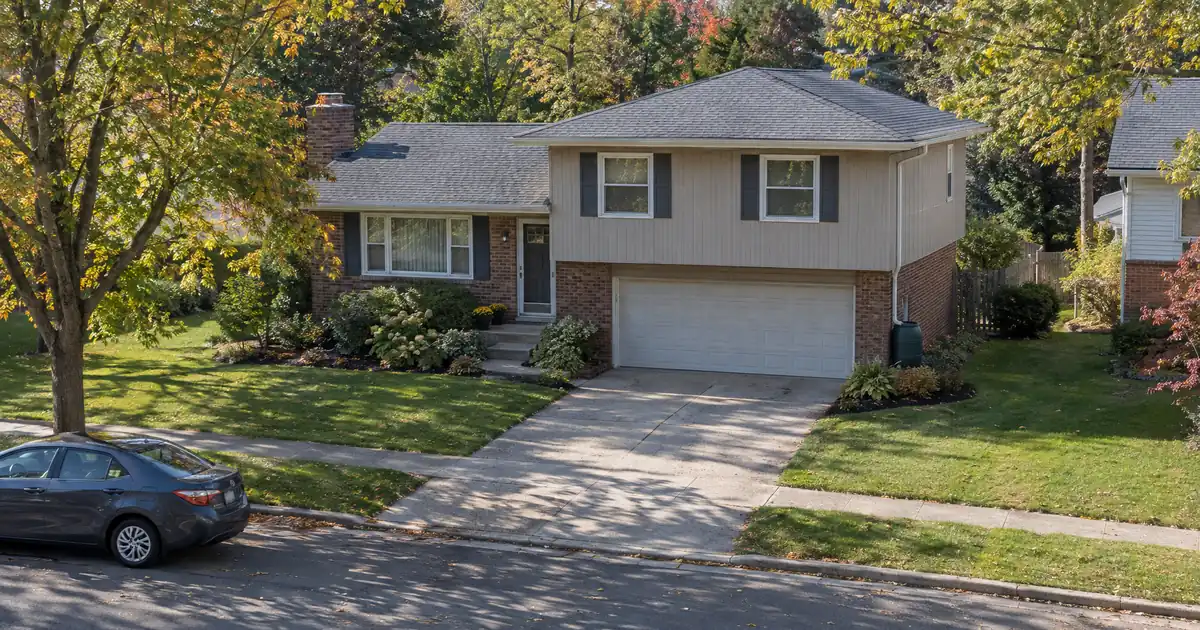
The Quick Read: While probate is open, an heir generally cannot get a home equity line on an inherited rental, because the estate owns the house and the heir holds only a claim to it. Title, not rent or credit, decides when borrowing opens up.
- The estate owns the house during probate. Lenders lend to the legal owner, so an heir has nothing to pledge.
- A named executor cannot sign until the court issues letters, and even then signs for the estate only.
- On this network, an investment-property line is reviewed on the borrower’s credit and debt-to-income ratio, not on rent. The ceiling is 70% CLTV, and 700 is the minimum credit score.
- Title must sit with the individual or a revocable living trust. LLC titling is not allowed.
- The usual rent-qualified route after title records is a DSCR cash-out refinance, not a HELOC.
Why Does Open Probate Block the Line?
An investment-property line needs a borrower who can put a lien on the house. During probate, the heir can’t. The estate holds title, and nothing the will says changes that until a deed records.
How large a line the equity supports.
An equity line is sized by combined loan-to-value, occupancy, and credit — not by rental coverage. Switch the occupancy or the credit band and the ceiling moves with it.
Investment-property lines require a 700 minimum credit score; second-home lines start at a 640 minimum and primary-residence lines at 600, and the combined-LTV ceiling steps down as the credit band drops on primary-residence and second-home lines and holds on investment-property lines; the line cap steps down on primary-residence lines and holds at every tier on investment-property and second-home lines.
A debt-to-income ratio above 45% requires 680+ credit. Profiles under 640 are limited to single-family homes. At least 75% of the approved line is drawn at closing. Ceilings, floors, and caps update from Lendmire’s centralized guideline source.
Line estimate
Illustrative estimate only — not a quote, Loan Estimate, approval, or commitment to lend. The rate is an editable assumption; equity-line pricing is variable through both the draw and repayment periods and never converts to fixed. Occupancy and credit drive the ceiling together: an investment property tops out at 70% combined LTV (minimum credit 700, line cap $500,000); a second home tops out at 90% combined LTV (minimum credit 640, line cap $500,000), with the ceiling stepping down as the credit band drops (the cap holds at every tier); a primary residence tops out at 90% combined LTV (minimum credit 600), and its $750,000 maximum line is available only at 75% combined LTV or below with a 700-or-better credit profile (720 on the longer-runway program) and a full appraisal. Lines above $500,000 require a full appraisal. Credit, debt-to-income, property type, and full underwriting review all affect the final line.
Naming someone executor in a will does not give that person authority. Authority starts when the court issues letters testamentary, or letters of administration when there is no will. LegalZoom describes letters as court-issued proof of that authority, and Mainor Wirth notes an executor cannot act before they issue. Title companies want a certified copy before they will handle real property held in the decedent’s sole name, per Afterkin.
Who Can Sign at Each Stage?
The answer changes as the estate moves forward. Here is the stage-by-stage view.
| Stage | Who holds title | Who can sign | Realistic move |
|---|---|---|---|
| Probate open, no letters | Estate | No one | Gather documents |
| Letters issued | Estate | Personal representative, for the estate | Estate-level loan, often with court approval |
| Deed recorded to heir | Heir | Heir | Apply for a line or a cash-out |
| Funded trust or TOD deed | Trust or heir | Trustee or heir, subject to title review | May skip the wait |
A personal representative who wants to borrow against estate real estate usually needs probate-court permission, and the loan generally has to benefit the estate. Court-approval rules vary by state. In California, for example, an executor with independent administration authority may have broader power to borrow and mortgage estate property, per a law-firm overview. Treat that as illustrative only, and ask the estate attorney what applies.
What Do Estate Loans Look Like?
An estate loan is a different product from a home equity line. It is a short-term loan to the estate, signed by the personal representative after a court order, and repaid from estate assets. It is not rent-qualified, and it is not a revolving line for the heir.
A probate cash advance is different again. It sells part of the inheritance. It is not a loan at all.
How Does Underwriting Treat an Investment-Property Line?
Once the heir is on title, the file is underwritten like any investment-property line. NerdWallet says these lines are possible but not offered by every lender. It describes a smaller lender pool, lower limits than on a primary home, and strict requirements, plus a typical 10-year draw period that is usually interest-only. That 10-year draw is the broader market’s pattern, not this network’s, and the network figures below are the ones that apply here.
Across Lendmire’s wholesale network, the investment line works this way:
1. Credit. The minimum is 700, and it is a hard floor with no tier beneath it. A 720 score reaches the same 70% CLTV, so a higher score adds no leverage.
2. Leverage and size. The ceiling on an investment property is 70% CLTV, with a maximum line of $500,000.
3. Income test. Debt-to-income tops out at 50%, and the 700 minimum means the full limit is available. For qualifying, the payment is calculated as interest-only on the maximum draw, which is a stricter basis than the amount actually drawn at closing. Rent does not qualify the line.
4. Valuation. Because the line caps at $500,000, it ordinarily runs on an automated valuation with no traditional appraisal. A borrower may still request a full appraisal.
5. Structure. The investment line uses a 5-year interest-only draw followed by a 25-year repayment period. At least 75% of the line is drawn at closing, and pricing floats rather than converting to fixed.
6. Title. The borrower must be an individual or an inter vivos revocable living trust.
Line size runs from $25,000 up to the $500,000 investment maximum. Availability is limited to Lendmire’s 16 full-service states, which is narrower than the 41-market DSCR footprint. A borrower is limited to three lines, and owning more than 15 financed properties is disqualifying. Everything here is subject to lender guidelines and full file review, and none of it is a commitment to lend.
Eligible property types include single-family, 2-4 units, PUDs, townhomes, and condos, including non-warrantable condos. Manufactured homes, co-ops, condotels, and log homes are not eligible.
What Happens to the Decedent’s Existing Mortgage?
The first mortgage or home equity line stays on the house through probate. It doesn’t vanish, and payments need to continue.
Federal law limits a lender’s ability to enforce a due-on-sale clause on certain transfers to a relative after the borrower’s death, under 12 U.S.C. §1701j-3. That protects the existing loan. It does not give the heir a new line of credit. An heir who documents their status, usually with a death certificate or a probate order, can also deal with the servicer as a successor in interest.
The existing lien also feeds the combined leverage figure. A 70% CLTV ceiling counts the first mortgage and the new line together, so a house with a large balance leaves little room.
Where the Rule Breaks
The wait is not universal. These are the named edge cases.
Non-probate transfers. A funded revocable trust, a survivorship title, or a transfer-on-death deed can pass outside probate, subject to title review. A successor trustee or surviving owner may already hold authority to sign.
Multiple heirs. One heir can’t encumber a shared house alone. Every titled owner generally signs. A holdout can force a buyout, a sale, or a court partition action. One heir buying out the others and then borrowing is one way through.
An heir living in the house. A sibling in residence, or an empty house with no lease, breaks a rental-property file. The line has to match the actual use.
LLC titling. The investment line does not allow LLC title. An inherited house moved into an LLC needs a vesting change, or a DSCR cash-out instead.
Multi-state estates. Real property in more than one state can require ancillary probate, with its own letters in each state, per Legal Writing Experts.
HELOC, Cash-Out, Estate Loan, or Sale?
| Option | Reviewed on | Who signs | Fit |
|---|---|---|---|
| Investment HELOC | Borrower credit and DTI | Titled heir | Borrower with 700+ credit and low DTI |
| DSCR cash-out refinance | Rent covering the payment | Titled heir or entity | Rent-driven investors scaling |
| Estate loan | Estate assets, court order | Personal representative | Estate needs cash |
| Sale | Not applicable | Estate or heir | Exit |
A DSCR cash-out refinance is the usual rent-qualified route after title records. It qualifies primarily on property-level rental income covering the payment, subject to lender guidelines. Leverage limits and seasoning expectations vary by lender, so confirm them for the specific file. Investors on BiggerPockets discuss this as a way to scale on an inherited paid-off rental. Treat that as peer commentary. Lendmire’s complete DSCR loans guide covers the cash-out product in depth.
Clearing 1.00 on a DSCR file is not the same as positive cash flow. Repairs, vacancy, and management sit outside the calculation.
A Walk-Through: From Probate to Borrowing
Picture an heir who inherits a rented single-family house with a small first mortgage.
1. The court issues letters. The personal representative keeps the lease in place and the mortgage current.
2. The estate closes and an executor’s deed records to the heir.
3. The heir gathers the lease, rent roll, payoff figure, and recorded deed.
4. If the heir wants a line, credit and DTI come first. If the goal is cash against rent, the deal works to a DSCR cash-out instead.
The deed date, not the lease, sets the earliest date for borrowing.
What to Do While Probate Is Open
Use the wait to prepare.
- Order certified copies of the letters.
- Document the lease and rent roll.
- Collect payoff figures on every existing lien.
- Confirm whether title moves by deed, trust, or TOD.
- Ask for a date-of-death valuation. Inherited property generally takes a basis equal to fair market value at the date of death, per IRS Publication 551. Tax treatment varies; consult a qualified professional.
Complex estates can run long, especially with real estate or several heirs. Plan around the deed date, not the calendar.
Key Terms Defined
Letters testamentary: The court document that proves an executor can act for the estate.
Letters of administration: The same proof when there is no will and the court appoints someone.
CLTV: Combined loan-to-value, which counts the first mortgage and the new line together against the home’s value.
Successor in interest: An heir confirmed by the servicer as able to deal with the existing mortgage.
Transfer-on-death deed: A recorded deed that passes the house to a named person without probate.
Ancillary probate: A second probate proceeding in another state where the decedent owned real property.
Frequently Asked Questions
Can I get a HELOC on an inherited rental before probate closes?
Generally no. The estate holds title, and lenders lend to the legal owner. Some sites say you can apply early, but the title logic and most sources point the other way.
Can the executor borrow against the house?
Only for the estate, and usually with probate-court permission. Letters give authority over estate property. That loan is an estate loan, not a HELOC for the heir.
Does rent help me qualify for an investment-property line?
No. On this network the line is reviewed on credit and debt-to-income. Rent matters on a DSCR cash-out, which qualifies primarily on property-level rental income covering the payment, subject to lender guidelines.
What if there are several heirs?
Every titled owner generally signs. One heir can’t borrow against a shared house alone. A buyout, a sale, or a partition action can break a holdout.
Can I put the inherited house in an LLC first?
After probate closes, yes for a DSCR cash-out, subject to program terms. The investment line itself needs an individual or revocable living trust on title.
Does a trust or TOD deed skip the wait?
It can, subject to title review. A funded revocable trust, survivorship title, or TOD deed can pass outside probate.
If you are considering a home equity line and want to see how the numbers work, Lendmire can help you compare HELOC options based on the property, the equity available, credit profile, combined leverage, and your goals. Reach the team at 828-256-2183 or through the quote request page.
For current guidelines and terms, see Lendmire’s investment-property HELOC programs page.
About Lendmire
Lendmire (NMLS# 2371349) is a mortgage broker. Home equity lines of credit, on a primary residence, a second home or an investment property, are arranged through wholesale lenders in Lendmire’s 16 full-service states, and every line is underwritten by the lender under its program guidelines. Scotsman Guide named Lendmire a Top Mortgage Workplace in both 2025 and 2026.
Get Started
Ready to find the right loan for you?
See your offer in seconds. No credit pull, no obligation.
Informational only. Not a Loan Estimate, approval, or commitment to lend. Program availability and eligibility are subject to lender guidelines, credit approval, property review, and underwriting.
References
1. LegalZoom – letters testamentary
2. Mainor Wirth – letters of testamentary
3. Afterkin – letters testamentary
4. Living Trust Attorneys – California letters
5. NerdWallet – HELOC on an investment property
6. 12 U.S.C. §1701j-3 (Garn–St Germain)
7. Legal Writing Experts – letters testamentary
8. BiggerPockets forum – paid-off inherited rental
This article is part of Lendmire’s investment property HELOC program — full qualification details, guidelines, and scenarios live on the program page.
Related reading: Investment Property HELOC Checklist Without a Full Appraisal · DSCR HELOC Requirements for a Lender on a Primary or Investment Home · How to Qualify for an Investment Property HELOC on a Home You Just Bought and Closed On
Brandon Miller
Founder & CEO, Mortgage Loan Originator, Lendmire LLC
- Mortgage Loan Originator · NMLS# 1129696 · Verify on NMLS Consumer Access
- North Carolina Real Estate Broker · License# 343312 · Verify on NCREC
- North Carolina Insurance Producer · License# 19053198 · Property, Casualty, Life, Health · Verify on NAIC SBS
- Lendmire LLC · Firm NMLS# 2371349 · Verify firm licensure
Compliance and disclosures. Lendmire (NMLS# 2371349) is a licensed mortgage broker and is not a direct lender, depository institution, financial advisor, or tax professional. Content in this article is general market analysis and educational information — not financial, legal, or tax advice for any specific situation. Lendmire does not guarantee loan approval; every transaction is subject to underwriting by the funding lender. Mortgage pricing and loan program guidelines are subject to change at any time without notice and vary by borrower characteristics, property type, and state regulations. Lendmire complies with Equal Housing Opportunity. Licensure verification: NMLS Consumer Access.