
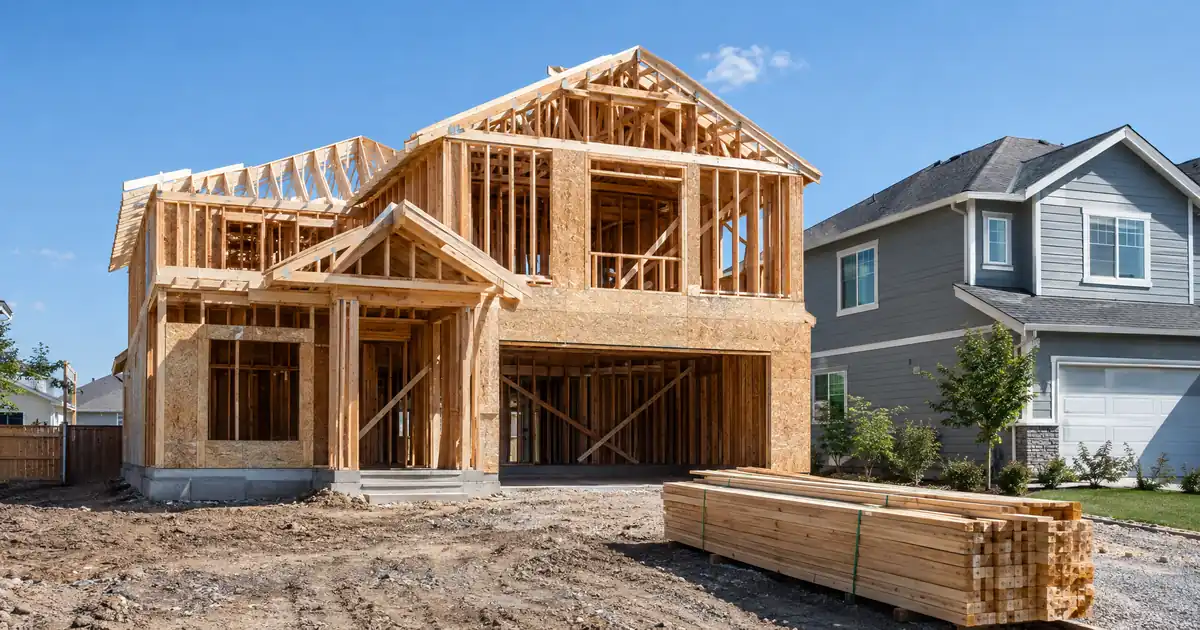
The Quick Read: As of September 28, 2026, buyers have more room to negotiate than they have had in years. Supply is up, sellers are cutting prices, and builders are handing out incentives. But mortgage rates have climbed four weeks in a row, so a lower price does not automatically mean an easier payment. Negotiate hard, and treat financing as half of the deal.
Key Takeaways
- Existing-home sales slipped in August, and months of supply rose to 4.9. That is the highest in over ten years, per NAR’s report of September 10, 2026.
- Freddie Mac’s 30-year average rose for a fourth straight week, to 7.03% for the week of September 24, 2026.
- Builders are cutting prices and buying down rates. Thirty-eight percent cut prices in September.
- Soft is a national average. Your local market may be firmer or softer than the headline.
- Negotiate on price and terms. Then get your financing lined up before you write the offer.
What changed
Sellers lost some of their leverage. Buyers got some, but financing costs rose faster than prices eased. That is the whole story in one sentence. Here are the dated facts.
Start with sales. NAR’s existing-home sales release, dated September 10, 2026, showed August sales fell 2.0% from July and 1.2% from a year earlier. The pace was 3.98 million. That was the first reading below 4.0 million since June 2025.
Inventory grew. NAR counted 1.62 million homes for sale, up 5.9% from August 2025. Months of supply hit 4.9, up from 4.6 in July. Months of supply is how long it would take to sell every listed home at the current sales pace. NAR’s chief economist said it gives buyers better opportunities to negotiate.
Prices held up nationally, though. HousingWire’s coverage of the same report put the median at $429,100, up 1.6%. So the market is soft on volume and leverage, not on the national price level.
Regions split. The Northeast fell 4%, the Midwest 3.1% and the South 1.6%, and the West was unchanged. One national number hides a lot of local variety.
Sellers are also cutting. Realtor.com data, reported by Inman on September 1, 2026, showed 20.4% of active listings had a price reduction in August. That matched last year’s share for the first time in 2026. Realtor.com’s weekly data, relayed by WRE News on September 19, 2026, showed active inventory up 5.8% from a year earlier and list prices down year over year for a 36th straight week.
Builders are moving faster on price than resale sellers. NAHB’s September 16, 2026 release said 38% of builders cut prices in September, up from 35% in August. The average cut held at 6%. Sixty-six percent used incentives, up from 63%. Scotsman Guide adds that large builders lean heavily on builder-paid rate buydowns.
Now the other side of the ledger. Freddie Mac’s weekly survey put the 30-year fixed at 7.03% for the week of September 24, 2026, up from 6.95% the week before. A year earlier it averaged 6.30%. That is a rise of 73 basis points in twelve months. A basis point is one hundredth of a percentage point.
The climb started in early September. Freddie’s average was 6.71% on September 3, 6.76% on September 10, and 6.95% on September 17. Four straight increases. The largest single jump, 19 basis points, came in the week of September 17.
The MBA sees the same thing. Its weekly survey, released September 23, 2026, put the average 30-year conforming contract rate at 7.12%, up from 6.97%. Purchase applications were down 11% from the same week a year ago, before seasonal adjustment. Refinance applications were 62% lower than a year ago. Terms vary by lender guidelines, property type, leverage, credit profile, and full file review.
Why did rates jump? Look at Treasuries, not just the Fed. The Federal Reserve’s statement of September 16, 2026 raised the target range by a quarter point, to 3-3/4 to 4 percent, on a 12–0 vote. It said inflation remains elevated. But mortgage rates track the 10-year Treasury yield more closely than the Fed’s overnight rate. CNBC reported on September 26, 2026 that the 10-year surged to 5.23% on September 25, its highest since 2007. It had been just below 4.8% earlier in the month.
One caution on comparing numbers. Mortgage News Daily’s daily index read 7.43% on September 25, 2026. That runs higher than Freddie’s figure because the two use different methods. Freddie’s survey covers conventional, conforming, fully amortizing purchase loans for borrowers with 20% down and excellent credit. Do not blend these numbers. Pick one source and follow its direction. Exact terms depend on the lender’s guidelines, property type, leverage, and a full review of the borrower’s file.
Is this really a buyer’s market?
Not yet, and not everywhere. It is a market where buyers have more negotiating room than a year ago. Words matter here.
A true buyer’s market usually shows up as falling prices, long stretches on the market, and sellers who feel real pressure. We have some of that. But the national median is still up 1.6%. The August share of listings with price cuts only matched last year’s. And listings remain about 11% below pre-pandemic levels nationally, per Realtor.com’s release.
Price-cut trackers also disagree. They use different windows and different definitions. One tracker shows about one in five listings with a cut. Another shows a far higher cumulative share. Always ask which source and which metric before you trust a headline.
There is also a seasonal effect. Realtor.com names September 27 to October 3 as its “Best Week” to buy this year. That is a seasonal pattern, and it leaves out interest rates. Early fall always brings more choice and less urgency. Part of what we see now is just September.
So my read: the seller’s-market playbook of rushing and offering at or over asking no longer fits everywhere. That is not the same as a crash, and I would not plan around one.
What it means for home buyers
A lower price and a higher rate pull in opposite directions, so you have to weigh both. A price cut helps once. A rate change works on every payment you make, for as long as you keep the loan.
Take a plain hypothetical. Say the rate on a loan moves from 6.5% to 7.0%. That half-point gap is not a rounding error. On a large balance over decades, it can outweigh a sizeable price concession. Do that arithmetic with a real quote before you decide a discount is worth waiting for. I am not giving you a figure here. I am telling you to run your own.
Here is who feels what.
First-time buyers. You gain the most from the extra choice and the slower pace. You also feel the rate jump hardest, because you have no old low-rate mortgage to offset it. Weekly Realtor.com data suggests the negotiating benefit can be offset by higher financing costs. Take that seriously.
Move-up buyers. You may be holding a low-rate mortgage on your current home. Giving it up is a real cost. That does not mean don’t move. It means count it.
New-construction shoppers. Builder incentives are at 66%, and rate buydowns are common. A buydown is money paid up front to lower the interest rate, either for the first few years or for the life of the loan. Ask what the buydown actually costs and whether the price is higher to pay for it. A 6% average price cut sounds cheap. Much of the help comes as incentives, and buyer traffic is still weak.
Census data shows new-home supply at 8.5 months in August, with sales at a seasonally adjusted annual rate of 684,000. Census notes wide margins of error on the monthly changes. Treat the direction, not the decimals, as the signal.
Self-employed buyers and investors. I have no dated, official data on how these borrowers behaved in the last month. I will not guess. What I can say is structural. Buyers who cannot document income the standard way look at different loan structures. You can read about them on our loan options page, which carries the current guidelines. Eligibility is subject to lender guidelines, and the page is the source of truth.
My take
The buyers who do best now will negotiate on price and terms, and get their financing settled before they need it. This is my opinion, based on the dated numbers above, not a forecast.
I think the biggest mistake right now is waiting for the spring of 2021 to come back. Rates are not heading there. The 10-year is at a 19-year high, and markets are pricing in the chance of another Fed move. CNBC reported fed funds futures showing a 64% chance of an October hike. Nobody knows where rates land. I would not build a plan on a guess.
The second mistake is the reverse. Some buyers will read “38% of builders cut prices” and assume every seller is desperate. They are not. Delistings were down 12.6% from a year ago in August, per secondary reporting of Realtor.com data. Sellers are staying on the market and cutting, not pulling homes. That tells me they want to sell, but they are still anchored to old prices.
Honestly, it is a toss-up whether waiting a few weeks pays. More inventory could give you better choices. Higher rates could erase the gain. Neither is certain. The next data point is NAR’s September report, due October 13, 2026. Most of the rate rise came after August closings, so it is not in the sales numbers yet. I expect the September report to show more of the rate effect. That is a read, not a fact.
Where I do have conviction: the decision rests on your own file. Your income, your savings, your comfort with a payment, and how long you plan to stay matter more than the national headline.
What I’d do now
Get your financing in order first, then shop with leverage. Here is the sequence I would follow.
1. Check your local market, not the national one. National months of supply is 4.9. Your zip code may be far tighter or looser. Look at local days on market, the share of listings with cuts, and how many homes sold above or below asking.
2. Line up financing before you tour. A pre-approval tells a seller you are serious. Comparing options across several lenders can show you structures you did not know existed. That is what a broker does. We arrange and compare. The lenders we work with review and decide eligibility.
3. Understand lock mechanics. A rate lock holds an offered rate for a set period while you close on a home. If you have a contract and like the terms, lock. Floating means leaving your rate unlocked and accepting the risk that it moves against you. Rates just rose four weeks running. That is a reason to be careful with floating, not a reason to panic.
4. Compare quotes from the same day. Quotes gathered on different days are not comparable. Rates move daily, sometimes by a lot, as this month showed. If you shop, gather your quotes together.
5. Negotiate more than the price. In a softer market, sellers often have more room on repairs, closing help and timing than on the sticker price. Ask for a credit toward costs. Ask about a seller-paid buydown. Ask for a fair inspection window.
6. Keep your inspection rights. Softer markets are not a reason to waive protections. If anything, use them. A motivated seller with a long-listed home is more likely to negotiate on repairs.
7. Do not stretch the budget. A price cut feels like a gift, but the payment is what you live with. Pick a comfort level for the monthly cost before you look at listings. If a home only works at the very top of that range, walk.
One more point on new construction. If a builder offers a rate buydown, compare it against a straight price cut on the same home. They are not always equal. Ask for both in writing, and ask a broker to compare how each fits your loan.
If you own a vacation property or plan to buy one, how the property is used affects how it is financed. I wrote about that in “How A Vacation Home’s Loan Status Shifts When Guests Pay Rent?”. It is a separate question from the one in this column, but worth reading if it applies to you.
If you’re weighing a purchase or a refinance this fall, Lendmire can walk you through how the current programs fit your file.
For the end-to-end picture of how these loans work — qualification, structures, and the full process — see Lendmire’s complete DSCR loans guide.
Frequently Asked Questions
Is now a good time to buy a home?
It depends on your file and your market, not the calendar. Buyers have more supply and more negotiating room than a year ago, per NAR’s September 10, 2026 report. But Freddie Mac’s survey shows the 30-year average up 73 basis points from a year earlier. If you are financially ready and plan to stay for years, the added leverage is real. If you would be stretching, waiting for readiness beats waiting for the market.
Will prices keep falling?
Nationally, prices have not fallen. NAR’s August median was up 1.6% from a year earlier. Listing prices have eased for 36 straight weeks, per Realtor.com data reported on September 19, 2026, and more sellers are cutting. But the picture varies by region, and I cannot tell you where prices go next. The September sales report on October 13, 2026 will add data.
Should I wait for mortgage rates to come down?
No one knows when, or whether, they will. Markets are pricing more Fed action, and the 10-year Treasury yield is at a level last seen in 2007. If you find a home you like at a price you can live with, a rate lock protects you from further increases. If rates fall later, you may be able to refinance, though that is never certain and depends on your file and the terms at that time.
Is a builder’s rate buydown better than a price cut?
Neither is always better. A buydown lowers your interest cost for some period, while a price cut lowers the balance you borrow for the whole loan. Compare both in writing on the same home. NAHB’s September 16, 2026 release says 66% of builders are using incentives, so you have room to ask.
Does “soft market” mean I can lowball?
Sometimes, but not everywhere. National months of supply is 4.9, yet regional results range from a 4% drop in Northeast sales to no change in the West. Check how many local homes sell below asking, and how long they sit. A low offer on a home that is drawing interest will likely lose. A firm but fair offer on a long-listed home is more likely to land.
About Lendmire
Lendmire — NMLS# 2371349 — is a mortgage brokerage whose founder writes this column. DSCR investor programs reach 41 markets, including Washington, D.C.; consumer programs such as bank statement, HELOC and down payment assistance loans are arranged in 16 states; every loan is placed with, and underwritten by, a wholesale lender under that lender’s guidelines. Scotsman Guide named Lendmire a Top Mortgage Workplace in both 2025 and 2026.
Get Started
Ready to find the right loan for you?
In about 30 seconds you can review financing options available for your home or investment property. No commitment required.
Informational only. Not a Loan Estimate, approval, or commitment to lend. Program availability and eligibility are subject to lender guidelines, credit approval, property review, and underwriting.
References
1. NAR existing-home sales report, August 2026
2. HousingWire, existing-home sales, August 2026
4. WRE News on September 19, 2026
5. NAHB builder sentiment release, September 16, 2026
7. Freddie Mac Primary Mortgage Market Survey
8. Federal Reserve FOMC statement, September 16, 2026
This article is part of Lendmire’s Mortgage News series — every loan program’s qualification details, guidelines, and scenarios live on the loan options page.
Related reading: Getting Pre-Approved for a Home Loan · Building Your Credit · How Do the Holidays Impact the Real Estate Market?
Brandon Miller
Founder & CEO, Mortgage Loan Originator, Lendmire LLC
- Mortgage Loan Originator · NMLS# 1129696 · Verify on NMLS Consumer Access
- North Carolina Real Estate Broker · License# 343312 · Verify on NCREC
- North Carolina Insurance Producer · License# 19053198 · Property, Casualty, Life, Health · Verify on NAIC SBS
- Lendmire LLC · Firm NMLS# 2371349 · Verify firm licensure
Disclosure information. Lendmire is a state-licensed mortgage brokerage under NMLS# 2371349. Lendmire is not a depository institution, direct lender, or financial advisor — all loans referenced are placed through wholesale lender partners and are subject to each lender's underwriting standards. This article is provided for general informational purposes and is not a commitment to lend, nor does it constitute financial, legal, or tax advice. Loan programs, terms, rates, and qualification standards change without notice and depend on borrower profile, property type, and the state in which the subject property is located. Equal Housing Opportunity provider. NMLS Consumer Access: nmlsconsumeraccess.org.