
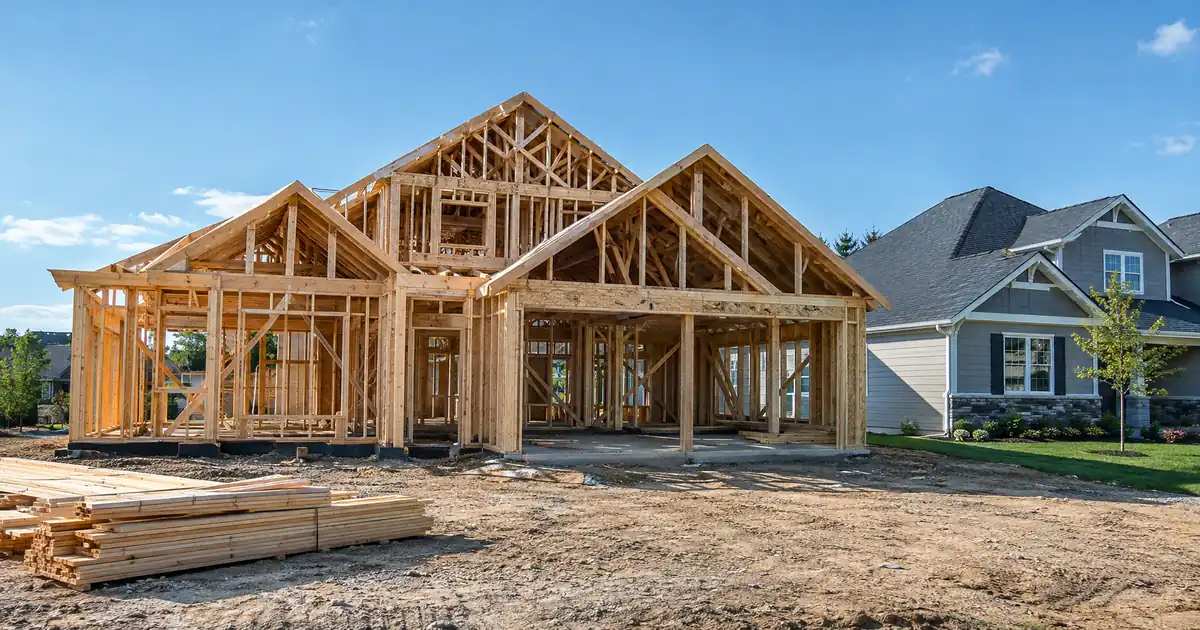
The Quick Read: As of September 28, 2026, mortgage rates have risen four weeks in a row and the Fed has hiked for the first time since 2023. A low-down-payment FHA loan still gets a buyer in the door, but the monthly payment now decides the deal as much as the down payment does. The offset is leverage. Inventory is up, months of supply are at a ten-year high, and builders are cutting prices and buying down rates.
I’ve been in lending for eighteen years, and the pattern is familiar. When rates jump, buyers fixate on the headline number and miss the other side of the ledger. This column lays out both.
Key Takeaways
- Freddie Mac’s survey put the 30-year fixed average up 37 basis points in four weeks, ending the week of September 24, 2026.
- That survey measures conventional loans with 20% down and excellent credit. It is not an FHA rate, so don’t read it as yours.
- Buyer leverage is real: more listings, more seller concessions, and heavy builder incentives.
- Rate pressure can be partly offset by negotiation. It is not erased by it.
- If you like a deal and the payment works, lock. Don’t try to outguess the bond market.
What Changed This Month
Rates rose four straight weeks, and the pace picked up. Freddie Mac’s survey showed the 30-year fixed at 6.71% on September 3, then 6.76% on September 10. It jumped to 6.95% on September 17, and reached 7.03% for the week of September 24, 2026, per the Freddie Mac release. A year earlier the same survey showed 6.30%.
That is 37 basis points from the 6.66% reading that preceded the run. A basis point is one hundredth of a percentage point, so 37 of them is a bit over a third of a point.
The daily indexes run hotter. Mortgage News Daily’s index, as reported by Yahoo Finance, stood at 7.45% late on the day of a 19-basis-point jump. Freddie’s number is a weekly average of lender surveys, so it trails the daily market. Different yardsticks, same direction.
The bond market is driving it. Treasury’s official 10-year close was 4.97% on Monday, September 14, and it moved above 5% the next day, according to ConsumerAffairs. It started the year at 4.19%. Mortgage rates track that yield far more closely than they track the Fed’s policy rate.
The Fed hiked. On September 16, 2026, the Federal Reserve’s FOMC statement raised the target range by a quarter point, to 3-3/4 to 4 percent, on a 12–0 vote. CNBC called it the first increase since 2023. For 2027, eight officials pointed to another hike, six to a hold and four to cuts. The Fed is split, and so am I about where this goes.
Demand is soft. The MBA’s weekly survey, released September 23, 2026 for the week ending September 18, showed the seasonally adjusted Purchase Index down 1% on the week. The unadjusted index sat 11% below a year earlier. Refinance applications were 62% lower than a year ago. FHA’s share of applications slipped to 16.7% from 16.9%. Exact terms depend on the lender’s guidelines, property type, leverage, and a full review of the borrower’s file.
Is the Freddie Mac Number Your FHA Rate?
No. Freddie Mac describes its survey as focused on conventional, conforming, fully amortizing purchase loans for borrowers who put 20% down and have excellent credit. An FHA loan is a different product with its own pricing and its own mortgage insurance. Every figure here varies by lender and program — guidelines, property type, leverage, and credit profile all apply.
Use the survey for direction. Don’t use it as a quote. Your own number depends on your file, the product, and the day it’s priced, subject to lender guidelines.
This is the most common misreading I see. A buyer reads “7.03%” in a headline and assumes it applies to them, or assumes FHA must be cheaper or costlier by some fixed amount. Neither is safe. The only way to know is to have quotes priced for your file, on the same day, side by side.
That last part matters. Quotes gathered on different days are not comparable. In a month when the market moved 19 basis points in a single week, a quote from Tuesday and one from Friday are measuring different markets. Gather them together or don’t compare them.
Why the Payment Now Matters as Much as the Down Payment
An FHA loan solves the cash problem, not the payment problem. The appeal is that a buyer can get in without a large down payment and with more flexibility on credit than many conventional files allow. Current guidelines live on the product page, and they’re subject to lender review.
But a small down payment means a large loan balance. A large balance is more sensitive to rate moves than a small one. Here’s a plain hypothetical: if a rate moves from 6.7% to 7.0%, the cost of borrowing rises by three-tenths of a point on every dollar financed. That hits a high-balance loan harder in absolute terms than a low-balance one.
Add mortgage insurance, which FHA loans carry, and the monthly obligation climbs further. The payment is what a lender tests against your income. When rates rise, the same buyer, the same income and the same house produce a tighter ratio.
So the question changes. It used to be “can I scrape together the down payment?” Now it’s “does the monthly payment fit my budget with room to spare?” Those are different questions, and they need different preparation. Paying down other debts, for instance, can matter more than saving another few thousand dollars.
Where Buyers Have Gained Leverage
Buyers have more negotiating room now than at any point this year. Rates took away purchasing power. The market handed some of it back through supply and incentives.
NAR’s existing-home sales report, updated September 10, 2026, showed August sales fell 2% to a 3.98 million annual pace. Inventory rose to 1.62 million homes, up from 1.54 million in July. Supply reached 4.9 months, up from 4.6 in July. NAR’s chief economist said months’ supply is at its highest level in over ten years.
Prices haven’t collapsed. NAR’s median existing-home price rose 1.6% to $429,100. So this is leverage on terms and concessions, not a crash.
Sellers are paying. Inman, reporting Redfin data on September 18, 2026, said sellers gave concessions in 44.7% of August sales, up from 42.6% a year earlier. Redfin called August its strongest buyer’s market of 2026. Concessions can help with closing costs or a rate buydown, and a buydown lowers the payment for a set period.
Builders are paying more. The Census Bureau’s new residential sales report, released September 24, 2026, showed 483,000 new homes for sale, an 8.5-month supply. The median new-home price was $393,700, down 5.8% from a year earlier. Inman reported on September 25, 2026 that 38% of builders cut prices in September and 66% used incentives, the highest incentive share since December.
Cotality’s Selma Hepp told HousingWire that roughly 80 to 90% of new-home sales now involve mortgage rate buydowns.
Two cautions on that. The 6.4% monthly gain in new-home sales sits inside the survey’s margin of error, so don’t call it a turnaround. And buydowns come out of builder margin, which raises the question of how long they last.
One more data point for timing. Realtor.com’s report, released September 10, 2026, flagged September 27 through October 3 as a stretch that pairs elevated inventory with less competition. Active listings remain about 11% below pre-pandemic levels, per that release. Supply is better. It isn’t abundant.
Does Leverage Cancel Out the Rate Move?
Partly, and only if you use it. A seller concession or a builder buydown can ease the payment. A price cut reduces the balance. Neither fully offsets a 37-basis-point climb in four weeks, and neither is available on every deal.
My read is that the gains are uneven. Redfin said concessions cluster in Sun Belt metros. NAR said the Northeast and Midwest saw the fastest price growth. So a buyer in one region may have real room to negotiate while a buyer in another faces a tight market. A national average tells you the direction, not your block.
The Realtor.com summary of the same data notes that the benefit of falling listing prices can be offset by higher financing costs. I agree with that. A fifty-thousand-dollar price cut helps less than you’d hope if the rate took back a chunk of it.
Here’s a scenario to run. Picture two identical homes. One has a seller who will pay toward a rate buydown. The other has no concession but a slightly lower list price. Which one wins depends on how long you’ll hold the loan, how the buydown is structured, and what your payment looks like after it expires. Ask for the payment in both cases, in writing, priced on the same day.
Buydowns are a bridge. If you expect your income to rise, or you plan to refinance when rates ease, a temporary reduction can make sense. If you’re stretching to qualify and need the payment to stay low permanently, it doesn’t solve your problem. It postpones it.
What About Down Payment Help?
Assistance programs can shrink the cash you need up front, which matters when the payment is already tight. Many first-time buyers qualify for some form of help, and eligibility varies by location, income and program, subject to lender guidelines.
I’d start with a look at down payment assistance programs. That page carries the current guidelines, so I won’t restate figures here.
A point worth making: assistance lowers the cash you bring to closing. It does not lower your monthly payment by itself. A buyer who uses help to cover the down payment and closing costs still has to carry the full loan each month. Ask whether a program adds a second loan, and how that affects the total obligation.
Also ask how assistance interacts with seller concessions and buydowns. Some combinations work together. Some hit limits. A broker can compare how a program fits your file across the lenders we work with, which is the practical advantage of shopping rather than walking into one lender’s door.
What Is HUD Doing With FHA?
HUD is reviewing FHA’s property standards, and nothing has changed yet. FHA is seeking feedback on proposed changes to its Minimum Property Requirements, with comments open through November 6, 2026, per HUD’s FHA INFO page. Existing FHA policies remain in effect until amended.
Back in June, HUD announced fourteen FHA Single Family policy changes meant to cut costs and burdens. I found no change to FHA mortgage insurance pricing in the last 45 days.
Why does a first-time buyer care about property requirements? Because FHA loans come with an appraisal that checks the condition of the house, and those standards shape which homes work. If you’re shopping for an older home, pay attention to what comes out of this comment period. Today’s rules still apply today.
My Take
Rising rates hurt, but waiting for them to fall is a bet, not a plan. I’ll state my opinion plainly: I don’t know where rates go next, and neither does anyone else. The Fed is split on 2027. Futures were pricing one more quarter-point hike in December, according to Advisor Perspectives. That’s a market guess, not a forecast I’d build a life on.
Consider what a buyer is really weighing. On one side, today’s rates and today’s leverage. On the other, a hoped-for drop that may or may not come, plus whatever prices do in the meantime. NAR’s median price is still up year over year, even as listing prices fall. Both can be true at once.
Here’s where I come down. The buyers who do well this fall are the ones who price the purchase on the payment, use the concessions on offer, and stay ready to refinance if rates ease. They don’t buy the most house the approval letter allows. They buy the house the monthly budget can carry in a bad month.
I’d also push back on anyone calling this a buyer’s market without qualification. Active listings are still about 11% below pre-pandemic levels. Redfin said new listings hit a four-year high in the four weeks ending August 30. Better, not loose.
And a wry note on headlines: “mortgage rates climb again” makes for a dramatic morning, but the headline figure usually leaves out plenty. The survey it cites excludes the FHA borrower entirely. Read past the first line.
What I’d Do Now
Get your file ready, get quotes on the same day, and lock when the payment works. None of this is advice to buy or sell a specific home. It’s the order of operations I’d follow.
Know your payment ceiling before you shop. Decide what monthly obligation you can carry comfortably, including mortgage insurance, taxes and homeowners insurance. Work backward to a price. Don’t let a listing set the budget.
Clean up your debts. With rates higher, your other monthly obligations take a bigger bite out of your qualifying ratio. Paying off a small balance can do more than a larger down payment.
Compare quotes priced the same day. A rate lock is an agreement that holds a quoted rate for a set period while your loan moves forward. Quotes from different days aren’t comparable in a market like this one. Line them up together.
Lock when it fits. If you like the house and the payment works, lock. Floating means leaving the rate unlocked and betting it drops. In a month where the market moved 19 basis points in a week, that’s a gamble with real downside. I’d rather a client lock a payment they can live with than chase a number that may never show up.
Negotiate on the whole package. Ask about concessions, buydowns, price and closing help together. Compare them on the payment they produce, not on the headline.
Watch builder offers with a cold eye. A buydown is a real benefit while it lasts. Ask what the payment looks like when it ends, and whether the price is inflated to fund it.
If you’re weighing a purchase or a refinance this fall, Lendmire can walk you through how the current programs fit your file. If you’re an investor, first-time buyers of out-of-state rentals face a different set of questions than a primary-residence buyer, and that piece covers them.
For the end-to-end picture of how these loans work — qualification, structures, and the full process — see Lendmire’s complete DSCR loans guide.
Frequently Asked Questions
Is FHA a good loan for a first-time buyer when rates are rising?
It can be, if the payment fits your budget. FHA is built for buyers with limited cash and more varied credit, which describes many first-timers. Rising rates make the monthly payment the deciding factor, so test it carefully. Current guidelines are on the product page and subject to lender review.
Does Freddie Mac’s 7.03% apply to FHA loans?
No. That figure is Freddie Mac’s 30-year average for the week of September 24, 2026. The survey covers conventional, conforming loans for borrowers with 20% down and excellent credit. An FHA loan is priced separately, so get a quote for your own file. Final terms depend on lender guidelines, property type, leverage, and the borrower’s complete credit picture.
Is this really a buyer’s market?
Partly. NAR showed 4.9 months of existing-home supply in August, the highest in over ten years, and Redfin reported concessions in 44.7% of August sales. But active listings remain about 11% below pre-pandemic levels, and conditions vary by region. Leverage is real in some places and thin in others.
What should I ask a builder offering a rate buydown?
Ask what the payment is once the buydown ends and whether the price reflects the incentive. About 80 to 90% of new-home sales now involve buydowns, and they come out of builder margin. A temporary reduction helps if your income is rising or you plan to refinance.
About Lendmire
Lendmire — NMLS# 2371349 — is a mortgage brokerage whose founder writes this column. DSCR investor programs reach 41 markets, including Washington, D.C.; consumer programs such as bank statement, HELOC and down payment assistance loans are arranged in 16 states; every loan is placed with, and underwritten by, a wholesale lender under that lender’s guidelines. Scotsman Guide named Lendmire a Top Mortgage Workplace in both 2025 and 2026.
Get Started
Ready to find the right loan for you?
In about 30 seconds you can review financing options available for your home or investment property. No commitment required.
Informational only. Not a Loan Estimate, approval, or commitment to lend. Program availability and eligibility are subject to lender guidelines, credit approval, property review, and underwriting.
References
1. Freddie Mac Primary Mortgage Market Survey
4. Federal Reserve FOMC statement, September 16, 2026
6. MBA Weekly Applications Survey, September 23, 2026
8. Inman, reporting Redfin data
9. Inman, new-home sales and builder incentives, September 25, 2026
10. HousingWire
11. StockTitan — Realtor September 27th October 3rd Marks the Best Time to Buy
This article is part of Lendmire’s Mortgage News series — every loan program’s qualification details, guidelines, and scenarios live on the loan options page.
Related reading: Buying A House With No Money Down As September Rates Climb Four Weeks Straight · Afford A Down Payment In September 2026 As Rates Climb Four Weeks Straight · Can I Afford A Mortgage? September 2026 Rate Climb Changes
Brandon Miller
Founder & CEO, Mortgage Loan Originator, Lendmire LLC
- Mortgage Loan Originator · NMLS# 1129696 · Verify on NMLS Consumer Access
- North Carolina Real Estate Broker · License# 343312 · Verify on NCREC
- North Carolina Insurance Producer · License# 19053198 · Property, Casualty, Life, Health · Verify on NAIC SBS
- Lendmire LLC · Firm NMLS# 2371349 · Verify firm licensure
Compliance and disclosures. Lendmire (NMLS# 2371349) is a licensed mortgage broker and is not a direct lender, depository institution, financial advisor, or tax professional. Content in this article is general market analysis and educational information — not financial, legal, or tax advice for any specific situation. Lendmire does not guarantee loan approval; every transaction is subject to underwriting by the funding lender. Mortgage pricing and loan program guidelines are subject to change at any time without notice and vary by borrower characteristics, property type, and state regulations. Lendmire complies with Equal Housing Opportunity. Licensure verification: NMLS Consumer Access.