
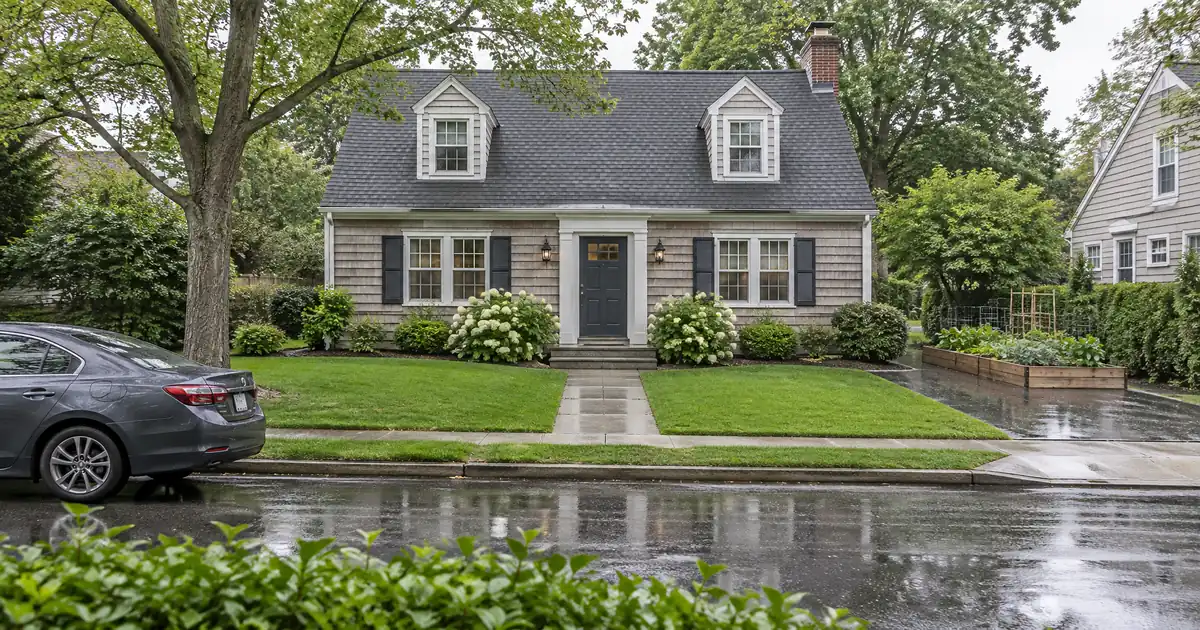
The Quick Read: A home bought with cash is a clean candidate for a bank statement HELOC because no first mortgage sits ahead of the line, but the lenders who write these programs still decide on seasoning, occupancy, credit, vesting and the deposits behind the income. Which lender fits depends on the file, not on the fact that the home is paid for.
- A cash-bought home can take a first-lien line, but not every lender writes first liens.
- On an investment property, the network ceiling is 70% CLTV, with a 700 minimum credit profile and a $500,000 maximum line.
- On a primary residence, the ceiling reaches 90% CLTV only at 720 or better, and only up to $500,000. A line above $500,000, up to $750,000, is available on a primary residence only, at no more than 75% CLTV.
- Title must sit with the individual borrower or a revocable living trust. An LLC cannot hold title on these lines.
- A line placed too early can close off a delayed-financing cash-out refinance later.
A cash purchase makes the equity picture simple. The property has a clear title and an appraised value, and the whole allowable line is available. The rest of the file is where lenders differ.
How large a line the equity supports.
An equity line is sized by combined loan-to-value, occupancy, and credit — not by rental coverage. Switch the occupancy or the credit band and the ceiling moves with it.
Investment-property lines require a 700 minimum credit score; second-home lines start at a 640 minimum and primary-residence lines at 600, and the combined-LTV ceiling steps down as the credit band drops on primary-residence and second-home lines and holds on investment-property lines; the line cap steps down on primary-residence lines and holds at every tier on investment-property and second-home lines.
A debt-to-income ratio above 45% requires 680+ credit. Profiles under 640 are limited to single-family homes. At least 75% of the approved line is drawn at closing. Ceilings, floors, and caps update from Lendmire’s centralized guideline source.
Line estimate
Illustrative estimate only — not a quote, Loan Estimate, approval, or commitment to lend. The rate is an editable assumption; equity-line pricing is variable through both the draw and repayment periods and never converts to fixed. Occupancy and credit drive the ceiling together: an investment property tops out at 70% combined LTV (minimum credit 700, line cap $500,000); a second home tops out at 90% combined LTV (minimum credit 640, line cap $500,000), with the ceiling stepping down as the credit band drops (the cap holds at every tier); a primary residence tops out at 90% combined LTV (minimum credit 600), and its $750,000 maximum line is available only at 75% combined LTV or below with a 700-or-better credit profile (720 on the longer-runway program) and a full appraisal. Lines above $500,000 require a full appraisal. Credit, debt-to-income, property type, and full underwriting review all affect the final line.
Lendmire is a mortgage broker, not a lender. It works with select wholesale HELOC lenders, and this explainer covers how those programs treat a home bought with cash, from first call to final draw. Availability for these lines is limited to Lendmire’s 16 full-service states, which is narrower than its 41-market DSCR footprint. Every figure here is subject to lender guidelines and full file review, and nothing here is a commitment to lend.
Key Terms Defined
Bank statement HELOC: A home equity line that reads 12 or 24 months of deposits to estimate income instead of tax returns.
CLTV: Combined loan-to-value, the total of all liens on the property divided by its appraised value.
First-lien position: The line is the only loan recorded against the property, which is the normal case after a cash purchase.
Seasoning: The time you have owned the property before a lender will lend against it at full value. It is lender policy, not a federal rule.
Delayed financing: A cash-out refinance exception for buyers who paid cash, sized to documented purchase cost. It is a refinance feature, not a HELOC feature.
Draw period: The stretch when you can borrow from the line, typically interest-only, before the balance amortizes.
What Is a Bank Statement HELOC on a Paid-Off Home?
A bank statement HELOC is a revolving line secured by a home. The lender qualifies a self-employed borrower by averaging deposits over 12 or 24 months, not by reading tax returns. Write-offs often push taxable income well below real cash flow. Deposit-based review fixes that mismatch.
The product exists because no single federal formula dictates how these lines are underwritten. The CFPB’s consumer booklet on HELOCs explains that lenders typically set the limit as a percentage of appraised value minus any existing mortgage balance, and that they weigh your ability to repay using income, debts and credit history. How each lender documents that income is its own policy. That is why statement, profit-and-loss and 1099 variants all exist.
On a cash-bought home, “minus any existing mortgage balance” is zero. The full allowable amount under the program’s CLTV cap and line cap is on the table. That is the whole appeal.
Who Writes These Lines, and Why Are There So Few?
Bank statement HELOCs come mostly from non-bank lenders and the brokers who place files with them. Finder’s overview of no-doc and alternative-income HELOCs says these programs are offered almost exclusively by non-bank lenders and brokers, with bank statements, assets, DSCR or P&L as the common alternatives to tax returns. Big banks and large retail lenders rarely offer them.
That is the case for working through a broker. A broker that shops several wholesale lenders can match a scenario to the program whose rules fit: occupancy, credit profile, title and leverage need. No single lender wins on every file.
Lendmire’s network does not support a ranked list of lenders, and none appears here. The right program depends on the property type, occupancy, credit profile, and the leverage you need.
| Lender category | What it typically does | Fit for a cash-bought home |
|---|---|---|
| Non-bank wholesale lenders | Write alt-doc lines through brokers | Most likely source of a first-lien line |
| Big banks and large retail lenders | Standard income documentation | Rarely offer deposit-based review |
| Regional or community lenders | Occasional statement programs | Case by case, often second lien only |
How Underwriting Treats a Cash-Bought Home, Step by Step
Here is the sequence a lender follows on this kind of file.
1. Confirm lien position. A cash purchase means no mortgage exists, so the line will be first lien. The network’s lines can sit in first or second position, but some lenders only write seconds. A first-lien-capable program matters here.
2. Check seasoning and value basis. No federal rule sets a waiting period. Lenders set their own, and until it runs out some cap the value at the purchase price. Ask for the lender’s seasoning rule early, since it decides which value the line is sized on.
3. Prove the purchase. Expect to provide the settlement statement and the source of the purchase funds. If the cash was borrowed, the lender will want to know against what.
4. Document income from deposits. The lender reads 12 or 24 months of personal or business statements. Underwriters usually apply an expense factor to business deposits, so qualifying income is lower than gross deposits. They also look at how long you have been self-employed.
5. Run credit, title and DTI. Credit is pulled with a single-bureau score model keyed to the primary wage earner, and the report can be no more than 90 days old at closing. Maximum DTI is 50%, and 45% for credit profiles from 600 to 679. The payment is calculated on the interest-only amount at the maximum draw.
6. Value the property. Lines at or below $500,000 ordinarily run an automated valuation with no traditional appraisal, though a higher CLTV may call for a secondary valuation. A full appraisal is required on every line above $500,000, and you may request one in any case.
7. Size the line and close. Value times the allowed CLTV, minus existing liens, gives the cap. At least 75% of the line is drawn at closing. Pricing floats and never converts to fixed.
Having no mortgage payment helps the DTI side. It does not replace the income review.
What the Network’s Programs Allow, by Occupancy
The ceilings split by how you use the home. State the occupancy first, then read the number.
| Occupancy | Top CLTV | Credit needed | Max line |
|---|---|---|---|
| Investment property | 70% | 700 minimum | $500,000 |
| Second home | 90% | 720 or better for 90%; 640 minimum | $500,000 |
| Primary residence | 90% | 720 or better for 90%; 600 minimum | $500,000 at 90% CLTV; $750,000 at 75% CLTV, 700+ (720 on the longer-runway program) |
On an investment property, 70% CLTV is the ceiling at both 700 and 720. Nothing sits above it. On a second home, 90% CLTV exists only at 720 or better, and it steps down to 85% at 680 to 700 and 80% at 660. On a primary residence, 90% CLTV applies only at 720 or better and only up to $500,000, while the $750,000 line is capped at 75% CLTV.
Market surveys report that bank statement HELOCs commonly want a high credit score and 65% to 70% CLTV or less on investment property, according to Refiguide’s self-employed HELOC guide. Those are market-wide figures. The network figures are the ones in the table above.
Two Draw Structures and Who Fits Each
The network places files with two wholesale programs. The first is the higher-leverage program, and the second is the longer-runway program. The names describe how they differ.
Primary residences and second homes can use either of two draw structures:
- A 3-year interest-only draw, followed by a 17-year fully amortizing repayment.
- A 5-year interest-only draw, followed by a 25-year fully amortizing repayment.
Investment lines run only the 5-year draw and 25-year repayment structure. In Tennessee, the 3-year draw structure shortens its repayment to 12 years, and the 5-year draw structure shortens its repayment to 10 years.
The two programs also differ in the file’s details. The longer-runway program requires two tradelines seasoned 12 months or one seasoned 24, and it sets housing-history standards at 0x30x6 and 1x30x12 at 640 and above. It also limits total exposure to $750,000 across a borrower’s lines, where the higher-leverage program allows $2,000,000. Either way, a borrower is limited to three lines and cannot own more than 15 financed properties.
Where the General Rule Breaks
Title and vesting. The line must be held by the individual borrower or an inter vivos revocable living trust. LLCs, corporations, partnerships, and irrevocable, blind or land trusts cannot hold title. This is the sharpest difference from a DSCR loan. If the home sits in an LLC, the choices are to change the vesting or to look at a DSCR cash-out refinance instead. The complete DSCR loans guide covers that route.
The delayed-financing trap. Delayed financing lets a cash buyer refinance early, with the loan sized to documented purchase cost. It depends on a clean title showing no financing on the purchase. Recording a HELOC on the property first can undo that, so settle the order of operations before you sign. For how those cash-out files are reviewed, see Lendmire’s piece How Lenders Underwrite a Bank Statement Cash-Out Refinance on a Recently Bought Home.
Borrowed purchase money. If a HELOC on another property funded the cash purchase, the underwriter may ask for the new proceeds to repay it. A bridge or hard-money loan secured on the property generally breaks the cash-purchase story altogether.
Deposits versus sourcing. Purchase money moving through a business account is not income. Gifts and asset sales are the same. A lender separates deposits that reflect earnings from deposits that reflect transfers. Keep the paper trail for each.
Property types. Single-family, 2-4 units (640 minimum on the longer-runway program), PUD, townhome and condominium, including non-warrantable, can qualify. Modular factory-built homes are eligible on the longer-runway program only. Manufactured homes, co-ops, condotels, log homes, commercial, mixed-use and agricultural zoning are not eligible on either program.
Listing status and state rules. A property listed for sale, or listed within the past 60 days, is ineligible in NC, PA, TN, TX and WA. Texas primary residences are homesteads and cap at 80% combined loan-to-value, with a 12-day waiting period, a one-lien-at-a-time rule and 12-month seasoning. Texas second homes and investment properties are eligible as non-homestead transactions. New Mexico and Ohio tie their CLTV caps to the credit profile.
Derogatory history. A bankruptcy needs 4 years of seasoning from discharge or dismissal on both programs. On primary residences and second homes, one program seasons a foreclosure at 7 years and a short sale or deed-in-lieu at 4, while the other declines that history regardless of age. Investment files follow the 7-and-4-year path.
Risks of Putting a Line on a Debt-Free Home
The line is variable. Pricing floats during both the draw and repayment periods and never converts to fixed. When the interest-only draw ends, the payment shifts to full amortization, and the step-up can be large on a line drawn heavily at closing.
The line can also be frozen after closing. Federal home-equity rules let a creditor suspend or reduce a line under defined conditions, such as a significant drop in home value or a material change in the borrower’s finances, as Alston & Bird’s consumer finance analysis describes. The existing balance stays on its terms. Further draws stop. A line is therefore not guaranteed liquidity.
Choosing Between a HELOC, a Cash-Out, and Other Routes
The right route depends on what the money is for and how the home is held.
| Route | Reviews | Best fit |
|---|---|---|
| Bank statement HELOC | Borrower’s deposits | Self-employed owner who wants a flexible, revolving line |
| Bank statement cash-out refinance | Borrower’s deposits | Owner who wants a single lump sum |
| Delayed-financing refinance | Purchase paper trail | Cash buyer who wants fast access to the equity just paid |
| DSCR cash-out refinance | Property’s rental coverage | Rental owner, including a property held in an LLC |
On the last row, DSCR files qualify primarily on property-level rental income covering the payment, subject to lender guidelines. A DSCR file generally tops out around 75% LTV on a cash-out across most of the network, with about 6 months of seasoning as the common expectation. That is a different tool from a HELOC, and the leverage rules differ.
What to Prepare Before a Broker Shops Your File
- Settlement statement for the cash purchase and proof of where the funds came from.
- 12 or 24 months of personal or business bank statements, with a clear separation of operating deposits from transfers.
- Proof of ownership of the business and how long you have run it.
- Title documents showing vesting in your name or a revocable trust.
- Credit profile, plus a list of every financed property you own.
- A decision on whether you may later want delayed financing. That choice changes the order of everything else.
It is not a quote.
If you are considering a home equity line and want to see how the numbers work, Lendmire can help you compare HELOC options based on the property, the equity available, credit profile, combined leverage, and your goals. Reach the team at 828-256-2183 or request a quote.
Frequently Asked Questions
Can I get a bank statement HELOC right after buying a home with cash?
Possibly, but seasoning is lender policy. Some lenders cap the value at the purchase price until a period of ownership has passed, and others require ownership time before they lend at all. Ask the lender’s rule first, because timing also affects delayed financing.
Does having no mortgage count as an advantage?
Yes, in two ways. The line can sit in first position, and no existing payment enters the debt-to-income review. Income, credit, occupancy and title still decide the outcome. DTI tops out at 50%, and at 45% for credit profiles from 600 to 679.
What CLTV can I expect on an investment property?
The network ceiling on an investment line is 70% CLTV, with a 700 minimum credit profile and a $500,000 maximum line. Primary residences and second homes can reach higher, but only at a 720-or-better profile. Market-wide figures differ by lender.
Can my LLC hold the property for this kind of line?
No. Title must be held by the individual borrower or a revocable living trust. A property already in an LLC needs a vesting change, or a DSCR cash-out refinance may fit better, subject to program terms.
Will a HELOC hurt my chance at delayed financing?
It can. Delayed financing depends on a clean title with no purchase financing, so recording a line first may close that door. Decide which route you want before either one closes.
Why are there so few lenders for this?
These programs come almost exclusively from non-bank lenders and brokers, per Finder. Big banks mostly stick to standard income documentation. A broker that works with several wholesale lenders can match the file to the right program.
About Lendmire
Lendmire — NMLS# 2371349 — is a mortgage broker that arranges home equity lines of credit in its 16 full-service states through wholesale lenders, on primary residences, second homes and investment properties. Every line is subject to the lender’s guidelines and full underwriting. Scotsman Guide named Lendmire a Top Mortgage Workplace in both 2025 and 2026.
Get Started
Ready to find the right loan for you?
See your offer in seconds. No credit pull, no obligation.
Informational only. Not a Loan Estimate, approval, or commitment to lend. Program availability and eligibility are subject to lender guidelines, credit approval, property review, and underwriting.
References
1. CFPB – What You Should Know About HELOCs
3. Refiguide – HELOC Loans for Self-Employed
4. Alston & Bird Consumer Finance – HELOCs on the Rise
This article is part of Lendmire’s bank statement HELOC program — full qualification details, guidelines, and scenarios live on the program page.
Related reading: Banks That Offer a Bank Statement HELOC on a Home You Just Bought and Closed On · Can You Get a Bank Statement HELOC on a Home You Just Bought and Closed On? · How Much Can You Borrow on a Bank Statement HELOC on a Home You Just Bought and Closed On? · Bank Statement HELOC Requirements on a Home You Just Bought and Closed On · How a Bank Statement HELOC Works on a Home You Just Bought and Closed On
Brandon Miller
Founder & CEO, Mortgage Loan Originator, Lendmire LLC
- Mortgage Loan Originator · NMLS# 1129696 · Verify on NMLS Consumer Access
- North Carolina Real Estate Broker · License# 343312 · Verify on NCREC
- North Carolina Insurance Producer · License# 19053198 · Property, Casualty, Life, Health · Verify on NAIC SBS
- Lendmire LLC · Firm NMLS# 2371349 · Verify firm licensure
Important disclosures. Lendmire (NMLS# 2371349) is a licensed mortgage brokerage. Lendmire is not a direct lender, depository institution, or financial advisor. All loan inquiries are subject to lender underwriting; this article does not constitute a commitment to lend. Rates, terms, and program guidelines are subject to change without notice and vary by borrower profile, property type, and state. Information in this article is general in nature and is not financial, legal, or tax advice. Equal Housing Opportunity. NMLS Consumer Access: nmlsconsumeraccess.org.