
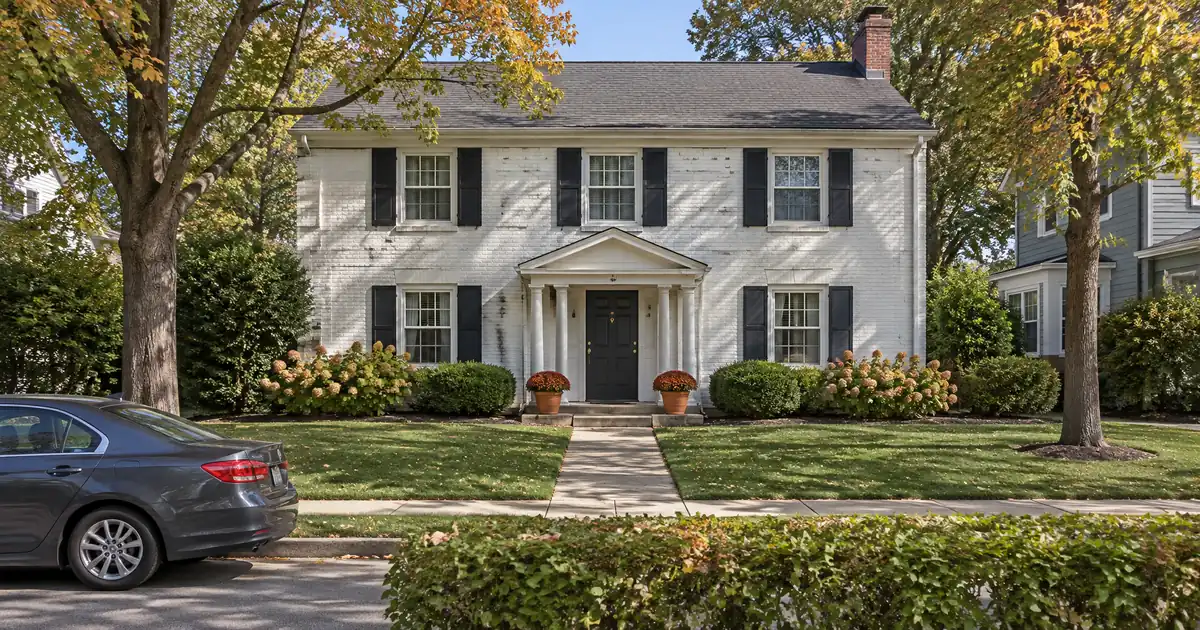
The Quick Read: A DSCR HELOC is a revolving line of credit on a rental you already own, and it qualifies primarily on the property’s rental income covering a stress payment, not on the owner’s wages, subject to lender guidelines. Lendmire is a mortgage broker, not a lender, and it places these lines through a wholesale lender network, so which lender fits depends on the file.
- It is a standalone second lien behind the first mortgage you keep, or a standalone first lien on a rental with no mortgage.
- Minimum coverage is 1.10x, tested on a stress payment across the entire credit limit.
- Second liens reach 70% combined loan-to-value (CLTV) at a 720 score or better, on lines of $50,000 to $500,000.
- First liens reach 75% loan-to-value (LTV) at 740 or better, on lines up to $500,000.
- The LLC can stay on title, subject to program terms.
Investors often ask which lenders offer this kind of line. The honest answer starts with the structure, because the fit depends on your property, your credit, and how much equity you want to reach. A brokerage that shops several wholesale lenders can match the file to a program that suits it.
What Is a DSCR HELOC?
A DSCR HELOC is a market label, not a regulated product category. Underneath the label sits an ordinary home equity line: an open-end line that lets you borrow, repay, and borrow again. The federal consumer-finance regulator describes a HELOC as an open-end line of credit that allows you to borrow repeatedly against your home equity.
The “DSCR” part changes who gets tested. Instead of calculating your personal income, the lender tests whether the rental’s gross rent covers the payment on the line. That is the entire idea. Tax returns, W-2s, pay stubs, and a debt-to-income ratio are not part of the calculation, subject to lender guidelines.
It is not a no-paperwork product. The lease, the credit report, the valuation, and title are all reviewed. What drops away is the personal income file.
This line is never offered on an owner-occupied home or a second home. A primary-residence HELOC is a different, income-documented consumer product. Our complete DSCR loans guide covers the broader family of rent-qualified financing if you want the background first.
How Underwriting Treats It, Step by Step
Underwriting runs in a fixed order, and each step can stop a file. Understanding the order tells you where to look first when you size a line.
Step 1: Lien position. The line is written as a standalone second lien behind the first mortgage you keep. If the rental has no mortgage, it can be a standalone first lien. It is never closed with a purchase and never sits in third position.
Step 2: Equity sizing. The federal consumer-finance regulator’s HELOC booklet shows the standard method: appraised value times a percentage, less the mortgage balance owed, gives the potential line. Its worked example takes $100,000 times 75%, subtracts $40,000 owed, and arrives at $35,000. The percentage in that illustration is not this program’s. Here the percentage is the CLTV or LTV cap covered below.
Step 3: Rent. Rent is the lesser of the appraisal’s market rent (Form 1007) and the lease, unless three months of receipts support a lease above market. A lease in place is required. On a two-to-four-unit property, at most one unit may be vacant.
Step 4: The coverage test. Gross monthly rent is divided by the qualifying payment. That payment is a fully amortizing principal-and-interest payment on the entire credit limit, calculated at the start rate plus 2 percentage points. It is a stress payment. Taxes and insurance are not part of it. The minimum is 1.10x.
A revolving line lets you borrow only part of the limit and leave the rest untouched. The coverage test ignores that flexibility and assumes the whole line is in use. A rental that looks comfortable on a half-drawn balance can still miss 1.10x on the full limit.
On a second lien, confirm on the file how the lender treats the first-mortgage payment in its coverage calculation. The lender’s own math governs, and any worked number here is illustrative.
Step 5: Credit, valuation, and title. Credit is pulled and the tier comes from the lender’s own report. A valuation is ordered and title is reviewed. Personal income is not the decider, but the file still gets a full review.
Key Terms Defined
DSCR (debt-service coverage ratio): The rental’s gross monthly rent divided by the qualifying payment.
Stress payment: A fully amortizing payment on the whole credit limit at the start rate plus 2 percentage points, used only for the test.
CLTV (combined loan-to-value): The first mortgage balance plus the new line, divided by the property’s value.
Draw period: The five-year interest-only stretch when you can borrow against the line.
Repayment period: The 25-year fully amortizing stretch after the draw period ends.
Standalone second lien: A line recorded behind the first mortgage you keep, closed on its own.
The Structures and Tiers That Exist
Two lien positions exist, and they have different credit floors and leverage ceilings. Choosing between them is mostly decided by whether the rental carries a mortgage.
| Factor | Second lien | First lien |
|---|---|---|
| Existing mortgage | Stays in place | None on the rental |
| Credit floor | 720 | 700 |
| Leverage at top tier | 70% CLTV at 720+ | 75% LTV at 740+ |
| Mid tier | None below 720 | 70% LTV at 700-739 |
| Line size | $50,000 to $500,000 | To $500,000, then to $1,000,000 |
| Lines over $500,000 | Not available | 65% LTV at 720+ |
Both are subject to underwriting and offered through select programs. These are ceilings and floors, never offers.
A borrower who keeps a first mortgage can only take a second lien, and that route needs a 720 score. A first lien exists only on a rental with no mortgage. If your score sits at 700 to 719 and you have a mortgage, the issue is lien position and the 720 second-lien floor, not a missing product.
Some conditions lower the ceiling. A declining-market flag trims it by 5 points, and Philadelphia lines carry a ceiling 10 points lower.
Draw and repayment rules
The mechanics are specific. At least 80% of the line is drawn at closing, and the closing draw is never less than $50,000. On the smallest lines, that means the whole line is drawn at closing. Later draws are at least $5,000 each.
The draw period runs 5 years, interest-only on the drawn balance. A 25-year fully amortizing repayment period follows, for a 30-year maturity. The rate is variable.
The CFPB notes that payments are often significantly higher once you enter repayment. That is the point where a line that passed coverage can strain cash flow. If you plan to hold the balance for years, model the repayment-period payment against rent before you draw, not after.
The file
Every line needs a valuation, and appraisal waivers are not accepted. Lines up to $400,000 can use an automated valuation (confidence score 85 or better) together with a property inspection report, or a full interior appraisal. Lines above $400,000 take a full interior appraisal.
Title work scales with the line. A full title policy applies on a first lien and on second liens above $400,000. Smaller second liens use an owner-and-encumbrance report.
No reserves and no cash to close are required. Mortgage history should show no 30-day late in the last 12 months, and 48 months must have passed since a bankruptcy, foreclosure, short sale, or deed-in-lieu. Exposure is capped at 5 loans or $2,500,000 per borrower with the program.
Hazard insurance covers both liens, with flood coverage where required.
How Seasoning Works
A rental bought or refinanced inside the last 6 months is not eligible (that clock runs from the last note date to the new note date), and the owner must have held title for 6 months (settlement date to note date).
That rule removes a common plan: buying a rental and pulling equity from it right away. The line needs a seasoned property. Once it qualifies, the cash can fund the next purchase, though how a given lender views borrowed down-payment funds is something to ask before you commit.
Where the General Rule Breaks
Rent-qualified lines have edges. Knowing them up front saves a wasted application.
Bank “investment property HELOC” labels. A NerdWallet explainer notes that a HELOC on an investment property isn’t offered by all lenders, and that there are strict qualification requirements. Many bank versions underwrite the borrower’s personal income and debts, which is a different test from rent coverage. If a lender says “HELOC” and then asks for tax returns, it is selling the personal-income product. Ask which test applies in the first conversation.
LLC title. The LLC can stay on title, subject to program terms. The members sign as guarantors. A title holder who is not a borrower signs a non-borrowing owner acknowledgment and the security instrument. The borrowers on the line need not be the borrowers on the first mortgage. Land trusts are not eligible.
Property types. Eligible properties include single-family, PUD, townhome, two-to-four units, and warrantable and non-warrantable condominiums. Lots up to 10 acres are allowed. The lane excludes rural-designated property, row homes, condotels, commercial or agricultural property, leaseholds, age-restricted communities, hobby farms, modular and log homes, land contracts, and mixed-use. It also excludes a property listed for sale in the prior 2 months and one with a solar lien.
Short-term rentals. Short-term rental rules can vary by city, county, HOA, and property type, so investors should confirm local rules before relying on projected rental income. Because this program’s rent comes from the lease and the appraisal’s market rent, projected nightly income is not the basis.
Borrower eligibility. U.S. citizens, permanent residents, and non-permanent residents with a Social Security number are eligible. Foreign nationals and ITIN borrowers are not.
Footprint. The program is offered in 15 of Lendmire’s 16 licensed states, every licensed state except Tennessee: Alabama, California, Colorado, Florida, Georgia, Indiana, Michigan, Montana, New Mexico, North Carolina, Ohio, Pennsylvania, Texas, Virginia, and Washington.
Why No Income Test Is Allowed Here
DSCR loans are designed for non-owner-occupied investment properties. Because they are business-purpose investor loans, they are reviewed differently from a standard owner-occupied mortgage.
No federal rule sets the DSCR threshold, though. The 1.10x floor is program policy, and each wholesale lender sets its own overlays.
What the Decision Looks Like in Practice
A rent-qualified line suits an investor who wants to reach a rental’s equity without refinancing the first mortgage. It also suits an owner whose tax returns understate cash flow because of write-offs. The line leaves the first mortgage untouched and lets you borrow only what you need after the opening draw.
It fits less well in a few situations. A cash-out refinance, the alternative NerdWallet lists as replacing the existing mortgage with a larger one, may fit better if your current first mortgage is expensive to keep. A closed-end loan may suit someone who wants one fixed lump sum and no variable exposure. Our piece How to Qualify for an Investment Property HELOC Qualified on Property Income Alone walks through that comparison in more detail.
Consider a rental where the rent clears the 1.10x test on the full limit at the stress payment. A borrower with a 720 score and a first mortgage fits the second-lien lane at up to 70% CLTV. The same rent, tested the same way, can still give different leverage outcomes because lien position and score drive the cap. Terms depend on the lender’s guidelines, the property type, the leverage, and a full review of the credit profile.
Think about thin equity too. If the first mortgage plus the new line would push combined leverage past 70% CLTV, the line shrinks or the file does not fit. That is a sizing problem, not a rent problem.
How to Choose Among Lenders Through a Broker
Which lenders fit depends on the file. Property type, credit tier, lien position, line size, and the valuation path all narrow the field. A broker working with a network of wholesale DSCR HELOC lenders can compare programs against the specifics rather than leaving you to apply one lender at a time. Lendmire does not lend. It arranges the line and the receiving lender underwrites it.
Before you apply, gather these items:
- The current lease and, if rent exceeds market, three months of receipts
- The first mortgage statement, if one exists
- Entity documents and guarantor details, if the LLC holds title
- Proof of insurance on the property
- A rough sense of the line size you want
The rate and the pricing terms come with the lender’s disclosures.
Frequently Asked Questions
Do DSCR HELOC lenders look at my personal income?
No. The rent qualifies the line, so there is no traditional personal-income documentation, W-2s, pay stubs, or debt-to-income calculation, subject to lender guidelines. Credit, the lease, the valuation, and title are still reviewed.
How much can I borrow against a rental?
On a second lien, up to 70% CLTV at a 720 score or better, with lines from $50,000 to $500,000. On a first lien, up to 75% LTV at 740 or better, and 70% at 700 to 739, on lines to $500,000. Larger first-lien lines to $1,000,000 cap at 65% LTV. All figures are subject to underwriting. The exact numbers vary by lender and program and follow a full review of property, leverage, and credit.
Can my LLC hold title to the property?
Yes, subject to program terms. The members sign as guarantors, and any title holder who is not a borrower signs a non-borrowing owner acknowledgment and the security instrument. Land trusts are not eligible.
How long must I own a rental before borrowing?
Two six-month clocks apply: the line is not available on a rental bought or refinanced in the last 6 months (last note date to new note date), and title must have been held for 6 months (settlement date to note date).
What happens when the draw period ends?
The 5-year interest-only draw period gives way to a 25-year fully amortizing repayment period within a 30-year maturity. Payments often rise at that point, so test the larger payment against rent early.
Next Step
If you are considering a home equity line on a rental property and want to see how the numbers work, Lendmire can help you compare DSCR HELOC options based on the property, the rent, the equity available, credit profile, combined leverage, and your goals. Reach the team at 828-256-2183 or request a quote.
About Lendmire
Lendmire (NMLS# 2371349) is a mortgage brokerage serving landlords and real estate investors in 16 licensed states. DSCR home equity lines of credit on non-owner-occupied one-to-four-unit rentals are arranged through wholesale lending channels in 15 of those states (every licensed state except Tennessee); Lendmire brokers the line and the lender underwrites each application on the property’s rent, credit and leverage. Scotsman Guide named Lendmire a Top Mortgage Workplace in both 2025 and 2026.
Get Started
Ready to find the right loan for you?
See your offer in seconds. No credit pull, no obligation.
Informational only. Not a Loan Estimate, approval, or commitment to lend. Program availability and eligibility are subject to lender guidelines, credit approval, property review, and underwriting.
References
1. CFPB
This article is part of Lendmire’s DSCR HELOC program — full qualification details, guidelines, and scenarios live on the program page.
Related reading: Best DSCR HELOC Program Qualified on Property Income Alone · Banks That Offer a DSCR HELOC Qualified on Property Income Alone · Top DSCR HELOC Providers Qualified on Property Income Alone · How Much Can You Borrow on a DSCR HELOC Qualified on Property Income Alone? · How a DSCR HELOC Works Qualified on Property Income Alone
Brandon Miller
Founder & CEO, Mortgage Loan Originator, Lendmire LLC
- Mortgage Loan Originator · NMLS# 1129696 · Verify on NMLS Consumer Access
- North Carolina Real Estate Broker · License# 343312 · Verify on NCREC
- North Carolina Insurance Producer · License# 19053198 · Property, Casualty, Life, Health · Verify on NAIC SBS
- Lendmire LLC · Firm NMLS# 2371349 · Verify firm licensure
Legal disclosures. Lendmire (NMLS# 2371349) is a state-licensed mortgage brokerage that arranges financing through wholesale lender relationships. Lendmire is not a direct lender, depository institution, or registered financial advisor. The discussion above is general informational content about real estate financing — it is not financial, legal, or tax advice, and readers should consult licensed professionals for guidance on their individual circumstances. Loan inquiries are subject to lender underwriting; this article does not represent a commitment to lend. Loan terms, rates, and qualification standards vary by borrower, property, and state, and are subject to change at any time. Equal Housing Opportunity. NMLS Consumer Access: nmlsconsumeraccess.org.