
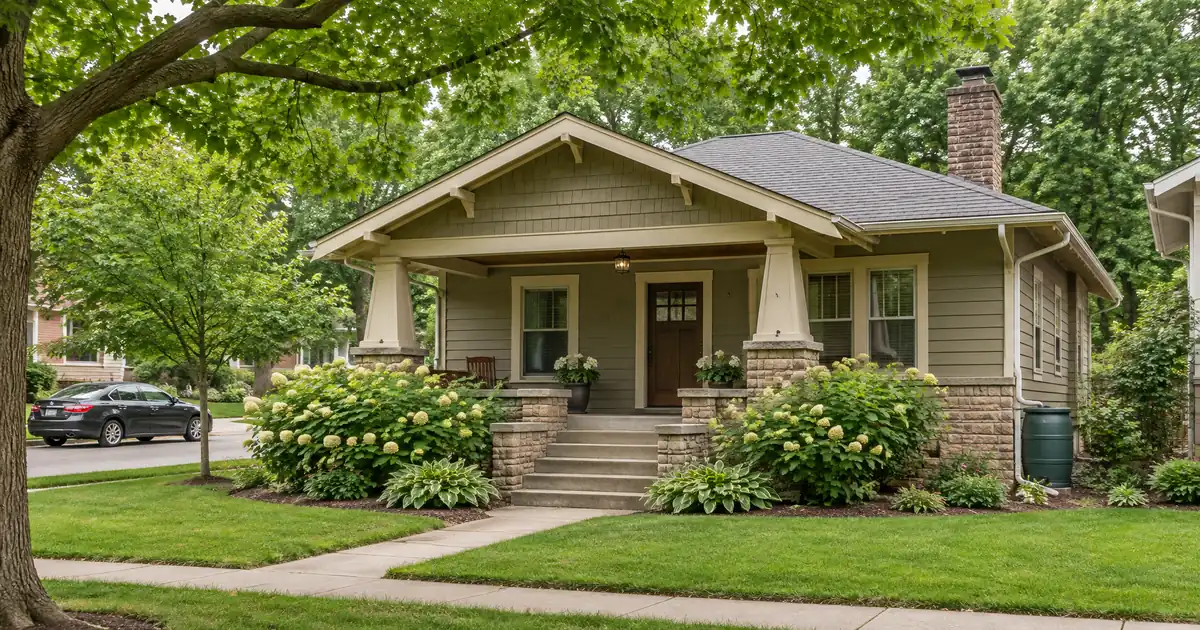
The Quick Read: A leased solar system does not automatically block a bank statement HELOC, but it adds two checkpoints that a standard file does not have: a recorded filing on title, and a recurring lease payment on the debt side of the ratio. Which lenders fit depends on how the filing reads, how the payment affects debt-to-income, and what occupancy the line is secured by.
- A solar lease or PPA is a service contract, not a loan on the home, but it often leaves a UCC-1 filing behind.
- Bank statements prove self-employed income. They do not remove the equity, credit, or debt-ratio tests.
- Leased panels add no appraised value, and they add no loan balance to subtract either.
- On this network, an investment-property line tops out at 70% CLTV. On primary residences and second homes the ceiling reaches 90% CLTV, but only at a 720-or-better credit profile and within the loan-amount limits for that tier. A primary-residence line above $500,000 caps at 75% CLTV.
- Lendmire is a broker. It matches the file to a wholesale HELOC program; it does not lend.
Rental income from the property is not the test here. A bank statement HELOC reads deposits, so the lease payment competes with your other obligations for room under the debt-to-income limit. That competition for room is the thread running through the rest of this page.
How large a line the equity supports.
An equity line is sized by combined loan-to-value, occupancy, and credit — not by rental coverage. Switch the occupancy or the credit band and the ceiling moves with it.
Investment-property lines require a 700 minimum credit score; second-home lines start at a 640 minimum and primary-residence lines at 600, and the combined-LTV ceiling steps down as the credit band drops on primary-residence and second-home lines and holds on investment-property lines; the line cap steps down on primary-residence lines and holds at every tier on investment-property and second-home lines.
A debt-to-income ratio above 45% requires 680+ credit. Profiles under 640 are limited to single-family homes. At least 75% of the approved line is drawn at closing. Ceilings, floors, and caps update from Lendmire’s centralized guideline source.
Line estimate
Illustrative estimate only — not a quote, Loan Estimate, approval, or commitment to lend. The rate is an editable assumption; equity-line pricing is variable through both the draw and repayment periods and never converts to fixed. Occupancy and credit drive the ceiling together: an investment property tops out at 70% combined LTV (minimum credit 700, line cap $500,000); a second home tops out at 90% combined LTV (minimum credit 640, line cap $500,000), with the ceiling stepping down as the credit band drops (the cap holds at every tier); a primary residence tops out at 90% combined LTV (minimum credit 600), and its $750,000 maximum line is available only at 75% combined LTV or below with a 700-or-better credit profile (720 on the longer-runway program) and a full appraisal. Lines above $500,000 require a full appraisal. Credit, debt-to-income, property type, and full underwriting review all affect the final line.
What Is a Bank Statement HELOC on a Home With Leased Panels?
It is a standalone home equity line, in first or second lien position, where a self-employed borrower documents income from 12 or 24 months of deposits instead of tax returns. The solar lease is a separate contract that sits beside it. The two only meet at two points: title and the monthly debt ratio.
Lendmire works with a network of wholesale HELOC lenders. Their programs qualify the borrower on documented income under the applicable program, subject to lender guidelines. That is a different test from a DSCR loan, which qualifies primarily on property-level rental income covering the payment.
Key Terms Defined
- Solar lease: a contract where a provider owns the panels on your roof and you pay a monthly fee to use them.
- PPA (power purchase agreement): a contract where you pay for the electricity the panels produce, often with a yearly escalator.
- UCC-1: a public filing that tells the world a provider has a claim on specific equipment.
- Fixture filing: a UCC-1 with an addendum recorded in the county property records, so it shows up in a title search.
- CLTV: combined loan-to-value, meaning all liens on the property divided by its value.
- Bank statement HELOC: a home equity line that proves self-employed income from deposits.
Lease, PPA, Loan, or PACE: Why the Structure Comes First
The first step is sorting what you actually have. A CFPB solar financing report separates loans, where the homeowner owns the panels, from leases and PPAs, where the homeowner buys the energy without owning the equipment. The same report notes that typical leases run 15 to 20 years and that PPAs can carry escalators of 1 to 5 percent a year.
That structure drives everything downstream:
| Arrangement | Title effect | Debt-ratio effect | Appraisal effect |
|---|---|---|---|
| Lease | Often a UCC-1 or fixture filing | Payment counts as a recurring debt | No panel value |
| PPA | Often a UCC-1 or fixture filing | Payment usually counts; production terms matter | No panel value |
| Solar loan | UCC-1 or recorded lien | Loan payment counts; balance counts toward CLTV | Panels may be part of the home |
| PACE | Repaid through the tax bill | Adds to the tax obligation | Treated as a tax-lien problem |
| Owned outright | Nothing recorded | None | Part of the home, per the appraiser |
Only a loan creates a balance. A lease or PPA creates a payment and a filing, which is why the file reads differently.
How Underwriting Treats the Solar Lease, Step by Step
1. Identify the structure. Pull the lease or PPA, every amendment, the latest provider statement, and any UCC-1 or fixture addendum.
2. Search title and UCC records together. A title-industry explainer from Skyline Title Support says a leased or financed system is usually secured by a UCC-1 fixture filing that surfaces on the title commitment as a closing requirement. Ordering the UCC search with the title search keeps surprises off the closing table.
3. Check the filing’s wording. The collateral is typically the panels and related hardware, as the law firm Pender & Coward explains. A fixture filing lands in the county property records. A plain UCC-1 sits in the state system. A filing worded to reach the real estate itself may need amending or release.
4. Test lien position. For a line behind an existing first mortgage, the question is whether anything could sit ahead of the new lien. Panel-only filings are easier to live with. Broad filings may require the provider to subordinate or release.
5. Run the debt-to-income test. The lease or PPA payment generally joins the monthly obligations. On the programs in this network, the maximum DTI is 50%, with 45% for credit profiles from 600 to 679, and the line is qualified on the interest-only payment at the maximum draw. Every figure is subject to lender guidelines and full file review.
6. Run the CLTV test. The appraisal gives no credit for leased panels, so the value of the home is counted without them, even when a precautionary UCC filing is recorded.
Three gates, three separate questions: equity, income, and title. Bank statements only help with the income gate.
How the Bank Statement Piece Works With a Lease Payment
Deposits from 12 or 24 months of business or personal statements become the qualifying income. The lease payment then lands on the debt side of the ratio. If the payment runs through a business account, make sure the statements, the lease, and the filing all tell the same story. Mismatched payment sources invite questions.
Picture a self-employed contractor with steady deposits and a solar lease that adds one more fixed monthly obligation. Income qualifies, but the extra debt moves the ratio closer to the 45% or 50% line. At a modest debt load, that is a small nudge. At a heavy one, it can decide the file.
Note the agency contrast too. The current agency guide includes the lease payment in DTI unless it is tied to delivered energy with a production guarantee. Non-agency programs set their own treatment, so a production-based PPA is something to flag early rather than assume.
What the Network’s Equity Line Programs Look For
Program parameters differ by occupancy, and this is where most solar-lease borrowers need to be precise. All figures are typical guidance within select wholesale programs, not guarantees. Exact terms depend on lender and investor guidelines, credit profile, reserves, and property review.
| Occupancy | Max CLTV | Credit | Max line |
|---|---|---|---|
| Primary residence | 90% only at 720+ and up to $500,000; 75% at 700+ up to $750,000 | 600 minimum | $750,000 |
| Second home | 90% only at 720+ | 640 minimum | $500,000 |
| Investment property | 70% | 700 minimum | $500,000 |
On this network, an investment-property line is capped at 70% CLTV regardless. Terms depend on the lender’s guidelines, the property type, the leverage, and a full review of the credit profile.
Other mechanics worth knowing:
- Lines are in first or second lien position. At least 75% of the line is drawn at closing, so the balance starts large and the interest-only payment at the maximum draw is what the file is qualified on.
- Lines of $500,000 or less ordinarily use an automated valuation, though a higher CLTV may require a secondary valuation. Anything above $500,000 needs a full appraisal, and a borrower may request one in any case.
- Title must sit with the individual or a revocable living trust. LLC-held properties cannot take this product.
- Manufactured homes, log homes, and condotels are not eligible.
- The product is arranged in Lendmire’s 16 full-service states, which is narrower than the DSCR footprint.
Where the General Rule Breaks
Several edge cases change the answer.
Production-based PPAs. Payments tied to energy actually delivered may be treated differently from a flat lease. Treatment is lender-specific.
Solar loans with a recorded lien. A loan is a different animal. Its balance counts toward CLTV, and payoff alone does not clear a UCC-1. A UCC-3 termination has to be filed.
PACE. This is a tax-lien problem, not a lease problem. Agency rules make a PACE obligation a delivery issue unless paid in full by closing. That is contrast only, but it shows how differently PACE is handled.
Broad or precautionary filings. A solar UCC should never be assumed to cover only equipment and be safe to ignore. A filing that reaches the real estate may need to be amended.
Entity title. A property already deeded to an LLC cannot take this line. It needs a vesting change, or a DSCR cash-out refinance instead, subject to program terms.
W-2 earners. Bank statement qualification is a self-employed path. A pure W-2 borrower usually does not fit it.
Rental properties generally. Many large retail lenders will not write a line on a non-owner-occupied rental at all, which is why investors often end up in the non-agency channel.
What to Ask When Comparing Lenders
No honest page ranks lenders, because the best program for your situation depends on the property, credit, leverage need, and documents. A broker that shops multiple wholesale lenders can screen for fit. These questions sort programs fast:
- Does the program treat a lease or PPA payment as debt, and how does it treat a production-guaranteed PPA?
- Does it require subordination or release of a fixture filing, or accept a panel-only filing?
- What is the maximum CLTV for the occupancy of this exact property?
- Is a full appraisal required at this line size?
- Can the property be held in a trust, and what happens if it sits in an LLC?
Documents to Line Up Before Submitting
- 12 or 24 months of business or personal bank statements
- The solar lease or PPA, all amendments, and the latest provider statement
- Any UCC-1 or fixture addendum, plus a title and UCC search
- Mortgage statement for the existing first lien
- Proof of the payment source for the lease
Filing clean-up, such as a subordination or a UCC-3 after payoff, can lengthen the file, so ordering the title and UCC search early keeps it moving.
When DSCR Is the Better Fit
If personal debt-to-income is the constraint, or the property is in an LLC, a rent-based loan avoids the personal-income test. DSCR loans are designed for non-owner-occupied investment properties, and they qualify primarily on property-level rental income covering the payment, subject to lender guidelines. On most DSCR files in this network, purchases land at 75% to 80% LTV and cash-out refinances top out around 75%. Credit floors, reserves, and property eligibility still apply. Clearing 1.00 coverage is not the same as positive cash flow, because repairs, vacancy, and management sit outside the ratio. The complete DSCR loans guide covers the full structure.
The tradeoff runs both ways. A line keeps a low first mortgage intact and draws only what you need. A cash-out refinance replaces the first lien. Which is better turns on how the existing first mortgage compares with current options and how much capital you actually need.
Frequently Asked Questions
Does a solar lease block a bank statement HELOC?
Not automatically. The lease adds a payment to the debt ratio and often a filing on title. If the filing is panel-only and the payment leaves room under the DTI limit, the file can move forward, subject to lender guidelines.
Does the lease payment count as debt?
Generally yes. Because a bank statement HELOC is income-tested rather than rent-tested, the payment sits in the monthly obligations. A production-guaranteed PPA may be treated differently by some lenders.
Do leased panels add appraised value?
No. A leased system is the provider’s equipment, so it adds no equity and subtracts none. Owned panels may support value, depending on comps and underwriter review.
Do I have to pay off or terminate the lease first?
Usually not. What matters is whether the filing can stay behind the new lien or be subordinated. If a solar loan is involved, payoff does not clear the filing on its own; a termination filing is also needed.
Can I get this line on a rental property?
Sometimes. On this network an investment-property line requires a 700 credit score, caps at 70% CLTV and $500,000, and must be held by an individual or revocable trust. Many large retail lenders do not write these lines at all. The exact numbers vary by lender and program and follow a full review of property, leverage, and credit.
If you are considering a home equity line and want to see how the numbers work, Lendmire can help you compare HELOC options based on the property, the equity available, credit profile, combined leverage, and your goals. Programs change, and every file is reviewed individually; this is not a commitment to lend.
About Lendmire
Lendmire is a mortgage brokerage (NMLS# 2371349) arranging home equity lines of credit — primary-residence, second-home and investment-property lines — through a wholesale lending network in its 16 full-service states. Eligibility is determined by the lender on each file. Scotsman Guide named Lendmire a Top Mortgage Workplace in both 2025 and 2026.
Get Started
Ready to find the right loan for you?
See your offer in seconds. No credit pull, no obligation.
Informational only. Not a Loan Estimate, approval, or commitment to lend. Program availability and eligibility are subject to lender guidelines, credit approval, property review, and underwriting.
References
1. CFPB Issue Spotlight: Solar Financing
2. Skyline Title Support: Solar Panel UCC Liens
3. Pender & Coward: What to Know About UCC Liens Before Going Solar
This article is part of Lendmire’s bank statement HELOC program — full qualification details, guidelines, and scenarios live on the program page.
Related reading: Top Bank Statement HELOC Providers for Homes With Leased Solar Panels · Bank Statement HELOC Requirements With Leased Solar Panels · Best Bank Statement HELOC Program Approved With Leased Solar Panels · Can You Get a Bank Statement HELOC Approved With Leased Solar Panels? · Bank Statement HELOC to Pay for Solar Panels
Brandon Miller
Founder & CEO, Mortgage Loan Originator, Lendmire LLC
- Mortgage Loan Originator · NMLS# 1129696 · Verify on NMLS Consumer Access
- North Carolina Real Estate Broker · License# 343312 · Verify on NCREC
- North Carolina Insurance Producer · License# 19053198 · Property, Casualty, Life, Health · Verify on NAIC SBS
- Lendmire LLC · Firm NMLS# 2371349 · Verify firm licensure
Important disclosures. Lendmire (NMLS# 2371349) is a licensed mortgage brokerage. Lendmire is not a direct lender, depository institution, or financial advisor. All loan inquiries are subject to lender underwriting; this article does not constitute a commitment to lend. Rates, terms, and program guidelines are subject to change without notice and vary by borrower profile, property type, and state. Information in this article is general in nature and is not financial, legal, or tax advice. Equal Housing Opportunity. NMLS Consumer Access: nmlsconsumeraccess.org.