
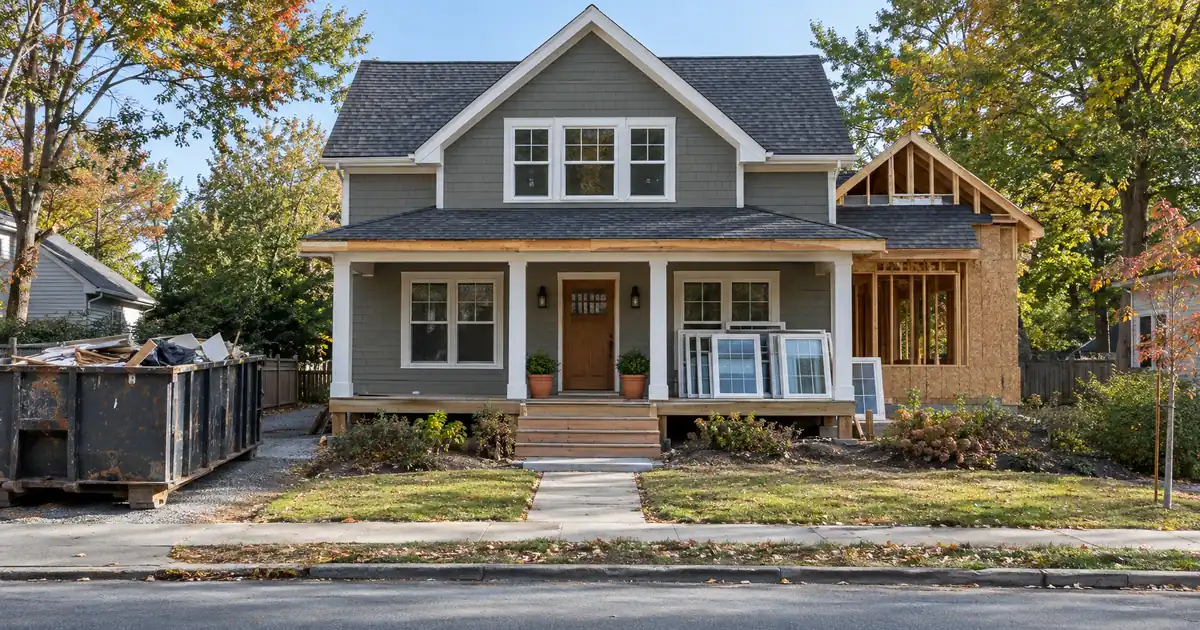
The Quick Read: Applying means defining your exit, building a deal package of purchase contract, scope of work, budget and comparable sales, getting the property appraised for as-is and after-repair value, and passing a review of your credit, liquidity and plan, because the loan is underwritten to the property and the exit more than to your income.
- The lender sizes the loan off the property, the plan and the exit, then checks your credit and cash.
- Across the wholesale network, first-timers typically receive leverage that varies by scenario, with the loan capped at 75% of after-repair value.
- Your real cash need is bigger than the down payment: fees, interest carry, reserves and contractor float all count.
- Lenders review these loans for non-owner-occupied investment property only, and every file is underwritten individually.
- The loan is a bridge, so a sale or a refinance has to repay it.
What a Hard Money Bridge Loan Actually Is
A hard money bridge loan is a short-term loan from a private or non-bank lender, secured by the property and repaid by a sale or refinance. “Hard money” describes the lender type. “Bridge” describes the job, which is spanning the gap until longer-term financing takes over.
What this loan actually costs to carry.
Hard money is sized against the project and priced by time. Enter the deal and see how much the program will lend, the cash required at closing, the carry while you hold it, and what is left at the exit.
Leverage tiers on the current program: 85% with fewer than 2, 90% with 2 or more, 93% with 5 or more completed projects — every tier capped at 75% of after-repair value. Loan amounts up to $5,000,000, larger by exception; terms of 6 to 18 months, interest-only, no prepayment penalty. The rehab portion funds in draws against completed work, not at closing.
Program parameters shown update from Lendmire’s centralized guideline source. Rate, points, and months are editable assumptions, not quoted terms.
Cost cap sets the loan · positive spread
Illustrative estimate only — not a quote, Loan Estimate, approval, or commitment to lend. Rate, points, and months are editable assumptions. Hard money is business-purpose financing for real estate investors, not a consumer mortgage. Leverage on the current program tops out at 93% of project cost for investors with a documented track record, capped at 75% of after-repair value, with rehab funding up to 100% of the documented budget released in draws; actual terms vary by lender, borrower experience, property, and exit. Lendmire is a mortgage broker, not a lender.
This article covers the investor version. It does not cover the homeowner bridge loan that borrows against one house while buying another.
| Factor | Hard money bridge | Bank mortgage |
|---|---|---|
| Lender focus | Property, plan, exit | Borrower income and debt |
| Value tested | Often after-repair value | As-is appraised value |
| Term | Short, interest-only | Long, amortizing |
| Repaid by | Sale or refinance | Monthly payments |
Are You Ready to Apply?
You are ready when you can answer four questions on paper: what you are buying, what it costs to finish, what it is worth afterward, and how the loan gets repaid. If any answer is vague, wait. A lender reads vagueness as risk.
Run this checklist first:
- You have a specific property under contract or identified, not just a budget.
- You have a written scope of work and a contractor quote you can defend.
- You have comparable sales that support the after-repair value.
- Your credit is at or above the network’s 620 minimum, ideally at 660 or higher (below 660, extra conditions apply).
- You hold cash for the equity, fees, interest carry and reserves, not just the down payment.
- You have a primary exit and a backup exit.
This article assumes you have decided.
The Application, Step by Step
Every file follows the same arc. The details change with the lender and the deal.
| Step | You provide | Where it stalls |
|---|---|---|
| 1. Define deal and exit | Strategy in plain terms | Exit is vague |
| 2. Build your numbers | Cost, budget, ARV | Optimistic ARV |
| 3. Pre-qualify | Credit and scenario | Thin liquidity |
| 4. Submit package | Documents below | Missing items |
| 5. Appraisal and review | Property access | Value comes in low |
| 6. Term review | Questions answered | Unread terms |
| 7. Close and draw | Draw requests | Work behind schedule |
Step 1: define the transition and the exit. The exit repays the loan, because the loan can exceed what the property is worth today. Lenders underwrite the exit as seriously as the deal.
Step 2: build your numbers. Add purchase price and rehab budget to get total project cost. Estimate the after-repair value (ARV), which is what the property should be worth once the work is done. Loan-to-cost (LTC) divides the loan by total project cost, while loan-to-value divides it by appraised value. They are different tests, and your loan must pass both.
Step 3: pre-qualify. Talk to a broker or lender about credit, liquidity and the scenario before you spend money on an appraisal. A broker with a wholesale network can show you how several lenders would size the same deal.
Step 4: submit the package. Send everything at once, because partial files get stuck.
Step 5: appraisal and review. The appraiser reports an as-is value and an after-repair value. The lender sizes the loan at the lesser of the cost-based test and the value cap.
Step 6: review the terms. Read them before you sign, as the lender-vetting section below explains.
Step 7: close, then draw. Rehab money typically releases in stages as work is completed, so you front costs and get reimbursed.
What Goes in the Package
A complete package answers three questions: who you are, how you hold title, and what the project is.
| Group | Typical items | Why they ask |
|---|---|---|
| Borrower | Application, ID, credit authorization, bank statements | Credit and liquidity |
| Entity | Operating agreement, EIN letter, good standing | Who signs and owns |
| Project | Contract, scope, budget, comps | Value and feasibility |
Many lenders prefer that title sit in an LLC, subject to lender program eligibility. Ask a real estate attorney or CPA how to form it, since the structure affects your liability. Expect a personal guarantee, which means you are personally on the hook if the loan defaults.
Your Exit Plan Is Half the File
The exit is the lender’s repayment plan, so a first-timer needs a primary exit and a backup. A credible exit names the buyer or the loan type, shows the numbers and does not depend on a single optimistic assumption.
Scenario one: fix and sell. You buy, renovate and list. Your primary exit is a sale at the appraised ARV. Your backup is renting the property and refinancing into long-term financing if the market softens.
Scenario two: buy and hold. You buy a dated rental, renovate and stabilize it with tenants. Many investors then refinance into long-term DSCR financing, and Lendmire arranges that path. Your backup is selling if the rent does not cover the new payment. The complete DSCR loans guide explains how that refinance is evaluated.
Scenario three: buy before a refinance. You close on a property that is not yet reviewable through conventional channels, such as one needing repairs. The exit is the refinance once the property is repaired.
A weak exit says “I will figure it out later.” A strong exit says “I will sell, or if the market is flat, I will rent and refinance, and here is why both work.”
What Your Cash Really Covers
Your cash covers more than the down payment. Here is the network’s structure, which varies by lender, property and experience.
Fix-and-flip leverage is tiered by completed projects: 85% of project cost with fewer than two, 90% of project cost with two or more, and 93% of project cost with five or more. Every tier is capped at 75% of ARV. Up to 100% of the rehab budget funds in draws against completed work. A bridge purchase with no rehab typically funds up to 80% of the purchase price, and a refinance tops out around 65% of value. There is no true 100% purchase program.
For comparison, HousingWire reports that most hard money lenders ask for 20–30% down. A first-timer in the network sits in the 85% tier, so you bring about 15% of project cost, though the ARV cap can raise that. The exact numbers vary by lender and program and follow a full review of property, leverage, and credit.
Run the cap this way. If the ARV is 1.1 times your project cost, 75% of ARV equals 82.5% of cost, so the cap binds before the 85% tier does and your equity grows. If the ARV is 1.3 times cost, the 85% tier binds instead.
Then stack the rest of your cash needs:
- Equity: the gap between total cost and the loan.
- Closing costs and lender fees.
- Interest carry, since the loan is interest-only and you pay monthly until the exit.
- Draw float, the money you front before reimbursement.
- Reserves for surprises.
The short answer is that a low down payment does not mean low cash needed. Tax treatment varies; consult a qualified professional about how loan costs and improvements are handled.
No Track Record? Build One on Paper
First-timers get approved on credibility. You can build it three ways.
Bring an experienced contractor with a documented history of similar work, and show that contractor’s quote. Choose a simple scope, such as cosmetic updates rather than structural changes. Hold extra liquidity beyond the minimum, because cash is the best substitute for experience.
A partner with completed projects can also help. Do not claim their experience as yours, since lenders verify. The first completed project is worth a lot, because it moves you toward the 90% tier on the next deal.
Why Files Stall or Get Declined
Most delays trace back to a short list.
- The appraisal lands below your ARV. The cap shrinks the loan, and your cash need grows. Build in a cushion before you submit.
- The exit is thin. A lender that cannot see the repayment path will pause.
- Documents are missing. Entity papers and bank statements are the usual gaps.
- Credit sits below 660. The 620 minimum exists, but additional conditions apply below 660.
- The property is ineligible. The network covers non-owner-occupied residential of one to four units. Commercial, land and owner-occupied property are not offered, and a rural appraisal can mean lower leverage.
- The budget is soft. An unbinding contractor quote worries underwriters.
The fix is usually to resize. Add cash, simplify the scope or strengthen the exit, then resubmit.
How to Size Up a Lender and an Offer
Compare lenders on terms, not on promises. Ask each one these questions:
- Is interest charged on the whole loan, or only on funds drawn? Many lenders differ here, and it changes your carry.
- How are draws released, and what inspections are required?
- What is the term, and what does an extension cost if your exit slips?
- Is there a prepayment penalty? The network’s bridge program has none, with terms of 6–18 months, interest-only.
- Is the lender licensed where the property sits?
Be cautious of any lender that promises approval before underwriting.
Hard money bridge loans are business-purpose investor loans, which is why they are reviewed differently from an owner-occupied mortgage. The CFPB’s Truth in Lending summary notes that business-purpose credit is generally exempt from consumer disclosure rules. That puts the burden on you to read the terms yourself.
Key Terms Defined
ARV (after-repair value): the estimated value of the property once renovations are finished.
Loan-to-cost (LTC): the loan divided by total project cost, including rehab.
Loan-to-value (LTV): the loan divided by appraised value.
Draw: a staged release of rehab funds after completed work.
Draw float: the money you front before a draw reimburses you.
Personal guarantee: your personal promise to repay if the borrowing entity cannot.
Exit strategy: the planned way the loan gets repaid, usually a sale or a refinance.
Frequently Asked Questions
Can I use a hard money bridge loan on my primary home?
No. These loans are for non-owner-occupied investment property of one to four units, with ground-up construction going to ten units. A primary residence follows a different, consumer-mortgage path.
Do I need an LLC?
Many lenders prefer or require one, subject to lender program eligibility. Speak with an attorney or CPA about the right structure for you before you apply, because the entity affects both liability and the documents you submit.
Does my credit score matter if the loan is asset-based?
Yes. The network’s minimum is 620, with additional conditions below 660. The property drives the sizing, but credit still decides whether you clear the file and which leverage tier you can use.
What if my exit falls through?
Talk to your lender before the term ends, not after. Options include extending, selling or refinancing into long-term financing, and each carries costs. This is why a backup exit belongs in the original file.
What is the difference between hard money and a bridge loan?
Hard money describes the lender, a private or non-bank source. A bridge loan describes the purpose, which is covering the gap until permanent financing. Many investor loans are both.
Next Step
If you are buying, rehabbing or refinancing an investment property on a short timeline and want to see how the numbers work, Lendmire can help you compare hard money options based on the project, the exit plan, leverage and your goals. Lendmire brokers financing through select lenders across 41 markets, including Washington, D.C. Programs and terms vary by lender, property and experience, and nothing here is a commitment to lend.
About Lendmire
Lendmire (NMLS# 2371349) is a mortgage brokerage focused on DSCR investor financing, helping arrange programs through wholesale and investor-lending channels in 41 markets, including Washington, D.C. DSCR loans are evaluated by the lender on property cash flow rather than personal income, subject to lender guidelines, supporting LLC closings and accommodating investors with four or more financed properties. Scotsman Guide Top Mortgage Workplace in both 2025 and 2026.
The exit plan matters as much as the purchase price on short-term financing – see the hard money loan overview.
Get Started
Ready to find the right loan for you?
In about 30 seconds you can review financing options available for your investment property. No commitment required.
Informational only. Not a Loan Estimate, approval, or commitment to lend. Program availability and eligibility are subject to lender guidelines, credit approval, property review, and underwriting.
References
1. Corporate Finance Institute: Loan to Value Ratio
2. HousingWire: hard money explainer
This article is part of Lendmire’s hard money loan program — full qualification details, guidelines, and scenarios live on the program page.
Related reading: Hard Money for a Six-Unit Rehab vs. a 2-4 Unit Bridge Loan · How a First-Time Flipper Can Qualify for a Lower Hard Money Down Payment · Hard Money Loan Credit Reporting Rules for Personal Credit
Brandon Miller
Founder & CEO, Mortgage Loan Originator, Lendmire LLC
- Mortgage Loan Originator · NMLS# 1129696 · Verify on NMLS Consumer Access
- North Carolina Real Estate Broker · License# 343312 · Verify on NCREC
- North Carolina Insurance Producer · License# 19053198 · Property, Casualty, Life, Health · Verify on NAIC SBS
- Lendmire LLC · Firm NMLS# 2371349 · Verify firm licensure
Disclosure information. Lendmire is a state-licensed mortgage brokerage under NMLS# 2371349. Lendmire is not a depository institution, direct lender, or financial advisor — all loans referenced are placed through wholesale lender partners and are subject to each lender's underwriting standards. This article is provided for general informational purposes and is not a commitment to lend, nor does it constitute financial, legal, or tax advice. Loan programs, terms, rates, and qualification standards change without notice and depend on borrower profile, property type, and the state in which the subject property is located. Equal Housing Opportunity provider. NMLS Consumer Access: nmlsconsumeraccess.org.