
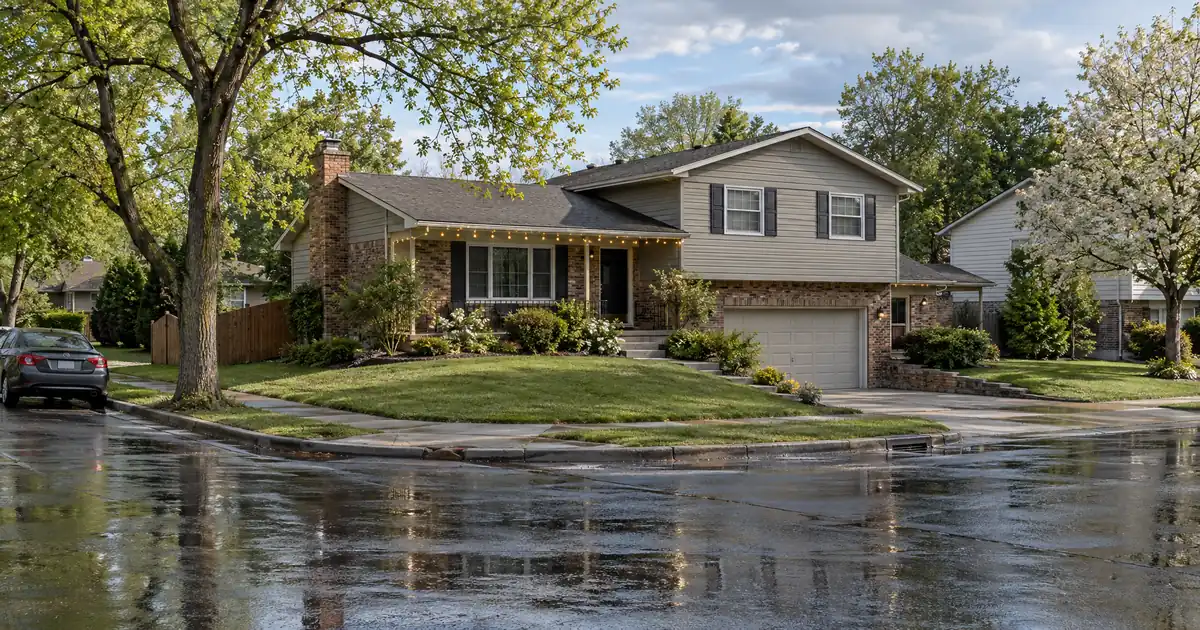
The Quick Read: Yes, in many cases: a bank statement loan can be written on a second home, and select programs in the wholesale network offer adjustable structures, but the borrower is qualified on a stress-tested payment rather than the teaser payment, the property must be used as a true second home, and ARM availability depends on the individual lender program.
- Income is documented from 12 months of business or personal bank statements. The loan is reviewed on documented income under the applicable program, subject to lender guidelines.
- Adjustable terms are a program feature, not a guarantee. Some lenders offer them on second homes and some do not.
- A second home has to be personally used and not run as a rental. If rent is part of the plan, the file belongs on investment occupancy or a DSCR loan.
- Loan sizes typically run from $125,000 to $3,500,000, and reserves commonly sit near 6 months of the housing payment.
Self-employed buyers often ask this question after a lender says yes to bank statements and yes to a second home, but never says whether the two work with an adjustable structure. The honest answer is a set of conditions. This article walks through each one.
What your deposits qualify you for.
Alt-doc programs read 12 months of business or personal bank deposits instead of tax returns. Enter your average monthly deposits and see the income a lender would credit you.
The expense factor is set by the lender from your business type and profit-and-loss statement; it is not a number you choose. This widget quotes no rate and no payment.
Program parameters shown update from Lendmire’s centralized guideline source.
Estimate
Illustrative estimate only — not a quote, Loan Estimate, approval, or commitment to lend. Deposit average, expense factor, and housing ratio are editable assumptions; the expense factor a lender applies is set from your business type and documentation. No interest rate or monthly payment is quoted here. Purchase capacity is a simplified illustration and does not account for taxes, insurance, HOA dues, or other debts. Alt-doc income documentation is available on consumer mortgages in the states where Lendmire is licensed for consumer lending; actual terms vary by lender, borrower, and property.
Key Terms Defined
Bank statement loan: A non-QM mortgage that uses deposits in 12 months of bank statements, instead of traditional personal-income documentation, to estimate qualifying income.
Second home: A one-unit property the borrower personally uses part of the year, controls exclusively, and does not rent out as an investment.
ARM (adjustable-rate mortgage): A loan whose rate is fixed for an opening period and then resets on a schedule.
Index and margin: The index is a market benchmark. The margin is a fixed number the lender adds to it. Together they set the rate after the opening period.
Expense factor: The share of business-account deposits a lender treats as operating cost before it counts the rest as income.
Stress-tested payment: The payment the lender uses to qualify you, which is higher than the opening payment on most ARMs.
Can a Second Home Use Bank Statement Income?
A second home can use bank statement income on most programs in the wholesale network that allow second-home occupancy. The documentation type is separate from the occupancy type. Lenders first decide what the property is, then decide how income is proven.
Across the network, bank statement programs are written for primary residences, second homes and investment properties. The leverage differs by occupancy. A primary residence can reach up to 90% LTV on a purchase or rate-term refinance through select lenders, and the strongest files earn the top of that range. Second-home purchase leverage is set by the individual lender program, so confirm the ceiling before you price the deal. On an owner-occupied cash-out, whether the property is a primary residence or a second home, the ceiling is up to 80% LTV with a fixed expense ratio (75% with an accountant-prepared ratio), depending on loan size and credit. Final terms depend on the lender’s guidelines, the property type, and the borrower’s complete credit picture.
Occupancy is where files get into trouble. A second home must be suitable for year-round use and cannot sit in a rental pool or timeshare. Lenders look for consistency in the file. Traditional personal-income documentation, insurance policies, listings and address records should all tell the same story. If they do not, expect questions.
Lendmire arranges these loans as a broker through select lenders. Its consumer mortgage licensing covers 16 states, so the property’s state affects whether a second-home bank statement file can be placed at all.
How Are Deposits Turned Into Income?
Lenders average eligible deposits across the statement period. The result is monthly qualifying income. Transfers between your own accounts, loan proceeds and one-off credits are stripped out first.
Statements Ready describes the same sequence: total the eligible deposits, remove non-income credits, apply a factor to business accounts, and divide by the number of months. Personal-account deposits are generally counted without an expense factor, while business deposits take one.
Across the programs the network sees, the expense factor is lender-specific. Some lenders use a fixed ratio. Many accept a lower ratio when a CPA or other qualified preparer certifies the actual expense figure. Nobody should promise a universal formula, and no borrower should assume the ratio from a friend’s file will apply to theirs.
Bank statements change how income is documented. They do not make the review lighter. Credit, assets, reserves, the property and the full debt picture are all still reviewed. The new housing payment and the borrower’s other debts count against the income the deposits produce.
Does an ARM Change How You Qualify?
An ARM changes the payment the lender uses, and the change works against you. You are not qualified on the opening payment. For a second home, which is consumer-purpose credit secured by a dwelling, federal ability-to-repay rules apply.
The CFPB’s ability-to-repay compliance guide says the creditor generally calculates the payment using the greater of the fully indexed rate or the introductory rate, on a fully amortizing basis. If the teaser rate is below the fully indexed rate, the qualifying payment still uses the higher one.
Here is how the rate works after the opening period. Per Ask CFPB, the new rate is the index plus the margin, subject to any caps. Periodic and lifetime caps vary by program, and the margin is generally fixed for the life of the loan.
One point causes confusion. The five-year maximum-rate test applies to General QM loans. Bank statement loans are typically non-QM and are not held to that test. Their floor is still the fully indexed or introductory rate, whichever is greater.
Interest-only variants follow a separate calculation. Term structure on alt-doc loans follows each lender’s program sheet, so describe length and structure as program-specific. Do not assume a 40-year or interest-only option exists on a bank statement file. Those structures sit on the DSCR side.
Disclosure regime follows occupancy
An owner-occupied second home is a consumer mortgage, so TRID disclosures apply. A bank statement loan on a non-owner-occupied rental, including a short-term rental, is business-purpose and exempt from TRID. Keep the two lanes separate in your head and on your file.
ARM or Fixed on a Second Home?
Choose by holding period and payment tolerance. A second home usually carries less urgency than a primary residence, which is exactly why a payment reset deserves more thought, not less.
| Factor | ARM | Fixed |
|---|---|---|
| Opening payment | Lower during fixed period | Stable throughout |
| Qualifying payment | Stress-tested, higher | Note payment |
| Reset exposure | Yes, index plus margin | None |
| Best fit | Short hold or planned exit | Long hold, tight budget |
| Availability | Varies by program | Widely offered |
An ARM tends to fit when the investor plans to sell or refinance before the first reset, and has reserves to absorb a higher payment if that plan slips. A fixed structure tends to fit when the second home is a long-term hold and the owner wants no surprises.
Thinking out loud, the harder case is the middle: a buyer who expects to keep the property for a decade but wants a lower opening payment. That buyer is betting on a refinance. Refinancing a bank statement loan later depends on the same deposit history, credit and property value, and any of those can shift.
Second Home, Investment Property or DSCR?
If you want rent to count, the file is no longer a second home. Occasional rental use is possible on some files. Heavy rental activity can reclassify the property as an investment, and rental income generally cannot be used to qualify on a second-home file.
| Factor | Second home | Investment | DSCR |
|---|---|---|---|
| Personal use | Required | No | No |
| Rent counts to qualify | Generally no | Program-based | Yes |
| Income basis | Documented deposits | Documented deposits | Property rent |
| Stated purpose | Consumer | Business | Business |
DSCR loans are designed for non-owner-occupied investment properties. Because they are business-purpose investor loans, they are reviewed differently from a standard owner-occupied mortgage. They qualify primarily on property-level rental income covering the payment, subject to lender guidelines, and are not a second-home product.
Here is where the choice turns practical. Each bank statement loan adds to the borrower’s personal debt-to-income ratio. A growing portfolio often shifts to DSCR for that reason. Lendmire’s complete DSCR loans guide covers how that product works for a pure rental purchase.
Investment-property cash-out on bank statement documentation tops out around 75% LTV. Investment purchase leverage on bank statements varies by lender, and investor-focused leverage guidance belongs to the DSCR side.
A Worked Scenario Without the Payment
Picture a self-employed owner who runs a business account with strong deposits and heavy write-offs. Taxable income looks thin, but deposits support a solid average. The owner wants a second home in a resort area for personal use and prefers an adjustable structure with a fixed period for the first several years.
The lender averages deposits, removes transfers, and applies an expense factor to the business account. Suppose that leaves qualifying income that supports the stress-tested payment at a comfortable debt-to-income ratio. The file then turns on three things. First, does the stress-tested ARM payment fit, rather than the teaser payment? Second, are about 6 months of housing payment in reserves documented? Third, does the occupancy story hold up across the file?
Now change one fact. The owner decides to list the home for most of the year. The occupancy certification no longer fits. The better structure is investment occupancy on bank statements, or a DSCR loan if the rent covers the payment. Both are different files with different leverage.
What Derails These Files
Four problems show up repeatedly in second-home bank statement files.
1. Occupancy drift. The borrower plans to rent the home but applies as a second home. Listings, insurance and tax records surface the mismatch, and a false statement on the application carries real legal consequences.
2. Messy statements. Large transfers, mixed personal and business deposits and gaps in the 12 months mean the lender has to explain them or exclude them.
3. Qualifying on the teaser. Buyers price the deal on the opening payment and discover the lender used the higher stress-tested payment.
4. Thin reserves. Lenders commonly look for around 6 months of the housing payment, and the reserves need documentation, not just a balance.
Tax treatment can depend on how the funds are used and how the property is held; investors should keep clear records and speak with a qualified tax professional before relying on any deduction.
Questions to Ask Before You Pick an ARM
- Does this program offer an adjustable structure on second-home occupancy?
- What is the index, the margin, and the periodic and lifetime caps?
- Which payment will you use to qualify me?
- Is there a prepayment penalty, and when does it end relative to the first reset?
- What expense factor applies, and does a CPA-prepared ratio lower it?
- How many months of reserves do you want, and what counts?
Comparing answers across lenders is the main value a broker adds here. Lendmire’s piece Bank Statement Loan vs Full-Doc Jumbo for a Second Home Purchase helps with the documentation decision before the ARM question comes up.
Frequently Asked Questions
Can I get an ARM on a bank statement loan for a vacation home?
Possibly. A vacation home that you personally use and do not rent out counts as a second home. Whether the program offers an adjustable option depends on the individual lender, since not every bank statement program offers every structure or occupancy.
Will the lender qualify me on the low opening payment?
No. The lender generally uses the greater of the fully indexed rate or the introductory rate on a fully amortizing payment. The teaser payment is not the qualifying payment.
Can rental income from the second home help me qualify?
Generally not on a second-home file. If rent is part of the plan, the property usually belongs on investment occupancy with bank statements, or on a DSCR loan, subject to lender guidelines.
What leverage is available on a second-home cash-out?
On an owner-occupied cash-out, up to 80% LTV with a fixed expense ratio (75% with an accountant-prepared ratio), by loan size and credit. Purchase leverage on a second home is set by the individual program. Each figure is subject to lender guidelines and a complete review of property type, leverage, and credit.
Does DSCR work for a second home?
No. DSCR loans are for non-owner-occupied investment property. A second home needs personal use, which rules out an investor loan.
Next Step
Loans are arranged through select lenders and are not a commitment to lend; every file is underwritten individually.
About Lendmire
Lendmire is a non-QM mortgage brokerage (NMLS# 2371349) arranging DSCR investor loans in 41 markets, including Washington, D.C., through wholesale and investor-lending channels. DSCR loans are evaluated by the lender on rental income rather than personal income, subject to lender guidelines — a fit for LLC-owned portfolios, self-employed investors, and operators scaling beyond conventional loan caps. Recognized as a Scotsman Guide Top Mortgage Workplace in 2025 and 2026.
Get Started
Ready to find the right loan for you?
In about 30 seconds you can review financing options available for your home or investment property. No commitment required.
Informational only. Not a Loan Estimate, approval, or commitment to lend. Program availability and eligibility are subject to lender guidelines, credit approval, property review, and underwriting.
References
1. Statements Ready: what is a bank statement loan
2. CFPB Ability-to-Repay and Qualified Mortgage Small Entity Compliance Guide
3. Ask CFPB: index and margin on an adjustable-rate mortgage
This article is part of Lendmire’s bank statement loan program — full qualification details, guidelines, and scenarios live on the program page.
Related reading: Bank Statement vs Conventional With a W-2 Co-Borrower on the Loan · How a 5/6 or 7/6 ARM Lowers a Bank Statement Loan Payment · How to Qualify for a Bank Statement Purchase Loan for a Primary Home
Brandon Miller
Founder & CEO, Mortgage Loan Originator, Lendmire LLC
- Mortgage Loan Originator · NMLS# 1129696 · Verify on NMLS Consumer Access
- North Carolina Real Estate Broker · License# 343312 · Verify on NCREC
- North Carolina Insurance Producer · License# 19053198 · Property, Casualty, Life, Health · Verify on NAIC SBS
- Lendmire LLC · Firm NMLS# 2371349 · Verify firm licensure
Required disclosures. Lendmire (NMLS# 2371349) operates as a licensed mortgage broker, not a direct lender or depository. The discussion in this article is general in nature and should not be relied upon as financial, legal, or tax advice — every investment scenario is unique and should be reviewed by a qualified professional. Any loan inquiry is subject to lender underwriting, and this article is not a commitment to lend or a guarantee of approval. Mortgage rates, loan terms, and program guidelines vary by borrower, property, and state, and may change without notice. Equal Housing Opportunity. Verify licensure at NMLS Consumer Access.