
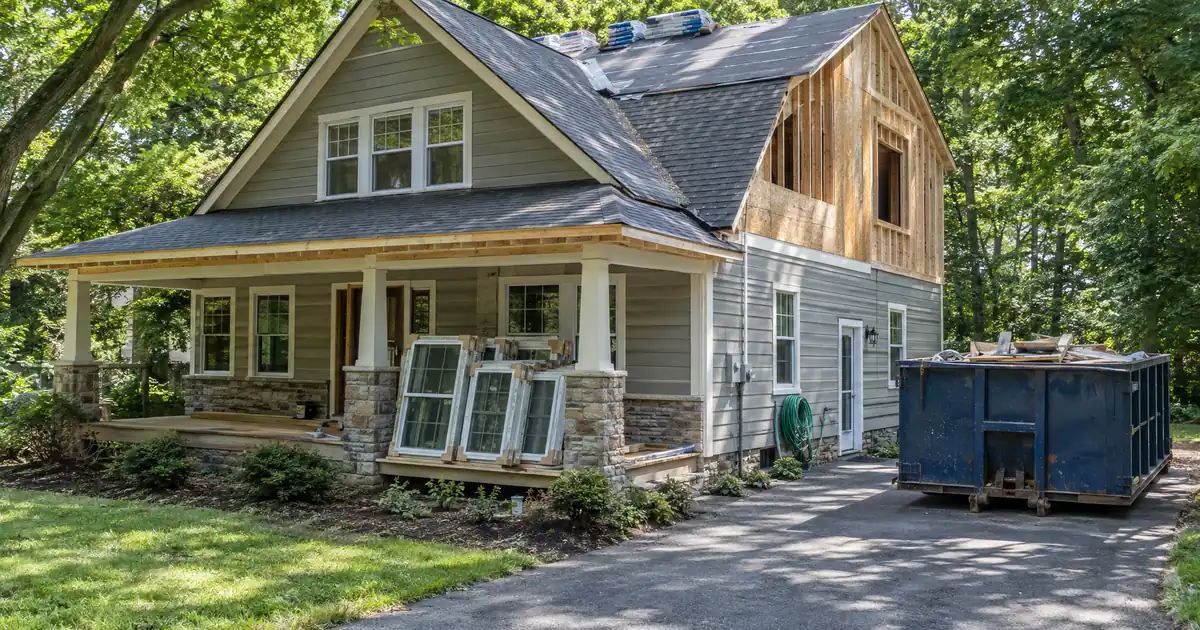
The Quick Read: Usually not by itself, because the down payment is only one of four cash needs on a flip, and the others are closing costs, working capital to start the rehab, and liquid reserves. Most investors who stall on a flip budgeted for the first item and ignored the rest. Rehab money also arrives in draws after work is done, so you carry early costs yourself.
- Across the network, fix-and-flip loans are sized as a share of project cost, topping out at 93% for experienced operators, 90% with two or more completed projects, and 85% with fewer than two. Every tier is capped at 75% of after-repair value (ARV).
- Up to 100% of the rehab budget can fund through draws against completed work. That is not the same as financing the purchase.
- Closing costs, builder’s-risk insurance, interest carry, and a reserve cushion all come out of your own cash.
- Thin flip margins leave little room to absorb a cash shortfall. All figures vary by lender, property, and experience, and nothing here is a commitment to lend.
Why One Average Hides Too Much
A single average down payment hides more than it shows. No official survey publishes one, and the ranges that circulate come from lenders describing their own programs. Experience, credit, the deal itself, and the lender’s appetite all move the number.
What this loan actually costs to carry.
Hard money is sized against the project and priced by time. Enter the deal and see how much the program will lend, the cash required at closing, the carry while you hold it, and what is left at the exit.
Leverage tiers on the current program: 85% with fewer than 2, 90% with 2 or more, 93% with 5 or more completed projects — every tier capped at 75% of after-repair value. Loan amounts up to $5,000,000, larger by exception; terms of 6 to 18 months, interest-only, no prepayment penalty. The rehab portion funds in draws against completed work, not at closing.
Program parameters shown update from Lendmire’s centralized guideline source. Rate, points, and months are editable assumptions, not quoted terms.
Cost cap sets the loan · positive spread
Illustrative estimate only — not a quote, Loan Estimate, approval, or commitment to lend. Rate, points, and months are editable assumptions. Hard money is business-purpose financing for real estate investors, not a consumer mortgage. Leverage on the current program tops out at 93% of project cost for investors with a documented track record, capped at 75% of after-repair value, with rehab funding up to 100% of the documented budget released in draws; actual terms vary by lender, borrower experience, property, and exit. Lendmire is a mortgage broker, not a lender.
Hard money is asset-based lending. The lender looks at the property, the rehab plan, and the exit, then at your track record. Terms usually run 6 to 18 months, interest-only, so the loan is built for a project and not a long hold.
The honest answer to the title is that the down payment tells you what you owe on day one. It does not tell you what you need to finish the flip.
What Is the Average Hard Money Down Payment Actually Measured Against?
It is measured against project cost in most structures, but the loan is capped by after-repair value. Investors confuse these two bases all the time, and the difference changes the cash you bring.
| Base | What it means | How it’s used |
|---|---|---|
| Purchase price | What you pay for the house | Used on bridge loans with no rehab |
| Project cost | Purchase plus rehab budget | Sets the main flip loan size |
| ARV | Value after the work is done | Caps the total loan at 75% |
On the network’s fix-and-flip programs, leverage runs 85% of project cost with fewer than two completed projects, 90% at two or more, and 93% at five or more. Whichever test gives the smaller loan wins. The 75% ARV cap often controls, and it surprises first-timers.
Run it as percentages. Say a project’s total cost equals 90% of its ARV. An 85% loan-to-cost tier would imply a loan of 76.5% of ARV, which is over the cap. The loan is held to 75% of ARV, or about 83% of cost, and you cover the rest.
The same flip at a total cost of 80% of ARV works differently. Even the 93% tier produces a loan of about 74% of ARV, so the cost test binds and the cap never bites.
The lesson is that a better deal on price lowers the cash you need. A tighter margin raises it.
What Moves the Number
Experience is the biggest lever, with credit, deal quality, and loan type behind it. Across the wholesale network, the pattern is consistent, and individual lenders tune it differently.
| Factor | Effect on cash you bring |
|---|---|
| Completed projects | More projects means higher loan-to-cost |
| Credit score | 620 minimum, with added conditions below 660 |
| ARV and scope | A thin margin lets the 75% cap bind |
| Loan type | Bridge purchases use a different base |
First-time investors do qualify, but at the lower leverage tiers. The top tier is reserved for people who have documented completed projects. A lender is not going to price a deal around your learning curve, and that logic is fair.
If your score sits between 620 and 660, expect extra conditions. Weigh whether lifting your score or writing a bigger check does more for your terms, because the two do not always trade evenly.
Down Payment vs Total Cash to Close vs Total Cash Needed
Three different numbers get called the down payment, and mixing them up is how budgets break.
- Down payment: your equity share of the purchase and project cost.
- Cash to close: the down payment plus title, insurance, and lender fees.
- Total cash needed: cash to close plus contractor float, interest carry, and reserves.
Here is what sits in that third bucket on a typical flip:
- Builder’s-risk insurance, which a lender usually wants in place before closing.
- Title and closing fees.
- The first contractor payment, which you often front.
- Monthly interest carry, since these loans are interest-only.
- Utilities, taxes, and insurance on a vacant property.
- A cushion for overruns and for a longer hold than planned.
Many investors treat the rehab draw as free money. It is reimbursement.
Rehab Money Comes Back in Draws
Up to 100% of the rehab budget can fund in draws against completed work. That figure is a rehab-budget feature and not a purchase loan-to-value number. There is no true 100% purchase program on this sheet.
The sequence runs like this. You close, start work, and pay the contractor. The work is inspected, and the lender reimburses that portion. Then the cycle repeats.
Between those steps, your own cash carries the project. Working capital needs to cover the gap between spending and reimbursement. Investors with a long record sometimes negotiate smoother draw terms, but a first-timer should budget to front the early work.
A project that is fully rehab-funded still leaves purchase equity, closing costs, and carry on your side. That is the real meaning of low-money-down.
A Worked Flip, in Percentages
Take a flip with total project cost indexed at 100 units. Treat the units as a modeling convenience and not a market price. The investor is a first-timer on the 85% tier, and the ARV leaves the cost test as the binding one.
The cash stack looks like this:
1. Down payment: 15% of project cost.
2. Closing and fees: an additional slice on top, varying by lender and deal.
3. Contractor float: the first stage of the rehab, until the first draw reimburses it.
4. Interest carry: monthly, on funds drawn so far, until sale.
5. Reserves: a buffer for overruns and delays.
Now stack the tiers side by side, all on the same project:
| Experience tier | Max loan-to-cost | Equity share of cost |
|---|---|---|
| Fewer than 2 projects | 85% | 15% |
| 2 or more projects | 90% | 10% |
| 5 or more projects | 93% | 7% |
Each tier remains capped at 75% of ARV. The equity share is only the first line of the stack. A seven-percent equity share means little if you cannot cover the other four lines.
An investor planning a no-rehab purchase uses a different structure. Bridge purchases without rehab run up to 80% of the purchase price on this program, which means about 20% down before fees and carry. Refinances are lower. Cash-out and rate/term refinances top out at 65% of value. Exact terms depend on the lender’s guidelines, property type, leverage, and a full review of the borrower’s file.
Where Does the Money Run Short?
Cash runs short in three places: overruns, delays, and a low appraisal. Each one hits you directly, because the loan is already sized to its caps.
Overruns. A budget that grows mid-project raises cost, but the ARV cap does not move. The extra spend usually falls to you.
Delays. ATTOM’s Q2 report puts the typical flip at 161 days from purchase to resale. The program term runs up to 18 months, so the clock has room. But every month past plan adds interest carry and holding costs, and those are your cash.
Low ARV. If the finished value comes in under your estimate, the 75% cap shrinks the loan. You fund the difference.
A practical rule is to build the cushion before you need it. Many operators hold reserves of several months of carry plus a percentage of the rehab budget. Your lender and deal will set the real number.
Why Thin Margins Make Cash Planning Harder
Margins on flips have narrowed for about two years. Typical gross profit was $60,526, across 77,991 flips that made up 6.2% of sales, per the same ATTOM report.
Those figures are gross. ATTOM measures gross profit as the gap between purchase and resale price before rehab costs. Rehab, carry, and selling costs all come out of it, so what an investor keeps is smaller.
Financed buyers also face cash rivals. HousingWire’s coverage of ATTOM’s Q1 data shows cash purchases at 61.1% of flipped homes. If you finance, your offers sit next to buyers who skip the loan process.
Price band matters too. WRE News reports returns of about 28% on homes bought between $100,000 and $200,000, and about 26% between $200,000 and $300,000. Smaller deals can look easier on cash, but they still carry fixed costs.
Is It Enough? A Readiness Check
You have enough when you can answer yes to each of these.
- Can I cover my equity share at my experience tier, plus closing and fees?
- Can I fund the first stage of the rehab before any draw arrives?
- Can I carry interest-only payments for the full planned hold and a few extra months?
- Could I absorb a budget overrun without selling the deal short?
- If the appraisal comes in low, can I bring the difference?
- If I plan to keep the property, will I still have liquidity for the next loan?
If you miss one or two, you are not out of the game. You may need a smaller project, a stronger margin, or a partner.
Ways to Lower Upfront Cash, and What They Cost
You can lower the cash you bring, but each route trades something away.
- Pick a better-margin deal. A lower cost against ARV keeps the cap from biting. This is the cleanest fix.
- Build a track record. Moving from the 85% tier toward 90% or 93% cuts your equity share. It takes completed projects.
- Shrink the project. A smaller scope or price cuts every line in the stack.
- Bring a partner. Equity from a partner lowers your check but shares your profit.
- Strengthen credit. A score at or above 660 removes added conditions.
Be careful with anything that sounds like a no-money-down structure. When a lender does fund both the purchase and the rehab under the ARV cap, closing costs, fees, and reserves still remain on your side.
Questions to Ask Any Lender
Compare offers on cash, not on a headline leverage figure. Ask each lender:
1. What is the loan-to-cost percentage at my experience level?
2. What ARV cap applies, and who sets the ARV?
3. What are the total closing costs and fees?
4. How are draws requested, inspected, and reimbursed?
5. What reserves or proof of funds do you want?
6. Is there a prepayment penalty? (On this program there is none.)
7. What happens if the project needs more time?
The Exit Matters for Cash Planning
Selling is the obvious exit. Cash from a flip you plan to keep is a different question, because it competes with the next loan.
Many investors refinance out of hard money into long-term rental financing once the property is stabilized. Lendmire brokers that path through its DSCR network, and the complete DSCR loans guide explains how rent coverage works. DSCR compares rent to the full housing payment, so it is not the same as positive cash flow after repairs, vacancy, and management. Reserve rules on a DSCR file vary by lender, leverage, and loan size.
Cash spent on the flip is cash not available for that next step. A flip-to-rental plan needs liquidity for both phases. Tax treatment varies, so consult a qualified professional before relying on any deduction.
Key Terms Defined
After-repair value (ARV): the estimated market value of the property once the planned work is finished.
Loan-to-cost: the loan amount divided by purchase price plus the rehab budget.
Draw: a release of rehab funds after the lender confirms that work was completed.
Interest carry: the interest-only payments you make each month while the loan is outstanding.
Reserves: liquid cash set aside to cover overruns, delays, and carry.
Hard money loan: a short-term, asset-based business loan secured by the property and sized on the project and the exit.
Frequently Asked Questions
Do I need a down payment at all for a fix and flip?
Yes, in practice. Even where the loan funds the whole rehab budget in draws, the purchase side needs equity. On this program, fix-and-flip leverage tops out at 93% of project cost for experienced operators, so some cash always stays with you. Closing costs and reserves are separate.
How much should a first-time flipper plan to bring?
Plan on the 85% loan-to-cost tier, which means about 15% of project cost in equity, plus closing costs, contractor float, carry, and reserves. The total will exceed that equity figure by a meaningful margin. Everything varies by lender, property, and experience, so treat this as a planning range and not an offer.
Is the down payment based on purchase price or ARV?
It starts from project cost, and ARV acts as the ceiling. The loan cannot exceed 75% of ARV on any tier. When your costs run high against ARV, the ceiling decides how much you bring, and the tier percentage matters less.
Can I put nothing down?
Not on the purchase. Up to 100% of the rehab budget can fund in draws, but that is reimbursement for completed work, and it is not a purchase loan. Anyone offering a true full-purchase structure deserves extra scrutiny.
What credit score do I need?
A 620 minimum score applies, with additional conditions below 660. Underwriting stays asset-based, meaning it looks at the property, the plan, and the exit, and approval is never guaranteed. Strong credit can improve your terms but does not replace equity.
Next Step
If you are buying, rehabbing, or refinancing an investment property on a short timeline and want to see how the numbers work, Lendmire can help you compare hard money options based on the project, the exit plan, leverage, and your goals. As a mortgage broker, it arranges these loans through select lenders in its wholesale network across 41 markets, including Washington, D.C. Programs are underwritten individually and nothing here is a commitment to lend.
About Lendmire
Lendmire is a non-QM mortgage brokerage (NMLS# 2371349) that arranges hard money and private money loans for fix-and-flip, bridge, and ground-up projects, along with long-term DSCR investor loans, in 41 markets including Washington, D.C., through wholesale and investor-lending channels. Hard money loans are asset-based, reviewed on the property, the rehab plan, and the exit, subject to lender guidelines. DSCR loans are evaluated on rental income rather than personal income, a fit for LLC-owned portfolios, self-employed investors, and operators scaling beyond conventional loan caps. Recognized as a Scotsman Guide Top Mortgage Workplace in 2025 and 2026.
Get Started
Ready to find the right loan for you?
In about 30 seconds you can review financing options available for your investment property. No commitment required.
Informational only. Not a Loan Estimate, approval, or commitment to lend. Program availability and eligibility are subject to lender guidelines, credit approval, property review, and underwriting.
References
1. attomdata.com: Home Flipping Profits Continue Gradual Two Year Decline
2. ATTOM release syndicated by FAIRS
3. HousingWire coverage of ATTOM’s Q1 home flipping data
4. WRE News on ATTOM’s Q2 home flipping returns
This article is part of Lendmire’s hard money loan program — full qualification details, guidelines, and scenarios live on the program page.
Related reading: How a Hard Money Lender Reads Fix and Flip Bridge Documents · How to Budget Down Payment and Rehab Cash on a Hard Money Flip · Hard Money Application Fee Rules for a Fix-and-Flip Purchase
Brandon Miller
Founder & CEO, Mortgage Loan Originator, Lendmire LLC
- Mortgage Loan Originator · NMLS# 1129696 · Verify on NMLS Consumer Access
- North Carolina Real Estate Broker · License# 343312 · Verify on NCREC
- North Carolina Insurance Producer · License# 19053198 · Property, Casualty, Life, Health · Verify on NAIC SBS
- Lendmire LLC · Firm NMLS# 2371349 · Verify firm licensure
Disclosure information. Lendmire is a state-licensed mortgage brokerage under NMLS# 2371349. Lendmire is not a depository institution, direct lender, or financial advisor — all loans referenced are placed through wholesale lender partners and are subject to each lender's underwriting standards. This article is provided for general informational purposes and is not a commitment to lend, nor does it constitute financial, legal, or tax advice. Loan programs, terms, rates, and qualification standards change without notice and depend on borrower profile, property type, and the state in which the subject property is located. Equal Housing Opportunity provider. NMLS Consumer Access: nmlsconsumeraccess.org.