
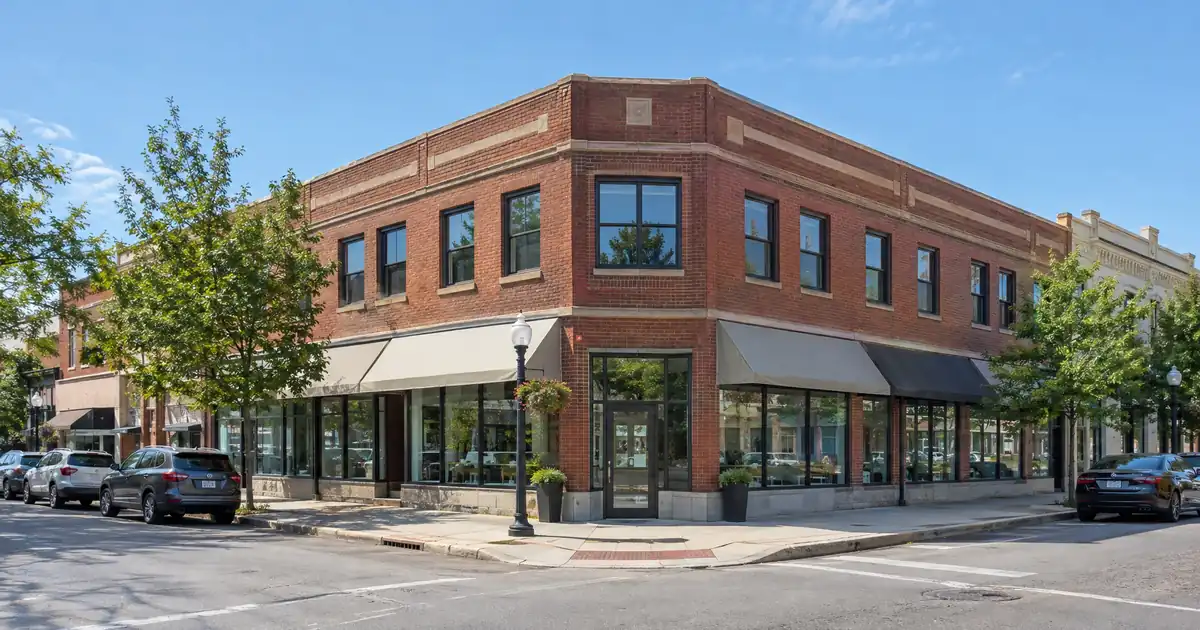
The Quick Read: Usually yes, if you own a residential condo unit on an upper floor of a high-rise tower and the building passes the lender’s project review. A shop or retail podium at the base of the tower does not automatically disqualify you, because the lender measures how much of the building is commercial and looks at the rest of the project’s health. The answer turns to no when the collateral itself is a commercial unit or a mixed-use property.
- The income review looks at you, and the project review looks at the building. A commercial floor only affects the second one.
- Condos, including non-warrantable ones, are eligible property types across the select lenders Lendmire works with. Commercial and mixed-use collateral is not offered.
- On an investment property, the line tops out at 70% CLTV (combined loan-to-value) and $500,000, with a 700 minimum credit score.
- The unit must be titled in your name or a revocable living trust. An LLC-owned unit needs a different product.
- If the building blocks the HELOC, a DSCR cash-out refinance on a rented unit is often the next path.
Why Does a Commercial Floor Even Matter?
A commercial floor matters because the lender is lending against the unit and the building around it. The unit’s value depends on the health of the whole project: its insurance, its reserves, its owners, and how much of it is not residential.
How large a line the equity supports.
An equity line is sized by combined loan-to-value, occupancy, and credit — not by rental coverage. Switch the occupancy or the credit band and the ceiling moves with it.
Investment-property lines require a 700 minimum credit score; second-home lines start at a 640 minimum and primary-residence lines at 600, and the combined-LTV ceiling steps down as the credit band drops on primary-residence and second-home lines and holds on investment-property lines; the line cap steps down on primary-residence lines and holds at every tier on investment-property and second-home lines.
A debt-to-income ratio above 45% requires 680+ credit. Profiles under 640 are limited to single-family homes. At least 75% of the approved line is drawn at closing. Ceilings, floors, and caps update from Lendmire’s centralized guideline source.
Line estimate
Illustrative estimate only — not a quote, Loan Estimate, approval, or commitment to lend. The rate is an editable assumption; equity-line pricing is variable through both the draw and repayment periods and never converts to fixed. Occupancy and credit drive the ceiling together: an investment property tops out at 70% combined LTV (minimum credit 700, line cap $500,000); a second home tops out at 90% combined LTV (minimum credit 640, line cap $500,000), with the ceiling stepping down as the credit band drops (the cap holds at every tier); a primary residence tops out at 90% combined LTV (minimum credit 600), and its $750,000 maximum line is available only at 75% combined LTV or below with a 700-or-better credit profile (720 on the longer-runway program) and a full appraisal. Lines above $500,000 require a full appraisal. Credit, debt-to-income, property type, and full underwriting review all affect the final line.
Picture a 40-story tower with a pharmacy, a coffee shop and a fitness studio on the first two levels. You own unit 2208. The lender does not underwrite the pharmacy. It does ask whether that commercial space makes the building look like a residential condo project or something closer to a mixed-use commercial property.
Most lenders answer that with a percentage. They compare the commercial square footage to the total building, and sometimes to the condo project itself. A small retail footprint in a large residential tower usually lands far below any limit. A podium with several floors of office, retail and parking can land much higher.
The practical point: a commercial floor changes which check the building has to pass. It does not change how your income is read.
Two Checks: You and the Building
Every file runs through two separate gates. Mixing them up is how borrowers end up confused about why a strong income file still stalls.
| Item | The borrower check | The property check |
|---|---|---|
| What it reviews | Deposits, credit, debt ratios | Unit type, project health, title |
| Commercial floor affects it? | No | Yes |
| Main documents | Bank statements, credit report | Condo questionnaire, budget, declaration |
| Common stopper | Low credit, high debt-to-income | Commercial share, litigation, vesting |
A bank statement HELOC is a standalone line of credit that is reviewed around documented income under the applicable program, subject to lender guidelines. Deposits stand in for traditional personal-income documentation and W-2s. Underwriters total the eligible deposits, remove transfers and non-income credits, and average the result over the review period. Business accounts typically get an expense factor, and the lookback is commonly 12 or 24 months, depending on the program.
That is the borrower gate. It does not ask what is on the ground floor of your building.
The property gate is where the commercial floor shows up. The lender sends a condo questionnaire to the association and reads the project’s budget, reserves, litigation history, owner concentration and commercial share. Passing the income check never gets a unit through a failed project review.
Which Kind of Owner Are You?
The deciding factor is what you actually own. A commercial floor in the building is one fact. Owning the commercial space is a completely different fact.
| What you own | How it is classified | Usual outcome | Next step |
|---|---|---|---|
| Residential unit in a tower with a retail podium | Condominium | Eligible property type, subject to project review | Get the condo questionnaire |
| A commercial or retail unit in the tower | Commercial | Not offered | Look at commercial financing |
| The whole mixed-use building | Mixed-use | Not offered | Look at commercial financing |
| A live-work unit | Depends on zoning and use | Not offered if zoned commercial or mixed-use | Confirm the zoning first |
Across the wholesale network Lendmire places files with, the property rules are consistent on this point. Single-family homes, 2-4 unit properties, PUDs, townhomes and condominiums are eligible, and that includes non-warrantable condos. Manufactured homes, co-ops, condotels, log homes, commercial property, mixed-use property and agriculturally zoned land are not offered.
So the same building can produce a yes for you and a no for the neighbor who owns the cafe. The loan follows the collateral, not the address.
Two cautions on the live-work row. First, a unit that is residential on paper but used as an office or storefront can be treated differently than the paperwork suggests. Second, the zoning that matters is the one in the recorded documents, not the one in a listing.
What Does Non-Warrantable Mean for a Tower?
Non-warrantable is a financing category, not a judgment on the building. A warrantable condo project meets the standards that large mortgage buyers use when they purchase conventional loans. A non-warrantable one misses at least one of them.
Excess commercial space is one of the common reasons. Enact, a mortgage insurer, lists mixed-use or excessive commercial space, generally above 35%, among the triggers that make a condo non-warrantable.
For contrast, the conventional-loan rulebooks work this way. Fannie Mae’s Selling Guide caps commercial or mixed-use space at 35% of the project or of the building it sits in, including space above and below grade. Freddie Mac’s Guide applies the same 35% test to above- and below-grade square footage and includes a table showing which kinds of space count.
Those rules govern conventional loans, not the HELOC or DSCR programs here. They matter for two reasons.
1. The measure is against the building, not just the condo association. A tower with a retail podium, office floors or hotel floors can fail the test even when the residential association is small.
2. A non-warrantable tower is harder to sell to buyers who need conventional financing. That affects your exit, even when your own line gets approved.
Across the select lenders in the network, non-warrantable condos are an accepted property type. Each lender still sets its own limits on commercial share, and the exact measure (project, building or total floor area) varies by program. A building that fails one lender’s review can pass another’s, which is why a decline from a big retail lender is not the final word.
How Do You Find Your Building’s Commercial Share?
You find it in the recorded documents. Guessing from the lobby does not work. Here is the sequence that works.
1. Ask the management office for the condo questionnaire. The lender usually sends its own, and managers have seen it before. It asks for the share of commercial space, owner-occupied versus rented units, single-entity ownership, budget and reserves, delinquent dues, special assessments and litigation.
2. Request the declaration and the recorded plans. The declaration defines what the project includes. The plans show square footage by use.
3. Identify each non-residential area. Retail, office, amenity, hotel and parking space are treated differently. Fannie Mae’s 2018 guideline update, summarized in an Enact training document, exempted commercially owned or operated parking from the commercial-space calculation for conventional loans, so a garage level can change the math for lenders that follow similar logic.
4. Check for hotel components. A tower with hotel floors or condotel units is a separate and harder issue than ground-floor retail. Condotels are not offered in these programs.
5. Look for income-producing business operations run by the association. A restaurant, spa or health club owned by the HOA can trip a separate test even when the square-footage ratio looks fine.
6. Hand the package to your broker before you apply. A broker who sees many lenders’ guidelines can match the building to the program with the most workable limits.
If the commercial share is small and everything else is clean, the commercial floor will be a non-event. If it is large, you will know it before you pay for anything.
What Else Do Lenders Check in a High-Rise?
A commercial floor is rarely the only item on the list. Older towers often fail on several points at once, so the checklist matters more than any single number.
| Review item | What the lender wants | Common snag |
|---|---|---|
| Commercial share | A modest percentage of the building | Retail, office and hotel floors stacked together |
| Master insurance | Active, adequate coverage | Coverage gaps or lapses |
| Reserves and budget | Healthy reserve funding | Underfunded reserves in older towers |
| Delinquent dues | A small share of units behind | A building with many owners behind |
| Special assessments | None pending, or manageable | Major repairs triggering a large assessment |
| Litigation | None, or minor | Construction-defect suits |
| Owner concentration | Units spread across many owners | One entity holding a large block |
| Rental mix | Reasonable owner-occupied share | Heavy investor ownership |
Fannie Mae’s Condo Project Manager bulletin flags several of these as separate problems, including delinquent assessments over 15% of units, critical repairs and an exceeded commercial-space limit. That is a conventional-loan screen, but it shows how an older tower can fail in more than one place. Non-warrantable acceptance in the network widens the door without removing the review.
What Leverage and Credit Does the Line Need?
The leverage depends on how you use the unit. A tower unit can be a primary residence, a second home or an investment property, and the ceilings differ sharply.
For an investment property, the line caps at 70% CLTV and $500,000, with a minimum 700 credit score. There is no higher investment tier. Combined loan-to-value adds your first-mortgage balance to the new line limit and divides by the property’s value, so an existing first lien eats into the line you can get. These specifics are subject to lender guidelines and a full review of property, leverage, and credit.
For a second home, the program reaches up to 90% CLTV only with a 720 or better credit profile, and the line is limited to $500,000. The minimum score on a second home is 640. On a primary residence, lines also reach up to 90% CLTV only at 720 or better, and lines can reach $750,000 on lower leverage tiers, with the minimum score at 600.
Other terms that apply to investment lines:
- Structure: a 5-year interest-only draw followed by a 25-year fully amortizing repayment, in first or second lien position.
- Draw at closing: at least 75% of the line is drawn at closing.
- Debt-to-income: 50% maximum, with qualification based on the interest-only payment calculated on the maximum draw.
- Valuation: lines at or below $500,000 ordinarily use an automated valuation rather than a traditional appraisal, though a higher CLTV may require a secondary valuation. You can also request a full appraisal in any case.
- Exposure: a borrower is limited to three lines, and a borrower with more than 15 financed properties is not eligible.
- Availability: HELOC placements are limited to Lendmire’s 16 full-service states, which is narrower than its 41-market DSCR footprint.
Every figure is subject to lender guidelines and full file review. None of this is a commitment to lend.
A strong deposit history does not raise these ceilings. Documentation changes how income is read. It does not remove credit, equity, lien-position or property-type review.
Does Title Matter More Than the Commercial Floor?
For many investors, yes. The HELOC programs here require the unit to be titled in the individual borrower’s name or an inter vivos revocable living trust. LLCs, corporations, partnerships and irrevocable, blind or land trusts cannot hold title.
That makes vesting the first filter for investors, and it is separate from the commercial-floor question. If your unit sits in an LLC, the HELOC may be off the table before the building ever comes up. The fix is either a vesting change or a different product.
Many investors choose the different product. Deeding a unit out of an LLC can create its own problems with insurance, liability and existing loan terms, so it is worth talking it through before you sign anything.
What If the Building Blocks the HELOC?
If the building blocks the HELOC, you have three realistic paths. Each is reviewed on different things and carries its own trade-off.
| Alternative | What it is reviewed on | Main trade-off |
|---|---|---|
| HELOC on another property you own | That property’s equity and your income | Puts a different asset at risk |
| DSCR cash-out refinance on the unit | The unit’s rent against its full monthly payment | Replaces your existing first mortgage |
| A different lender’s HELOC program | Same borrower check, different building limits | Terms and leverage vary by program |
A DSCR loan is an investor loan that qualifies primarily on property-level rental income covering the payment, subject to lender guidelines. DSCR means debt service coverage ratio: the monthly rent divided by the monthly principal, interest, taxes, insurance and any HOA dues. Because these are business-purpose loans on non-owner-occupied investment properties, they are reviewed differently from a standard owner-occupied mortgage.
For a rented tower unit held in an LLC, a DSCR cash-out is often the workable route. Across the network, cash-out refinances top out around 75% LTV on standard rentals, with about 6 months of seasoning as the common expectation. Pricing and available terms vary by lender, borrower profile, property type, and full underwriting review. Loan sizes generally reach up to $3,000,000 on standard programs.
The coverage number matters too. A 1.00 ratio is where many select programs start, and a stronger ratio opens better pricing and leverage. A separate select-lender path takes coverage below 1.00 with leverage and terms adjusted.
Clearing 1.00 is not the same as positive cash flow. The ratio compares rent to the full payment only. Repairs, vacancy, management, utilities and capital expenses sit outside it, so run those separately before you pull equity.
The condo project review applies to DSCR loans as well, so a building with a commercial share problem can still run into it. Whether a particular tower works depends on that lender’s limits. For the full picture of how these loans are structured, see Lendmire’s complete DSCR loans guide.
How Should You Choose Between a HELOC and a DSCR Cash-Out?
The deciding questions are about the first mortgage, the title and how you plan to use the money.
- You like your current first mortgage. A HELOC leaves it untouched. The cost is that the line is sized on CLTV, so the first-mortgage balance reduces what you can borrow.
- You want the property’s rent to carry the qualification. A DSCR cash-out reads the unit’s rent against its payment and replaces the first mortgage.
- The unit is in an LLC. The HELOC is out unless you change the vesting. DSCR is the cleaner fit.
- Your income is hard to document. The bank statement approach reads your deposits instead of traditional personal-income documentation.
- The building looks borderline. Ask your broker to run the project package against several programs before choosing a product.
If a spouse is on title or lives in the unit, signature requirements may apply.
Tax treatment can depend on how the funds are used and how the property is held; investors should keep clear records and speak with a qualified tax professional before relying on any deduction.
Pre-Application Checklist
Gather these before you talk to a broker, and the building review will go more smoothly.
1. Confirm how the unit is titled: individual, revocable trust or LLC. 2. Decide the occupancy: primary residence, second home or investment. 3. Pull 12 to 24 months of personal or business bank statements, depending on the program. 4. Request the condo questionnaire, budget and declaration from the association. 5. Note whether any commercial space is owned by the HOA or run as an HOA business. 6. Estimate your combined leverage using your first-mortgage balance and the new line. 7. Check your credit against the minimums for your occupancy.
Key Terms Defined
Bank statement HELOC: a home equity line of credit that is reviewed around deposits in your bank statements instead of traditional personal-income documentation and W-2s, subject to lender guidelines.
CLTV (combined loan-to-value): your first-mortgage balance plus the new line limit, divided by the property’s value.
Non-warrantable condo: a condo project that misses at least one standard used for conventional loans, such as too much commercial space.
Mixed-use property: a property that combines residential and commercial uses, which is not offered in these HELOC programs.
Vesting: how the title to the property is held, whether in your name, a trust or an entity.
DSCR: the ratio of a property’s monthly rent to its full monthly payment, used to qualify investor loans.
Frequently Asked Questions
Does a ground-floor shop make my whole tower commercial?
No. The test is a percentage of square footage, not a yes-or-no label. A small retail footprint in a large residential tower is usually far below any limit, and the recorded condo plans determine the actual figure.
Is a bank statement HELOC the same as stated income?
No. The lender reads your actual deposits, removes transfers and non-income credits, and averages the result. Documentation is different, but credit, equity, lien position and property review still apply.
Can I get the HELOC if I own the retail unit in the tower?
Not through these programs. Commercial and mixed-use collateral is not offered, so a retail or office unit needs commercial financing instead. A residential unit in the same building is a different case.
What if my condo is in an LLC?
The HELOC programs here require individual or revocable-trust title, so an LLC-owned unit does not qualify as is. You can change the vesting, or look at a DSCR cash-out refinance on the rented unit, subject to program terms.
How much can I borrow on an investment condo?
Investment lines cap at 70% CLTV and $500,000, with a 700 minimum credit score. Your first-mortgage balance reduces the available line, and every figure is subject to lender guidelines.
If you are considering a home equity line and want to see how the numbers work, Lendmire can help you compare HELOC options based on the property, the equity available, credit profile, combined leverage and your goals.
About Lendmire
As a mortgage broker (NMLS# 2371349), Lendmire helps homeowners and real estate investors in its 16 full-service states open home equity lines of credit arranged through wholesale lenders. Lendmire is never the lender; line amounts, ceilings and terms are set by the lender under its guidelines. Scotsman Guide named Lendmire a Top Mortgage Workplace in both 2025 and 2026.
Get Started
Ready to find the right loan for you?
In about 30 seconds you can review financing options available for your home or investment property. No commitment required.
Informational only. Not a Loan Estimate, approval, or commitment to lend. Program availability and eligibility are subject to lender guidelines, credit approval, property review, and underwriting.
References
1. Enact: What Makes a Condominium Non-Warrantable
2. Fannie Mae Selling Guide B4-2.1-03
3. Freddie Mac Guide Section 5701.3
4. Enact-hosted summary of the 2018 Fannie Mae Selling Guide update
This article is part of Lendmire’s bank statement HELOC program — full qualification details, guidelines, and scenarios live on the program page.
Related reading: Bank Statement HELOC Requirements for Business Owners · Bank Statement HELOC Requirements for LLC-Titled Borrowers · Bank Statement HELOC Requirements for First-Time Investors
Brandon Miller
Founder & CEO, Mortgage Loan Originator, Lendmire LLC
- Mortgage Loan Originator · NMLS# 1129696 · Verify on NMLS Consumer Access
- North Carolina Real Estate Broker · License# 343312 · Verify on NCREC
- North Carolina Insurance Producer · License# 19053198 · Property, Casualty, Life, Health · Verify on NAIC SBS
- Lendmire LLC · Firm NMLS# 2371349 · Verify firm licensure
Disclosures. The information presented in this article is general market commentary, not financial, legal, or tax advice. Lendmire is a mortgage brokerage (NMLS# 2371349) — not a direct lender or depository institution — and loan placement is subject to lender underwriting. Nothing in this content represents a commitment to lend. Loan terms, pricing, and program availability vary based on borrower qualifications, property characteristics, and state of subject property, and are subject to change at any time. Lendmire complies with Equal Housing Opportunity requirements. Consumer access: nmlsconsumeraccess.org.