
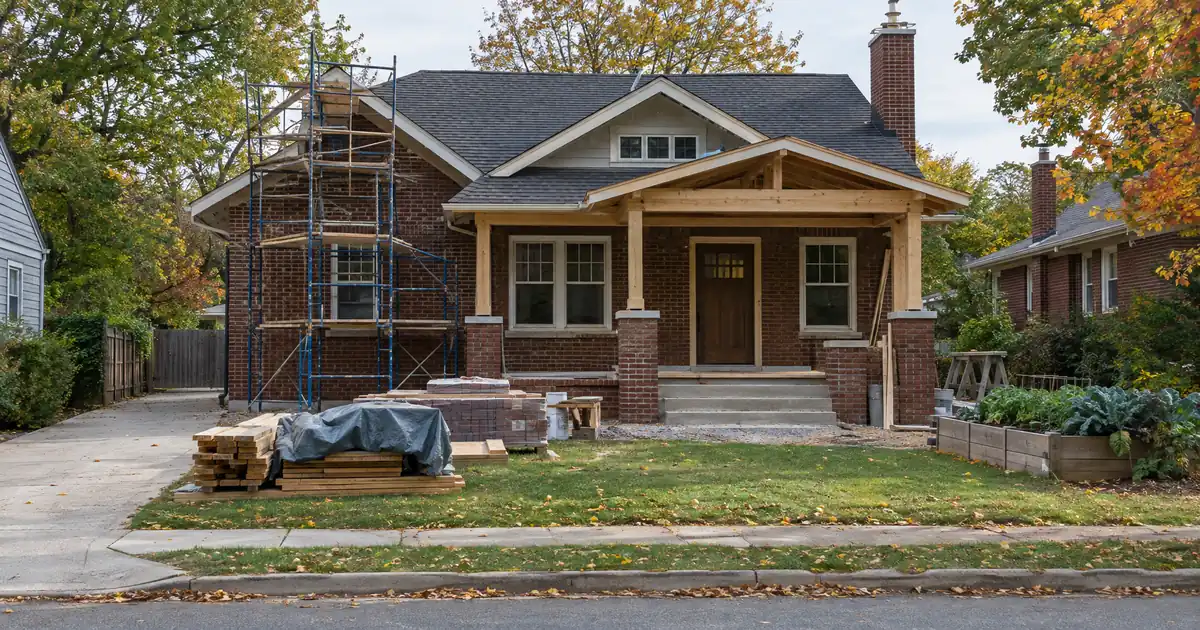
The Quick Read: The stack has three layers: an equity line on property you already own supplies the cash, hard money buys and rehabs the next property, and a long-term DSCR loan usually pays off the hard money, so it works only when cash source, combined leverage, and exit are planned together. The bank statement part changes only how your income is proven.
- The line is secured by a property you already own, so that property carries the risk if the new deal stalls.
- Hard money lenders underwrite the asset, the plan, and your experience. They are not underwriting your tax returns.
- The exit decides everything. The long-term lender sizes the payoff on its own appraisal, not on your after-repair estimate.
- Clearing 1.00 on a DSCR loan does not mean the property cash flows. Repairs, vacancy, and management sit outside that math.
Key Terms Defined
Bank statement HELOC: a home equity line of credit where the lender proves your income from 12 to 24 months of deposits instead of tax returns.
HELOC (home equity line of credit): a revolving credit line secured by property. You draw cash, repay, and draw again during a set draw period.
Hard money loan: a short-term, interest-only business loan sized mainly on the property and the project.
Loan-to-cost: the share of total project cost a lender funds, purchase plus rehab.
After-repair value (ARV): what the property is expected to be worth when the work is done.
Seasoning: the waiting period a lender wants after you buy before it will refinance and pay out cash.
DSCR (debt service coverage ratio): monthly rent divided by the monthly payment that covers principal, interest, taxes, insurance, and any HOA dues.
What this loan actually costs to carry.
Hard money is sized against the project and priced by time. Enter the deal and see how much the program will lend, the cash required at closing, the carry while you hold it, and what is left at the exit.
Leverage tiers on the current program: 85% with fewer than 2, 90% with 2 or more, 93% with 5 or more completed projects — every tier capped at 75% of after-repair value. Loan amounts up to $5,000,000, larger by exception; terms of 6 to 18 months, interest-only, no prepayment penalty. The rehab portion funds in draws against completed work, not at closing.
Program parameters shown update from Lendmire’s centralized guideline source. Rate, points, and months are editable assumptions, not quoted terms.
Cost cap sets the loan · positive spread
Illustrative estimate only — not a quote, Loan Estimate, approval, or commitment to lend. Rate, points, and months are editable assumptions. Hard money is business-purpose financing for real estate investors, not a consumer mortgage. Leverage on the current program tops out at 93% of project cost for investors with a documented track record, capped at 75% of after-repair value, with rehab funding up to 100% of the documented budget released in draws; actual terms vary by lender, borrower experience, property, and exit. Lendmire is a mortgage broker, not a lender.
What Is a Bank Statement HELOC, Really?
It is an ordinary equity line with a different way of proving income. The collateral, the lien, the floating pricing, and the draw and repayment schedule all work like any other HELOC. Underwriting still looks at credit, equity, and the property.
Here is the income side. A self-employed borrower supplies consecutive months of personal or business statements. Scotsman Guide’s non-QM overview describes 12 to 24 months of statements, with the lender applying an expense factor to business deposits. It uses 50% as its example, and each program sets its own factor.
The underwriter strips out transfers, loan proceeds, and one-off deposits. Then the adjusted total is averaged across the window. That is why heavy tax write-offs can sink a tax-return application while the deposits still support the file. The file is reviewed on documented income under the applicable program, subject to lender guidelines.
A HELOC also behaves like a credit line, not a lump-sum loan. The CFPB’s HELOC brochure explains that you can borrow, repay, and borrow again during the draw period. Some plans allow interest-only payments then. When repayment starts, payments can change even if you draw nothing more.
One naming trap: a private lender’s open-ended line sometimes gets called a hard money HELOC. That is a different product from what this article covers.
How Does the Hard Money Layer Work?
Hard money is asset-based business lending. Across the wholesale network Lendmire works with, the lender looks at the property, the rehab plan, the exit, and your track record. The programs we see are for non-owner-occupied residential property, 1 to 4 units, and ground-up construction up to 10 units.
Typical leverage runs on loan-to-cost, and it rises with experience. All of these vary by lender, property, and experience, and none is a commitment to lend.
| Project type | Typical ceiling |
|---|---|
| Fix-and-flip, 5+ completed projects | 93% of project cost |
| Fix-and-flip, 2+ completed projects | 90% of project cost |
| Fix-and-flip, under 2 projects | 85% of project cost |
| Bridge purchase, no rehab | Up to 80% of purchase price |
| Refinance | Up to 65% of value |
Every flip tier is also capped at 75% of ARV. Rehab money funds in draws against completed work, up to 100% of the rehab budget. There is no true 100% purchase program. Terms run 6 to 18 months, interest-only, with no prepayment penalty. A 620 credit score is the typical minimum, with added conditions below 660. Final terms depend on the lender’s guidelines, the property type, and the borrower’s complete credit picture.
Can You Use Them Together?
Yes, with conditions. The line gives you cash. Hard money gives you leverage on a different property. Neither lender is replacing the other.
The gap between what the hard money lender funds and what the project needs is your cash. A line on a property you own covers it. It can also fund reserves or a rehab overage.
Two practical points. First, many hard money lenders prefer first position on the new property, so the HELOC sits on a separate one. Second, asset-based underwriting does not mean nobody asks about your cash. Expect to document where closing funds came from, and a HELOC draw leaves a clean paper trail.
Order of Operations
Open the line before you need it. A deal that is already under contract is a poor moment to start a new application. This is the sequence that works best:
| Stage | What happens | What each lender sees |
|---|---|---|
| 1. Line | Qualify on deposits, then draw | HELOC lender: credit, equity, deposits |
| 2. Purchase | Hard money closes, drawn cash covers the gap | Hard money lender: asset, plan, source of funds |
| 3. Rehab | Draws released against completed work | Hard money lender: progress |
| 4. Lease | Tenant placed, rent documented | Future DSCR lender: lease and rent |
| 5. Exit | DSCR loan pays off the hard money | DSCR lender: its own appraisal, rent, credit |
Hard money terms are short, so lease-up and seasoning have to fit inside the term. Seasoning usually runs from the recorded deed, not from rehab completion or the lease date, and it is lender policy rather than law.
A Worked Example in Percentages
These inputs are modeled assumptions, not market data. Say an experienced flipper finances a project at 90% of project cost, with the rehab budget funded in draws. Their line covers the other 10%, plus closing costs and a cushion. The hard money balance at payoff, plus exit costs, equals about 70% of the value they hope the property appraises at.
The DSCR exit is a cash-out or rate-and-term refinance topping out around 75% LTV across most of the network, with about 6 months of seasoning as the common expectation. The new lender uses its own appraisal. The break-even is simple: payoff plus exit costs, divided by the LTV cap, equals the minimum appraisal you need. Each figure is subject to lender guidelines and a complete review of property type, leverage, and credit.
With the payoff at 70% of hoped-for value and a 75% cap, the appraisal can land roughly 6 to 7% short before the refinance stops paying off the bridge. Beyond that, you bring cash. That cash may mean drawing more on the line, which stacks one more obligation on top of the others.
Payment Stacking and What Lenders Count
During the hold you carry three things at once: interest-only draw payments on the line, the hard money payment, and the costs of the old property. Pricing on the line floats, so model it higher than today.
A DSCR exit does not test your personal debt-to-income ratio. These are business-purpose investor loans, reviewed differently from a standard owner-occupied mortgage. A DSCR lender does look at rent against the new payment. That means principal, interest, taxes, insurance, and HOA dues.
Many programs expect around 6 months of those payments in reserves, though that varies by lender, leverage, and loan size. Credit expectations vary too: most programs want around 660, 620 exists in parts of the network, and 700 or higher unlocks the strongest leverage tiers.
Coverage is its own question. A 1.00 ratio is where many select programs start. A separate select-lender path takes coverage below 1.00, with leverage and terms adjusted. Either way, DSCR compares rent to the payment only, so a property can clear it and still lose money after repairs and vacancy.
A debt-to-income test matters if you later apply for a loan that uses one. Lenders treat HELOCs differently there, so ask early.
Which Property Secures Which Loan?
Keep the collateral separate. The line sits on the property you already own, after the first lien, and it is limited by combined leverage. Combined leverage on an investment-property line is typically more conservative than on a purchase loan. The hard money loan sits on the new property, sized on that property’s cost or value.
If the new deal fails, the lender on the line can look to the first property. The CFPB brochure stresses that your property is at stake. Hold title in the way the line program allows, because lender program eligibility can limit entity-owned collateral.
Tax treatment can depend on how the funds are used and how the property is held; investors should keep clear records and speak with a qualified tax professional before relying on any deduction.
Where the Rules Break
A heavy draw at closing. Some line programs expect a large share drawn at closing. You pay on the full amount right away, so model it against the hard money schedule.
Large deposits. Banks scrutinize big deposits, and some borrowers let borrowed money sit before applying elsewhere. That habit comes from bank-style files. Hard money and DSCR programs differ, so check each one.
A business younger than the statement window. Underwriters may weigh liquid assets and credit alongside a shorter history. Confirm that against the specific program sheet.
Commingled accounts. Deal-related transfers, flip proceeds, and personal spending in one account distort statement income. Keep personal and business money separate and be ready to explain large deposits.
Misstated purpose. Describing the draw as something other than what it is can create fraud exposure. Disclose the use of funds accurately every time.
A bridge that matures before seasoning. Your options are a payoff-only refinance, bringing cash, a new bridge, or an extension. A payoff-only exit returns no cash. Doing two refinances in a row can also trigger a prepayment penalty on the first long-term loan. That is a fee for paying it off early.
Stress Tests Before You Commit
| Scenario | What it does | What to plan |
|---|---|---|
| Rehab overruns | Adds cost beyond the draw budget | Hold cash cushion on the line |
| Low appraisal | Cuts the payoff loan by 75 cents per lost dollar | Bring cash or extend the bridge |
| Refinance delayed | Hard money term runs short | Know extension terms upfront |
| Line pricing rises | Raises carry on the old property | Model a higher payment |
| Income dips | Weakens the next application | Keep statements clean |
When a Different Tool Fits Better
| Situation | Better fit |
|---|---|
| Strong tax returns, modest cash need | Conventional documentation |
| Property already stabilized and rented | Direct DSCR purchase or refinance |
| No equity in other property | Lower leverage tier, partner capital, or smaller project |
| Thin experience, large rehab | A smaller first project |
The question underneath is whether you need the line at all or can fund the project another way.
The Exit: Why Most Investors End in a DSCR Loan
Many investors refinance out of hard money into long-term DSCR financing once the property is stabilized, and Lendmire brokers that path. DSCR loans qualify primarily on property-level rental income covering the payment, subject to lender guidelines. The spine is a 30-year fixed, with 40-year terms, interest-only periods, and ARMs available through select lenders. Loan sizes run up to $3,000,000 on standard programs (smaller balances available through select lenders), and above $2,500,000 the network generally holds to 30-year fixed.
For the complete picture of those programs, see the complete DSCR loans guide.
If you are buying, rehabbing, or refinancing an investment property on a short timeline and want to see how the numbers work, Lendmire can help you compare hard money options based on the project, the exit plan, leverage, and your goals. Programs change and every file is underwritten individually.
Frequently Asked Questions
Can a HELOC fund a hard money down payment?
Often yes. The line is a source of cash, and a hard money lender is mainly underwriting the asset and the plan. Expect to document the funds, and size the total debt so the exit can still repay everything.
Do hard money lenders care where the cash comes from?
Less than a bank would, but they still ask. Asset-based underwriting focuses on the deal and your experience, though a documented source of funds protects the file. A borrowed down payment on a thin-experience project is a reason to choose a lower-leverage tier.
Does a bank statement HELOC require tax returns?
Typically not. The program proves income from deposits instead. Credit, equity, and the property are still reviewed, so it is not a shortcut around underwriting, and the details vary by program.
Can I open the line after I find the deal?
You can try, but it is risky. A hard money purchase has a hard deadline, while a line application takes its own time. Open the line first, then shop deals.
What if the refinance falls through?
The hard money term and the line still run. Your choices are bringing cash, extending the bridge, or finding a new bridge. Plan these before you close, because a low appraisal is the most common way an exit stalls.
About Lendmire
As a DSCR and non-QM mortgage broker, Lendmire — NMLS# 2371349 — connects investors with wholesale lending channels across 41 markets, including Washington, D.C. The property’s rental income, not the borrower’s tax returns, is central to lender review, which works for self-employed operators and portfolios beyond four financed properties. Scotsman Guide named Lendmire a Top Mortgage Workplace in both 2025 and 2026.
Get Started
Ready to find the right loan for you?
See your offer in seconds. No credit pull, no obligation.
Informational only. Not a Loan Estimate, approval, or commitment to lend. Program availability and eligibility are subject to lender guidelines, credit approval, property review, and underwriting.
References
1. Scotsman Guide – Rev Up the Engine for Non-QM Lending
2. CFPB – What You Should Know About HELOCs
This article is part of Lendmire’s hard money loan program — full qualification details, guidelines, and scenarios live on the program page.
Related reading: How to Qualify for a DSCR HELOC by State and Where It Is Offered · How a DSCR HELOC Works for Commingled Accounts and NSF Items · How an Investment Property HELOC Works on a Home Held in an Irrevocable Trust
Brandon Miller
Founder & CEO, Mortgage Loan Originator, Lendmire LLC
- Mortgage Loan Originator · NMLS# 1129696 · Verify on NMLS Consumer Access
- North Carolina Real Estate Broker · License# 343312 · Verify on NCREC
- North Carolina Insurance Producer · License# 19053198 · Property, Casualty, Life, Health · Verify on NAIC SBS
- Lendmire LLC · Firm NMLS# 2371349 · Verify firm licensure
Legal disclosures. Lendmire (NMLS# 2371349) is a state-licensed mortgage brokerage that arranges financing through wholesale lender relationships. Lendmire is not a direct lender, depository institution, or registered financial advisor. The discussion above is general informational content about real estate financing — it is not financial, legal, or tax advice, and readers should consult licensed professionals for guidance on their individual circumstances. Loan inquiries are subject to lender underwriting; this article does not represent a commitment to lend. Loan terms, rates, and qualification standards vary by borrower, property, and state, and are subject to change at any time. Equal Housing Opportunity. NMLS Consumer Access: nmlsconsumeraccess.org.